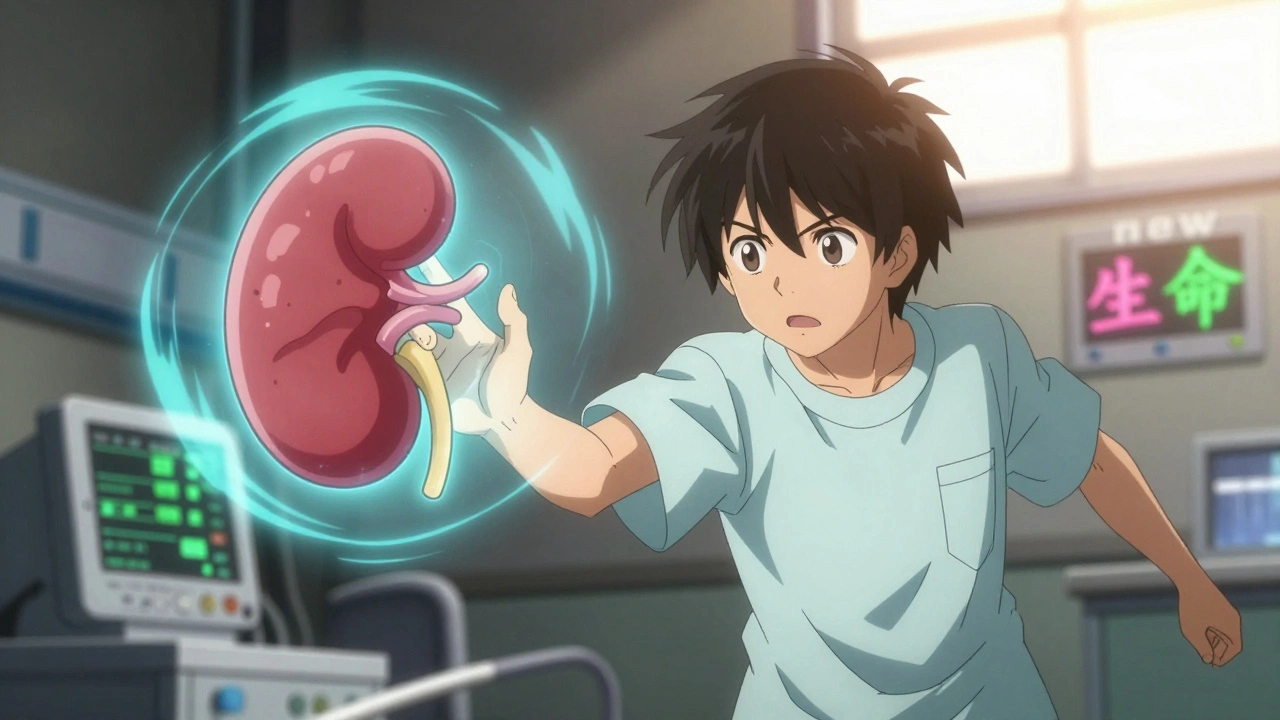
What Is a Kidney Transplant?
A kidney transplant is when a healthy kidney from a donor replaces a failing one. It’s not a cure, but it’s the closest thing to one for people with end-stage renal disease (ESRD). Unlike dialysis, which only does part of what kidneys do, a transplant lets you live more like you did before your kidneys failed. You won’t need to spend hours hooked up to a machine three times a week. You’ll have more energy, fewer dietary restrictions, and a much better chance of living longer.
The first successful kidney transplant happened in 1954 between identical twins. Since then, the procedure has become routine. In 2023, around 27,000 kidney transplants were done in the U.S. alone. But over 100,000 people are still waiting. The biggest hurdle? Finding a match - and being healthy enough to get one.
Who Qualifies for a Kidney Transplant?
You don’t automatically qualify just because your kidneys are failing. Transplant centers have strict rules because the surgery is major, and you’ll need to take anti-rejection drugs for life. If you’re not a good candidate, the risks outweigh the benefits.
The main requirement is end-stage renal disease. That means your glomerular filtration rate (GFR) is 20 mL/min or lower. Some centers will consider you if your GFR is up to 25 mL/min - especially if your kidney function is dropping fast or you have a living donor ready. Most people on the list are already on dialysis, or about to start.
Age isn’t a hard cutoff. Some centers won’t transplant anyone over 75. Others look at your overall health, not your birthday. A healthy 80-year-old with strong heart and lungs might be a better candidate than a 60-year-old with diabetes and heart disease.
Body Weight and Health Risks
Obesity is one of the biggest barriers. A BMI over 45 usually means you’re disqualified. Some centers won’t even consider you if your BMI is above 35. Why? Extra weight makes surgery riskier. It increases the chance of infection, poor wound healing, and even kidney failure after transplant. One study showed obese patients have a 35% higher risk of surgical complications and a 20% higher chance of losing the new kidney.
If you’re overweight, many centers require you to lose weight before being listed. That’s not a punishment - it’s about giving you the best shot at long-term success.
Heart and Lung Health Matter Too
Your heart and lungs have to be strong enough to handle surgery and recovery. If you have severe pulmonary hypertension - meaning high blood pressure in your lungs - you won’t qualify. Some centers set the limit at 70 mm Hg. If you need oxygen all the time because of COPD, you’re likely not a candidate.
Heart tests are routine. You’ll get an echocardiogram, a stress test, and sometimes a cardiac catheter. Your heart’s pumping strength (ejection fraction) needs to be at least 35-40%. If it’s lower, you might need a heart procedure first.
The Evaluation Process
Getting on the transplant list isn’t a quick visit to the doctor. It’s a full medical and social audit.
- You’ll have blood tests for infections like HIV, hepatitis, and CMV.
- Tissue typing checks how well your body might accept a donor kidney.
- Cancer screening is mandatory. If you’ve had cancer, you usually need to be in remission for at least 2-5 years, depending on the type.
- A chest X-ray and EKG check your lungs and heart.
- Psychological evaluation looks at your mental health and ability to follow complex care routines.
- Frailty tests measure strength, walking speed, and energy levels - especially for older adults.
You’ll also need a care partner. This person helps you take your meds, drives you to appointments, and calls the team if something goes wrong. No support system? You won’t be listed. Transplant isn’t a solo mission.
What Disqualifies You?
Some things are absolute deal-breakers:
- Active cancer that’s likely to come back
- Untreated HIV with a low CD4 count or high viral load
- Active hepatitis B with detectable virus
- Current drug or alcohol abuse
- Severe, untreated mental illness that makes you unable to follow your medication schedule
Even if you’ve quit drugs or alcohol, you’ll need at least 6 months of sobriety before being considered. This isn’t about judging you - it’s about survival. Missing one dose of anti-rejection medicine can mean losing the transplant.
What Happens During Surgery?
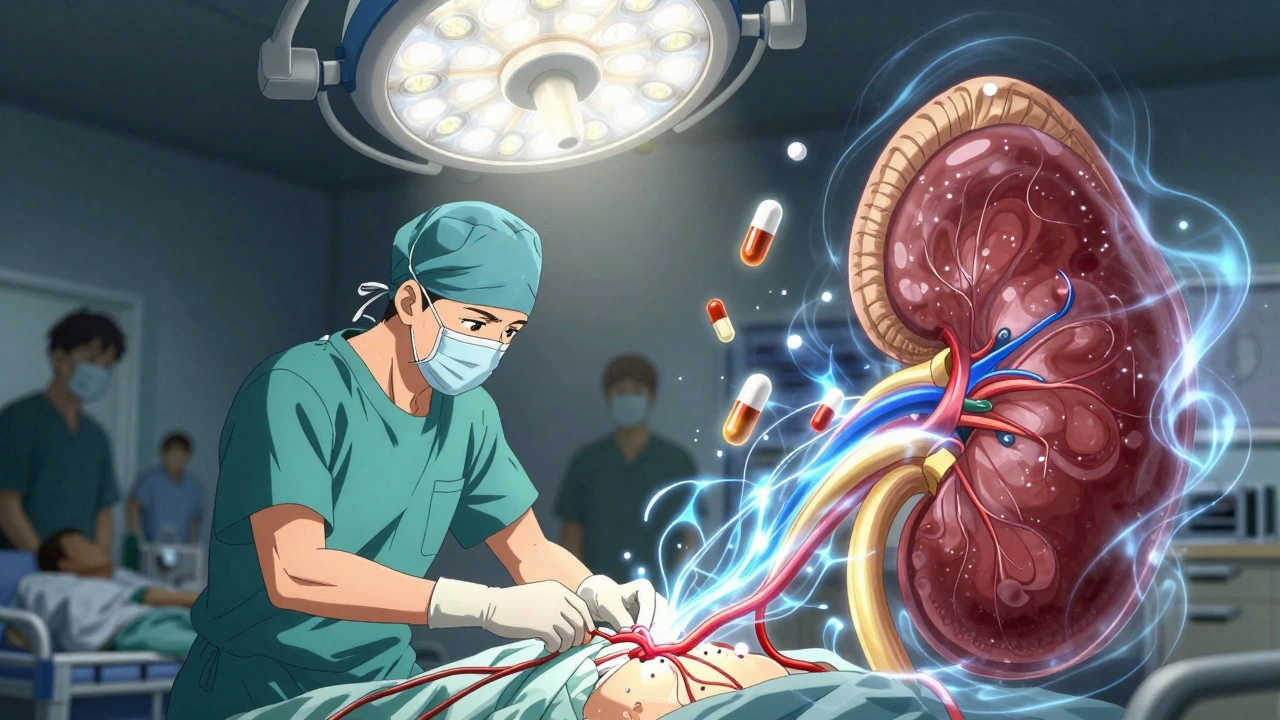
The operation takes 3 to 4 hours. You’re under general anesthesia. The surgeon places the new kidney in your lower belly, connects its blood vessels to your arteries and veins, and attaches the ureter to your bladder. Your own kidneys? They’re usually left in place unless they’re infected, causing pain, or raising blood pressure.
Most new kidneys start working right away. But about 1 in 5 - especially those from deceased donors - take a few days to start making urine. That’s called delayed graft function. You might need dialysis for a short time after surgery. It’s not a failure. It’s common.
Life After the Transplant
You’re not done after surgery. The real work begins now.
You’ll take immunosuppressants every single day, for the rest of your life. These drugs stop your immune system from attacking the new kidney. Common ones include tacrolimus, mycophenolate, and steroids. Missing even one dose can trigger rejection.
Side effects are real. You might gain weight, get high blood sugar, develop high cholesterol, or have shaky hands. Some people get skin cancer from long-term use. That’s why you need regular check-ups.
Follow-up is strict:
- Weekly visits for the first month
- Monthly for the next 3-6 months
- Every 3 months after that
- Once a year for life
Blood tests check kidney function and drug levels. Biopsies might be done if there’s concern about rejection. You’ll also get annual skin checks and cancer screenings.

Success Rates and Long-Term Outlook
Transplants work. A lot better than dialysis.
One year after transplant, 95% of living donor kidneys are still working. For deceased donor kidneys, it’s 92%. Five years out, 85% of living donor kidneys and 78% of deceased donor kidneys are still going strong. Your chance of living five years after a transplant is about 85%. On dialysis? Only 50%.
Living donors are the gold standard. Their kidneys last longer, work better, and have fewer complications. The National Kidney Registry reports a 97% one-year survival rate for living donor transplants.
New Advances and What’s Coming
Technology is improving outcomes. The Kidney Donor Profile Index (KDPI) helps match kidneys to the right patients. A kidney from an older donor with high KDPI might seem risky - but it’s still better than staying on dialysis.
Researchers are working on ways to reduce or eliminate lifelong immunosuppression. Some clinical trials are testing tolerance-inducing therapies - training the immune system to accept the new kidney without drugs. If this works, it could change everything.
Organ preservation is getting better too. New cooling methods keep kidneys alive longer after donation, giving more time to find the right match.
What If the Transplant Fails?
It happens. About 1 in 4 transplants fail within 10 years. Reasons include rejection, infection, or side effects from meds.
If your transplant fails, you go back to dialysis. You can be re-listed for another transplant. Many people get a second, even a third transplant. Each one gives you more time and better quality of life.
Final Thoughts
A kidney transplant isn’t easy. It’s a long road with strict rules, daily meds, and lifelong monitoring. But for most people, it’s worth it. You get your life back - more freedom, more energy, more time with family.
If you’re on dialysis or close to it, talk to your nephrologist about transplant. Get evaluated. Even if you’re turned down now, you might qualify later. Weight loss, quitting smoking, or managing your blood pressure could open the door. Don’t give up.
Can you have a kidney transplant if you’re over 70?
Yes, age alone doesn’t disqualify you. Many transplant centers evaluate older patients based on overall health, not just age. If you’re active, have strong heart and lung function, and no major untreated conditions, you can be a candidate. Frailty, not age, is the real concern.
How long is the wait for a kidney transplant?
The average wait in the U.S. is 3 to 5 years. But it varies by location, blood type, and how well you match with donors. People with common blood types like O or A wait longer. Those with rare types or a living donor can get transplanted much faster - sometimes within months.
Can you donate a kidney if you’re over 60?
Yes. Healthy people over 60 can donate a kidney. Many centers now accept donors up to 75 or even older, if they’re in excellent health. Donors are carefully screened for kidney function, blood pressure, and long-term risk. The decision is based on health, not age.
Do you need to be on dialysis to qualify for a transplant?
Not always. Some centers will list you before dialysis starts - if your kidney function is dropping fast (GFR under 25 mL/min and falling by 10+ mL/min per year). Being off dialysis before transplant can lead to better outcomes.
What happens if you miss a dose of your anti-rejection medicine?
Missing even one dose can trigger rejection. Anti-rejection drugs need to stay at steady levels in your blood. Skipping doses increases the risk of your immune system attacking the new kidney. That can lead to sudden kidney failure. Always set reminders, use pill organizers, and have a backup plan if you’re traveling.
Can you drink alcohol after a kidney transplant?
Moderate alcohol is usually allowed - one drink per day for women, two for men. But heavy drinking damages the liver and can interfere with your medications. Some immunosuppressants are processed by the liver, and alcohol increases the risk of liver toxicity. Always check with your transplant team before drinking.
Can you get pregnant after a kidney transplant?
Yes, many women have healthy pregnancies after transplant. But it’s safest to wait at least 1 year after surgery, when the kidney is stable and medication doses are steady. You’ll need close monitoring by both your transplant team and an OB-GYN. Some anti-rejection drugs are not safe during pregnancy - your team will adjust them.

Write a comment
Your email address will not be published.
Recent Posts
-
 How Lincomycin Is Used to Treat Ear Infections November 1, 2025
 -
 Betamethasone for Urticaria: How It Works, Benefits & Risks September 14, 2025
 -
 Generic Drug Recalls and Safety Alerts: What Triggers Action November 17, 2025


14 Comments
man i just saw this and thought about my uncle who died waitin for a kidney. they said he was too fat but he was just lazy. now he's gone and they still got a list a mile long. why do they even make rules like this?
I just want to say how deeply moved I am by the honesty in this post. So many people don't realize how much work goes into surviving a transplant-not just the surgery, but the daily discipline, the emotional toll, the quiet courage it takes to show up for every appointment, every blood test, every pill. It’s not glamorous, but it’s heroic. And for anyone feeling discouraged, please know: your effort matters more than you know.
us citizens should get priority. why are we letting foreigners jump the line? we got 100k people here waitin and they still take organs from abroad? this system is broken and i'm sick of it.
the gfr threshold at 20 is standard but i’ve seen centers go to 25 if there’s a living donor-especially with rapid decline. the real issue is comorbidity burden. if you’ve got ejection fraction under 35 or uncontrolled HTN, you’re not a candidate. period. it’s not about being harsh-it’s about survival stats. i’ve seen too many grafts fail because the recipient wasn’t optimized pre-op.
let’s be real-this whole system is a numbers game disguised as medicine. they screen out the poor, the obese, the mentally ill, the elderly-not because it’s medically sound, but because it’s cheaper to keep them on dialysis than risk a failed transplant. the stats look good on paper but the human cost? buried under jargon and institutional inertia.
My sister got her transplant last year. She didn’t know how to use a pill organizer until the social worker sat with her for an hour. Now she’s hiking every weekend. This isn’t just about organs-it’s about systems that help people stay alive. We need more support, not more barriers.
this is so real man 🙏 i live in india and my dad is on dialysis 3x a week. we cant even dream of transplant here. the cost is insane and the wait is longer than my life expectancy. america has it bad but we got nothing. just prayers and hope.
they say you can’t be a drug addict but what about the ones who quit? they lock you out for 6 months like you’re a criminal. what if you’re trying? this isn’t healthcare-it’s punishment.
There’s something almost sacred about the idea of one body giving life to another. Not just a mechanical exchange of tissue, but a silent contract between strangers-where one person’s loss becomes another’s renewal. And yet we treat it like a bureaucratic lottery. What if we stopped seeing donors as resources and started seeing them as heroes? What if we stopped seeing recipients as burdens and started seeing them as survivors? The medicine is science. The meaning is poetry.
In my country, organ donation is still culturally taboo. Many families refuse even when the patient is brain dead, believing the body must remain whole. Yet, we have thousands on waiting lists. Education and community dialogue are essential. A kidney is not a lost limb-it is a second chance. We must shift the narrative from fear to compassion.
i read this while waiting for my nephro appointment. honestly felt like someone finally explained it without making me feel dumb.
If you’re overweight and want a transplant, losing weight isn’t a punishment-it’s your first act of self-respect. The system doesn’t care if you’re ‘deserving.’ It cares if you’re alive next year. Choose life, even if it’s hard.
you think this is bad? wait till you see what happens after the transplant. they put you on steroids and you turn into a balloon. then you get diabetes. then skin cancer. then they say ‘just take more pills.’ this isn’t a cure-it’s a lifetime subscription to side effects.
The long-term immunosuppression regimen introduces a complex pharmacokinetic burden that demands precision in dosing and adherence. Subtherapeutic levels precipitate cellular rejection, while supratherapeutic levels elevate the risk of opportunistic infections and malignancies. The balance is tenuous, and the monitoring protocols-while burdensome-are non-negotiable for graft longevity. This is not merely medical care; it is a sustained, dynamic equilibrium requiring interdisciplinary coordination.