Drug Interaction Checker
Check potential interactions between your medications using official FDA data. This tool provides a preliminary assessment based on known interactions but should never replace professional medical advice.
Knowing what’s in your medicine shouldn’t feel like decoding a legal document. Every year, millions of patients look up their prescriptions online - not to shop, but to understand. Is this drug safe while breastfeeding? Why does the bottle say one thing and the label says another? What happens if I take this with my other meds? The answers matter. And the best place to find them isn’t on a pharmacy’s website or a flashy ad-filled portal. It’s on free, government-backed platforms built by scientists, not marketers.
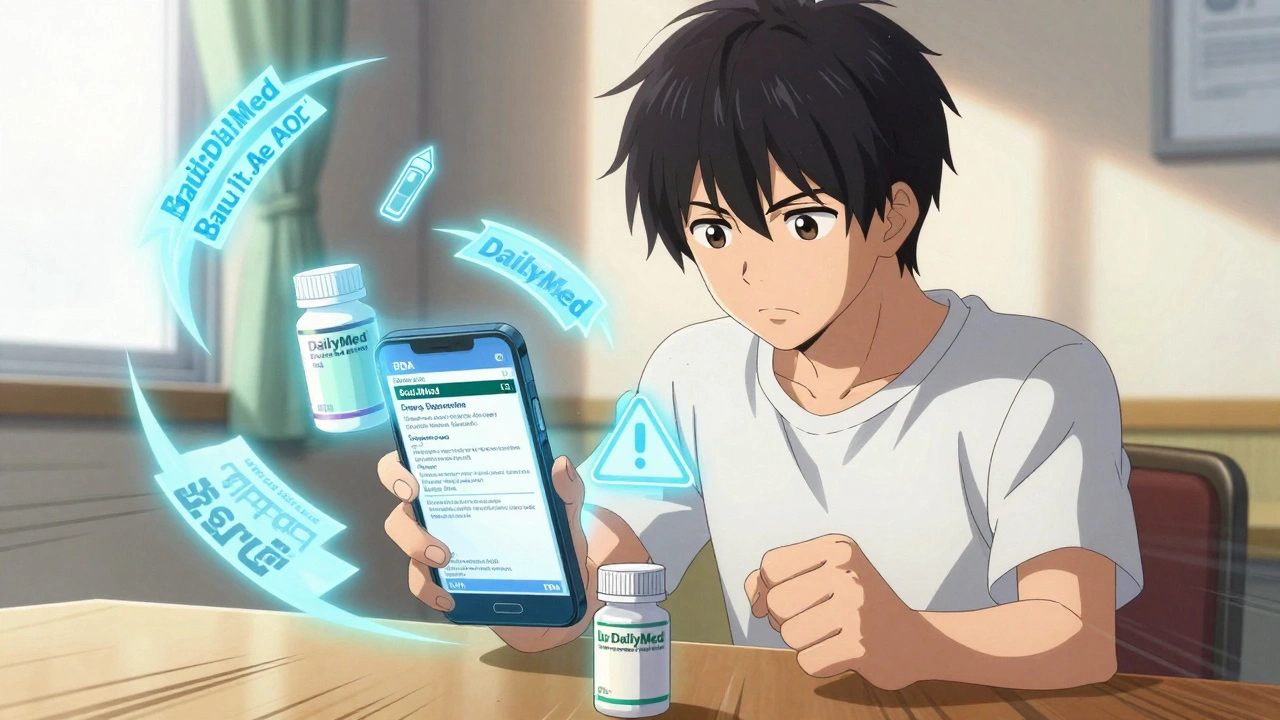
DailyMed: The Official FDA Drug Label Source
DailyMed is where the U.S. Food and Drug Administration (FDA) publishes the exact, unedited labels for every approved drug in the country. Think of it as the original instruction manual - the one the manufacturer submitted to the FDA and got approved. As of October 2023, it holds over 142,000 drug entries. That includes everything from common antibiotics to rare cancer treatments.
It’s not pretty. The full labels are long, technical, and written at a 12th-grade reading level or higher. But here’s what makes it irreplaceable: it’s the only source that shows you exactly what the FDA reviewed and approved. No summaries. No ads. No corporate spin. If your doctor says, “Check the label,” DailyMed is the label.
There’s a catch. Most patients get lost in the jargon. Sections like “Warnings and Precautions” or “Adverse Reactions” can scare people into stopping their meds unnecessarily. That’s why DailyMed added “Patient-Friendly Highlights” in June 2023. These short summaries, now available for every new drug, cut the reading level down to 9th grade. Look for them at the top of each drug page.
Real users rely on it. One Reddit user found their prescription bottle said “5mg,” but DailyMed showed “2.5mg twice daily.” They called their pharmacist - and avoided a dangerous overdose. That’s the power of going straight to the source.
LactMed: The Only Trusted Resource for Breastfeeding Safety
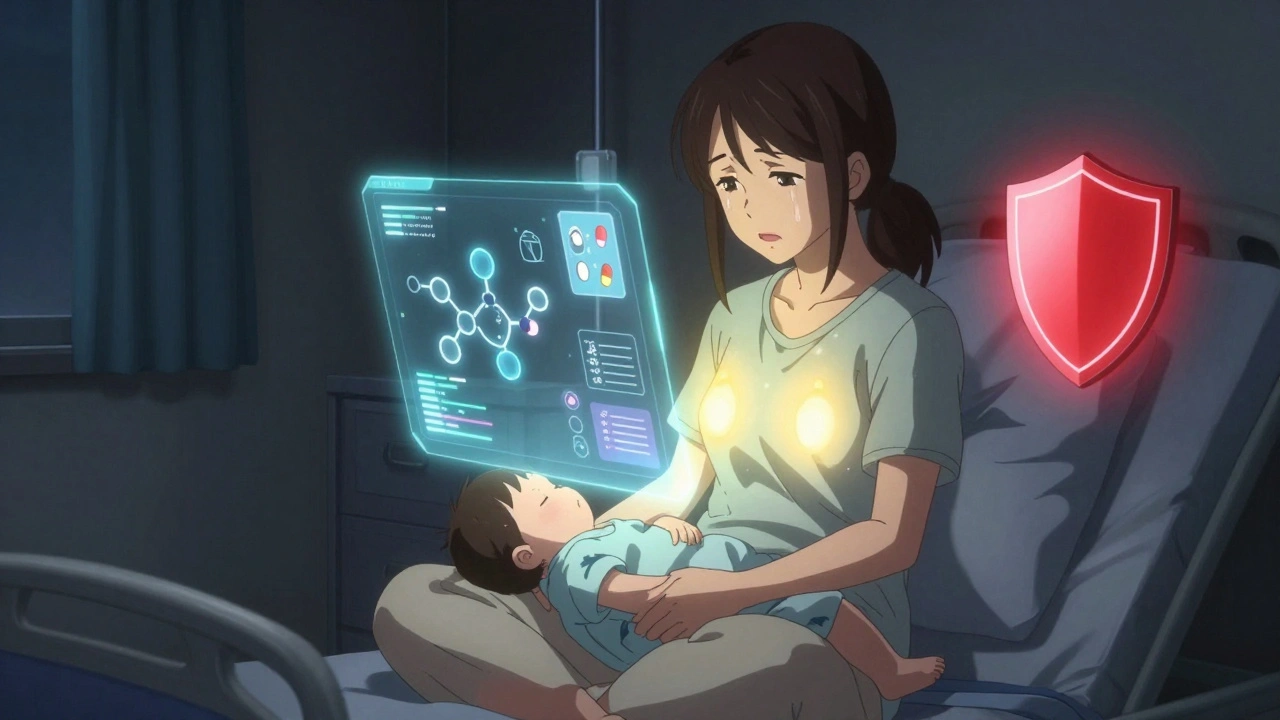
If you’re breastfeeding and taking medication, you’ve probably panicked. Is this safe? Will it hurt my baby? Most websites give vague advice. LactMed is different. It’s a database built by the National Library of Medicine with input from the Academy of Breastfeeding Medicine. It covers over 4,200 drugs, herbs, and chemicals - and tells you exactly what passes into breast milk, at what levels, and what the research says about infant effects.
It’s updated weekly. Each monograph is based on peer-reviewed studies, not opinions. And unlike BabyCenter or parenting blogs, LactMed doesn’t rely on anecdotal stories. It uses hard data. The summaries are written at an 8th-grade level, making them readable without oversimplifying.
One 2023 study in the Journal of Human Lactation followed a mother undergoing chemotherapy who used LactMed to continue breastfeeding safely. Her baby’s blood tests showed no detectable levels of the drug. That’s not luck. That’s science.
There’s no other resource like it. If you’re nursing and on meds, LactMed should be your first stop - not Google, not Facebook groups, not even your pharmacist’s quick guess. This is the gold standard.
DrugBank: Deep Science, For the Motivated Patient
DrugBank is the powerhouse. Created by researchers at the University of Alberta, it’s used by doctors, pharmacists, and scientists worldwide. But its public version? It’s surprisingly useful for patients who want to go beyond basics.
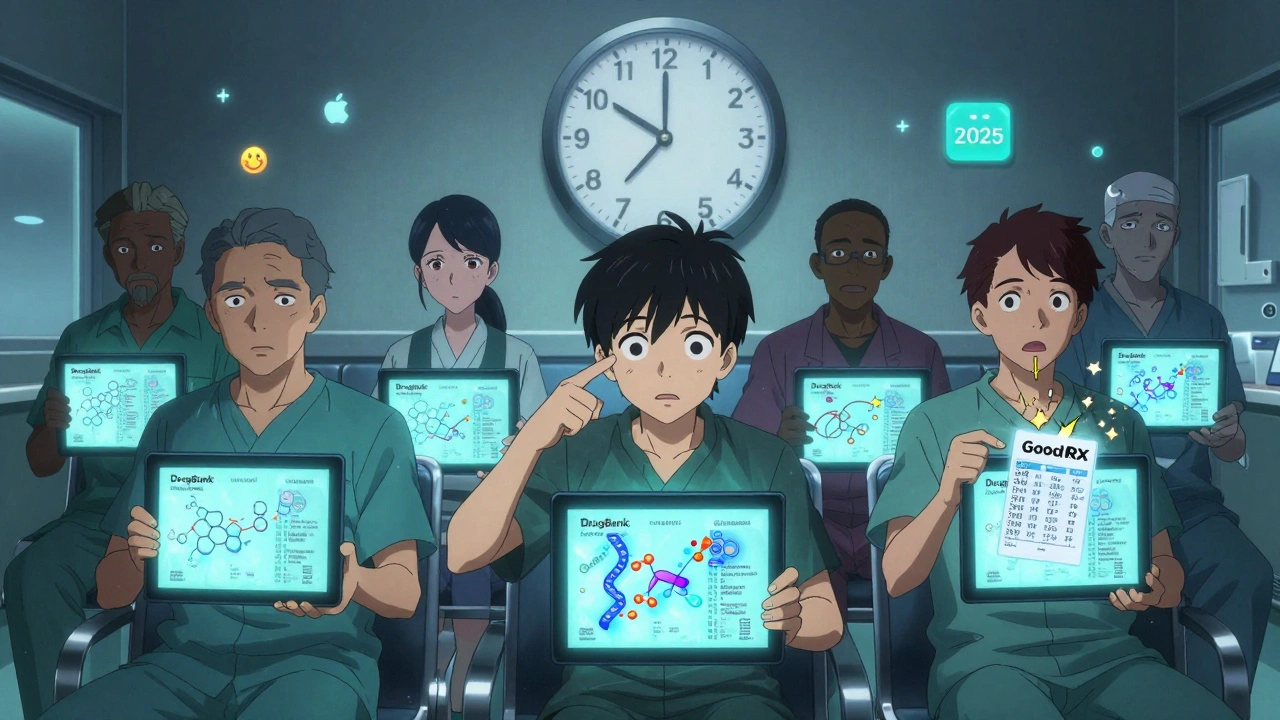
It lists over 13,500 drugs - including 2,720 approved by the FDA. You can see how a drug works in the body, what genes affect how it’s processed, what drugs interact with it, and even what it looks like chemically. It’s like having a pharmacology textbook open on your phone.
But it’s not for everyone. The interface is dense. The “Drug Interactions” section shows a matrix of hundreds of possible combinations. The average patient spends 15-20 minutes just figuring out how to use it. A 2022 study from the University of Toronto found 43% of users felt confused by the visuals.
That said, for people with complex conditions - rare diseases, multiple prescriptions, or genetic sensitivities - DrugBank is unmatched. One user found a drug-gene interaction that no other tool flagged. Their doctor adjusted the dose, avoiding a serious side effect. That’s the kind of insight that saves lives.
There’s a free tier. You can search, see interactions, and read basic data. If you want deeper data - like clinical trial results or patent info - you’ll need a paid account ($499/year). Most patients won’t need it. But if you’re the type who reads research papers for fun, it’s worth exploring.
Why Not WebMD, Drugs.com, or GoodRx?
You’ve probably used them. WebMD has flashy layouts. Drugs.com has quick summaries. GoodRx shows prices. All of them are popular. But here’s the problem: they’re not neutral.
WebMD and Drugs.com run ads from drug companies. Their content is often written by freelance writers, not scientists. A 2021 JAMA Internal Medicine review found WebMD’s accuracy rated just 62 out of 100. GoodRx? It’s the best for prices - 94% accurate on real-time costs - but tells you nothing about side effects or safety.
They’re great for quick checks. But if you need to know if a drug is safe during pregnancy, or how it interacts with your heart condition, they’re not enough. They’re the summary. DailyMed, LactMed, and DrugBank are the full report.
How to Use These Tools Without Getting Overwhelmed
You don’t need to be a scientist to use these. Here’s how to make them work for you:
- Start with MedlinePlus (medlineplus.gov). It’s the National Library of Medicine’s patient-friendly portal. Search your drug, and it links directly to DailyMed and LactMed - with plain-language explanations.
- Use DailyMed to confirm exact dosage. If your pill looks different than last time, or the instructions changed, check the official label.
- Use LactMed if you’re nursing. No exceptions. Don’t rely on “I heard it’s fine.”
- Use DrugBank only if you’re dealing with complex meds. If you’re on five drugs, have a genetic condition, or are researching rare side effects, it’s worth the time.
- Pair DrugBank with GoodRx. One tells you how the drug works. The other tells you how much it costs.
And never, ever stop at one source. If DailyMed says “use with caution,” and LactMed says “safe,” talk to your doctor. These tools give you facts - not medical advice.
What These Sites Don’t Do
They won’t tell you if your insurance covers the drug. They won’t tell you how to get a discount. They won’t answer “Is this better than the other one?” They’re not shopping sites. They’re safety tools.
For prices, use GoodRx. For side effect comparisons, talk to your pharmacist. For emotional support, join a patient group. But for truth? These are the only platforms that answer with data, not dollars.
What’s Coming Next
The government is working to make these tools easier. By late 2025, DailyMed will connect directly to Apple Health Records. That means your meds will auto-populate in your phone - with official labels attached.
DailyMed is also testing AI summaries. In late 2024, it began piloting a version that turns FDA labels into plain English using AI. Early results show patients understand the warnings 60% better.
But the biggest change? More hospitals are linking these tools directly into their patient portals. If your doctor’s system uses Epic, there’s a good chance DailyMed is already embedded in your chart.
Final Thought: Trust the Source, Not the Search Engine
Every day, people make decisions based on Google snippets. They read one line from a blog. They panic. They stop their meds. They take too much. They mix things they shouldn’t.
These free, government-run databases exist because someone once died because they trusted the wrong source. The FDA didn’t build DailyMed because it was trendy. They built it because patients needed truth - not marketing.
You don’t need to be an expert. You just need to know where to look. And now you do.

Write a comment
Your email address will not be published.
Recent Posts
-
 How Neuroblastoma Links to Developmental Disorders: Genetics, Risks & Care September 22, 2025

8 Comments
I used DailyMed last week when my pill looked different. Turned out the pharmacy switched generics and the dosage was off by half. I almost didn’t catch it. Thanks for reminding people to check the source.
Of course the government site is the best. Because nothing says trust like a bureaucracy that can’t even fix their own website. The interface looks like it was coded in 2003 with Notepad. And you want me to believe this is the gold standard? Please.
There’s something deeply beautiful about how these resources exist outside the profit motive. They’re not trying to sell you anything-just truth. In a world where every click is monetized, it’s radical to find information that doesn’t have a hidden agenda. We should be fighting to expand them, not just use them.
God bless LactMed. I was on antidepressants while nursing and nearly quit because some random mom on Facebook said it "might make the baby sleepy." I went to LactMed and saw the data-trace amounts, zero clinical impact. I kept going. My kid’s now three, thriving, and still nursing. That site saved my sanity and my bond with my baby. No hype. Just facts. That’s rare.
Wait-so you’re telling me the FDA and NIH are just quietly giving us free, accurate drug info? No ads? No tracking? That’s too clean. Someone’s watching. This is a setup. They’re collecting our health data to build a national control system. You think DailyMed is for patients? Nah. It’s for the algorithm. They want to know what you’re taking before they decide if you’re "fit" to have kids or a job. Don’t fall for it.
While I appreciate the intent behind this post, the implicit dismissal of commercial pharmaceutical websites as inherently untrustworthy is both reductive and intellectually lazy. The reality is that many of these platforms employ licensed pharmacists and medical writers who adhere to strict editorial guidelines. To equate advertising with inaccuracy is a logical fallacy that undermines informed discourse.
Let me tell you something. In India, we don’t have DailyMed. We have Google. We have WhatsApp forwards from cousins who "know a guy who took this and got better." And yet, somehow, we survive. You Americans act like you invented truth because you have a government database. But truth isn’t in a server. It’s in experience. In community. In the grandmother who’s seen ten generations of sick people. You think your 9th-grade summary is better than 50 years of lived wisdom? That’s arrogance dressed as science.
fr fr why is no one talking about how the fda just got hacked last year? i heard the drug data got swapped out for a few weeks and nobody noticed. i mean… what if your meds got replaced with placebo labels? i’d rather just ask my aunt who works at cvs tbh