Medication-Alcohol Interaction Checker
Check Your Interaction Risk
This tool helps you understand potential risks when combining alcohol with medications. Always consult your doctor or pharmacist for personalized advice.
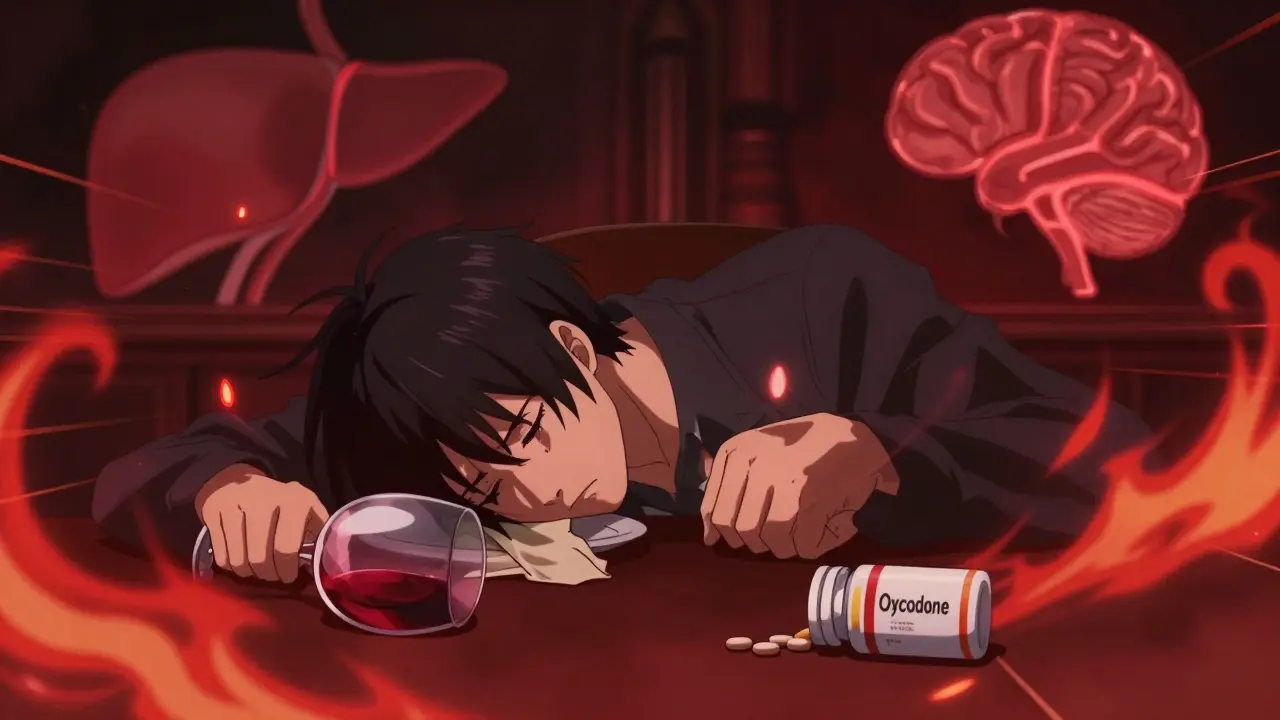
Drinking alcohol while taking medication might seem harmless-maybe you had a glass of wine with dinner and took your painkiller afterward. But that small choice could be putting your life at risk. Every year, thousands of people end up in emergency rooms because they didn’t realize how dangerous mixing alcohol with common medicines can be. It’s not just about getting drunk faster. It’s about your liver shutting down, your breathing stopping, or your blood pressure crashing. And it’s happening more often than you think.
Why Alcohol and Medications Don’t Mix
Alcohol doesn’t just sit in your stomach. Once it enters your bloodstream, it heads straight to your liver-the same organ that breaks down most medications. When both are present, they compete for the same enzymes. This slows down how fast your body clears the drug, or sometimes speeds it up in dangerous ways. The result? Too much of the medicine builds up in your system, or it stops working altogether.
Alcohol also affects your brain and nervous system. Many medications do the same. When they team up, the effect isn’t just added-it’s multiplied. Think of it like pressing the gas and brake at the same time. Your body doesn’t know what to do, and it can lead to serious, even deadly, outcomes.
Deadly Combinations: The High-Risk Medications
Some medications are especially dangerous when mixed with alcohol. These aren’t rare drugs-they’re prescribed to millions.
- Opioids (oxycodone, hydrocodone, morphine): These already slow your breathing. Alcohol does the same. Together, they can stop your breathing completely. In 2020, 20% of opioid overdose deaths in the U.S. involved alcohol. The FDA removed a long-acting opioid pill from the market in 2005 because alcohol caused it to release all its poison at once.
- Benzodiazepines (alprazolam, diazepam, lorazepam): Used for anxiety and sleep, these drugs calm your nervous system. Alcohol does the same. Combine them, and your risk of overdose goes up by 24 times. Many people don’t realize their anti-anxiety pill and a nightcap are a lethal combo.
- Acetaminophen (Tylenol): This common pain reliever is safe alone-but with alcohol, it turns toxic. Your liver turns acetaminophen into a poison called NAPQI. Normally, your body neutralizes it with glutathione. But alcohol drains those stores. The result? Acute liver failure. The FDA says acetaminophen-alcohol interactions cause over 56,000 ER visits every year in the U.S.
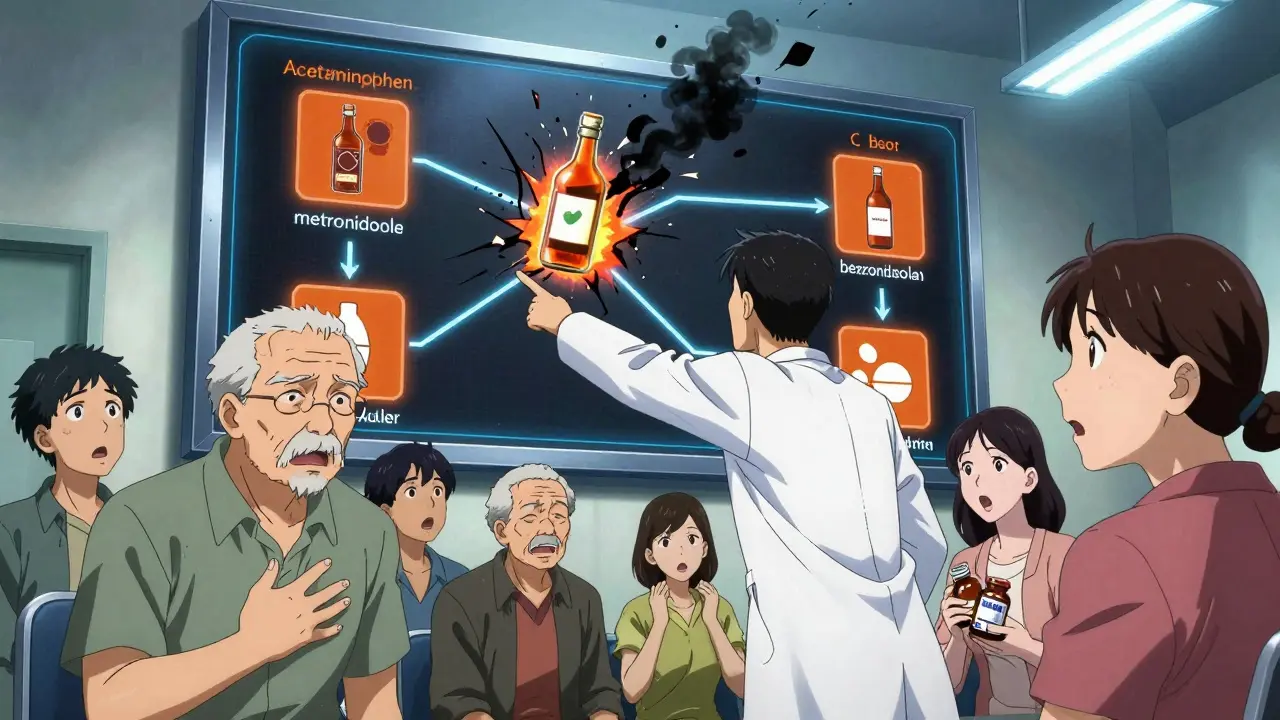
- Metronidazole (Flagyl): This antibiotic triggers a violent reaction with alcohol: nausea, vomiting, flushing, racing heart, and chest pain. It’s called a disulfiram-like reaction. You must wait at least 72 hours after your last dose before drinking.
Other Dangerous Interactions You Might Not Know About
It’s not just the obvious ones. Even common OTC meds can turn risky.
- NSAIDs (ibuprofen, naproxen): These reduce inflammation but also irritate your stomach lining. Alcohol does the same. Together, they can cause bleeding ulcers. Studies show the risk goes up 3 to 5 times.
- Antihistamines (diphenhydramine, cetirizine): They make you drowsy. Alcohol makes you drowsier. You could fall asleep at the wheel-or stop breathing in your sleep.
- ADHD meds (Adderall, Ritalin): These speed up your heart. Alcohol slows you down. The clash can cause irregular heartbeat, high blood pressure, and heart damage.
- Diabetes meds (sulfonylureas, metformin): Alcohol can drop your blood sugar dangerously low. With sulfonylureas, the risk of hypoglycemia jumps by 300%. Metformin mixed with alcohol can trigger lactic acidosis-a rare but fatal buildup of acid in the blood.
- Blood pressure meds: Alcohol can cause your blood pressure to spike or crash. This is especially dangerous for older adults, who are more likely to fall and break a hip.
- SSRIs (sertraline, fluoxetine): These antidepressants don’t usually cause dangerous reactions with alcohol-but alcohol makes depression worse. It cancels out the benefit of the drug and can increase suicidal thoughts.
Who’s at the Highest Risk?
It’s not just about what you take-it’s about who you are.
People over 65 are at the greatest danger. Their bodies process alcohol and drugs slower. They take more medications-on average, 14 prescriptions a year. The Beers Criteria, used by doctors to avoid risky prescriptions in older adults, lists 30 drugs that should never be mixed with alcohol, including sleep aids, muscle relaxers, and older antihistamines.
Women face higher risks too. Because of lower body water and different enzyme levels, women get higher blood alcohol levels than men after the same drink. That means even one glass of wine can have a stronger effect on their meds.
Veterans are another high-risk group. The VA found that 30% of veteran suicides involved alcohol and prescription drugs. Many are on painkillers for injuries, antidepressants for PTSD, and sleep meds-all mixed with alcohol.
People with mental health conditions are 3.5 times more likely to mix alcohol with meds. Depression, anxiety, and substance use disorders often go hand in hand. The cycle is hard to break without professional help.
What Should You Do?
You don’t have to guess. There are clear steps to stay safe.
- Read every label. The FDA requires alcohol warnings on about 100 prescription drugs and 700 over-the-counter products. Look for phrases like "Do not drink alcohol while taking this medication" or "May cause drowsiness-avoid alcohol." If it’s not clear, ask.
- Ask your pharmacist. Pharmacists see your full medication list. They’re trained to spot dangerous combos. When you pick up a new prescription, ask: "Can I drink alcohol with this?" Don’t assume it’s safe just because it’s not labeled.
- Use the AUDIT-C screening. If you’re seeing a doctor for a new medication, they should ask you about your drinking habits. The AUDIT-C is a simple 3-question tool that helps identify risky alcohol use. If they don’t ask, bring it up yourself.
- Wait it out. For some drugs like metronidazole, you need to wait 72 hours after your last dose. For others, like SSRIs, you might be okay with one drink-but only if you know your body’s reaction. When in doubt, skip it.
- Track your meds. Keep a list of everything you take-prescriptions, supplements, OTC drugs. Bring it to every appointment. Many dangerous interactions happen because doctors don’t know what else you’re on.

What’s Changing in Healthcare?
Doctors and pharmacies are starting to catch up.
Electronic health records like Epic now block prescriptions if the patient has a history of alcohol use and is being prescribed a high-risk drug. The FDA now requires new extended-release opioids to be tested for alcohol interactions before approval. The CDC launched a public awareness campaign in January 2023 called "Alcohol and Medicine Don’t Mix," spending $2.5 million on social media and pharmacy posters.
But the biggest gap? Communication. A 2022 study found only 35% of primary care doctors routinely screen patients for alcohol use when prescribing meds. That means most people aren’t being warned.
You’re Not Alone-But You Are Responsible
It’s easy to think, "I’ve had a drink with my painkiller before and nothing happened." But that’s how accidents start. One time, it’s fine. The next time, your liver can’t handle it. Your breathing slows too far. You don’t wake up.
There’s no safe amount of alcohol with many medications. For some, even one drink is too much. For others, the risk builds over time. The truth is, if your medication has any sedative, liver-metabolized, or blood-pressure-lowering effect, alcohol is a gamble you can’t afford to take.
Don’t wait for a warning label. Don’t rely on memory. Ask. Check. Wait. Your life depends on it.
Can I have one drink while taking painkillers?
It depends on the painkiller. With opioids like oxycodone or hydrocodone, even one drink can be deadly. With acetaminophen (Tylenol), one drink increases your risk of liver damage, especially if you drink regularly. With NSAIDs like ibuprofen, one drink raises your chance of stomach bleeding. If you’re unsure, skip it. There’s no safe gray area with these drugs.
How long should I wait after stopping a medication before drinking alcohol?
It varies. For metronidazole (Flagyl), wait at least 72 hours. For most antidepressants or blood pressure meds, the drug may be out of your system in a few days, but the risk of interaction can linger. For extended-release opioids, even after stopping, your body may still be sensitive. When in doubt, wait a full week. Always check with your pharmacist.
Do herbal supplements interact with alcohol too?
Yes. Kava, valerian root, and melatonin can all increase drowsiness when mixed with alcohol. St. John’s Wort can raise the risk of serotonin syndrome when combined with alcohol and antidepressants. Many people think "natural" means safe-but herbs are powerful chemicals. Always treat them like medicine and ask your pharmacist before drinking.
Is it safe to drink alcohol while on antibiotics?
Most antibiotics don’t have dangerous interactions with alcohol-but some do. Metronidazole, tinidazole, and linezolid can cause severe reactions. Even antibiotics like doxycycline or azithromycin can make nausea and dizziness worse. Alcohol also weakens your immune system, which can slow your recovery. Best practice: avoid alcohol until you’re fully done with your course and feeling better.
What should I do if I accidentally mixed alcohol with a dangerous medication?
If you feel dizzy, confused, nauseous, have trouble breathing, or your heart is racing, seek help immediately. Call poison control or go to the ER. Don’t wait to see if it gets better. Some reactions, like liver failure or respiratory depression, can develop slowly but become fatal within hours. It’s better to be checked out than to risk losing time.
Final Thought: Your Body Is Not a Lab
Medications are designed to help. Alcohol is a toxin. When you mix them, you’re not experimenting-you’re risking your health. There’s no benefit to drinking while on meds. No reward. No exception. The only safe choice is to avoid alcohol entirely if you’re taking any prescription or over-the-counter drug that affects your brain, liver, or heart.
It’s not about being perfect. It’s about being smart. One conversation with your pharmacist could save your life.

Write a comment
Your email address will not be published.
Recent Posts
-
 Proving Bioequivalence for Complex Generic Drugs: Key Challenges August 19, 2026
 -
 Bittersweet Nightshade Benefits: The Ultimate Supplement Guide September 4, 2025
9 Comments
It's wild how many people treat medications like they're candy-pop a pill, crack a beer, no big deal. But the science here is terrifyingly clear: alcohol doesn't just 'interact' with drugs, it hijacks your liver's entire metabolic pathway. The liver doesn't have a priority list; it's just trying to process both at once, and when it can't keep up, you get toxic buildup. I've seen ER reports where people thought 'one glass' was fine-until their AST/ALT levels spiked into the thousands. It's not about willpower, it's biochemistry. And the FDA's 700+ OTC warnings? Those aren't marketing fluff-they're emergency notices written in plain language. We need more pharmacists in primary care, not less.
Let’s be real-this whole discourse is a neoliberal technocratic fantasy. The body is not a machine to be optimized, it’s a living, breathing dialectic of chaos and homeostasis. You reduce alcohol to a ‘toxin’ and medications to ‘solutions,’ but both are cultural artifacts shaped by capitalist pharmaceutical hegemony. Who decided that ‘safe’ means zero alcohol? Is sobriety the new piety? The real danger isn’t the cocktail-it’s the moral panic that turns every sip into a sin. The body knows what it needs. Trust the process, not the pamphlet.
Everyone says don’t mix alcohol with meds but nobody tells you how to quit drinking if you’re already addicted. I’ve been on antidepressants for 5 years. I drink because I’m lonely. I take the pills because I’m depressed. You think telling me ‘just don’t drink’ helps? Nah. It just makes me feel guilty. And guilt doesn’t fix anything. The system doesn’t care about people like me-it just wants us to follow rules. But rules don’t heal trauma. Real help does. So stop preaching. Start listening.
I’m a nurse and I see this every day. A 72-year-old man takes his blood pressure med, has one glass of wine with dinner, and ends up in the ER because his BP dropped so low he passed out and cracked his skull. His wife didn’t know it was dangerous. No one told them. This isn’t fear-mongering-it’s prevention. If you’re on any med that says ‘may cause drowsiness,’ assume alcohol will double it. One drink is too much. Period. And if you’re scared to ask your doctor? Bring this post. I’ll bet they’ll thank you for being smart.
One drink with Tylenol = liver damage. No exceptions. Stop pretending it’s a gray area.
Thank you for laying this out so clearly. I’ve been on metronidazole before and had no idea about the 72-hour rule-I drank at 48 hours and felt like I was going to die. The flushing, the palpitations… it was terrifying. I wish every pharmacy had a sticker on the bottle like ‘DO NOT DRINK FOR 72H’ in bold red. Maybe we need QR codes on prescriptions that link to interactive interaction checkers. Simple, practical tools could save so many lives. This isn’t about restriction-it’s about informed consent.
My grandpa took his pain pills and whiskey every night for 20 years. Never had a problem. So why are you telling me I can’t have one beer with my ibuprofen? Maybe it’s not about the drug-it’s about the person. Some folks have strong livers. Some folks have weak ones. You can’t just blanket ban everything. That’s not science, that’s fear. I’ve got a 100% survival rate with my combo. Don’t assume I’m dumb just because I like a drink.
bro just don't drink if you're on meds 😭🫠 i know it's hard but your liver will thank you later. i used to do it all the time and now i'm on a transplant list. not worth it. just say no. 🙏
Hey Dusty-I hear you. My dad did the same thing: whiskey with his pills for decades. He made it to 80. But here’s the thing-he also had a liver transplant at 72, and his doctor told him it was because of 40 years of nightly combinations. You’re right: some people get lucky. But luck isn’t a plan. And if you’re lucky enough to have a dad who made it, don’t you want to make sure your kids don’t have to learn the hard way? I don’t judge people who drink-I just want them to know the real stakes. One conversation, one question to the pharmacist… that’s all it takes to change the outcome.