Excipient Checker
Check Your Medication Excipients
Many people experience side effects when switching from brand-name to generic drugs due to different inactive ingredients (excipients). This tool helps you identify potential excipients in your medication.
Results
Most people assume that a generic pill is just a cheaper copy of the brand-name version-same effect, same risks. But what if the problem isn’t the active ingredient at all? What if your nausea, dizziness, or sudden flare-up isn’t from the medicine itself, but from something hidden inside the pill-the excipients?
What Are Excipients, and Why Do They Matter?
Excipients are the non-active ingredients in a medication. They don’t treat your condition. They’re not meant to have any therapeutic effect. But they do a lot of other things: they hold the pill together, help it dissolve at the right speed, make it easier to swallow, give it color, or even preserve it. Think of them like the scaffolding and paint on a house-the structure is the active drug, but the rest makes it usable. Brand-name drugs and their generic versions must contain the exact same active ingredient, strength, and dosage form. That’s the law. But when it comes to excipients? The rules are looser. A generic manufacturer can use different fillers, binders, dyes, or flavorings-as long as the drug still gets into your bloodstream the same way. Here’s the catch: your body doesn’t care about the law. It cares about what’s actually touching your gut, your skin, or your immune system. And some people react badly to ingredients that are perfectly fine for everyone else.When a Generic Causes Problems You Didn’t Have Before
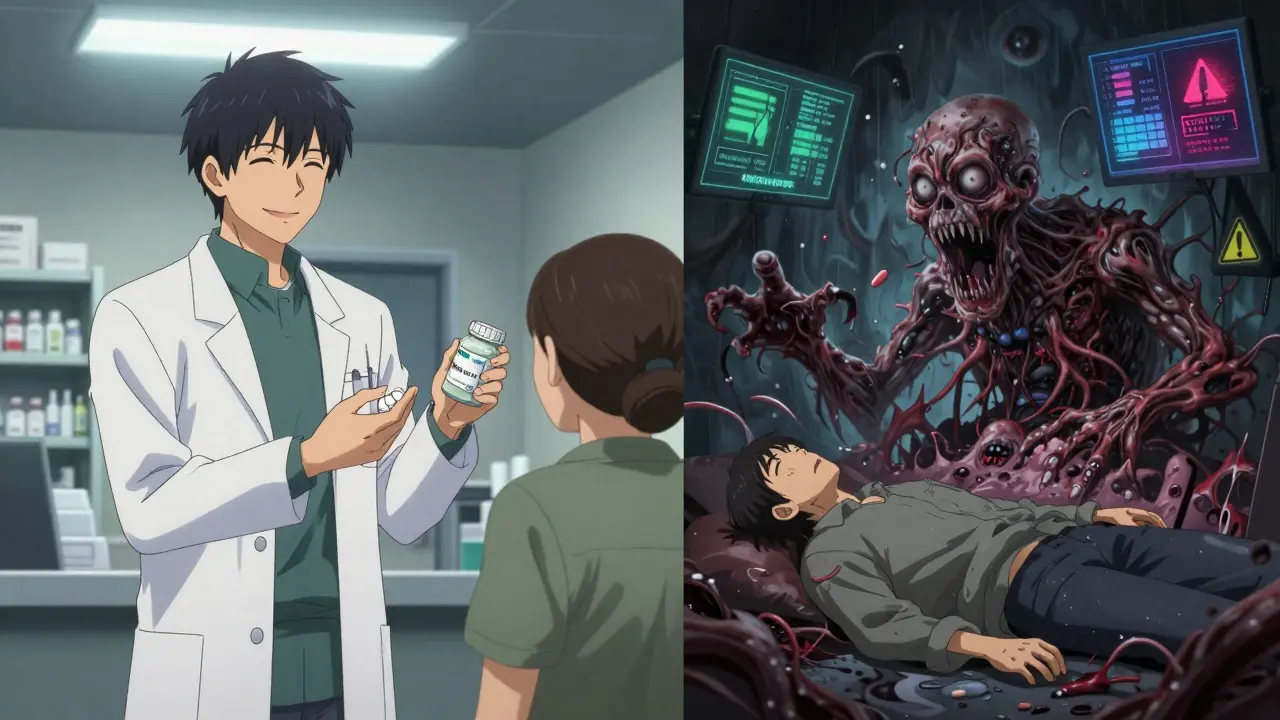
Switching from a brand-name drug to a generic is usually safe-and saves you money. But for a small but significant group of people, it’s not harmless. One well-documented case involved a patient switching from branded furosemide to a generic version. They’d taken the brand for years with no issues. After switching, they developed a severe allergic reaction. The culprit? Croscarmellose sodium, a common disintegrant used in the generic version but not in the brand. The patient had never been tested for sensitivity to this ingredient-and no one told them it was in the pill. Another example: a lactose-intolerant person switched to a generic version of an antiarrhythmic drug. The brand used cornstarch as a filler. The generic used lactose. Within days, they had bloating, cramps, and diarrhea. The drug wasn’t working properly because their gut was inflamed-slowing absorption. Their heart condition got worse, not because the active ingredient changed, but because the excipient changed. These aren’t rare outliers. A 2023 survey by GoodRx found that 12% of people who switched to generics reported new side effects they never had on the brand. Five percent said the generic just didn’t work as well. For many, it wasn’t a vague feeling-it was a clear, repeatable pattern tied to a specific switch.Who’s Most at Risk?
Not everyone needs to worry. For most people, generics work just fine. But some groups are more vulnerable:- People with known allergies or intolerances: If you’re allergic to dyes like FD&C Red No. 40, or intolerant to lactose, gluten, or certain sugars, you need to know what’s in your pills.
- Patients on narrow therapeutic index (NTI) drugs: These are medications where even tiny changes in blood levels can cause big problems. Examples include warfarin (blood thinner), levothyroxine (thyroid), and certain seizure drugs like phenytoin. A 5% difference in absorption might be fine for an antibiotic-but dangerous for a blood thinner.
- People with chronic neurological conditions: Parkinson’s patients, in particular, report real differences. One study found 18% of Parkinson’s patients had worse symptoms after switching from branded levodopa to a generic. Why? The way the tablet breaks down in the stomach can change how fast the drug is absorbed. For Parkinson’s, timing matters. Too slow? You get stiff and stuck. Too fast? You get twitchy and nauseated.
- People with autoimmune or gut disorders: Conditions like celiac disease, Crohn’s, or IBS make people more sensitive to additives that affect digestion. Even small changes in excipients can throw off absorption or trigger inflammation.
Why Don’t Pharmacies Tell You?
You won’t see excipients listed on the pill bottle. Not by law. The label only shows the drug name, strength, and dosage. The full list of ingredients is in the package insert-something most people never open. Pharmacists know the excipients. But unless you ask, they won’t volunteer the information. And most patients don’t know to ask. The American Pharmacists Association says patients with sensitivities should keep a medication diary: note the drug name, manufacturer, and any reaction. That way, if you switch to a new generic and feel worse, you can trace it back to the specific version you took.How to Protect Yourself
You don’t have to avoid generics. But you do need to be smart about them.- Ask your pharmacist: When you get a new prescription, ask: “Is this a generic? What’s the manufacturer? What are the inactive ingredients?” They can look up the product details.
- Check the package insert: It’s usually inside the box. Look for the “Inactive Ingredients” section. Save it. If you switch brands, compare the lists.
- Stick with the same generic manufacturer: If a generic works for you, try to keep getting the same one. Different manufacturers use different excipients-even if both are labeled as “generic.”
- Ask your doctor to write “Do Not Substitute”: If you’ve had a bad reaction, your doctor can legally require the brand or a specific generic. It’s not expensive to ask.
- Know your triggers: If you’re allergic to lactose, gluten, or certain dyes, make a list and share it with your doctor and pharmacist. Many excipients have generic names-lactose, cornstarch, titanium dioxide-that aren’t obvious.

The Bigger Picture: Why This Is Changing
The generic drug market is huge-90% of prescriptions in the U.S. are generic. That’s good for costs. But it’s also a blind spot in safety. The FDA is starting to pay attention. In 2024, they announced plans to create a public database listing excipients for both brand and generic drugs. That’s a big step. For the first time, patients will be able to look up exactly what’s in their pills without calling a pharmacist. Some generic manufacturers are already responding. In early 2024, major companies agreed to standardize excipients in NTI drugs-like thyroid and seizure medications-to reduce switching issues. It’s not mandatory yet, but it’s a sign the industry is waking up. And patients are speaking up. Online communities like Reddit’s r/Parkinsons and the Michael J. Fox Foundation’s Fox Insight platform are full of stories: “I felt better after switching back to the brand.” “My tremors got worse after the generic changed.” “I thought I was getting worse-turns out it was the dye.”What This Means for You
Generic drugs save billions every year. They’re safe and effective for the vast majority of people. But assuming they’re all identical? That’s where the risk lies. Your body doesn’t care if a pill is cheap. It cares if it contains something it can’t tolerate. If you’ve ever felt “off” after switching medications-nausea, fatigue, brain fog, worse symptoms-it’s worth investigating. It might not be your disease getting worse. It might be the filler in the pill. Don’t assume your doctor knows. Don’t assume the pharmacist will tell you. Ask. Track. Compare. Keep a record. And if you’ve had a reaction, speak up-your experience could help someone else avoid the same mistake.Frequently Asked Questions
Are generic medications as effective as brand-name drugs?
Yes-for most people and most drugs, generics are just as effective. The FDA requires them to deliver the same active ingredient at the same rate and amount as the brand. Studies show 92% of generics perform identically to brand-name drugs across 47 drug classes. But for narrow therapeutic index drugs like warfarin or levothyroxine, even small differences in absorption can matter. If you’re on one of these, stick with the same version unless your doctor advises otherwise.
Can excipients in generic drugs cause allergic reactions?
Yes. While rare, excipients like dyes (FD&C Red No. 40), lactose, gluten, or croscarmellose sodium can trigger allergic or intolerant reactions in sensitive individuals. One documented case involved a patient who developed a severe rash and swelling after switching to a generic furosemide containing croscarmellose sodium, which wasn’t in the brand version. If you have known allergies, always check the inactive ingredients.
Why don’t medication labels list excipients?
U.S. law doesn’t require manufacturers to list inactive ingredients on the bottle label. The full list is only in the package insert, which most people don’t read. Pharmacists have access to this information, but you have to ask. The FDA is working on a public database to make this easier, but for now, it’s up to you to request the details.
What should I do if I think a generic is causing side effects?
First, don’t stop taking your medication without talking to your doctor. Write down when the side effects started, what generic you switched to, and what symptoms you’re having. Then contact your pharmacist to find out the manufacturer and excipients in that version. Compare it to your previous medication. If you suspect the excipient, ask your doctor to write “Do Not Substitute” on your prescription to get the same version or the brand.
Can I switch back to the brand-name drug if generics cause problems?
Yes. Your doctor can prescribe the brand-name version and write “Dispense as Written” or “Do Not Substitute” on the prescription. Insurance may require prior authorization, especially for expensive drugs, but many plans will approve it if you have documented side effects from generics. If cost is an issue, ask about patient assistance programs or generic versions from a specific manufacturer you’ve tolerated before.
Are there any medications where switching generics is always risky?
Yes. Medications with a narrow therapeutic index (NTI) are especially sensitive. These include warfarin, levothyroxine, phenytoin, cyclosporine, and certain anti-seizure drugs. Small changes in absorption can lead to toxicity or treatment failure. For these, many doctors recommend sticking with the same manufacturer or brand. Some states require special approval before substituting NTI generics.

Recent Posts
-
 Fibromyalgia and Aging: How Symptoms Evolve Over Time October 2, 2025
 -
 How to Buy Generic Depakote Online Safely and Cheaply in 2026 August 11, 2026