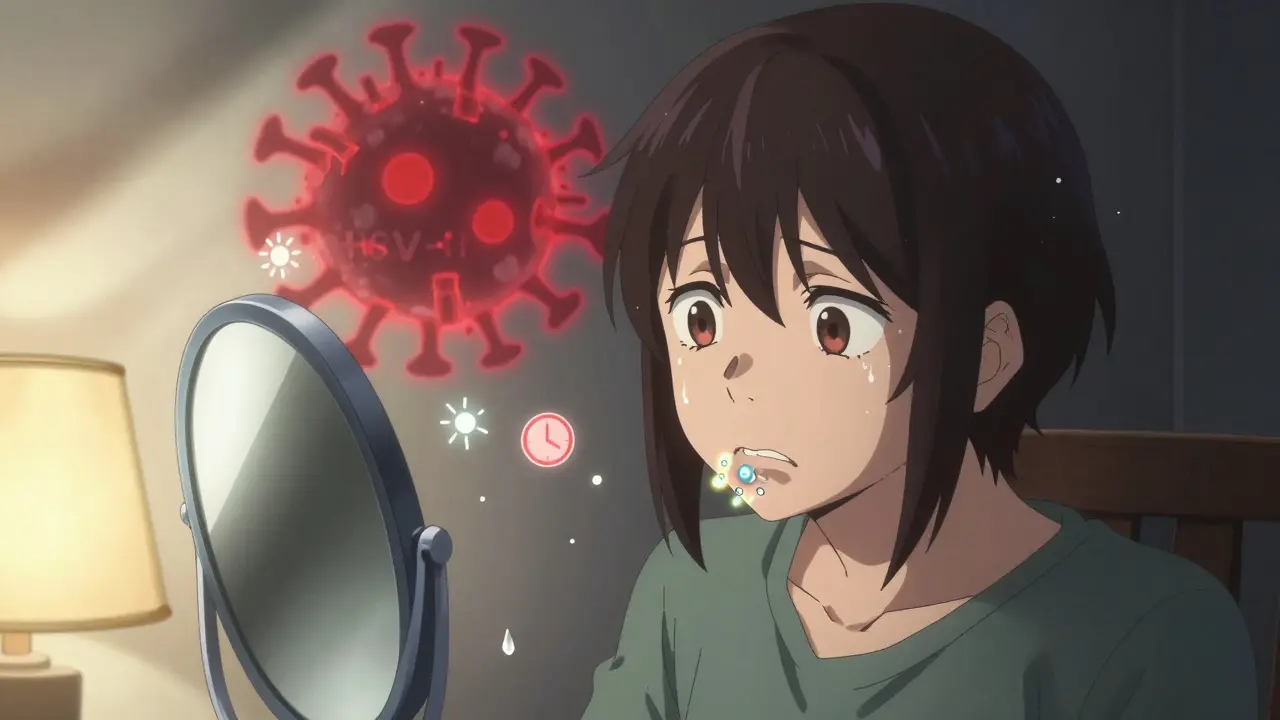
Ever looked in the mirror and wondered if that tiny bump on your lip is a cold sore or just a pimple? You’re not alone. Many people mistake one for the other - and that mix-up can make things worse. Cold sores and pimples look similar at first glance: red, swollen, sometimes with a white tip. But they’re completely different in cause, behavior, and treatment. Getting it wrong means using the wrong cream, spreading an infection, or waiting weeks longer to heal. Here’s how to tell them apart - and what to actually do about each one.
What Causes Cold Sores?
Cold sores are caused by the herpes simplex virus type 1 (HSV-1). It’s not rare - about 67% of people under 50 worldwide carry it, according to the World Health Organization. Most get it as kids, often through a kiss or sharing a drink. Once you have it, the virus stays in your nerves for life. It doesn’t go away. But it can sleep for months or years until something wakes it up.
Triggers? Sunburn, stress, hormonal shifts, illness, or even just being tired. When the virus reactivates, it travels down the nerve to the skin near your lips. That’s when you feel it - a tingling, burning, or itching sensation, usually 12 to 48 hours before you see anything. That’s your warning sign.
Then come the blisters. Not one, but a cluster of tiny, fluid-filled bubbles. They form right where your lip meets your face - the vermillion border. That’s a key clue. The fluid starts clear, then turns cloudy. After a day or two, they burst, leaving an open sore that crusts over. Healing takes 7 to 14 days without treatment. With antiviral medicine, it can drop to 5 to 7 days.
What Causes Pimples?
Pimples are part of acne. They happen when hair follicles get clogged. Your skin makes oil (sebum), sheds dead cells, and bacteria (Cutibacterium acnes) hang out in the mix. When things get stuck, inflammation follows. That’s the red, swollen bump you see.
Unlike cold sores, pimples can pop up anywhere on your face - forehead, chin, nose, cheeks. And yes, even on your lip surface. That’s because your lips have hair follicles too. A pimple usually appears as a single bump with a white or yellow center. It doesn’t come in clusters. It doesn’t tingle before it shows up. You might feel tenderness when you touch it, but no warning buzz.
Minor pimples heal in 3 to 7 days. Deeper ones, like cysts, can last weeks. They’re not contagious. You can’t catch a pimple from someone else. It’s all about your skin’s internal chemistry - oil, bacteria, and how your body responds.
Key Differences at a Glance
Here’s how to spot the difference fast:
- Location: Cold sores = lip border only. Pimples = anywhere on the face, including the lip surface.
- Appearance: Cold sores = group of tiny blisters. Pimples = single raised bump, often with a whitehead.
- Sensation: Cold sores = tingling, burning, itching before they appear. Pimples = no warning - just pain when touched.
- Contagious? Cold sores = yes, very. Pimples = no.
- Healing time: Cold sores = 7-14 days (5-7 with treatment). Pimples = 3-7 days (longer if cystic).
If you’re unsure, ask yourself: Did it tingle first? Is it right on the edge of your lip? Is it part of a cluster? If yes - it’s likely a cold sore.
How to Treat Cold Sores
Time matters. The earlier you treat, the better. If you feel that tingling - even before the blister shows - start antiviral treatment. Prescription options like acyclovir (Zovirax) or valacyclovir (Valtrex) can cut healing time by 1 to 2 days. Topical antivirals like penciclovir (Denavir) need to be applied every 2 hours while you’re awake during the first 4 days.
Over-the-counter options? Docosanol (Abreva) is the only FDA-approved OTC treatment. It won’t stop the sore, but it can reduce symptoms by 50% if used for 4 to 5 days straight.
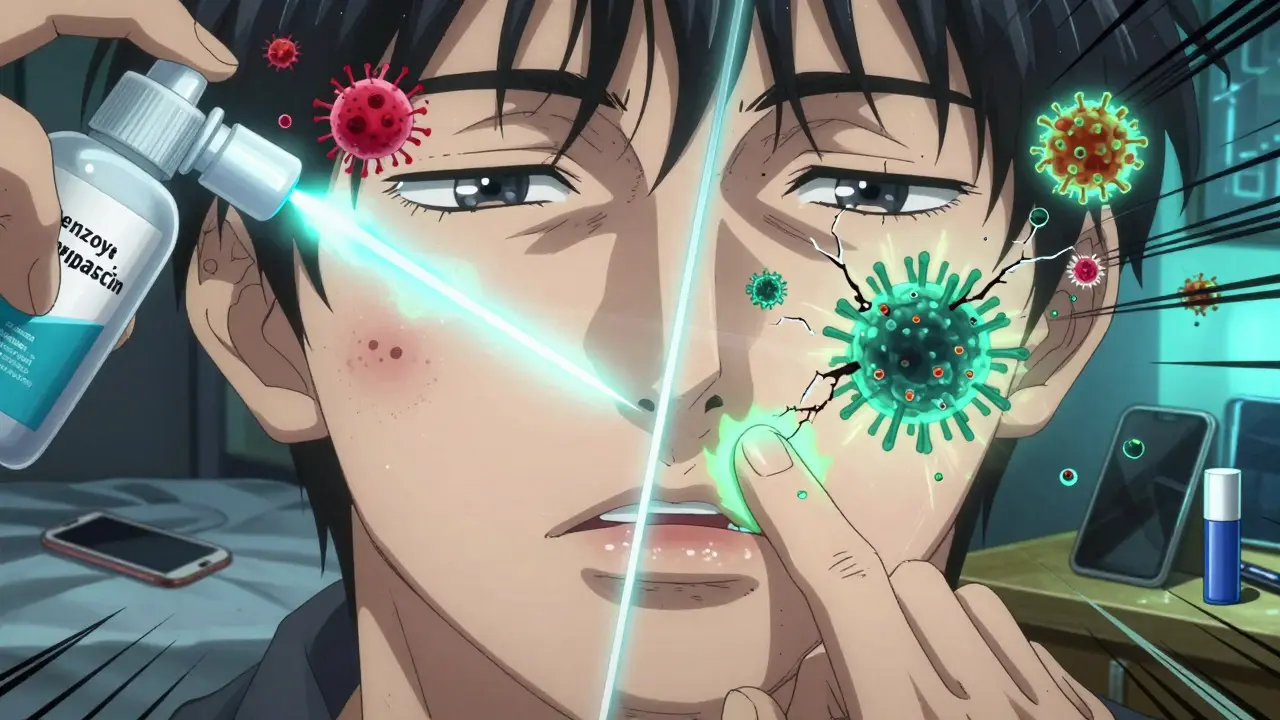
What NOT to do: Don’t pop the blisters. Don’t apply toothpaste, baking soda, or alcohol-based spot treatments. These irritate the skin, break open the blisters, and increase the chance you’ll spread the virus to your cheek, nose, or even your eye. That’s real risk.
Keep it clean. Wash your hands often. Don’t share lip balm, towels, or utensils. If you kiss someone during an outbreak, you’re risking transmission - up to 50% chance of spreading it.
How to Treat Pimples
Pimples respond to ingredients that unclog pores and kill bacteria. Benzoyl peroxide (2.5% to 10%) is the gold standard. It kills acne bacteria and reduces inflammation. Studies show it cuts inflammatory pimples by 40-60% in 4 weeks.
Salicylic acid (0.5% to 2%) works differently. It exfoliates dead skin cells to keep pores clear. It’s great for blackheads and whiteheads. Use it daily in cleansers or toners.
Apply treatments once or twice a day. Don’t overdo it - that dries out your skin and makes things worse. Use non-comedogenic moisturizers. Don’t pick. Picking leads to scarring and infection.
For stubborn cases, dermatologists may prescribe retinoids (like adapalene) or antibiotics. But for most people, consistent use of benzoyl peroxide or salicylic acid is enough.
Common Mistakes People Make
Here’s what goes wrong:
- Applying acne cream to a cold sore. That’s like using gasoline on a fire. It breaks blisters open, spreads the virus, and delays healing.
- Using toothpaste or alcohol to dry out a cold sore. These are harsh. They burn. They don’t help.
- Touching or popping a cold sore like a pimple. That’s how people spread it to their fingers or eyes.
- Sharing lip balm during an outbreak. One study found 41% of partners caught HSV-1 this way.
- Waiting until the sore is fully formed to treat it. The best window is during the tingling phase.
On the flip side, people who catch the tingling early and start antiviral cream right away report 30-50% shorter outbreaks. That’s huge.

Prevention Tips
For cold sores: Use sunscreen on your lips daily. UV exposure triggers 32% of outbreaks. Manage stress. Get enough sleep. If you get frequent outbreaks, talk to a doctor about daily antiviral suppression - it’s an option.
For pimples: Wash your face twice a day with a gentle cleanser. Avoid heavy makeup or oils. Clean your phone screen, pillowcases, and makeup brushes regularly. Hormonal acne? That’s trickier - might need medical help.
Both conditions benefit from consistent hygiene. Don’t touch your face. Wash your hands before applying anything. Use separate applicators for skincare if you have an active cold sore.
When to See a Doctor
See a dermatologist if:
- Your cold sore lasts more than 2 weeks.
- You get them more than 5 times a year.
- The sore spreads to your eye or other parts of your face.
- Your pimple is huge, painful, and doesn’t improve after 6 weeks of OTC treatment.
- You’re getting scarring or dark spots after breakouts.
There are new treatments on the horizon. In 2023, the FDA approved pritelivir - an experimental antiviral that cuts viral shedding by 70%. For acne, microbiome-friendly products are rising - they target bad bacteria without wiping out the good ones.
But right now, the best tools are the ones we already have. Know your skin. Know the signs. Treat early. Don’t guess.
Can a cold sore turn into a pimple?
No. A cold sore is a viral infection and a pimple is a clogged pore. They’re caused by completely different things. One can’t transform into the other. But they can appear close together - especially if you have acne-prone skin near your lips. That’s why it’s easy to confuse them.
Can I use benzoyl peroxide on a cold sore?
No. Benzoyl peroxide is designed to kill bacteria in clogged pores. It’s harsh on open sores. Applying it to a cold sore will irritate the skin, break open blisters, and likely spread the virus. It won’t help the cold sore heal - it’ll make it worse.
Why does my cold sore keep coming back?
Once you’re infected with HSV-1, the virus stays in your nerves forever. It wakes up when your immune system is low - from stress, sunburn, illness, or lack of sleep. If you get outbreaks often, talk to a doctor. Daily antiviral medication can reduce frequency by up to 80% in some cases.
Is it safe to kiss someone if I have a pimple on my lip?
Yes. Pimples aren’t contagious. You can’t pass acne to someone else through kissing or skin contact. But if you’re not sure whether it’s a pimple or a cold sore, avoid kissing until you know for sure. Cold sores are highly contagious - even before the blister shows.
Can stress cause pimples?
Yes. Stress doesn’t cause acne directly, but it increases oil production and slows healing. When you’re stressed, your body releases cortisol, which can trigger breakouts - especially around the jawline and chin. Managing stress helps, but it won’t replace proper acne treatment.
Final Takeaway
Cold sores and pimples look alike, but they’re not the same. One is viral. One is bacterial. One is contagious. One isn’t. One needs antivirals. One needs exfoliants. Mixing them up costs you time, comfort, and sometimes, your skin.
Learn the signs. Listen to your body. That tingling? That’s your warning. Treat early. Don’t pop. Don’t guess. And if you’re still unsure - see a dermatologist. Your skin will thank you.

Write a comment
Your email address will not be published.
Recent Posts
-
 Acetaminophen Safety: How to Avoid Overdose and Protect Your Liver November 14, 2025
 -
 Benzodiazepines: Memory Loss, Fall Risks, and Safe Tapering Strategies November 14, 2025
14 Comments
Lip pimple? Nah bro that's just your body rejecting Western medicine. In Nigeria we use neem leaves and prayer. No antivirals needed. You people overcomplicate everything.
Okay but like... have you considered that maybe the HSV-1 virus is just... your body's way of saying you're not meditating enough? Like I tried acyclovir but it didn't fix my aura imbalance. Also I think benzoyl peroxide is a government conspiracy to control our skin microbiome. 🤔
I've had cold sores since I was 7 and let me tell you, the tingling is the real villain. It's like your lip's personal alarm system screaming 'DANGER: VIRAL INTRUDER!' I catch it at the first tingle and hit it with penciclovir like a boss. No more 14-day suffering. Your skin deserves better than guesswork.
The data presented is statistically sound but lacks longitudinal cohort analysis. HSV-1 latency in trigeminal ganglia shows variable reactivation kinetics across populations. Your '67%' statistic is from WHO 2016 data - we need updated meta-analyses to account for regional seroprevalence shifts post-pandemic.
If it tingles? Cold sore. If it's just a bump? Pimple. Don't overthink it. Your body gives you signals. Listen. Treat accordingly. Simple. No magic creams needed. Just science and timing.
People who use toothpaste on cold sores are literally playing Russian roulette with their face. You're not a scientist, you're a disaster waiting to happen. And sharing lip balm? That's not just stupid, it's immoral. You're putting other people at risk for your laziness.
Hey everyone! I'm Deepika from Bangalore and I've been managing HSV-1 for 12 years! I switched to a plant-based diet, started yoga at 5am, and now I get outbreaks maybe once a year! The key is balance! Your body is a temple! Don't stress! Eat turmeric! Drink warm water! And always, always wash your hands! I used to get 6 outbreaks a year and now? Peace! You can do it too! 💪🌸
I used to pop every damn thing on my face like it owed me money. Then I got a cold sore and thought it was a zit. Ended up with herpes on my finger. Took months to heal. Don't be me. Don't touch. Don't guess. Just... stop. Seriously. Your fingers are not magic wands.
Tingling = virus. Bump = clogged pore. Simple. 😊 I used to stress over every little thing on my face. Now I just pause. Breathe. Check the location. If it's on the edge? Cold sore. If it's on the lip surface? Pimple. Life's easier when you stop overcomplicating things. Namaste 🙏
The assertion that HSV-1 is ubiquitous is empirically valid, yet the therapeutic recommendations lack granularity regarding pharmacokinetic profiles of topical versus systemic antivirals. Furthermore, the efficacy of docosanol remains statistically marginal in peer-reviewed meta-analyses.
So... you're telling me I've been treating my cold sores like acne for years? And now you want me to believe the tingling is a warning? Wow. I feel like I've been living in a soap opera written by a dermatologist with a grudge.
Life is a virus and we are all just temporary hosts 🌌 Maybe the cold sore is just your soul saying it's time to slow down. Or maybe it's just a pimple. Who knows? The universe is a mystery. 🤷♀️✨
You people treat skin like it's a science project. I've had cold sores since I was 10. I don't need a 2000-word essay. I feel the tingle. I put on Abreva. Done. Stop overanalyzing your face. You're not a dermatology textbook.
I appreciate the thorough breakdown. I used to apply benzoyl peroxide to my cold sores because I didn't know the difference. My skin still hates me for it. Now I keep a separate tube labeled 'COLD SORE ONLY' next to my acne cream. Small changes. Big difference.