
Finding out you have gestational diabetes can feel like a whirlwind of stress, especially when you're already dealing with the exhaustion of pregnancy. You might be wondering if you'll ever eat a piece of fruit or a slice of toast again. The good news? Managing gestational diabetes is not about starving yourself or eating bland food; it's about balancing your plate to keep your baby healthy and your glucose levels steady. With the right approach, most women can manage their levels through food alone, avoiding the need for medication.
Quick Guide to GDM Management
- Primary Goal: Keep blood glucose within target ranges to prevent macrosomia (excessive birth weight).
- Core Strategy: Spread carbohydrate intake across three meals and three snacks.
- The Gold Standard: High-fiber, low-glycemic index foods combined with lean protein.
- Key Targets: Fasting under 95 mg/dL and 1-hour post-meal under 140 mg/dL.
Understanding Your Blood Sugar Targets
Monitoring your levels is the only way to know if your meal plan is actually working. Different bodies react differently to the same foods, which is why testing is so critical. According to consensus statements from the International Association of Diabetes and Pregnancy Study Groups (IADPSG), you should aim for these specific numbers:
- Fasting (Upon waking): Below 95 mg/dL.
- 1-Hour Post-Meal: Below 140 mg/dL.
- 2-Hour Post-Meal: Below 120 mg/dL.
If you notice your fasting numbers are creeping up in the third trimester, it's often due to hepatic glucose overproduction-basically, your liver releasing extra sugar while you sleep. A pro tip to fight this is the "protein-first" snack: try a piece of cheese or a handful of almonds before bed to stabilize those morning numbers.
Choosing Your Meal Planning Method
There isn't a one-size-fits-all diet for GDM. Depending on how you like to track your food, you'll likely lean toward one of these three popular methods. The American Diabetes Association (ADA) and other health bodies recognize that the "best" method is the one you can actually stick to.
| Method | How it Works | Best For... | Pros/Cons |
|---|---|---|---|
| Plate Method | Visual portions (1/2 veg, 1/4 protein, 1/4 carb) | Beginners or those with morning sickness | Very simple; less precise |
| Carb Counting | Tracking exact grams of net carbohydrates | Women with pre-existing insulin resistance | Highly precise; can be tedious |
| Mediterranean | Focus on plant proteins, olive oil, and whole grains | Those wanting long-term heart health | Lower glucose spikes; requires more cooking |
The Plate Method: A Simple Starting Point
If the idea of counting grams makes you want to cry, start with the plate method. It's a visual tool that removes the math. Imagine a nine-inch dinner plate. You fill half of it with non-starchy vegetables-think spinach, broccoli, or peppers. One-quarter is for your lean protein (chicken, fish, or tofu), and the final quarter is for your carbohydrate source (brown rice, quinoa, or a small sweet potato).
This method is a lifesaver for women dealing with morning sickness. When you can't stomach a scale or a measuring cup, simply filling half your plate with greens helps keep the glucose spike in check. It's an intuitive way to ensure you're getting enough fiber to slow down the absorption of sugar into your bloodstream.
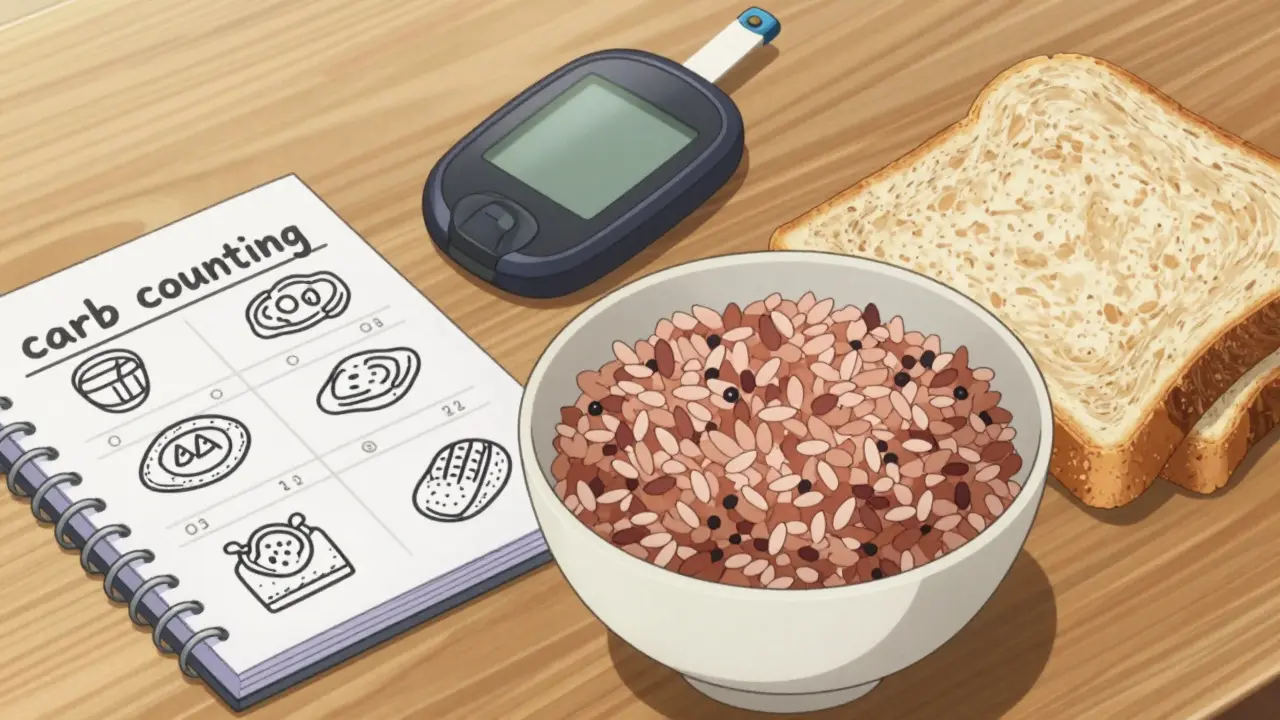
Mastering Carbohydrate Counting
For those who need more precision, carbohydrate counting is the way to go. The general rule of thumb from the ADA is to aim for 45-60 grams of net carbohydrates per meal and about 15 grams per snack. To get "net carbs," you subtract the fiber from the total carbohydrates. Why? Because fiber doesn't raise your blood sugar.
To make this practical, you need to know what one "carb serving" looks like. According to clinical diet sheets, one serving is roughly:
- 50g of cooked brown rice (about two heaped tablespoons).
- 75g of potatoes.
- One medium slice of whole-grain bread.
As you move into your third trimester, your baby needs more energy. You'll likely need to increase your protein to about 2.5 ounces per meal and bump your carb servings up to four per meal to support fetal growth.
Sample 7-Day Meal Framework
While every woman's metabolic response is different, a structured plan helps prevent the "what do I eat now?" panic. Focus on pairing every carb with a protein or a healthy fat to blunt the glucose response.
Breakfast: This is often the hardest time to manage. Avoid high-sugar cereals or white toast. Instead, try two scrambled eggs with sautéed spinach and one slice of sprouted grain toast. If you're craving fruit, stick to berries (blueberries or raspberries) as they have a lower glycemic index.
Mid-Morning Snack: A small apple with two tablespoons of almond butter or a cup of Greek yogurt with a sprinkle of cinnamon. Cinnamon is often cited for its ability to help with insulin sensitivity.
Lunch: A grilled chicken salad with mixed greens, avocado, cucumbers, and 1/2 cup of quinoa. Use olive oil and lemon as a dressing to avoid the hidden sugars in store-bought dressings.
Afternoon Snack: Hummus with raw carrots and celery sticks. This provides a steady stream of energy and keeps you from overeating at dinner.
Dinner: Baked salmon with roasted asparagus and a small portion of wild rice. If you prefer cultural dishes, something like chicken adobo with a small side of brown rice works perfectly as long as the proportions remain consistent.
Evening Snack: A piece of string cheese and a few whole-grain crackers. This prevents the liver from overproducing glucose overnight, helping you hit that < 95 mg/dL fasting target.

Common Pitfalls and Pro Tips
One of the biggest mistakes is over-restricting carbs. While it's tempting to cut them out entirely to see a low number on the glucometer, this can be dangerous. Dropping below 1,700 calories or severely limiting carbs can lead to inadequate folate and iron intake, which increases the risk of neural tube defects. Your baby needs these nutrients to grow.
Another common issue is "hidden carbs." Many "diabetic-friendly" processed snacks are loaded with sodium or sugar alcohols that can still affect some people. Whenever possible, stick to whole foods. If you're using a measuring cup, be careful-many women underestimate cooked rice portions, which can lead to an extra 7-10 grams of carbs per meal without realizing it.
If you find yourself struggling, look for community support. Groups on Facebook or Reddit can be great for swapping recipes and realizing you're not the only one fighting a "spike" after a specific type of berry. Just remember that a clinical dietitian is your best resource for personalized adjustments.
Can I eat fruit if I have gestational diabetes?
Yes, but timing and type matter. Stick to low-glycemic fruits like berries, green apples, or citrus. Avoid eating fruit on an empty stomach; always pair it with a protein or fat, like Greek yogurt or nuts, to slow down the sugar absorption.
What is a "net carb" and why does it matter?
Net carbs are the total carbohydrates minus the fiber. Since fiber is not digested by the body, it doesn't raise your blood glucose levels. Focusing on net carbs allows you to eat high-fiber vegetables and grains that keep you full without spiking your sugar.
Why are my fasting blood sugar numbers high even when I diet?
This is often due to a phenomenon where the liver releases glucose during the night to provide energy. To combat this, try a protein-heavy snack before bed, such as a piece of cheese or a handful of nuts, which can help stabilize glucose levels overnight.
Do I have to use a glucose monitor every single meal?
Initially, yes. Most doctors recommend testing fasting and 1- or 2-hour post-meal levels for every meal to identify which foods trigger spikes. Once you have a consistent pattern and your numbers are stable, your healthcare provider may reduce the frequency of testing.
Will a GDM diet prevent my baby from being too large?
Yes. By keeping blood glucose within target ranges, you significantly reduce the risk of macrosomia (birth weight over 4,500g). Studies show that structured meal planning can reduce this risk by up to 30%, which in turn lowers the likelihood of a C-section delivery.
Next Steps for Success
If you've just been diagnosed, your first step should be a consultation with a registered dietitian to create a plan that fits your culture and taste preferences. Don't try to follow a generic plan if it doesn't feel sustainable; the best diet is the one you can actually follow every day.
For those already tracking, try a "food and mood" log for one week. Note not just your glucose numbers, but how you felt and what you ate. You might find that a specific "healthy" grain actually spikes your sugar more than another, allowing you to swap it out for a better alternative. If your numbers remain high despite these changes, don't panic-some women simply require medication to keep the baby safe, and that is a perfectly normal part of the process.

Write a comment
Your email address will not be published.
Recent Posts
-
 Cassava Supplements: The Next Big Trend in Health & Wellness September 20, 2025
 -
 Pravastatin Tolerability in Older Adults: Side Effect Profile December 1, 2025
 -
 How to Relieve a Burning Sensation in the Neck - Fast, Safe Tips August 24, 2025


8 Comments
Just wanted to say you got this! It seems scary at first but it really gets easier once you find your rhythm with the snacks. ❤️
Big Pharma loves these 'targets'. Just a way to push more meds on moms. Don't trust the system.
Actually the plate method is too basic for most people. You really need to understand the glycemic index if you want to actually fix the problem instead of just guessing with a plate.
imagining a world where people actually beleive a piece of cheese solves liver glucose issues lol. its all just random biological chaos and we pretend we have control with these little lists. basically just placbos for the anxious
there is a certain peace in the ritual of testing
it forces a mindfulness about what we put in our bodies that most people ignore until it is too late
I totally agree with the mindfulness part!!! ✨ It is like a little journey of discovery with your own body!!! 🌸 Maybe we can all just be kind to ourselves while we navigate these numbers?? 🌈💖
For anyone feeling overwhelmed, just remember that your body is doing something incredible right now and a few spikes on a meter don't make you a failure as a mother, so please just take a deep breath and remember that you can tweak these meals as you go along because what works for one person might not work for you, and that is perfectly okay in the grand scheme of things. I remember when I was first starting out and the numbers were all over the place, I felt like I was failing a test every single morning, but eventually, I realized that the protein-heavy snack before bed was the real game changer for me and it took a few weeks of trial and error to find the right balance of almonds and cheese that didn't make me feel nauseous but still kept my fasting levels in the green zone. Just keep logging everything and be patient with yourself because you are learning a whole new language of nutrition while growing a human being which is honestly a superpower if you think about it, so just hang in there and lean on the community when you need a recipe swap or just a place to vent about how much you miss regular bagels!
This is such a helpful breakdown for anyone feeling lost. You're doing great, mama!