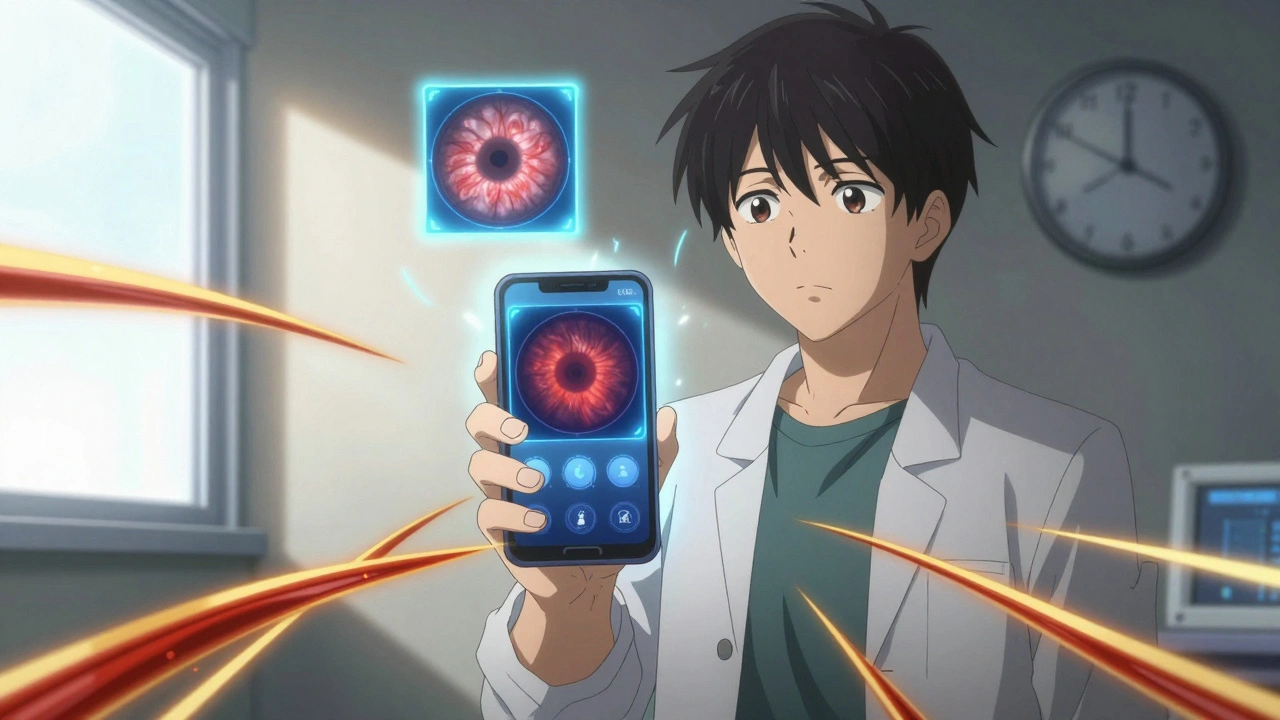
Diabetic retinopathy isn’t just a complication of diabetes-it’s the leading cause of preventable vision loss in adults under 65. If you have diabetes, skipping your eye exams isn’t just risky-it’s dangerous. But here’s the thing: not everyone needs an eye check every year. The old rule of annual screenings is changing, and the new approach is smarter, safer, and more personalized. Understanding when to get screened and what treatments actually work can save your sight-and your peace of mind.
What Is Diabetic Retinopathy, Really?
Diabetic retinopathy happens when high blood sugar damages the tiny blood vessels in the retina, the light-sensitive tissue at the back of your eye. At first, you might not notice anything. No pain. No blurriness. Just silent damage. Over time, these vessels can leak fluid, swell, or grow abnormally, leading to diabetic macular edema (DME)-a major cause of vision loss. In its most advanced form, proliferative diabetic retinopathy, new fragile blood vessels grow across the retina and into the vitreous, risking bleeding, scarring, and retinal detachment.
It’s not rare. Around 1 in 3 people with diabetes will develop some form of retinopathy. The good news? Up to 98% of severe vision loss from this condition can be prevented-if caught early.
When Should You Get Screened? It Depends
For years, everyone with diabetes got an eye exam every year. But research has shown that’s not always necessary. The key now is risk stratification-tailoring screening frequency to your actual risk level, not just your diagnosis.
Here’s how it breaks down:
- No retinopathy and good control (HbA1c under 7%, blood pressure under 140/90, no kidney issues)? You can safely wait 2 to 4 years between screenings. For some low-risk type 1 diabetes patients, even 3 years is fine.
- Mild nonproliferative retinopathy? Get checked again in 12 months. No need to panic, but don’t delay.
- Moderate nonproliferative retinopathy? You need an ophthalmologist referral within 3 to 6 months. This is where things start to get serious.
- Severe nonproliferative or proliferative retinopathy? See a specialist within 1 to 3 months. Waiting longer risks irreversible damage.
Tools like the RetinaRisk algorithm help doctors calculate your personal risk using your HbA1c, diabetes duration, blood pressure, and kidney function. One study showed this approach cuts screening visits by nearly 60% without missing a single case of sight-threatening disease.
But here’s the catch: if your HbA1c is above 8.5%, your blood pressure is high, or you have kidney disease, you’re in a higher-risk group-even if your eyes look fine now. Don’t let a clinic push you into a 2-year interval if your numbers aren’t where they should be.
How Screening Is Done: It’s Not What You Think
Most people imagine a doctor shining a bright light into their eyes. Modern screening is quieter, faster, and more accurate. It usually involves digital fundus photography-no dilation always needed, though it helps.
Here’s what happens:
- You sit in front of a specialized camera.
- It takes two or more high-res photos of each eye.
- Those images are sent to a trained grader-or an AI algorithm-that checks for signs of damage.
AI is changing the game. Google’s DeepMind system, tested on over 11,000 images, caught 94.5% of sight-threatening cases. The FDA-cleared IDx-DR system can even be used in primary care clinics without an ophthalmologist present. In rural areas where specialists are scarce, telemedicine screening has boosted detection rates from 58% to over 90%.
Even smartphone adapters like the D-Eye are now FDA-approved, letting nurses or even patients themselves capture usable images in a doctor’s office-or at home.
Treatment Options: What Actually Works
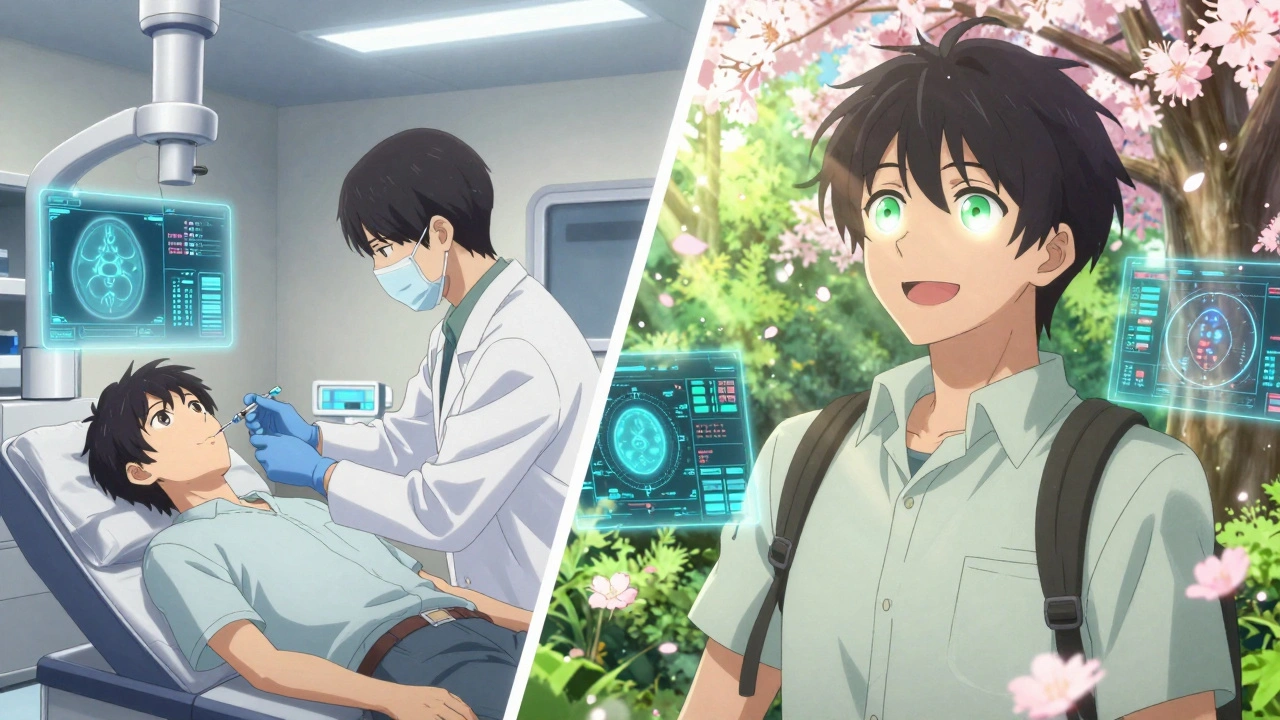
If screening finds early damage, the best treatment is still control: lower your HbA1c, manage your blood pressure, and stop smoking. But once the retina is visibly damaged, you need more than lifestyle changes.
Here are the proven treatments:
- Anti-VEGF injections (like ranibizumab or aflibercept): These are the first-line treatment for diabetic macular edema. They stop abnormal blood vessels from leaking. Most patients need monthly shots at first, then every 2 to 4 months. Studies show they improve vision in over 60% of cases.
- 激光治疗 (Laser therapy): Focal or grid laser treatment seals off leaking vessels in the macula. Panretinal photocoagulation (PRP) is used for proliferative retinopathy to shrink abnormal vessels. It’s less common now because of injections, but still vital in advanced cases.
- Steroid implants: For patients who don’t respond to anti-VEGF, a slow-release steroid implant (like Ozurdex) can reduce swelling for months. But it can raise eye pressure or cause cataracts.
- Vitrectomy surgery: If there’s heavy bleeding into the vitreous or retinal detachment, surgery is needed. It’s more invasive but often life-saving for vision.
One big myth: laser treatment doesn’t restore lost vision. It stops further loss. That’s why early detection is everything.
Who Should Be Screened More Often?
Not everyone can wait two years. These groups need annual-or even more frequent-screening:
- People with type 1 diabetes-start screening 5 years after diagnosis, then annually unless low risk.
- Those with HbA1c consistently above 8%.
- Anyone with diabetic kidney disease (microalbuminuria or eGFR below 60).
- Pregnant women with diabetes-retinopathy can worsen fast during pregnancy. Screen in the first trimester and again at 28 weeks.
- Patients who’ve had previous laser or injections-monitor every 6 months.
If you’re on insulin, have had diabetes for over 15 years, or your blood pressure spikes above 160/100, your risk climbs fast. Don’t assume you’re low-risk just because you’ve had clean screenings before.
What’s New in 2025?
The American Diabetes Association’s 2024 guidelines made it official: screening intervals should be personalized. No more one-size-fits-all.
Here’s what’s changing:
- AI screening is now covered by Medicare in the U.S. for eligible patients.
- New smartphone-based devices are being rolled out in community health centers.
- Telemedicine programs in New Zealand and the UK are reaching remote patients who previously went years without screening.
- Research is underway for oral drugs that could slow retinopathy progression-early trials show promise in reducing inflammation in the retina.
The global market for DR screening is growing fast, hitting $4.7 billion by 2028. That’s because more people are being diagnosed with diabetes-and more are realizing vision loss isn’t inevitable.
Real Stories: What Patients Are Saying
One Reddit user, Type1Warrior87, wrote: “After three clean screenings, my doctor switched me to every two years. I felt less stressed and saved hundreds on copays.”
But another, RetinaScared2023, shared: “They pushed for two-year intervals even though my HbA1c was 8.5%. I developed macular edema. I wish I’d stuck with annual checks.”
The difference? One had good control. The other didn’t. Risk-stratified screening works-but only if your doctor actually uses your real numbers, not just your diagnosis.
What You Can Do Today
You don’t need to wait for your next appointment to protect your eyes.
- Know your HbA1c. Aim for under 7%. If it’s over 8%, ask for a referral to an ophthalmologist now.
- Control your blood pressure. Even a 10-point drop can reduce retinopathy risk by 30%.
- Get a kidney test. Protein in your urine is a red flag for eye damage too.
- Don’t ignore blurry vision-even if it comes and goes. That’s often the first sign of macular edema.
- Ask your doctor: “Based on my numbers, how often should I be screened?” Don’t accept “every year” as the default.
Diabetic retinopathy doesn’t happen overnight. It’s a slow burn. But with the right screening schedule and timely treatment, you can keep your vision sharp for decades.
How often should I get screened for diabetic retinopathy if I have type 2 diabetes and no eye damage?
If you have type 2 diabetes and no signs of retinopathy, and your HbA1c is under 7%, blood pressure is controlled, and you have no kidney disease, you can safely wait 2 to 4 years between screenings. Some patients with very low risk and two clean screenings in a row may be advised to wait up to 5 years. But if your HbA1c is above 8% or you have high blood pressure, stick with annual exams.
Can AI really replace an eye doctor for diabetic retinopathy screening?
AI tools like IDx-DR and Google’s DeepMind can detect sight-threatening diabetic retinopathy with over 94% accuracy-matching or exceeding human graders. They’re FDA-approved and used in primary care clinics, especially where ophthalmologists aren’t available. But AI doesn’t replace the doctor. It’s a screening tool. If AI flags a problem, you still need to see an eye specialist for diagnosis and treatment.
Are injections the only treatment for diabetic macular edema?
Anti-VEGF injections are the first-line treatment and work best for most people. But if you don’t respond well, steroid implants (like Ozurdex) can be used. Laser therapy is still an option for some cases, especially if injections aren’t accessible. Surgery is reserved for severe cases with bleeding or retinal detachment. The goal is to stop fluid leakage, not restore lost vision-so early treatment is key.
Why does my doctor want me to get screened more often than my friend?
Screening frequency isn’t based on whether you have diabetes-it’s based on your risk. If you have higher HbA1c, high blood pressure, kidney disease, or you’ve had retinopathy before, you’re at higher risk. Your friend might have better control and no complications, so they can wait longer. Risk-based screening means you get the right care for your situation, not a one-size-fits-all schedule.
Can diabetic retinopathy be reversed?
Early damage can be stabilized, and vision can improve with treatment-especially if caught before permanent scarring. Anti-VEGF injections can reduce swelling and improve vision in many cases. But once the retina is scarred or blood vessels have caused irreversible damage, vision loss can’t be undone. That’s why early detection through screening is the only true way to prevent blindness.
What’s Next?
If you’ve been putting off your eye exam because you feel fine, stop. Diabetic retinopathy doesn’t wait. Even if you’re managing your blood sugar well, the damage can sneak up. Talk to your doctor about your HbA1c, blood pressure, and kidney health-and ask for a personalized screening plan. Don’t let outdated guidelines keep you from the care you need. Your eyes are worth more than a yearly checkbox.

Write a comment
Your email address will not be published.
Recent Posts
-
 Annual Savings from FDA Generic Drug Approvals: Year-by-Year Breakdown December 24, 2025
 -
 Food Labels and Allergies: Hidden Allergens and Safety in 2026 January 4, 2026
 -
 How and Where to Buy Dapasmart Online Safely (2025 Guide) September 14, 2025


9 Comments
Finally, someone gets it. I’ve been telling my endo for years that annual scans are unnecessary if your numbers are clean. I’ve got type 2, HbA1c at 6.4%, BP under 120/80, no protein in urine-why am I wasting time and money going every year? They kept pushing it like it was gospel. Now I’ve got a 3-year interval and I’m actually keeping up with care because it doesn’t feel like a chore.
Stop treating diabetes like a one-size-fits-all prison sentence. Personalized care isn’t a luxury-it’s the only way this system survives.
AI screening is the future, no cap. The IDx-DR system in my primary care clinic flagged a subtle microaneurysm I didn’t even know was there. Went to the ophthalmologist two weeks later-turned out it was early NPDR. Got on anti-VEGF before it became DME. If they’d waited for my annual ‘routine’ visit, I’d be blind in one eye by now.
Doctors still act like AI is a gimmick, but the data’s solid. Sensitivity >94%, specificity >87%. It’s not replacing the doc-it’s giving them eyes where they don’t have any. Rural clinics? Game changer. Insurance coverage? Long overdue.
Let me guess-you’re the type who thinks ‘low risk’ means you can ignore your diabetes until you need a cane and a seeing-eye dog. My cousin skipped screenings for 4 years because his HbA1c was ‘mostly under 7%’. Then he had a vitreous hemorrhage and lost 70% of his vision. Turns out he had uncontrolled nocturnal hyperglycemia nobody checked.
Stop romanticizing risk stratification. The system’s not perfect, and patients aren’t data points. If you’re not monitoring your glucose trends, your BP daily, and your renal function? You’re gambling with your sight. And no, ‘I feel fine’ isn’t a biomarker.
Just had my first AI screening last week. No drops, took 5 minutes, nurse did it in the exam room. Got an email 2 days later saying ‘no referable retinopathy’ and suggested next screen in 3 years. Felt way less intimidating than the old dilation ordeal.
Still, I wish more clinics offered this. My mom’s in her 70s, type 2 for 25 years, and still gets dragged into a dark room with a giant light. It’s 2025. We can do better.
It’s fascinating how the medical establishment has finally caught up to what patients have known for decades: one-size-fits-all protocols are a relic of paternalistic medicine. The fact that we’re now using algorithmic risk modeling-powered by longitudinal data on HbA1c, BP, and renal biomarkers-to optimize screening intervals isn’t innovation. It’s basic epidemiology.
And yet, so many clinicians still cling to the annual ritual like it’s a sacrament. The real tragedy isn’t the vision loss-it’s the institutional inertia that delayed this for 30 years. We’re not just treating retinopathy. We’re dismantling medical dogma.
Okay, but have you considered that the entire screening model is a pharmaceutical racket? Anti-VEGF injections cost $2,000 a pop. Steroid implants? Even more. And now they’re pushing AI screening so they can funnel everyone into that pipeline. Who profits? Big Pharma. Who pays? You. The insurance companies? They’re happy because they’re paying less for annual exams and more for expensive treatments later.
And don’t get me started on the FDA approvals-how many of those studies were funded by the companies selling the AI software? Google’s DeepMind? They’re not a nonprofit. They’re a data-hungry tech giant with a side hustle in ophthalmology.
I’ve got a friend who got diagnosed with DME after a ‘clean’ AI screen. Turns out the algorithm missed early leakage because the image was slightly blurred. Now she’s on monthly injections. For life. Who’s really protecting patients here?
They say ‘early detection saves sight.’ But what if the detection system is rigged to create patients?
Wow. Just… wow. 🤦♂️ So now we’re letting algorithms decide who gets to keep their vision? That’s progress? 🤨
Let me tell you something: I’ve seen patients with ‘low risk’ scores develop proliferative retinopathy in 6 months because their HbA1c spiked during stress, or they stopped taking meds, or their insurance dropped coverage. AI doesn’t know if you’re sleeping 4 hours a night, eating junk food, or crying in your car after work.
And now we’re replacing human judgment with a black box that can’t even tell if your eyelid was closed during the photo? 😒
My cousin got a ‘no referable disease’ result from an AI system-and then went blind 8 months later. The system didn’t flag the neovascularization because it was masked by a cataract. A human would’ve seen it.
Don’t mistake efficiency for safety. You’re not saving money-you’re gambling with someone’s sight. And that’s not science. That’s negligence dressed up in code. 🚫👁️
Just wanted to add a UK perspective-NHS rolled out tele-retinopathy screening in 2023 in rural Wales. Previously, patients were waiting 18 months for an appointment. Now they get images taken by community nurses, AI reads them within 48 hours, and if flagged, they’re seen by a specialist in under 3 weeks. Detection rates jumped from 61% to 92%.
It’s not perfect-some elderly patients struggle with the tech, and there’s still a backlog for follow-up-but it’s miles ahead of what we had. And yes, Medicare covering it in the US? Long overdue. This isn’t about cutting costs. It’s about equity.
Also, the smartphone adapters? Brilliant. My sister, who’s housebound with neuropathy, now takes her own photos with the D-Eye. She’s been compliant for the first time in 10 years. That’s the real win.
I appreciate how this post doesn’t just throw stats at us-it gives real context. I used to think ‘no retinopathy’ meant I was safe. Then I learned that silent damage can creep in without symptoms. My dad lost his vision because he trusted ‘I feel fine.’
What helped me was asking my doctor: ‘What’s my actual risk score?’ He pulled up RetinaRisk, showed me my HbA1c, BP, and eGFR, and said, ‘You’re low risk, but let’s check again in 3 years.’ That made me feel like a partner, not a patient.
And yes, AI isn’t magic-but it’s the best tool we’ve got to scale care without burning out doctors. I’d rather have a machine miss something than have a human overwhelmed by 500 screens a day.
Most of all-don’t wait for symptoms. By then, it’s too late. Your eyes don’t scream. They whisper. Listen before it’s gone.