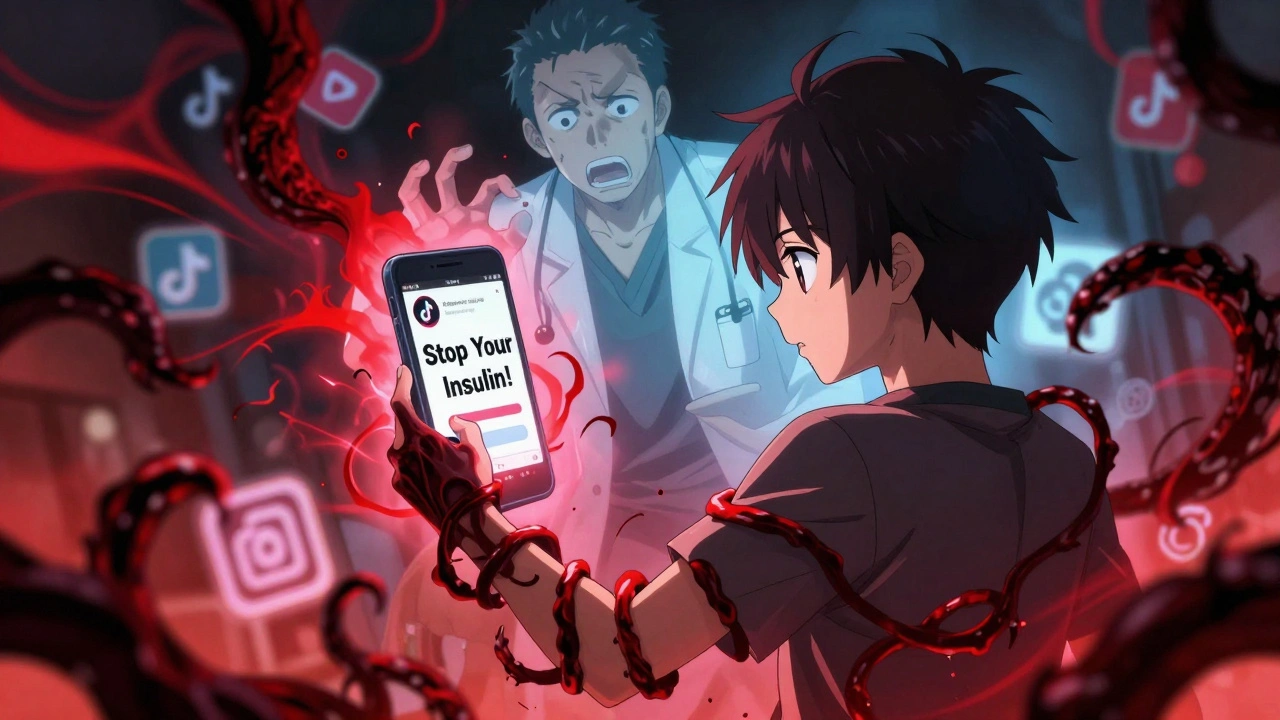
Every day, millions of people scroll through TikTok, Instagram, and YouTube looking for quick health fixes. A post says drinking apple cider vinegar cures migraines. Another claims a supplement can replace your blood pressure meds. Someone with 500K followers says they dropped 20 pounds in two weeks by skipping insulin. It looks convincing. It feels personal. But unsafe medication advice on social media isn’t just misleading-it’s dangerous.
Real people have ended up in the hospital because they trusted a stranger’s video over their doctor. The CDC says nearly 60% of Americans use the internet to look up health info. That’s not wrong. The problem is, most of what’s out there isn’t checked, regulated, or even close to accurate. During the pandemic, the World Health Organization called it an “infodemic”-a flood of false health claims that spread faster than the virus itself. And it didn’t stop.
Who’s Really Giving This Advice?
Not your doctor. Not a pharmacist. Not even someone with a medical license.
Most of the people pushing medication advice online are influencers, fitness coaches, or people selling supplements. They might say they’re “just sharing what worked for me,” but if they’re getting paid to promote a product, they’re not giving advice-they’re doing marketing. Healthline found that many TikTok and Instagram creators have partnerships with supplement brands. Their videos aren’t about your health. They’re about clicks, likes, and commissions.
Look at the profile. Does it say “RN,” “PharmD,” or “MD”? If not, assume they have no medical training. Even if they say “I’m a nutritionist,” that doesn’t mean they’re licensed. In many places, anyone can call themselves a nutritionist. Only registered dietitians (RDs) or registered dietitian nutritionists (RDNs) have real credentials. Same goes for “health coaches.” That title isn’t regulated. That’s not a red flag-it’s a flashing siren.
Red Flags: What Unsafe Advice Looks Like
Here’s what you should never ignore:
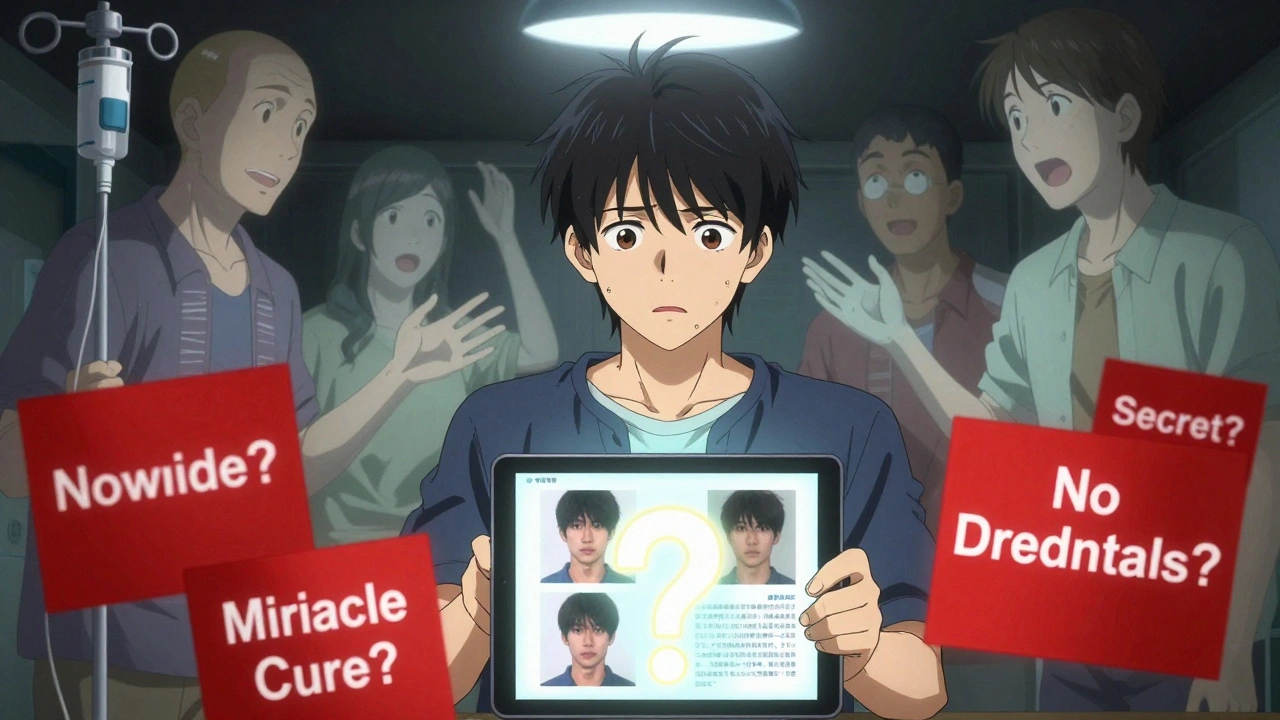
- Miracle cures - “This one pill fixes diabetes,” “This tea cures cancer,” “Stop your meds and try this.” If it sounds too good to be true, it is. Real medicine doesn’t work that way.
- Secret knowledge - “Doctors don’t want you to know this,” “The FDA is hiding the truth.” These are classic conspiracy tropes. If it’s real, reputable sources like the CDC, FDA, or peer-reviewed journals would have published it.
- One-size-fits-all advice - “Everyone should take this.” That’s nonsense. What helps one person could kill another. If you have kidney disease, a high-potassium supplement could be deadly. If you’re pregnant, certain herbs can cause miscarriage. Advice that ignores your history is dangerous.
- Product push - Every post ends with a link to buy something. That’s not advice. That’s an ad. Even if they say “I’m not sponsored,” check their bio. They might be using affiliate links. If they profit from your purchase, their advice is biased.
- Before-and-after photos - These are often staged, edited, or taken over months with professional help. Don’t trust visuals without data.
The UNMC Health Security Transmission article says it plainly: “If you can’t find the same information in trusted medical sources, it’s likely misinformation.”
How Algorithms Make It Worse
Why do you keep seeing this stuff? Because the algorithm wants you to.
Social media platforms don’t care if your health is at risk. They care about engagement. Anger, fear, and excitement keep you scrolling. So if you’ve ever clicked on a video about “natural cures for depression,” you’ll start seeing more of them. The system learns your preferences and feeds you more extreme content. That’s called an echo chamber.
Research from the University of Denmark showed that people who believe vaccines are dangerous end up seeing only anti-vaccine content-even if they never searched for it. Their own behavior shaped the information they got. And once you’re stuck in that loop, it’s hard to escape.
Facebook and Instagram tried to fix this with “flag-and-fact-check” tools. If a post gets reported, it gets labeled as false and linked to a credible source. But you have to report it. And most people don’t. The system is broken. You’re the last line of defense.

How to Verify Anything You See
You don’t need to be a scientist. You just need to ask three simple questions:
- Who said it? Look up their name. Are they a licensed health professional? Do they have credentials you can verify? Check their LinkedIn, their website, or the state medical board. If you can’t find proof, walk away.
- What’s the source? Does the post link to a study? If so, find the original study on PubMed or Google Scholar. Is it a real peer-reviewed journal? Or just a blog with no citations? If the claim is about a drug, check the FDA website. For supplements, look up the ingredient on the National Institutes of Health’s Office of Dietary Supplements.
- Is it one-sided? Real science has limits. Real doctors say, “This might help, but here’s what we don’t know.” If the post makes no mention of risks, side effects, or alternatives, it’s not balanced. It’s propaganda.
Healthline recommends checking with at least three trusted sources before you believe anything. That means CDC, FDA, Mayo Clinic, WebMD, or a university medical center. Not a random Facebook group. Not a YouTube comment section.
What Happens When You Believe It
People don’t always realize they’ve been harmed until it’s too late.
A 2023 study in JAMA Pediatrics found that adolescents exposed to health misinformation online were more likely to skip prescribed medications, try unproven treatments, or delay seeing a doctor. One teen stopped taking her ADHD meds after watching a viral video claiming they “destroyed your brain.” She ended up in the ER after a panic attack.
Another case involved a man who replaced his insulin with a “natural” supplement he saw on Instagram. His blood sugar spiked. He lost vision in one eye. He needed emergency surgery.
Even “harmless” advice can be deadly. Drinking apple cider vinegar on an empty stomach? Fine for some. Dangerous for someone with acid reflux or low potassium. Taking cold plunges to “boost immunity”? Risky for people with heart conditions. These aren’t just trends. They’re health risks disguised as wellness.
What You Can Do About It
You can’t stop misinformation from spreading. But you can stop it from spreading to you-and to others.
- Follow trusted sources. Follow accounts run by the CDC, WHO, FDA, Mayo Clinic, or your local hospital. They post real updates, not hype.
- Don’t share unverified posts. Even if you think it’s “helpful,” you’re amplifying it. If you’re unsure, don’t share.
- Talk to your doctor. Always. No matter what you see online. Your doctor knows your history, your meds, your allergies. No influencer does.
- Teach others. If a friend shares a dangerous post, don’t just ignore it. Say, “I looked into this. Here’s what the FDA says.”
- Use pre-bunking. Before you even see a fake claim, learn what real advice looks like. Read up on common myths. Know the red flags. That way, when you see one, you recognize it immediately.
The best defense isn’t fear. It’s knowledge. And the most powerful tool you have? Your own critical thinking.
When in Doubt, Wait
Here’s a simple rule: If you’re unsure, don’t act. Wait 24 hours. Look up the claim. Talk to a professional. If it’s real, it’ll still be true tomorrow. If it’s fake, it’ll still be fake.
Medication isn’t a trend. It’s science. And your health isn’t content. It’s your life.
Can social media influencers give medical advice legally?
No. In most countries, including the U.S. and New Zealand, it’s illegal for healthcare professionals to give medical advice to people who aren’t their patients-especially online. Many influencers aren’t licensed at all, so they’re not just breaking ethics-they’re breaking the law. Even if they say “I’m not a doctor,” they’re still responsible if someone gets hurt because they followed their advice.
Are all supplements on social media unsafe?
Not all supplements are unsafe, but the ones promoted on social media often are. Many are unregulated, contain hidden ingredients, or are falsely labeled. The FDA doesn’t approve supplements before they’re sold. So if someone’s pushing a “miracle” supplement with no clinical trials, it’s likely not safe. Always check the label for third-party testing (like USP or NSF) and talk to your pharmacist.
What should I do if I’ve already followed unsafe advice?
Stop immediately. Don’t wait for symptoms. Contact your doctor or pharmacist and tell them exactly what you took, how much, and where you got the advice. Bring screenshots if you can. They can check for interactions, side effects, or risks. Most health professionals won’t judge you-they’ve seen this before. The sooner you act, the safer you’ll be.
Why do people believe fake health advice so easily?
Because it’s emotional, simple, and personal. Real medicine is complicated. It takes time. It has side effects. Fake advice says, “Just do this one thing and you’ll be fine.” It feels like control. Plus, algorithms show you more of what you already believe. If you distrust doctors, you’ll see more anti-doctor content. That creates a loop that’s hard to break. The solution isn’t to argue-it’s to build habits of checking facts before believing.
Is there a way to report unsafe medication advice on social media?
Yes. Most platforms have a “report” button. Choose “false medical information” or “harmful content.” You can also report to health authorities. In New Zealand, you can report unsafe products to Medsafe. In the U.S., report to the FDA’s MedWatch program. Even if your report doesn’t take the post down, it helps platforms track patterns and improve their systems.
Final Thought: Your Health Isn’t a Trend
Health isn’t viral. It’s not about likes. It’s not about who has the most followers. It’s about what’s safe, what’s proven, and what’s right for you.
Next time you see a post promising a miracle fix, pause. Ask yourself: Would my doctor say this? Is this backed by science? Could this hurt someone? If the answer is no, don’t click. Don’t share. Don’t believe.
You’re not just protecting yourself. You’re protecting everyone who sees your feed.

Write a comment
Your email address will not be published.
Recent Posts
-
 Buy Cheap Generic Coumadin Online - Safe NZ Pharmacy Guide October 14, 2025


12 Comments
It’s wild how we’ll trust a guy in a tank top holding a bottle of green juice over a doctor with 20 years of training. I get it-social media feels like a friend telling you the truth. But most of those ‘friends’ are just trying to sell you something. Real health isn’t flashy. It’s boring. It’s consistency. It’s sleep. It’s talking to a professional who actually knows your blood work.
Love this breakdown. I used to share those ‘miracle cure’ posts before I learned how algorithms work. Now I just scroll past. If it sounds too easy, it’s probably a scam. My grandma’s still on her blood pressure meds-she’s 82 and hiking every weekend. No supplements needed.
bro i tried the apple cider vinegar thing for my acne and it burned my face off 😭🔥
One thing people miss: the FDA doesn’t regulate supplements before they hit the market. That means any ‘natural immunity booster’ you see on Instagram could contain heavy metals, steroids, or unlisted pharmaceuticals. The National Institutes of Health’s Office of Dietary Supplements has a searchable database-use it. If the label doesn’t list the exact amount of each ingredient, walk away. Real science doesn’t hide numbers.
Why do we even listen to these people? In America, we have the best medical system in the world. But now we’re letting TikTok influencers replace our doctors? This isn’t freedom. It’s stupidity dressed up as rebellion.
Everyone’s so quick to call this ‘misinformation’ but what about the doctors who overprescribe? What about the pharma companies that fund half the ‘trusted’ websites? This post feels like a corporate PSA. Who’s really in control here?
Oh wow. Another ‘trust your doctor’ lecture. Like they’ve never messed up. Like they’ve never ignored your symptoms for months. Like they don’t get paid to push pills. This isn’t critical thinking. It’s blind obedience.
My aunt took some ‘miracle’ supplement after watching a video and ended up in the hospital with liver damage. She didn’t even know it had hidden caffeine and stimulants. I showed her the FDA warning. She cried. We’re not just talking about fake trends here-we’re talking about people getting hurt because they thought they were being ‘natural’ or ‘empowered.’ It breaks my heart.
lol so if i watch a vid where some guy says lemon water cures cancer im a dumbass but if a doctor says chemo works im a good citizen? sounds like brainwashing to me
My mom’s a nurse and she says the scariest thing isn’t the influencers-it’s the patients who come in with printouts of Reddit threads and demand treatments they saw on YouTube. She’s seen people refuse insulin because ‘some guy on Instagram said it’s poison.’ I’ve started saving CDC links in my phone so I can send them when someone asks. Small acts, but they matter.
the algorithm doesn't care if you live or die it just wants you to click and rage. same way it got you into doomscrolling about politics. now it's got you convinced your thyroid is a conspiracy. we're all just meat puppets with wifi.
My daughter was diagnosed with anxiety last year. We found a therapist, started medication, and followed up with her doctor regularly. Then she started watching YouTube videos claiming ‘meds rot your brain.’ She stopped taking them. Within two weeks, she had a panic attack so bad she couldn’t breathe. We went back to the clinic. She’s doing better now. But I’ll never forget how easy it was for her to believe a stranger over a professional. Don’t underestimate the power of fear and simplicity. Real healing is slow. It’s messy. And it doesn’t come with a link in the bio.