
CKD Medication Safety Checker
Enter your estimated Glomerular Filtration Rate (eGFR) to see current clinical recommendations for Metformin and SGLT2 inhibitors.
If you have Type 2 Diabetes and Chronic Kidney Disease (CKD), your medication list probably feels like a minefield. You’ve likely heard that Metformin is dangerous for kidneys or that SGLT2 inhibitors are only for early-stage disease. The truth? Those rules changed dramatically in recent years. Old fears about lactic acidosis and strict eGFR cutoffs have been replaced by robust clinical data showing these drugs are not just safe-they are essential for protecting your kidneys and heart.
Navigating the new landscape can be confusing because the guidelines shifted so quickly. The KDIGO 2022 Clinical Practice Guideline, released in October 2022, represents a major paradigm shift. It recommends starting SGLT2 inhibitors at much lower kidney function levels than before and clarifies exactly when to adjust or stop Metformin. This article breaks down those specific numbers so you know exactly what to discuss with your doctor.
Understanding the New eGFR Thresholds
Your estimated glomerular filtration rate (eGFR) is the single most important number guiding these decisions. It measures how well your kidneys filter waste. For decades, doctors treated an eGFR below 60 as a red flag for Metformin. Today, we look at it differently.
The old rule of thumb was to stop Metformin if eGFR dropped below 45 or even 60. That led many patients to lose their primary blood sugar control prematurely. The current consensus, backed by the American Diabetes Association (ADA) and KDIGO, is that Metformin remains effective and safe down to an eGFR of 30 mL/min/1.73 m². Below that threshold, the risk of accumulation outweighs the benefits.
For SGLT2 inhibitors (like empagliflozin, dapagliflozin, and canagliflozin), the change is even more striking. Previously, these were often withheld if eGFR fell below 30. Now, evidence from trials like DAPA-CKD and EMPA-KIDNEY proves they protect the heart and kidneys even when function is quite low. The initiation threshold has been lowered to an eGFR of ≥20 mL/min/1.73 m². Once started, you can continue them even if your eGFR drops further, provided you are monitored closely.
| Medication Class | eGFR Range (mL/min/1.73 m²) | Action Required |
|---|---|---|
| Metformin | ≥ 60 | Standard dosing (up to 2,000 mg/day). No restrictions. |
| 45 - 59 | Reduce max dose to 1,000 mg/day if high risk for lactic acidosis. Otherwise, standard dosing is often acceptable per ADA. | |
| 30 - 44 | Reduce max dose to 1,000 mg/day. Monitor eGFR every 3-4 months. | |
| < 30 | Discontinue. Risk of lactic acidosis increases significantly. | |
| SGLT2 Inhibitors | ≥ 20 | Initiate therapy. Use lowest effective dose (e.g., Empagliflozin 10mg, Dapagliflozin 10mg). |
| < 20 | Continue if already on therapy. Do not initiate new therapy below this level unless advised by a specialist. | |
Metformin Safety: Debunking the Lactic Acidosis Myth
You might remember hearing that Metformin causes lactic acidosis, a rare but serious buildup of lactic acid in the bloodstream. This fear drove the FDA’s original black box warning. However, that warning was revised in 2016 after extensive review showed no increased mortality risk when Metformin was used correctly in mild-to-moderate CKD.
In reality, lactic acidosis is extremely rare-occurring in only 3-10 cases per 100,000 patient-years in the general population. The risk rises slightly in advanced CKD (eGFR < 30), which is why we stop the drug there. But for patients with eGFR between 30 and 45, the benefit of better glucose control and potential cardiovascular protection far outweighs the tiny risk of acidosis.
The key is monitoring. If you have had two or more episodes of acute kidney injury (AKI) in the past year, you are considered "high risk." In this case, your doctor may cap your Metformin dose at 1,000 mg daily even if your eGFR is above 45. This conservative approach prevents drug buildup during sudden dips in kidney function.
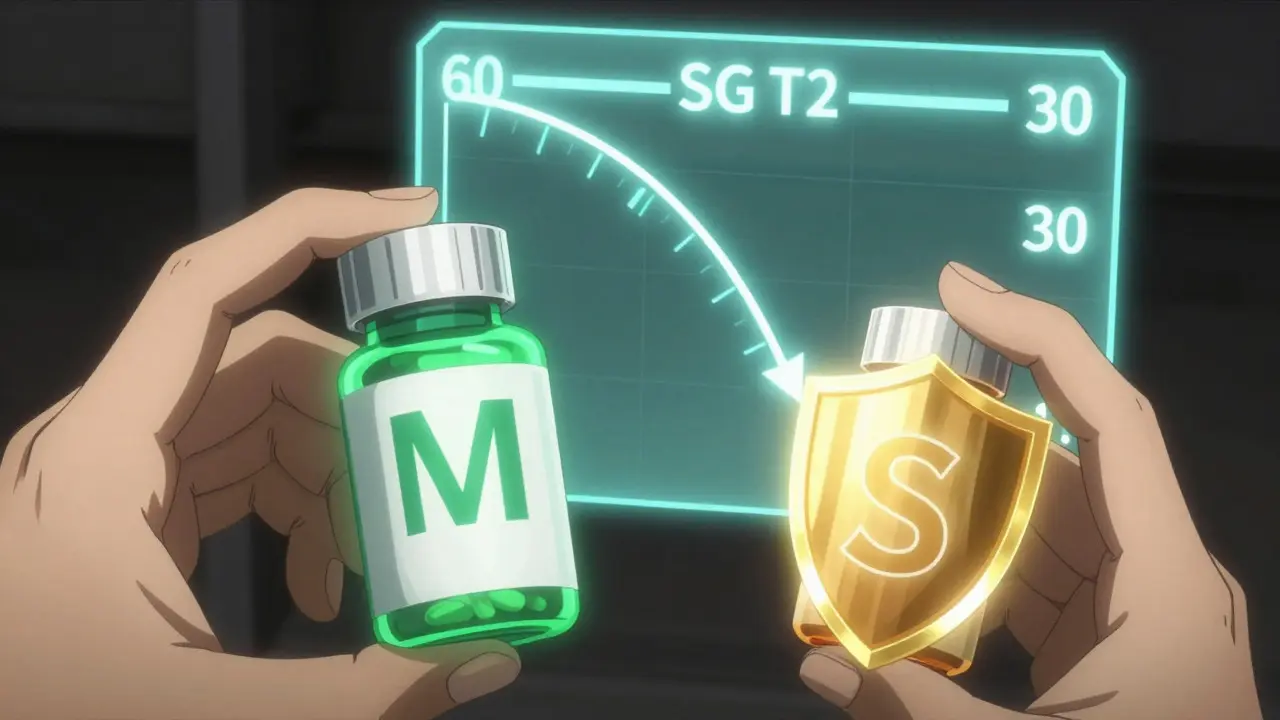
SGLT2 Inhibitors: Protecting Kidneys Beyond Glucose Control
SGLT2 inhibitors work by blocking sugar reabsorption in the kidneys, causing excess glucose to leave through urine. While this lowers blood sugar, their real superpower in CKD is hemodynamic. They reduce pressure inside the kidney’s filtering units (glomeruli), slowing down scarring and progression to dialysis.
The EMPA-KIDNEY trial, published in June 2023, was a game-changer. It showed that empagliflozin reduced the risk of kidney disease progression or cardiovascular death by 28% in patients with eGFR as low as 20 mL/min/1.73 m². This data convinced nephrologists worldwide to push these drugs into later stages of CKD.
Importantly, there is no dose-response relationship for kidney benefits. You don’t need the highest dose to get the protection. The lowest approved doses are sufficient:
- Empagliflozin: 10 mg daily
- Dapagliflozin: 10 mg daily
- Canagliflozin: 100 mg daily
- Ertugliflozin: 5 mg daily
Using higher doses does not provide extra kidney protection but may increase side effects. Stick to the low end of the dosing range for cardiorenal outcomes.
Managing Side Effects and Drug Interactions
While these medications are safer than ever, they are not without risks. Understanding what to watch for helps you stay on treatment longer.
Genital Infections: SGLT2 inhibitors increase sugar in the urine, which can feed yeast. Women see a 4-5% incidence of genital mycotic infections, while men see 1-2%. Good hygiene and staying hydrated help mitigate this. If you are uncircumcised, the risk is slightly higher, so monitor closely.
Volume Depletion: These drugs act as mild diuretics. If you are also taking water pills (loop diuretics like furosemide) or ACE inhibitors/ARBs, you might feel dizzy or lightheaded, especially when standing up. This is called orthostatic hypotension. Your doctor may adjust your diuretic dose when starting an SGLT2 inhibitor to prevent dehydration and acute kidney injury.
Euglycemic Diabetic Ketoacidosis (DKA): This is a rare (0.1-0.2%) but serious condition where ketones build up even though blood sugar isn’t dangerously high. Symptoms include nausea, vomiting, abdominal pain, and fatigue. If you are sick, fasting for surgery, or reducing insulin drastically, check your ketone levels. Stop the SGLT2 inhibitor if ketones are elevated.
Hypoglycemia Risk: When combining SGLT2 inhibitors with sulfonylureas (like glipizide) or insulin, your blood sugar might drop too low. The UK Kidney Association recommends reducing sulfonylurea doses by 50% and insulin doses by 20% when starting an SGLT2 inhibitor, especially if your HbA1c is already near target (<58 mmol/mol).

Monitoring Protocols: What to Expect at the Doctor
Starting these therapies requires a structured monitoring plan. Don’t expect a "set it and forget it" approach. Here is what your care team should be tracking:
- eGFR Monitoring: Check every 3-6 months. If your eGFR is stable, annual checks might suffice, but if it’s declining, quarterly tests are needed. Immediate discontinuation of Metformin is required if eGFR falls below 30.
- Potassium Levels: If you are also on finerenone (a mineralocorticoid receptor antagonist often added for CKD), potassium must be checked 4 weeks after starting, then every 3-6 months. High potassium (>5.5 mmol/L) requires pausing the medication.
- Blood Pressure: SGLT2 inhibitors lower BP. Ensure your systolic pressure doesn’t drop too low, especially if you’re elderly or frail.
- Genital Health: Report any itching, discharge, or discomfort immediately. Simple antifungal treatments usually resolve issues quickly.
Real-World Challenges and Access
Despite clear guidelines, implementation gaps remain. A 2023 study found that 37% of eligible patients with eGFR 20-29 were not receiving SGLT2 inhibitors due to clinician hesitation. Many doctors are still trained on older protocols and worry about safety in advanced CKD.
Additionally, access disparities exist. Patients in higher income brackets are 3.2 times more likely to receive SGLT2 inhibitors in late-stage CKD compared to those in lower income groups. Cost and insurance prior authorizations can be barriers. If you are denied coverage, ask your doctor to submit a letter of medical necessity citing the KDIGO 2022 guidelines and EMPA-KIDNEY trial results.
Don’t be afraid to advocate for yourself. Ask your provider: "Am I a candidate for an SGLT2 inhibitor based on my current eGFR?" and "Should we adjust my Metformin dose given my latest kidney labs?" These questions show engagement and ensure you’re getting the best evidence-based care.
Can I take Metformin if my eGFR is 35?
Yes. According to KDIGO 2022 and ADA guidelines, Metformin is safe for patients with an eGFR between 30 and 44 mL/min/1.73 m². However, the maximum daily dose should typically be capped at 1,000 mg to minimize the risk of lactic acidosis. Your doctor will monitor your kidney function more frequently, usually every 3-4 months.
At what eGFR should I start an SGLT2 inhibitor?
You can initiate SGLT2 inhibitors if your eGFR is 20 mL/min/1.73 m² or higher. This is a significant update from previous guidelines that required an eGFR of 30 or higher. Even if your eGFR drops below 20 after starting, you may continue the medication under close supervision, as it provides ongoing heart and kidney protection.
What are the signs of lactic acidosis with Metformin?
Lactic acidosis is rare but serious. Symptoms include unusual muscle pain, trouble breathing, stomach pain with nausea/vomiting, feeling cold, dizziness, or slow heartbeat. If you experience these symptoms, seek emergency care immediately. The risk is highest if your eGFR falls below 30 or if you have severe liver disease or alcoholism.
Do SGLT2 inhibitors cause kidney failure?
No, they do not cause kidney failure. In fact, they delay it. When you first start an SGLT2 inhibitor, you might see a small, temporary dip in your eGFR (usually 3-5 points). This is a normal hemodynamic effect called "initial dip" and indicates the drug is working to reduce pressure in the kidneys. Long-term, they preserve kidney function significantly better than placebo.
Should I stop Metformin before a CT scan with contrast dye?
Often, yes. Contrast dye can temporarily stress the kidneys, potentially lowering eGFR and increasing lactic acidosis risk. Most protocols recommend stopping Metformin 48 hours after the procedure until your kidney function is confirmed to be stable. Always follow your radiologist’s or doctor’s specific instructions.

Recent Posts
-
 Brown Rice Supplements: Health Benefits & How They Boost Wellness September 9, 2025