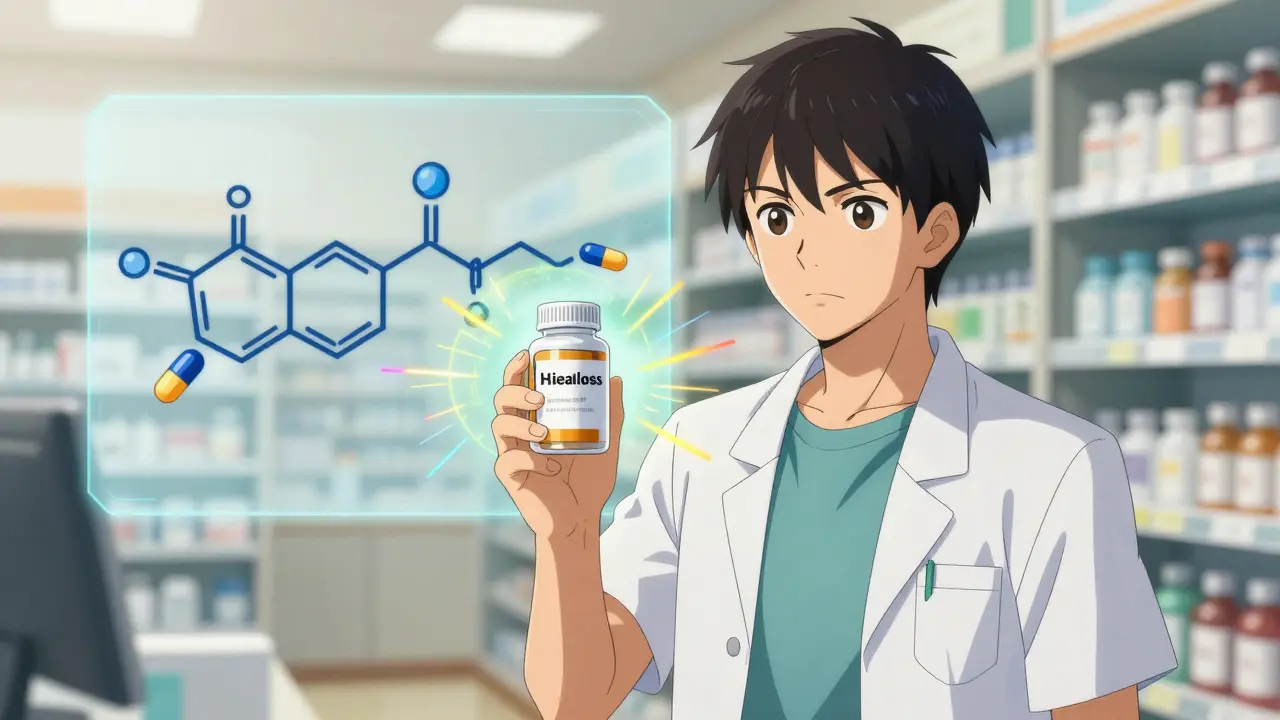
More than 90% of prescriptions filled in the U.S. are for generic medications. Yet, many patients still hesitate. They worry the pill that costs $5 instead of $50 isn’t as strong. They fear the different shape or color means it won’t work the same. And sometimes, they’re right to feel unsure-because no one ever explained why it’s safe.
Why Generic Drugs Are Just as Effective
Generic drugs aren’t cheap copies. They’re exact chemical twins to brand-name drugs. The FDA requires them to have the same active ingredient, strength, dosage form, and route of administration. That means if your brand-name pill has 10 milligrams of lisinopril, the generic has exactly 10 milligrams of lisinopril. No more, no less.The real test? Bioequivalence. Before a generic hits the shelf, the manufacturer must prove it delivers the same amount of medicine into your bloodstream at the same speed as the brand. The FDA’s rule? The generic’s absorption must fall between 80% and 125% of the brand’s. In practice, most are within 95%-meaning your body can’t tell the difference.
Think of it like two identical cars: one built by Toyota, the other by a supplier that makes parts for Toyota. Same engine, same fuel efficiency, same safety ratings. The only difference? Price. The FDA doesn’t approve generics because they’re cheap. They approve them because they work.
Why Patients Still Doubt Them
It’s not about science. It’s about perception.A 2024 study in Frontiers in Drug Safety and Regulation found that nearly a third of patients in Greece refused generics because they believed branded drugs were “higher quality.” In the U.S., the numbers are better-94% say generics are just as safe-but that still leaves millions who don’t fully believe it.
Why? Three big reasons:
- Different look. Generics often look different. A blue pill becomes white. A capsule turns into a tablet. Patients confuse appearance with effectiveness. But inactive ingredients-dyes, fillers, coatings-don’t affect how the medicine works. They just change how it looks or tastes.
- Bad experiences. Someone switched from brand to generic and felt sick. Maybe it was the new filler. Maybe it was a coincidence. But the memory sticks. One Reddit user wrote, “My generic Lyrica made me nauseous when the brand never did.” That’s real. And it’s why trust doesn’t come from data-it comes from personal stories.
- Doctors don’t explain. If your doctor says, “We’re switching you to a generic,” without context, you’re left wondering: Is this a cut? A compromise? A risk? When providers skip the why, patients fill the silence with fear.
Here’s the truth: The FDA gets more complaints about brand-name drugs than generics. Why? Because more people take them. But the perception? It’s the opposite.
The Role of Your Doctor and Pharmacist
You trust your doctor. That’s the most powerful tool we have.Studies show that when a doctor says, “This generic is just as good,” patient acceptance jumps. In one analysis, healthcare provider recommendation predicted generic acceptance with 87.6% accuracy. That’s not magic. That’s influence.
But saying “it’s the same” isn’t enough. You need to explain it. A 10-minute conversation can change everything.
Good providers say things like:
- “This generic has the same active ingredient as your old pill. The FDA tests it to make sure your body gets the same dose.”
- “The color changed because the manufacturer uses different fillers. That doesn’t change how it works.”
- “I’ve had hundreds of patients switch. Their labs, their symptoms, their energy levels-all stayed the same.”
Pharmacists matter too. At Kaiser Permanente, using a dedicated pharmacist to walk patients through the switch cut refusal rates by 37%. At Mayo Clinic, 92% of patients felt confident after a pharmacist consultation. Compare that to the national average of 68%. The difference? Time. Attention. Clarity.
What You Can Do to Build Trust
If you’re considering a generic, here’s how to make the switch with confidence:- Ask your doctor: “Is this generic approved by the FDA? Can you explain how it’s the same?”
- Check the label: Look for the active ingredient. It should match your brand-name pill exactly.
- Compare pill appearance: If your pill looks different, ask your pharmacist why. It’s normal. But knowing why helps.
- Monitor your body: Give it 30 to 90 days. Track how you feel. If something changes-like new side effects or worse symptoms-tell your doctor. But don’t assume it’s the generic. It might be stress, diet, or another factor.
- Use the FDA’s resources: The FDA’s “Understanding Generic Drugs” guide breaks down myths in plain language. No jargon. Just facts.
One Medicare beneficiary in New York saved $1,200 a year switching from Eliquis to apixaban. Her blood tests stayed perfect. She didn’t notice a difference. But she did notice the money in her wallet.
The Bigger Picture: Why This Matters
Generic drugs save the U.S. healthcare system $300 billion every year. That’s money for more cancer screenings, mental health visits, diabetes care. It’s money that keeps people from skipping doses because they can’t afford their meds.By 2028, over 200 brand-name drugs will lose patent protection. That means more generics. More savings. But only if people trust them.
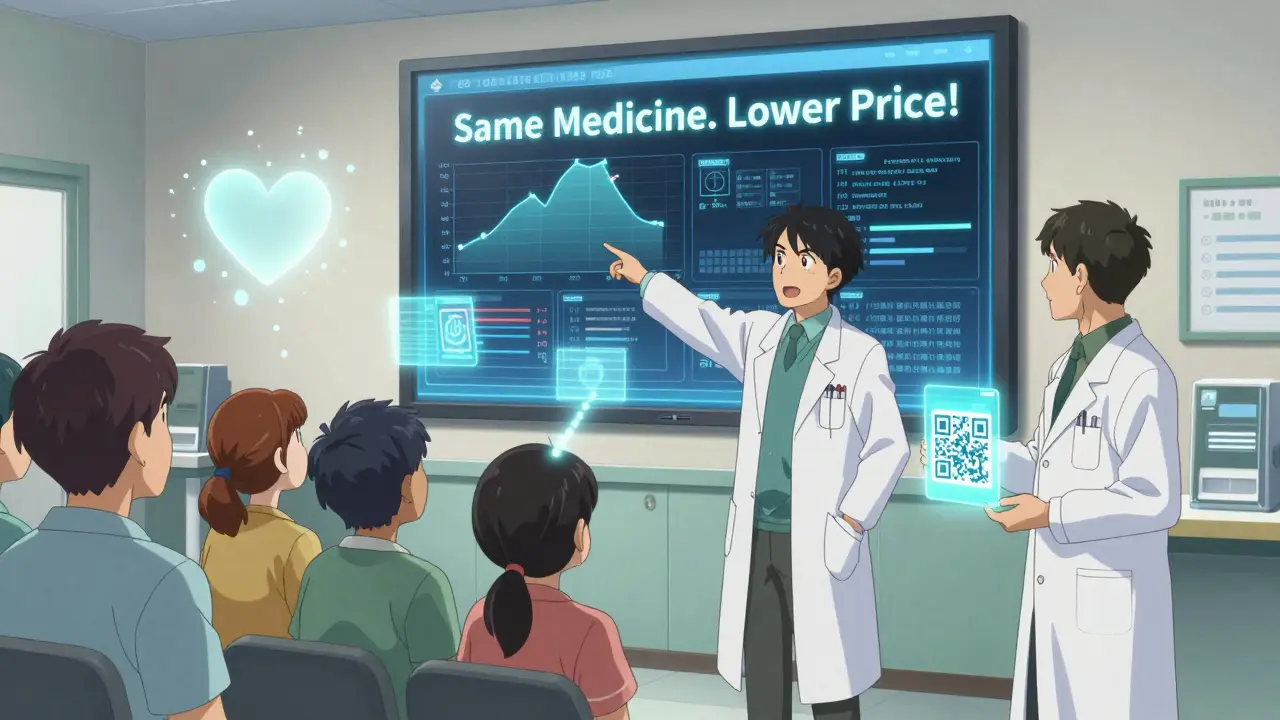
The FDA’s new “Know Your Options” campaign, launched in January 2024, is spending $15 million to fight myths. Generic manufacturers are adding QR codes to pill bottles so you can scan and see the testing data. CVS is testing AI tools that personalize education based on your medication history.
These aren’t marketing gimmicks. They’re trust-building tools. And they’re working.

Myths vs. Reality
Let’s clear up the biggest lies:- Myth: Generics have less active ingredient. Reality: The FDA requires 90-110% equivalence in actual delivery. Not 80%. Not 90%. 90-110%. That’s tighter than most brand-name batches.
- Myth: Generics are made in unsafe factories. Reality: The same factories often make both brand and generic versions. The FDA inspects them all-same standards.
- Myth: Generics take longer to work. Reality: Bioequivalence studies prove absorption speed is identical.
- Myth: If it’s cheaper, it must be worse. Reality: The savings come from skipping expensive marketing, fancy packaging, and patent lawsuits-not from cutting corners on quality.
Here’s the bottom line: If your brand-name drug works, the generic version will too. The science is settled. The data is clear. The only thing left to overcome? The fear in your head.
When Not to Switch
There are rare cases where switching might need extra care:- Thyroid meds (like levothyroxine): Small changes in absorption can affect TSH levels. If you’ve been stable on a brand, talk to your doctor before switching. But many patients switch successfully-like the one who saved $300 a year and kept her levels perfect for two years.
- Seizure meds: Some neurologists prefer to keep patients on the same version. Not because generics don’t work, but because consistency matters in fragile systems.
- Warfarin: Requires tight monitoring. Switching isn’t forbidden, but your INR needs checking after the change.
In these cases, the issue isn’t the generic. It’s the need for careful monitoring. Your doctor should guide you through it.
Final Thought: Trust Is Built, Not Given
You don’t trust a generic because you read a study. You trust it because your doctor explained it. Because your pharmacist answered your question. Because you saw your own labs stay stable. Because you saved money without losing sleep.Generic drugs aren’t a compromise. They’re the smart choice. And they’re here to stay.
Ask questions. Demand clarity. Don’t let a pill’s color decide your health.
Are generic medications really as effective as brand-name drugs?
Yes. The FDA requires generic drugs to have the same active ingredient, strength, dosage form, and bioequivalence as the brand-name version. This means they deliver the same amount of medicine into your bloodstream at the same rate. Thousands of studies and millions of patient experiences confirm they work just as well.
Why do generic pills look different from brand-name ones?
The difference in color, shape, or size comes from inactive ingredients-like dyes or fillers-that don’t affect how the medicine works. U.S. law requires generics to look different to avoid confusion with brand-name products. But the active ingredient, the part that treats your condition, is identical.
Can switching to a generic cause new side effects?
It’s possible, but rare. Side effects usually come from the active ingredient, which doesn’t change. Sometimes, a different filler in the generic can cause a mild reaction-like stomach upset-in sensitive people. If you notice new symptoms after switching, tell your doctor. But don’t assume it’s the generic. Many side effects are caused by other factors, like stress, diet, or aging.
Why do some doctors hesitate to prescribe generics?
Most doctors fully support generics. But some, especially in specialties like neurology or endocrinology, prefer consistency-especially for drugs where tiny changes in absorption matter, like thyroid or seizure medications. This isn’t because generics are less effective. It’s about minimizing variables in complex cases. Always ask your doctor why they recommend a specific version.
Is it safe to switch back and forth between brand and generic?
Yes. The FDA considers approved generics interchangeable with their brand-name counterparts. But frequent switching isn’t usually necessary. If you’re stable on a generic, there’s no reason to switch back. If you’re stable on a brand, switching to a generic is safe. The key is communication with your doctor and pharmacist to avoid confusion.
Do generic drugs come from unsafe countries?
No. The FDA inspects all manufacturing facilities-whether they’re in the U.S., India, Germany, or China. Many brand-name drugs are made overseas too. The FDA doesn’t care where the pill is made. It cares whether it meets U.S. safety and quality standards. Over 50% of generic drugs sold in the U.S. are made in India and China, but they’re held to the same strict rules as U.S.-made drugs.
How can I verify a generic drug is FDA-approved?
Look up the drug name on the FDA’s website under the “Approved Drug Products with Therapeutic Equivalence Evaluations” (Orange Book). You can also ask your pharmacist to show you the FDA approval letter for the generic. All legally sold generics in the U.S. must be approved. If it’s sold in a pharmacy, it’s FDA-approved.
Why are generics so much cheaper?
Generics cost less because they don’t need to repeat expensive clinical trials. The original brand paid millions to prove safety and effectiveness. Generic manufacturers only need to prove their version works the same way. They also skip costly marketing campaigns and brand advertising. The savings go straight to your wallet-without cutting corners on quality.
Can I ask my pharmacy to give me the brand instead of the generic?
Yes. In most cases, your pharmacist can dispense the brand-name drug if you request it-but you’ll pay more. Some insurance plans require you to try the generic first. If you have a medical reason not to switch, your doctor can write “Dispense as Written” on the prescription. But unless there’s a real clinical need, the generic is the best value.
Will my insurance cover the generic?
Almost always. Insurance plans strongly encourage generics because they save money. Your copay for a generic is often $5-$10, while the brand might cost $50-$100. Some plans won’t cover the brand unless you’ve tried the generic first. Always check your plan’s formulary, but expect the generic to be covered-and often preferred.

Write a comment
Your email address will not be published.
Recent Posts
-
 Wearable ECGs for QT Safety: Real-Time Risk Detection March 31, 2026
 -
 Cold Sores vs. Pimples: How to Tell Them Apart and Treat Each Correctly December 30, 2025
9 Comments
I used to refuse generics until my doctor sat me down and showed me the FDA bioequivalence data. I was on a brand-name statin for years-switched to generic, saved $400 a year, and my LDL hasn’t budged. The pill looks different? Yeah. So what? My body doesn’t care about the color.
Stop letting marketing fool you. The science is solid.
Look-I get it. People are scared of change. And when your health is on the line, it’s natural to cling to what’s familiar. But here’s the thing: the FDA doesn’t approve generics because they’re cheap-they approve them because they’re proven. Identical active ingredient? Check. Bioequivalence within 95%? Check. Same manufacturing standards? Check.
And yet-so many people still think, ‘Oh, it’s just a copy.’ No. It’s a copy of a copy that’s been tested more times than your phone’s software update. It’s not magic. It’s math. And math doesn’t lie.
My grandma switched from brand-name blood pressure med to generic last year. She was terrified. Thought it was ‘fake medicine.’ I printed out the FDA’s comparison chart, sat with her, and walked her through it. Three weeks later, she said, ‘I feel the same. And I’m saving $80 a month.’
Trust isn’t built with data alone. It’s built with patience. With time. With someone who cares enough to explain it-not just tell you it’s fine.
Doctors and pharmacists? You’re the bridge. Don’t skip the walk.
Oh wow, so the FDA says it’s ‘the same’? How revolutionary. Next you’ll tell me the moon landing was real and my phone doesn’t spy on me.
Let’s be real-generic pills are made in factories where the workers get paid less than your latte. And ‘bioequivalence’? That’s just corporate speak for ‘close enough for government work.’
My cousin took a generic seizure med and had a seizure. Coincidence? Or just another statistic buried under a pretty infographic?
Don’t sell me ‘science.’ Sell me a guarantee. Until then, I’ll keep paying extra for the blue pill. At least I know who made it.
I switched my anxiety med to generic last month and honestly? I felt weird at first-like my brain was doing a slow-mo version of itself. But I stuck with it. Gave it 45 days. No panic attacks. No weird dizziness. Just… calm. And a whole lot more cash in my account.
It’s wild how much power we give to color and shape, right? Like if the pill’s not blue, it can’t possibly work. But our bodies? They don’t care about branding. They just want the molecule to show up.
Also-huge shoutout to my pharmacist. She gave me a little pamphlet with doodles. I kept it on my fridge. It made me feel less alone in this weird health thing.
It’s funny how we trust a $100,000 car more than a $5 pill. Same engine. Different sticker.
Generics are the quiet heroes of healthcare. No ads. No influencers. Just chemistry that works. And yet-we’re conditioned to equate price with quality. Like if it’s cheap, it’s trash. But that’s not how biology works.
Maybe the real problem isn’t the pill. It’s the story we’ve been told about what ‘value’ means.
Also-emoji time: 🧪💊💰
People are idiots. You think a $5 pill is going to do the same job as a $50 one? Please. The FDA’s ‘80-125%’ range is a joke. That’s a 45% swing. You wouldn’t let a pilot fly if their altitude was off by 45%. Why are you okay with your meds being off by that much?
And don’t even get me started on the factories in India. You think they’re washing their hands before they touch your pills? Ha.
I’ve seen people get worse after switching. You call that ‘science’? I call it negligence dressed up in graphs.
my doc switched me to generic lisinopril and i was freaked out at first. like, what if it doesnt work? but i just gave it a shot. no side effects. no weird feelings. just cheaper.
also my pharmacist said the same factory makes both. so like… the brand is literally the same pill, just with a different box. mind blown.
thanks for the post. it helped me feel less dumb for being scared.
Oh, so now we’re just supposed to swallow the FDA’s marketing pamphlet like good little consumers? How quaint.
Let me guess-you also think organic kale is just ‘expensive lettuce’ and that ‘artisanal’ means ‘overpriced bread.’
Generics work? Sure. For most people. For most conditions. But if you’re one of the 2% who actually has a reaction to a different filler? Too bad. You’re just ‘an outlier.’
Meanwhile, the same companies that make generics also own the brand-name drugs. So who’s really saving money? Not you. Not your grandma. The shareholders.
Trust me-I’ve read the reports. The ‘equivalence’ is a legal loophole. Not a medical miracle.