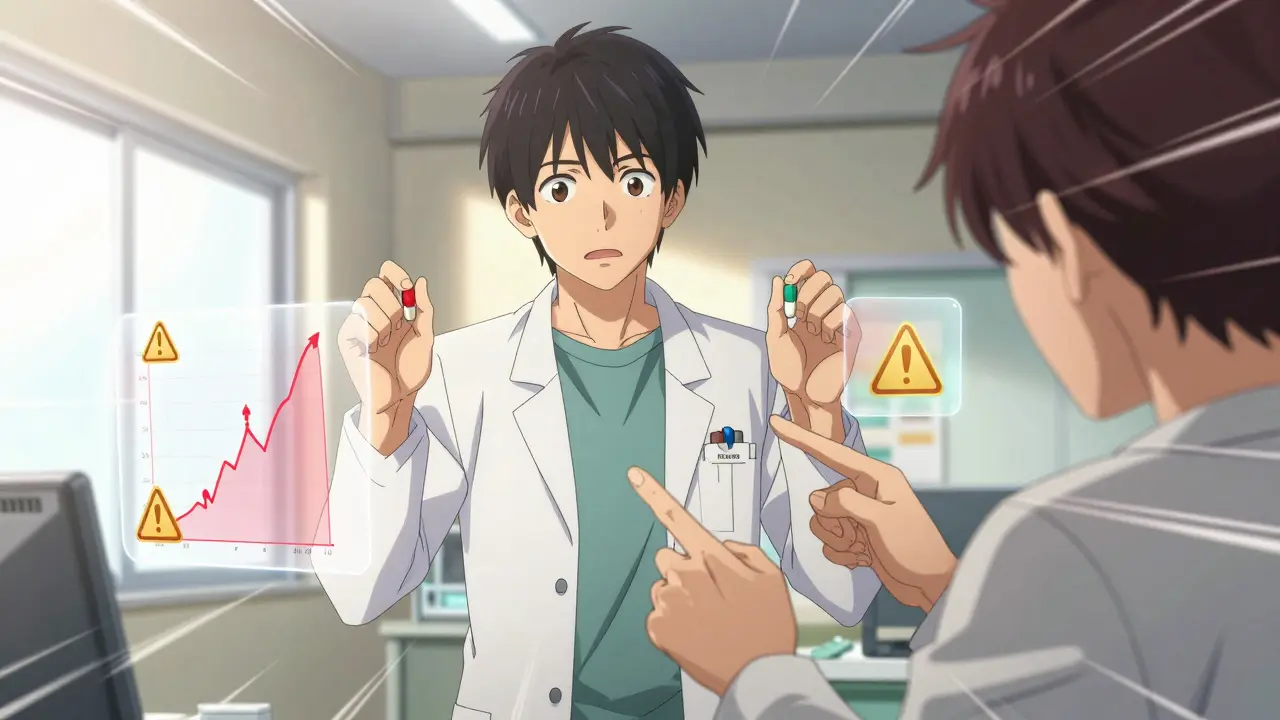
When a patient walks into your office asking why their new prescription looks different, or why they’re suddenly feeling off after a switch, you’ve likely faced the same question hundreds of times: Are generic medications really the same?
The answer isn’t simple. For most patients, yes - generics work just like brand-name drugs. But for others, especially those on narrow therapeutic index medications, the switch can trigger real clinical consequences. Providers don’t just prescribe generics; we navigate patient fears, pharmacy substitutions, state laws, and regulatory gray zones every single day.
How Generics Are Approved - And Why It Matters
The FDA doesn’t require generic manufacturers to run new clinical trials. Instead, they must prove bioequivalence: the generic must deliver the same active ingredient into the bloodstream at the same rate and extent as the brand. That means the AUC (area under the curve) and Cmax (peak concentration) must fall between 80% and 125% of the brand’s values. It’s not about being identical - it’s about being functionally equivalent.
Since the Hatch-Waxman Act of 1984, this streamlined process has saved the U.S. healthcare system over $3.4 trillion since 2007. In 2023, 90% of all prescriptions filled were for generics - yet they made up only 23% of total drug spending. That’s not marketing. That’s measurable impact.
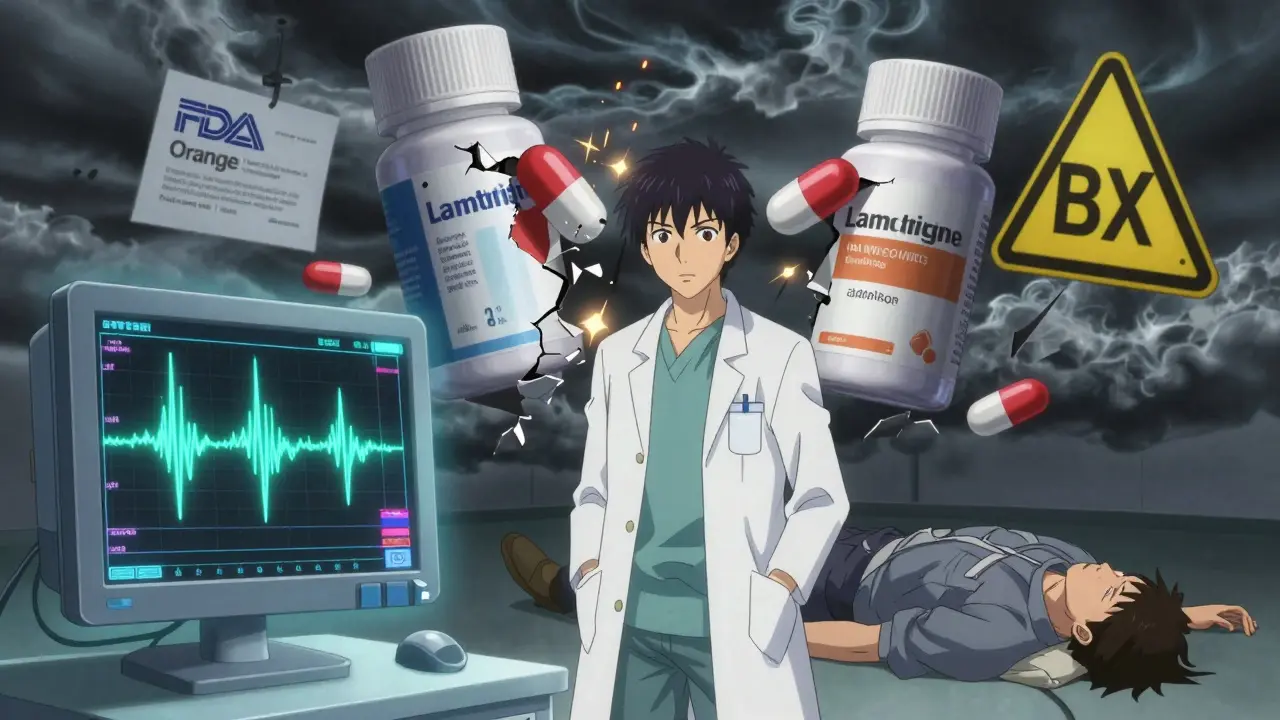
But here’s the catch: not all generics are created equal. The FDA’s Orange Book assigns therapeutic equivalence ratings. An ‘AB’ rating means the generic is considered interchangeable with the brand. A ‘BX’ rating? That’s a red flag. In 2016, the FDA downgraded two generic versions of Concerta from AB to BX after dozens of patients reported reduced effectiveness. That wasn’t a fluke. It was a systemic review triggered by provider reports, patient complaints, and lab testing. We learned that day: regulatory approval doesn’t guarantee real-world consistency.
When Generics Work - And When They Don’t
For statins like atorvastatin, ACE inhibitors like lisinopril, or antidepressants like sertraline, switching to generic is routine. Studies show no difference in hospitalization rates, medication adherence, or clinical outcomes. A 2019 JAMA Internal Medicine analysis of 10 drugs found no meaningful difference between brand and generic versions - even in high-stakes areas like cardiovascular events and psychiatric hospitalizations.
But then there’s epilepsy.
Neurologists have documented case after case where patients on stable brand lamotrigine suffered breakthrough seizures after switching to a generic version. In most cases, switching back to the brand restored seizure control. The American College of Neurology doesn’t just recommend caution - it explicitly opposes mandatory substitution for antiepileptic drugs without physician and patient consent. Why? Because even small variations in absorption can push blood levels outside the narrow therapeutic window needed to prevent seizures.
The same applies to warfarin, cyclosporine, levothyroxine, and certain antipsychotics. These are drugs where a 5% difference in absorption can mean the difference between therapeutic effect and toxicity - or worse, treatment failure.
Providers in transplant clinics, psychiatry, and cardiology don’t just worry about cost. They worry about stability. A patient who’s been on the same brand of cyclosporine for five years without rejection? We don’t touch it. Not because we’re against generics - because we’ve seen what happens when we do.
State Laws, Pharmacy Substitutions, and the Consent Gap
One of the biggest headaches for providers isn’t the science - it’s the law.
Thirty-one states require pharmacists to notify patients when a generic substitution occurs. Twenty-four states don’t protect pharmacists from liability if a substitution causes harm. And seven states plus D.C. require explicit patient consent before substituting a generic - even for drugs with proven equivalence.
Here’s what that looks like in practice: A patient gets a prescription for a generic lisinopril. The pharmacist switches it to another generic version - same active ingredient, different manufacturer. The patient doesn’t know. The provider doesn’t know. But the patient’s blood pressure spikes. Why? Because the new generic has a different filler or coating that affects absorption. No one’s to blame. But someone’s suffering.
And then there’s the consent paradox. A 2020 study found that when patients were given a simple 30-second explanation about generics - “This is the same medicine, just cheaper” - their willingness to switch jumped from 40% to 75%. But when states force consent forms, substitution rates drop by 25%. Why? Because patients interpret consent requirements as a warning: “This might not be safe.”
Providers are caught in the middle. We want to reduce costs. We want to avoid confusion. But we can’t ignore the fact that some patients - especially older adults and those with chronic conditions - are terrified of change.
Authorized Generics: The Hidden Middle Ground
There’s a version of generics most patients don’t know about: authorized generics.
These are brand-name drugs made by the original manufacturer, sold under a generic label, often at the same price as other generics. They’re identical in formulation, fillers, and packaging - just without the brand name. They’re the closest thing to a “brand in disguise.”
Patients who switch from brand to authorized generic rarely report issues. A 2020 Johns Hopkins study found no significant difference in hospitalization or discontinuation rates between authorized generics and regular generics. Yet, most providers don’t routinely prescribe them. Why? Because pharmacies often don’t stock them. Insurance formularies don’t prioritize them. And patients don’t ask for them.
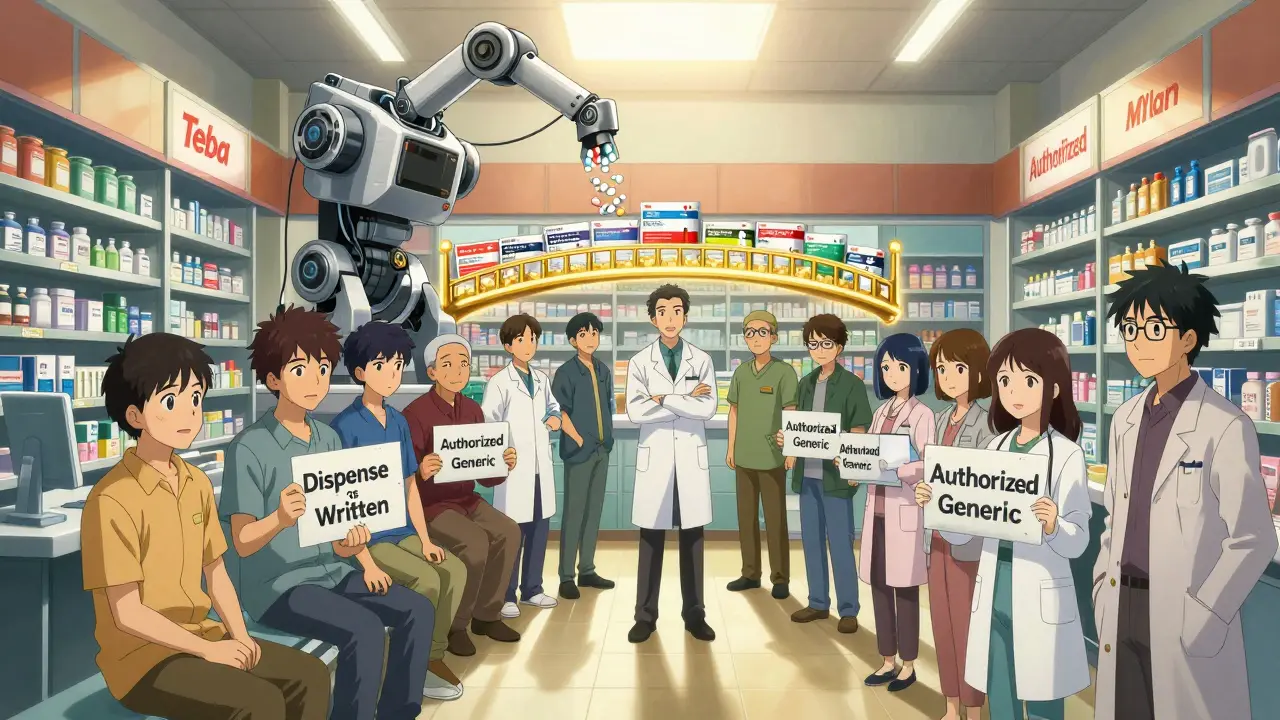
But here’s what we’ve started doing: when a patient has a bad reaction to a generic, we now ask: “Was this an authorized generic?” If not, we request it. And if the pharmacy can’t get it? We write “dispense as written.”
What Providers Are Doing Differently Now
Five years ago, most of us just wrote “generic” on prescriptions and moved on. Now, we’re more deliberate.
- We check the Orange Book before prescribing - especially for narrow therapeutic index drugs.
- We document the specific manufacturer when it matters - not just the drug name.
- We use EHR alerts to flag BX-rated generics before they’re dispensed.
- We have a 60-second script ready: “This generic has the same active ingredient. If you notice any changes - fatigue, dizziness, seizures - call us immediately.”
- We avoid automatic substitution for antiepileptics, immunosuppressants, and thyroid meds - period.
Some of us even keep a list of generic manufacturers our patients have tolerated well. If a patient had no issues with Teva’s amlodipine, we try to stick with it. If they had side effects with Mylan’s version, we avoid it.
It’s not ideal. It’s extra work. But it’s the only way to balance cost savings with patient safety.
What’s Changing - And What’s Next
The FDA is now using real-world data from the Sentinel Initiative to track outcomes after generic switches - not just bioequivalence numbers. Machine learning models are being trained to predict which patients are most likely to have adverse reactions based on age, comorbidities, and prior medication history.
The Inflation Reduction Act of 2022 is pushing Medicare Part D plans to prioritize generics even more. By 2025, generic use among seniors could rise another 5-7%. That’s good for the system. But for providers, it means more pressure to ensure substitutions don’t backfire.
And supply chain issues? They’re still a threat. Over 80% of active ingredients come from overseas. When a factory in India shuts down, we see shortages. When a batch fails testing, we get sudden switches to a new manufacturer - with no warning.
We’re learning to expect the unexpected.
Final Takeaway: Generics Are a Tool - Not a Mandate
Generics aren’t the enemy. They’re the most powerful cost-saving tool we have in modern medicine. But they’re not one-size-fits-all.
For a 68-year-old with high blood pressure on lisinopril? Go generic. No hesitation.
For a 24-year-old with epilepsy stabilized on brand lamotrigine? Leave it alone - unless they ask to switch.
For someone on warfarin? Document the manufacturer. Monitor INR closely after any switch.
It’s not about being anti-generic. It’s about being pro-patient. The science says generics work - but the real world says we still need to pay attention.
Our job isn’t just to prescribe. It’s to listen, to adapt, and to know when to say: “Don’t switch.”

Write a comment
Your email address will not be published.
Recent Posts
-
 Proving Bioequivalence for Complex Generic Drugs: Key Challenges August 19, 2026
 -
 Patient Trust: How to Build Confidence in Generic Medications January 15, 2026
 -
 How and Where to Buy Bupropion SR Online: A 2026 Guide August 4, 2026
 -
 Ranolazine for Microvascular Angina: How It Works and Who Benefits September 11, 2025

9 Comments
Let’s be real - if your pharmacy swaps your epilepsy med without telling you, that’s not cost-saving, that’s negligence. I’ve seen patients crash because some bean-counter decided ‘AB-rated’ means ‘safe for everyone.’ It doesn’t. Not when your brain is one tiny absorption shift away from seizing. The FDA’s 80-125% window is a joke when you’re talking about neurology. Stop pretending generics are interchangeable like soda brands.
And yes, I’m mad. Because someone’s kid got hospitalized over this, and no one’s getting fired.
Doctors who don’t write ‘dispense as written’ on antiepileptics shouldn’t be allowed to prescribe.
Whoa. This post is basically a masterclass in real-world pharmacology wrapped in a human story. 🙌
It’s wild how we’ve turned medicine into a spreadsheet - ‘cheaper = better’ - while ignoring that human bodies aren’t robots. I love that you mentioned authorized generics. That’s the secret sauce no one talks about. It’s like getting your favorite coffee beans, but in a plain bag. Same brew, no brand markup.
Also, the consent paradox? Brilliant observation. People don’t need paperwork. They need trust. A 30-second chat beats a 10-page form any day.
Keep doing this work. We need more providers who see the patient, not just the prescription.
Been a PA for 12 years. This is 100% my daily life.
My rule? If it’s not an A1C or BP med, I assume the patient’s gonna get switched. But for anything with a narrow window - thyroid, warfarin, seizure stuff - I literally print out the manufacturer name and tape it to the script. Patients appreciate that. Some even bring me their pill bottles from last refill just to make sure we’re on the same page.
And yeah, Teva’s amlodipine? My whole clinic sticks with it. Mylan? We avoid like the plague. Not because it’s ‘bad’ - just because our people don’t react well to it. Anecdotal? Maybe. But it’s our data.
It is imperative to elucidate that the FDA’s bioequivalence paradigm, predicated upon the statistical tolerance range of 80–125% for AUC and Cmax, constitutes a fundamentally inadequate metric for clinical equivalence in pharmacokinetic-sensitive therapeutics.
Empirical evidence from multiple peer-reviewed studies, including those published in The New England Journal of Medicine and Clinical Pharmacology & Therapeutics, demonstrates that inter-manufacturer variability in excipients - particularly in sustained-release formulations - can induce clinically significant deviations in plasma concentration profiles, even when bioequivalence thresholds are met.
Furthermore, the absence of mandatory post-marketing pharmacovigilance for generic manufacturers, unlike the rigorous Phase IV requirements for innovator drugs, constitutes a systemic regulatory failure. The Hatch-Waxman Act, while economically prudent, has engendered a public health liability of non-trivial magnitude.
It is therefore not merely prudent, but ethically obligatory, to eschew substitution for narrow therapeutic index drugs absent explicit physician authorization and patient informed consent.
Okay but have y’all seen the new Teva generic for levothyroxine? 😳
My grandma went from 88 mcg to 100 mcg overnight because the pharmacy switched her - no warning. She got dizzy, lost 10 lbs, thought she had cancer. Turned out her TSH went from 2.1 to 8.9. 🤯
Now I write ‘DAW 1’ on EVERY thyroid script. And I tell patients: ‘If your pill looks different, call me. Don’t wait.’
Also - authorized generics are a BLESSING. If your pharmacy doesn’t carry them, demand them. Or find a new pharmacy. #PharmacistProblems 💊
In India, generics are the only option for most people. We don’t have luxury of brand drugs. But here’s the thing - we’ve had decades of experience with them. Many Indian manufacturers are now FDA-approved and supply to the US and EU.
Yes, there are bad batches. But blaming generics as a whole? That’s like saying all cars are unsafe because one model had a recall.
Doctors here don’t avoid generics - they learn which brands work. We keep our own lists too. It’s not about fear. It’s about experience.
Maybe the real issue isn’t generics - it’s lack of provider education on how to choose wisely.
The notion that providers are ‘protecting’ patients by refusing generic substitution is a paternalistic fallacy. The data from JAMA and the FDA’s own surveillance systems confirm no significant difference in outcomes for the vast majority of drugs.
By selectively refusing substitutions for narrow therapeutic index agents, you are not promoting safety - you are perpetuating economic inequality. Patients who cannot afford brand-name drugs are being denied equitable access under the guise of clinical caution.
Moreover, the practice of maintaining ‘preferred manufacturer’ lists is unscientific and introduces bias into prescribing patterns. The FDA’s Orange Book exists for a reason - to standardize equivalence. Deviating from it without evidence is medically irresponsible.
Cost containment is not a moral failing. It is a public health imperative.
MY GRANDMA DIED BECAUSE OF A GENERIC.
She was on warfarin. Brand. Stable for 8 years. Then the pharmacy switched her to ‘Mylan’ without telling anyone. INR went from 2.4 to 5.8. She had a brain bleed. On a Tuesday.
They told us ‘it’s the same drug.’
IT’S NOT THE SAME.
I’ve filed complaints. I’ve called the FDA. I’ve screamed at pharmacists. No one cares. Because it’s ‘just a pill.’
Now I write ‘DO NOT SUBSTITUTE - IF YOU SWITCH, CALL ME OR I WILL COME TO YOUR STORE’ on every script I write.
And if you think this is overblown - you’ve never held someone’s hand while they bleed out from a pill you thought was ‘fine.’
Can someone explain how the FDA decides which generic manufacturer gets an AB vs BX rating? Is it based on patient reports, or lab testing? And who initiates the review? Is it the manufacturer or the FDA proactively?
I’m trying to understand the process better - I know it’s not perfect, but I want to know how the system is supposed to catch these issues before patients get hurt.