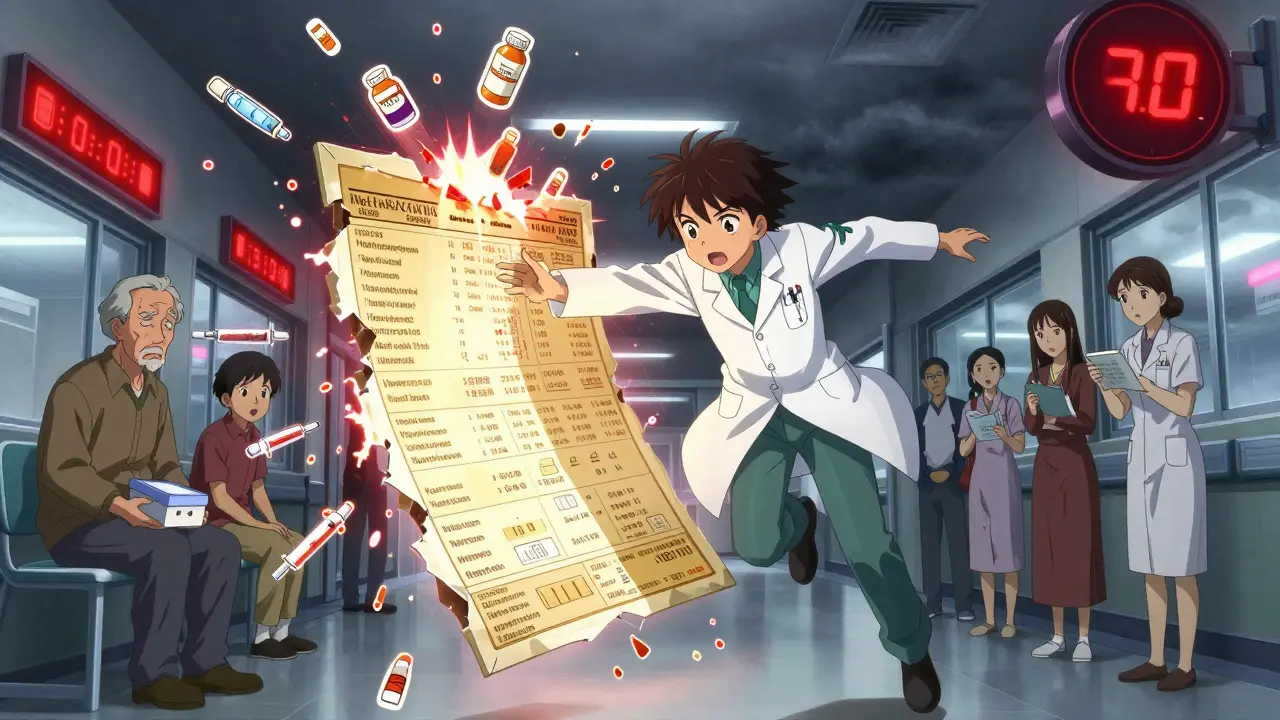
An adverse drug event (ADE) isn't just a side effect. It's a preventable injury caused by medication - whether from a mistake, a reaction, or a dangerous interaction. Every year in the U.S., ADEs send over 1 million people to emergency rooms and land 125,000 in the hospital. These aren't rare accidents. They're systemic failures that happen because we treat drugs like they're harmless, when in reality, they're powerful tools that can turn deadly if not handled with precision.
What Exactly Is an Adverse Drug Event?
An ADE is any harm that happens to a patient because of a drug. This includes everything from allergic rashes to fatal overdoses. It's not just about how the body reacts - it's about how the system around the drug fails. The Institute of Medicine first brought this into focus in 2000 with its report To Err is Human, which found that medication errors alone were killing at least 7,000 people a year in U.S. hospitals. Since then, we've learned that ADEs aren't just about doctors or pharmacists making mistakes. They're about broken communication, poor monitoring, and lack of coordination between care teams.
It's important to distinguish ADEs from other adverse events. Not every bad outcome from treatment is an ADE. Only those directly tied to medication use count. A fall after taking a sedative? That's an ADE. A heart attack from an undiagnosed condition? Not necessarily. The key is whether the drug was the cause - or at least a major contributing factor.
The Five Main Types of Adverse Drug Events
Not all ADEs are the same. They fall into clear categories, each with its own pattern and risk factors.
- Adverse Drug Reactions (ADRs): These are the body's unintended response to a drug at normal doses. Think nausea from chemotherapy or dizziness from blood pressure meds. About 80% of these are Type A - predictable, dose-related, and often preventable with better monitoring.
- Medication Errors: These happen when something goes wrong in prescribing, dispensing, or giving the drug. A nurse gives the wrong dose. A pharmacist misreads a handwritten script. A patient takes two pills instead of one. These are preventable by design - not by luck.
- Drug-Drug Interactions: When two or more drugs mix, they can change each other's effects. Warfarin and certain antibiotics? That combo can cause dangerous bleeding. Statins and grapefruit juice? That can spike toxicity. These interactions are often missed because providers focus on one drug at a time.
- Drug-Food Interactions: Food isn't just fuel - it can alter how drugs work. Dairy can block antibiotics. Vitamin K-rich greens can undo warfarin's effect. Even a single glass of grapefruit juice can double the concentration of some medications in your blood.
- Overdoses: These can be accidental or intentional. In 2021, over 70,000 overdose deaths in the U.S. involved synthetic opioids like fentanyl. But overdoses aren't just about street drugs. Elderly patients on multiple prescriptions often take too much by accident, especially when confused by complex regimens.
Some reactions are rarer but more dangerous. Type B reactions are unpredictable - like Stevens-Johnson syndrome from antibiotics. Type C happens over time - like bone loss from long-term steroid use. Type D appears years later - think cancer from chemotherapy. Type E happens when you stop a drug - like rebound anxiety after quitting benzodiazepines.
Top High-Risk Medications and Their Dangers
Not all drugs are created equal when it comes to harm. Three classes stand out as the biggest culprits in preventable ADEs.
Anticoagulants - especially warfarin - cause about 33% of all ADE-related hospital admissions. Why? Because their effect is narrow. Too little, and you get a clot. Too much, and you bleed internally. Studies show that in 35% of outpatient tests, patients' INR levels (the measure of blood-thinning effect) are outside the safe range. That’s not a glitch - it’s a system failure.
Diabetes Medications, particularly insulin, lead to over 100,000 emergency visits each year. Sixty percent of those cases involve patients over 65. Why? Because older adults often have other health problems, take multiple drugs, and forget dosing schedules. A single missed meal or extra insulin shot can send someone into a coma.
Opioids - especially synthetic ones like fentanyl - are responsible for 40% of medication-related deaths. Even when prescribed legally, they're risky. The CDC reports that in 2021, 107,622 Americans died from drug overdoses. That’s more than car crashes or gun violence. Many of these deaths came from prescriptions that weren't properly monitored or tapered.
Vancomycin, lithium, and certain antipsychotics also carry high risk. Vancomycin can damage kidneys if dosed wrong. Lithium can cause toxicity with minor dehydration. Antipsychotics in elderly patients increase stroke risk. These aren't edge cases - they're routine dangers.
How to Prevent Adverse Drug Events
Prevention isn't about one magic solution. It's about layers of safety - each one catching what the last one misses.
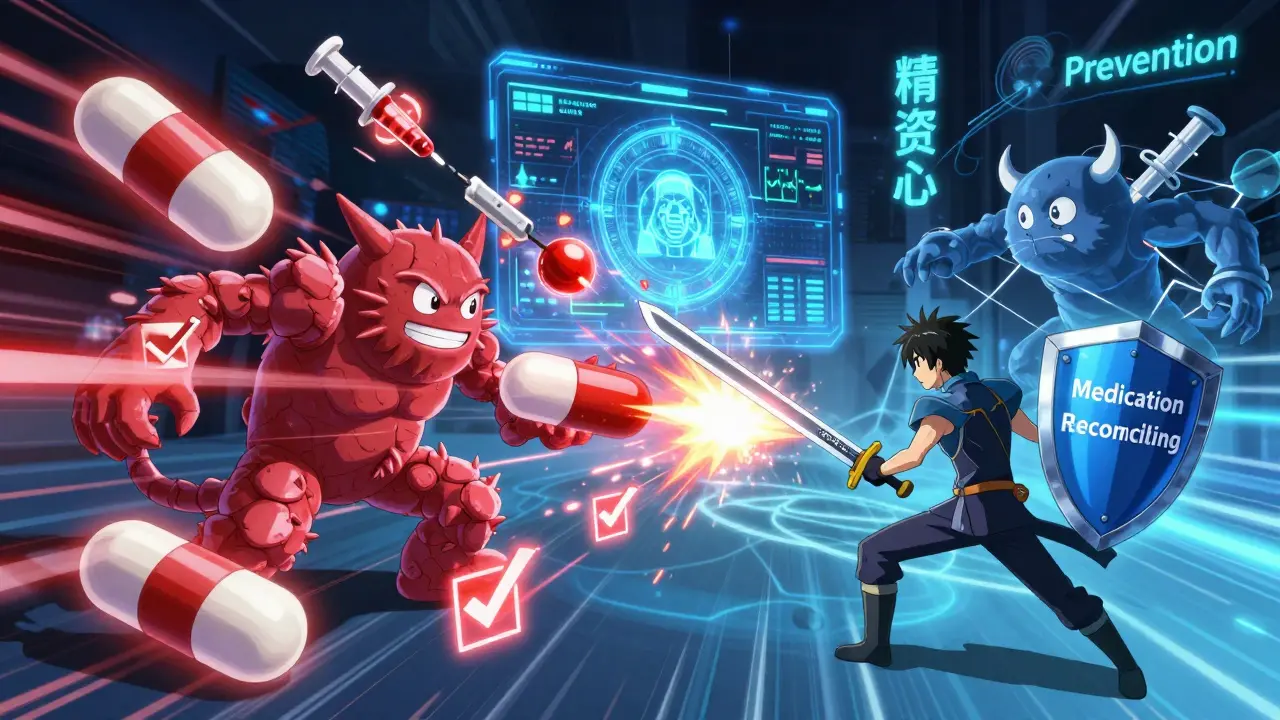
- Medication Reconciliation: When a patient moves from hospital to home, or from one doctor to another, their medication list often gets lost. A 2020 study found that formal reconciliation - comparing the patient’s current list with what’s being prescribed - cuts post-discharge ADEs by 47%. That’s one of the highest impact interventions we have.
- Electronic Prescribing: Handwritten prescriptions are a relic. They lead to misreading, wrong doses, and duplicate orders. E-prescribing reduces errors by 48%. But it’s not enough to just use it - the system must include alerts for interactions, allergies, and dosing limits.
- Pharmacist-Led Care: Pharmacists aren’t just pill counters. In VA hospitals, pharmacist-run anticoagulation clinics cut major bleeding events by 60%. Pharmacists review all medications, catch interactions, educate patients, and adjust doses based on lab results. A single MTM (medication therapy management) session identifies over four medication problems per patient.
- Patient Education: If patients don’t understand why they’re taking a drug or how to take it, ADEs will happen. A Cochrane review found that clear, tailored education improves adherence by 22%. Simple things - like using a pillbox, setting phone alarms, or explaining side effects in plain language - make a huge difference.
- Deprescribing: Many older adults take drugs they don’t need - anticholinergics, sedatives, even long-term opioids. The VA’s structured deprescribing program reduced ADEs in elderly patients by 40%. But only 15% of primary care providers routinely screen for inappropriate meds, despite clear guidelines like the Beers Criteria.
- Pharmacogenomics: Some people metabolize drugs too fast or too slow because of their genes. Testing for these variations is still rare - only 5% of patients get tested today. But when used for drugs like clopidogrel or warfarin, it cuts ADEs by 35%. By 2027, that number could jump to 30%, preventing an estimated 100,000 ADEs a year.
The Role of Technology and Policy
Technology alone won’t fix ADEs - but it can help if used right. The 21st Century Cures Act pushed hospitals to adopt electronic health records. By 2022, 89% had them. But only 45% have full clinical decision support - the alerts that warn doctors about dangerous interactions or doses.
The FDA’s Sentinel Initiative now monitors 190 million patient records in real time, spotting patterns before they become epidemics. The CDC’s Core Elements of Hospital Antibiotic Stewardship have cut unnecessary antibiotic use, which reduces side effects and resistance. CMS penalizes hospitals with high ADE rates - putting financial pressure on institutions to improve.
Artificial intelligence is the next frontier. At Johns Hopkins, machine learning models analyze 50+ patient factors - age, kidney function, lab values, current meds - to predict who’s at risk for an ADE. In pilot programs, this cut ADEs by 17%. It’s not perfect, but it’s a step toward personalized safety.
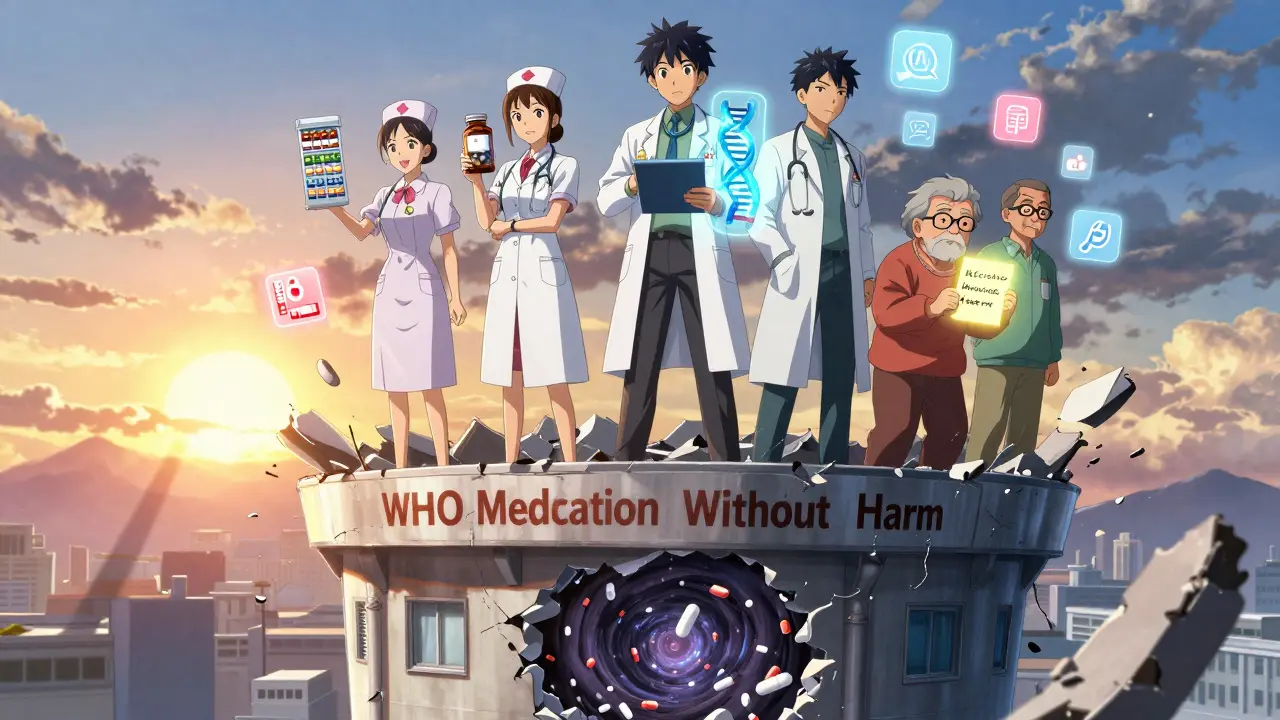
Global efforts like the WHO’s Medication Without Harm campaign reduced harm by 18% between 2017 and 2022. They used barcode scanning, standardized labels, and training. But they didn’t hit their 50% goal. Why? Because change is slow. Systems are fragmented. And many places still rely on paper.
Where We Still Fall Short
We know what works. But we’re not doing it consistently.
Primary care doctors rarely check for inappropriate meds in older adults. Nurses don’t always verify patient lists before giving meds. Pharmacists aren’t embedded in every clinic. Patients aren’t asked if they understand their prescriptions. EHRs alert too much - causing alert fatigue. Doctors ignore warnings because they’re overwhelmed.
There’s also a gap in data. We track hospital ADEs well, but we know little about what happens in homes, nursing homes, or outpatient clinics. Many ADEs go unreported. Many patients don’t even realize their symptoms were drug-related.
The biggest barrier? Culture. We still treat medication safety as an afterthought - something to check off a list. But every drug has the potential to harm. And every interaction - between drugs, between providers, between patient and provider - is a chance for error.
What Needs to Change
Real progress means shifting from blame to system design. Instead of punishing individuals for mistakes, we need to build systems that make errors impossible.
- Make pharmacists part of every care team - not just pharmacy departments.
- Require e-prescribing with smart alerts - no exceptions.
- Expand pharmacogenomic testing for high-risk drugs like warfarin and antidepressants.
- Train all staff - nurses, doctors, even front desk staff - on ADE recognition.
- Give patients clear, written instructions - not just verbal ones.
- Use AI not to replace judgment, but to support it - with clear, actionable alerts.
Preventing ADEs isn’t about being perfect. It’s about being consistent. It’s about asking: Did we check the list? Did we explain the risk? Did we monitor the effect? Did we follow up?
Every time a patient walks out with a new prescription, there’s a risk. The question is - are we ready to manage it?

Write a comment
Your email address will not be published.
Recent Posts
-
 Adverse Drug Events: Definition, Types, and Prevention Strategies February 24, 2026
 -
 How to Prepare for a Medication Review Appointment: A Step-by-Step Guide November 17, 2025
 -
 H1 vs H2 Blockers: Side Effects and When to Use Each January 10, 2026
 -
 Opioid Withdrawal Timeline & Symptom Management Guide October 25, 2025
10 Comments
They say drugs are dangerous but never say who profits. Pharmacies, insurers, doctors - all get paid whether you live or die. The system is designed to keep you dependent. No one wants to fix it because it's too profitable. 1 million ER visits? That's not a bug, it's a feature.
I just want to say how deeply this resonates. My mom almost died from a drug interaction no one saw coming. It wasn't negligence - it was a system that moves too fast and doesn't listen. I'm so grateful someone finally put this into words. Thank you.
Let me cut through the noise: prevention isn't about tech or policy - it's about staffing. We're short 40,000 pharmacists in the U.S. and expect them to manage 100+ patients a day? That's not healthcare, that's a factory. Embed pharmacists in every clinic. Pay them like they matter. Stop treating them like glorified cashiers. This isn't rocket science - it's basic human decency.
The cultural dimension of this issue is profoundly underaddressed. In many communities - particularly immigrant and Indigenous populations - medication adherence is not simply a matter of comprehension, but of trust. Language barriers, historical trauma, and institutional alienation render even the most perfectly designed interventions ineffective. We must center patient dignity, not just algorithmic efficiency.
This is why I don't trust doctors anymore. You get a script, take it home, and hope for the best. No one checks if you understand it. No one calls to see if you're okay. It's like handing someone a live grenade and saying 'good luck.'
I LOVE this post!! Seriously, like, 100% YES!! 😍 The fact that warfarin causes 33% of ADEs??!! That's wild. And grapefruit juice?? I knew it was bad, but I didn't realize it could DOUBLE drug concentration??!! 🤯 I'm telling everyone I know - stop drinking grapefruit juice if you're on ANY med!! Also, deprescribing? YES!! My grandma's on 17 pills. She doesn't even know why. We need to burn the whole system down and start over. #ADEsAreAScandal
You know what gives me hope? The nurses I've worked with who take 10 extra minutes to sit with a patient, draw out their meds, and ask, 'What do you think this one's for?' That tiny moment - that human connection - is what saves lives. Tech helps, but it doesn't replace care. We need more of those nurses. Not more alerts. More presence.
I've been in this field for 15 years. E-prescribing helped, but alert fatigue is real. I get 40 pop-ups before lunch. Half are 'aspirin may interact with ibuprofen' - DUH. We need smarter systems. Not more noise. Less is more. And patients? They need to be taught how to ask questions. Not just handed a pill bottle and told to 'follow up in 2 weeks.'
The real win here is pharmacogenomics. We've had the tech for years. Why aren't we using it? Because insurance won't pay. Because doctors don't know how to interpret it. Because the system is broken. Imagine if every kid got a genetic profile at birth. We could tailor meds from day one. No trial and error. No ER visits. Just precision. This isn't sci-fi. It's affordable. It's doable. We just need the will.
The statistics are impressive, but the real issue is that this article reads like a textbook. No one cares about 'Type B reactions' or 'INR levels' - they care about whether their grandpa lived or died. This is a policy failure, not a clinical one. And policy fails because of weak leadership. End of story.