Every year, the U.S. Food and Drug Administration (FDA) approves hundreds of generic drugs. These aren’t just cheaper versions of brand-name pills-they’re massive cost-cutters for the entire health system. In 2022 alone, new generic approvals saved the U.S. healthcare system $5.2 billion in just the first year after approval. That’s not a typo. That’s what happens when a single blockbuster drug goes generic and prices drop by 70% or more overnight.
How the FDA Measures Savings
The FDA doesn’t just count how many generics get approved. It tracks exactly how much money those approvals save. Their method is simple but powerful: they look at what a brand-name drug cost before a generic entered the market, then measure what it costs after. They multiply that difference by how many pills were sold. They also track how much the brand-name price dropped after generic competition started-even if the brand still sold some units.
For example, if a brand-name drug cost $100 per month and the first generic came in at $25, and 1 million people switched, that’s $75 million in savings just from patients switching. But if the brand dropped its price to $50 to compete, then even the people still buying the brand are saving $50 per month. The FDA adds both together.
This method only counts savings from drugs approved in that specific year-and only for the first 12 months after approval. It’s a snapshot of the immediate impact, not the long-term total. That’s why the numbers jump around so much year to year.
Year-by-Year Savings from New Generic Approvals
Here’s what the FDA recorded for savings from new generic approvals over the last few years:
- 2018: $2.7 billion
- 2019: $7.1 billion (highest on record)
- 2020: $1.1 billion
- 2021: $1.37 billion
- 2022: $5.2 billion
Why the wild swings? It’s all about timing. In 2019, several high-cost drugs lost patent protection at once. One of them, a treatment for rheumatoid arthritis, saw its price drop from $3,000 a month to under $200. That single drug accounted for nearly $2 billion in savings that year. In 2020, fewer big-ticket drugs went generic, so savings dropped sharply. In 2022, five major drugs-all used for chronic conditions like high cholesterol and diabetes-went generic together. That pushed savings back up to over $5 billion.
It’s not just about how many generics are approved-it’s about which ones. A single new generic for a drug with $10 billion in annual sales can generate more savings than dozens of generics for cheap, low-volume medications.
What About Total Generic Savings?
The FDA’s number only tells part of the story. The Association for Accessible Medicines (AAM) tracks something bigger: total savings from all generic drugs in use during a calendar year. This includes every generic ever approved, not just the ones approved last year.
In 2023, generics saved the U.S. system a staggering $445 billion. That’s more than the entire annual budget of the Department of Education. Over the past decade (2014-2023), generics have saved the country over $3.1 trillion.
Here’s how that money breaks down by payer:
- Medicare: $137 billion saved (about $2,672 per beneficiary)
- Commercial insurers: $206 billion saved
- Medicaid: $102 billion saved
And by condition:
- Heart disease: $118.1 billion saved
- Mental health: $76.4 billion saved
- Cancer: $25.5 billion saved
California alone saved $38 billion in 2023. Alaska saved $354 million. The savings scale with population size and prescription volume. No state was left out.
Why the Difference Between FDA and AAM Numbers?
The FDA’s $5.2 billion in 2022 and the AAM’s $445 billion in the same year aren’t contradictory-they’re measuring different things.
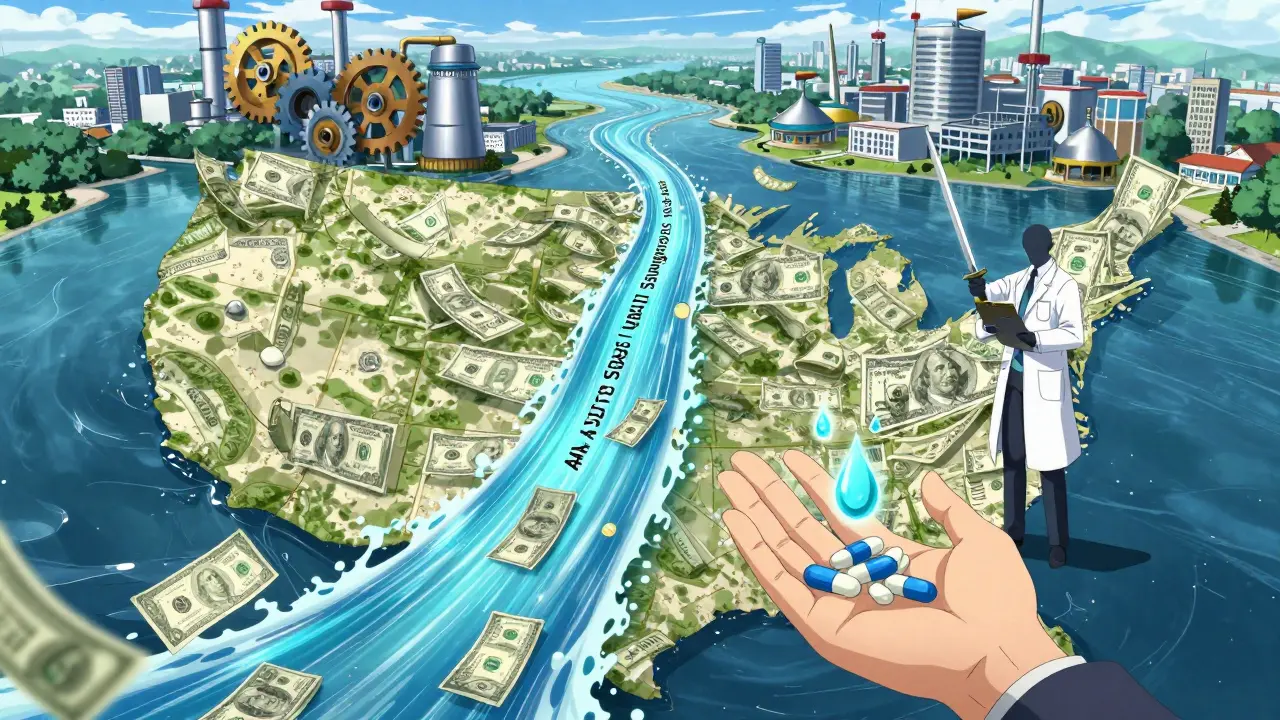
Think of it like a river. The FDA measures how much water flows into the river each year from new tributaries. The AAM measures how much water is flowing down the entire river at any given moment. The river gets bigger every year, but the new streams only add a fraction of the total flow.
The FDA’s number is the impact of new competition. The AAM’s number is the cumulative effect of decades of generic use. Both matter. One shows what’s coming next. The other shows what’s already working.
Who Benefits the Most?
Patients pay less. Pharmacists fill more prescriptions. Insurers spend less. But who gets the biggest slice of the savings?
Not always the patient. A 2023 Senate Finance Committee report found that only 50-70% of generic savings actually reach the person holding the prescription. The rest gets absorbed by pharmacy benefit managers (PBMs) through rebates and complex pricing deals. A drug might cost $10 at the pharmacy, but the PBM might have negotiated a $7 rebate from the manufacturer. That rebate doesn’t always lower the patient’s copay.
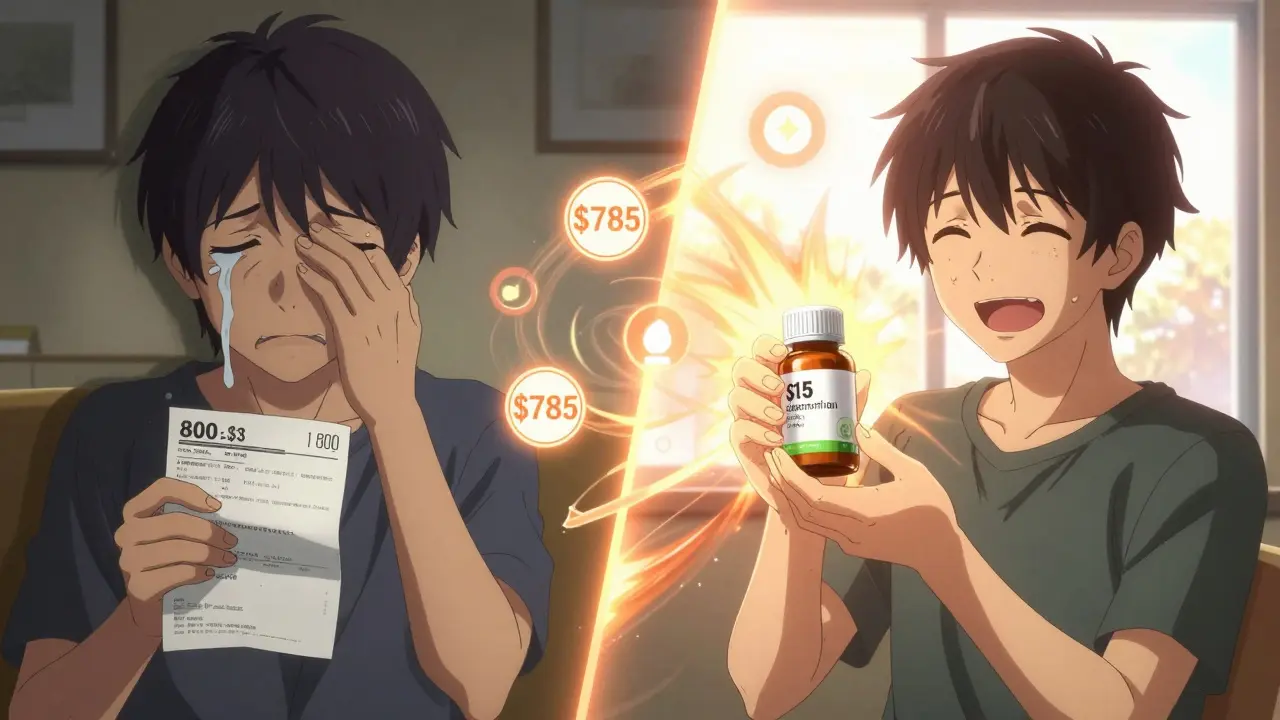
Still, patients win in the long run. The average generic copay in 2019 was $6.97. For many chronic conditions, that’s the difference between taking your meds every month or skipping doses because you can’t afford them. One patient told a reporter she used to pay $800 a month for her diabetes drug. After the generic came out, her copay dropped to $15. That’s not a statistic-that’s a life changed.
What’s Driving the Growth?
More than 90% of U.S. prescriptions are for generics. Yet they make up only 13.1% of total drug spending. That’s the power of competition.
Several forces are pushing this trend forward:
- Patent expirations: Dozens of top-selling brand-name drugs are losing protection between 2024 and 2027, including drugs for Alzheimer’s, obesity, and autoimmune diseases.
- Faster FDA reviews: Thanks to the Generic Drug User Fee Amendments (GDUFA), 95% of generic applications are reviewed within 10 months-down from over 2 years in the early 2000s.
- Cost pressures: Medicare, Medicaid, and private insurers are pushing hard for generics. Some plans won’t cover brand-name drugs unless the patient first tries the generic.
- Aging population: Older adults take more medications. Generics make long-term treatment affordable.
By 2033, U.S. generic drug revenue is projected to hit $131.8 billion. That’s not just growth-it’s a transformation of how medicine is paid for.
What’s Next?
Generics aren’t the whole story anymore. Biosimilars-generic versions of complex biologic drugs-are starting to enter the market. As of August 2024, the FDA had approved 59 biosimilars. They’re harder to make, slower to approve, and more expensive than traditional generics. But they’re already saving billions on drugs like Humira and Enbrel.
The FDA’s 2023 Drug Competition Action Plan is targeting delays caused by brand-name companies using legal tricks to block generics. Some manufacturers pay generic makers to stay out of the market. Others use complex safety programs (called REMS) to make it harder for generics to get approved. The FDA is cracking down.
Meanwhile, experts warn that not all future savings will be as big as the 2019 spike. The next wave of generics won’t all be for billion-dollar drugs. But even modest savings add up. A $500 million saving from a dozen smaller drugs still means thousands of patients can afford their medicine.
Final Takeaway
Generic drugs aren’t just a cost-saving tool-they’re a public health necessity. The year-by-year numbers show how unpredictable and powerful this system is. One approval can save billions. The next year, nothing. But over time, the pattern is clear: every time a generic enters the market, prices fall, access improves, and lives get easier.
That $5.2 billion in 2022? It’s not just a number. It’s 5 million people who didn’t have to choose between their medicine and their rent. It’s a diabetic who didn’t skip a dose. It’s a heart patient who didn’t go bankrupt.
That’s the real value of generic approvals. Not in the spreadsheets. In the lives.
How much do generic drugs save patients on average per prescription?
On average, generic prescriptions cost 80-85% less than brand-name versions. In 2019, the average generic copay was $6.97, compared to $127 for brand-name drugs. For many chronic conditions, this means monthly savings of $100 to $800 per person.
Why do generic savings vary so much from year to year?
Savings depend on which brand-name drugs lose patent protection. In 2019, several high-cost drugs went generic at once, pushing savings to $7.1 billion. In 2020, fewer big-ticket drugs expired, so savings dropped to $1.1 billion. It’s not about how many generics are approved-it’s about the value of the drugs going generic.
Do generic savings always mean lower prices at the pharmacy?
Not always. While generics are cheaper for insurers and pharmacies, pharmacy benefit managers (PBMs) often keep a portion of the savings through rebates. A 2023 Senate investigation found only 50-70% of the savings flow directly to patients. Some plans still charge high copays even for generics.
What’s the difference between FDA and AAM savings numbers?
The FDA measures savings from drugs approved in a single year during their first 12 months on the market. The AAM measures total savings from all generics in use during a calendar year. The FDA number is the new impact; the AAM number is the total effect. In 2022, FDA reported $5.2 billion in new savings, while AAM reported $445 billion in total savings.
Are biosimilars contributing to generic savings yet?
Yes, but slowly. As of August 2024, the FDA had approved 59 biosimilars-generic versions of complex biologic drugs like Humira and Enbrel. They’re more expensive to produce than traditional generics, so their savings are smaller per unit. But collectively, they’re already saving billions annually, and their impact is expected to grow rapidly over the next decade.
What’s projected for future generic savings?
The Association for Accessible Medicines projects cumulative savings from generics and biosimilars will reach $3.9 trillion by 2028. Annual savings are expected to hit $450-500 billion by the late 2020s, driven by dozens of blockbuster drugs losing patent protection between 2024 and 2027.

Write a comment
Your email address will not be published.
Recent Posts
-
 How to Recognize Unsafe Medication Advice on Social Media December 10, 2025
 -
 Patient Trust: How to Build Confidence in Generic Medications January 15, 2026
 -
 Burning Sensation in the Joints: Causes and Treatment October 6, 2025
 -
 How to Evaluate Stability of Repackaged or Pillbox Medications September 5, 2026
14 Comments
Oh wow, $5.2 billion in one year? Guess the FDA’s just handing out free money now. Meanwhile, my insulin copay’s still $450 because PBMs are siphoning off the ‘savings’ like a drunk vampire at a buffet. They call it ‘generic’ but it’s really just corporate shell games with more labels.
It is imperative to acknowledge the profound fiscal impact generated by the FDA’s rigorous approval protocols for generic pharmaceuticals. The data presented underscores a systemic efficiency that reduces financial strain on public health infrastructure. One must, however, remain cognizant of the structural inequities embedded within pharmacy benefit manager remuneration models, which may dilute patient-centric outcomes despite macroeconomic gains.
THIS IS WHY WE NEED MORE GENERIC DRUGS. Imagine if every kid with asthma could actually afford their inhaler. Or if seniors weren’t splitting pills because they can’t afford the copay. This isn’t just numbers-it’s people breathing, living, not choosing between meds and groceries. Let’s push for faster approvals, not more loopholes.
so like… i just read this and i think like… why is the FDA even here if theyre not fixing the p b m thing?? like i get the savings but my pharmacy still charges me 70 bucks for a generic?? like what even is the point??
Let me guess-the FDA is just a front for Big Pharma’s slow-motion monopoly. The ‘savings’? A distraction. They let a few generics in to look good while keeping the real money-makers protected. The 2019 spike? A controlled release. The 2020 drop? A reset. And now they’re hyping biosimilars to keep us distracted while they patent the next billion-dollar drug under a new name. Wake up.
Ugh. Another ‘generic drugs are great’ thinkpiece. Sure, they’re cheaper-but did you know some generics are made in factories that got shut down for selling rat poison as active ingredients? And the ‘savings’? Half of it goes to investors who own both the brand AND the generic. It’s like the same guy stole your wallet and then gave you back a quarter with a smile. Thanks, capitalism.
Okay but let’s be real-$445 billion saved? That’s not because generics are cheaper. It’s because insurers and PBMs are forcing patients into cheaper options, then keeping the difference. You think that diabetic paying $15 is getting a deal? Nah. The system just moved the cost from insurance to the patient’s dignity. And don’t even get me started on how they cherry-pick which generics get approved. It’s all about market share, not health.
One must observe, with a critical and refined lens, that the entire narrative surrounding ‘generic drug savings’ is a bourgeois illusion, constructed by technocratic elites to pacify the masses. The FDA’s metrics? Arbitrary. The AAM’s figures? Inflated. The real savings? A redistribution of wealth from the middle class to the pharmaceutical-industrial complex, disguised as benevolence. And the ‘lives saved’? Poetic embellishment. Reality is far more sordid.
People don’t get it. The FDA doesn’t care about you. They care about patent cliffs. They approve generics when the brand-name drug’s patent expires, not when people need them. And those biosimilars? They’re just branded generics with a fancy name and a 10-year head start. The whole system is rigged. You think your $15 copay is a win? It’s just the new normal. They lowered the bar so you’d stop complaining.
Interesting breakdown. I’ve always wondered how the numbers are calculated. The river analogy actually makes sense-new tributaries vs. total flow. I think the real story is how long it takes for these savings to reach the people who need them. It’s not just about approval speed. It’s about distribution, access, and whether pharmacies even stock the generic. Maybe next time we can look at rural access too.
Let me tell you something nobody else is saying-this whole generic drug thing is part of a larger globalist agenda to standardize medicine across borders, and once we’re all on the same generics, they’ll start adding traceable microchips to the pills through the excipients, and then they’ll track your compliance, your mood, your blood pressure, your sleep patterns-all tied to your social credit score, and if you miss a dose, your insurance rates go up, your job gets flagged, your kid’s school gets notified, and suddenly you’re on a watchlist because you didn’t take your blood pressure med on time, and they say it’s for your own good but we all know what they really want is control, and the FDA is just the frontman for the World Health Organization’s hidden pharmaceutical surveillance program that’s been quietly rolling out since 2016 under the guise of ‘efficiency’ and ‘cost savings’-and you think $5.2 billion is a lot? Wait till they start billing you for the data they collect from your pill.
In my village in Afghanistan, we used to trade medicine like currency. One pill could buy a week’s bread. Here, you’ve got billions saved-but still, people skip doses. It’s not about the price. It’s about dignity. The system says ‘cheaper is better.’ But what if better means being able to take your medicine without shame? That’s the real savings. Not in dollars. In breath. In sleep. In not having to explain why you’re crying in the pharmacy aisle.
The disparity between FDA and AAM figures is not a contradiction-it is a testament to the cumulative power of accessible medicine. The $445 billion in annual savings represents not merely fiscal prudence, but the restoration of human agency. To deny this is to deny the dignity of millions who now live, rather than merely survive.
generic drugs save money but p b m still rip you off