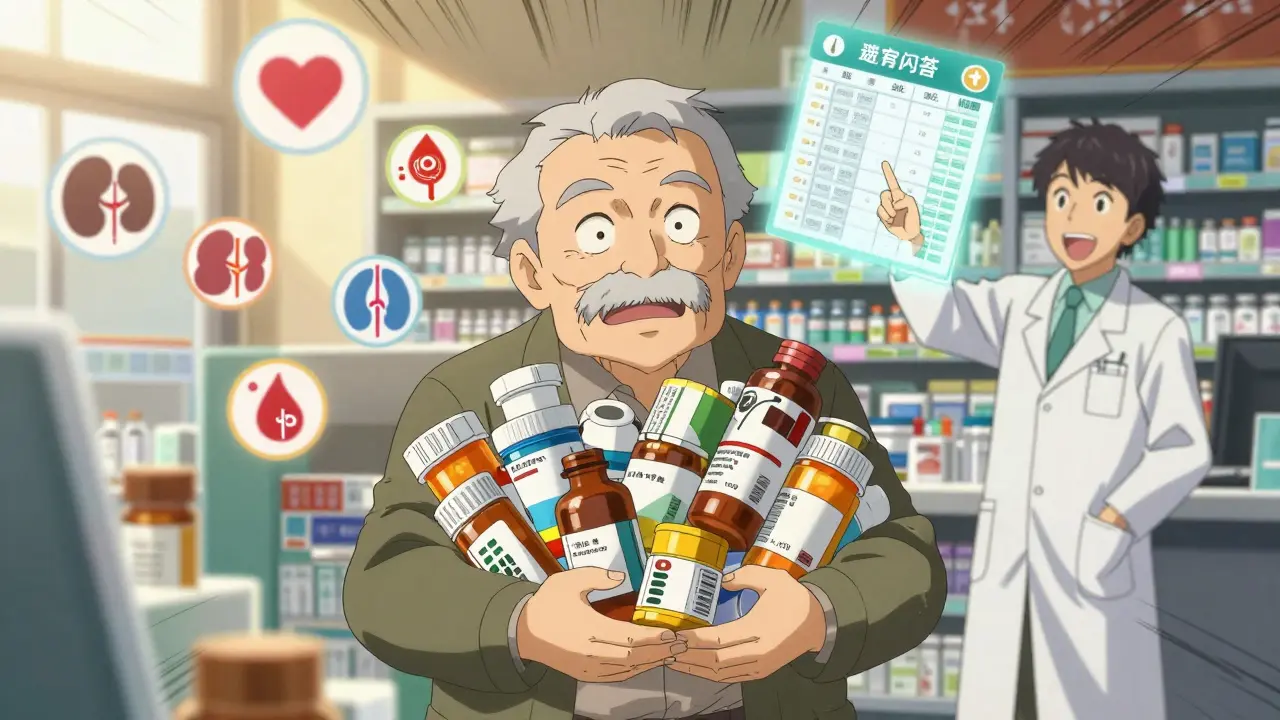
What Is a Medicare Annual Medication Review?
A Medicare Annual Medication Review, also called a Comprehensive Medication Review (CMR), is a free, one-on-one meeting with a pharmacist that’s required by Medicare Part D plans for eligible beneficiaries. It’s not just a quick check-in - it’s a full audit of every pill, capsule, vitamin, and herbal supplement you take. The goal? To catch hidden dangers like drug interactions, unnecessary medications, or costly duplicates that your doctors might miss because they’re only seeing you for 10 minutes at a time.
This isn’t optional. By law, every Medicare Part D plan must offer this review at least once a year. But here’s the catch: Medicare medication review only works if you show up prepared. If you walk in without your meds or can’t explain what each one is for, the pharmacist can’t help you. And that means you’re leaving safety, savings, and clarity on the table.
Who Qualifies for This Review?
You don’t automatically get one just because you’re on Medicare. To qualify in 2026, you must meet at least two of these three criteria:
- You have at least three chronic conditions - like diabetes, heart disease, high blood pressure, COPD, or arthritis.
- You take eight or more Medicare Part D-covered medications - including maintenance drugs, not just occasional painkillers.
- You spent at least $1,623 out of pocket on covered prescriptions in the last year.
That’s a lower threshold than in past years. In 2025, CMS made it easier to qualify, so more seniors can get this help. Even if you don’t hit all three, you might still be eligible if you have high-risk conditions like kidney disease or dementia. Your plan will usually notify you if you qualify - but don’t wait for them. Call your Part D insurer and ask if you’re in the program.
Why This Review Matters More Than You Think
Think about this: the average senior takes five to seven prescription drugs. Add in aspirin, ibuprofen, melatonin, fish oil, and a multivitamin, and you’re easily at 10 or more. Now imagine three different doctors prescribing these, none of them talking to each other. That’s how dangerous interactions slip through.
Studies show that 28% of seniors on multiple medications have at least one potentially harmful drug interaction. Many of these are caught - and fixed - during a CMR. One woman in Ohio discovered her blood thinner was reacting badly with her fish oil capsules. Another found he was taking two different pills for the same condition, doubling his risk of side effects. Both saved hundreds a month by switching to generics.
And it’s not just about safety. The review also identifies medications you no longer need. Maybe you had a knee replacement last year and stopped taking the painkiller - but your doctor never took it off your list. That’s waste. That’s money down the drain. The pharmacist can help you stop it safely.
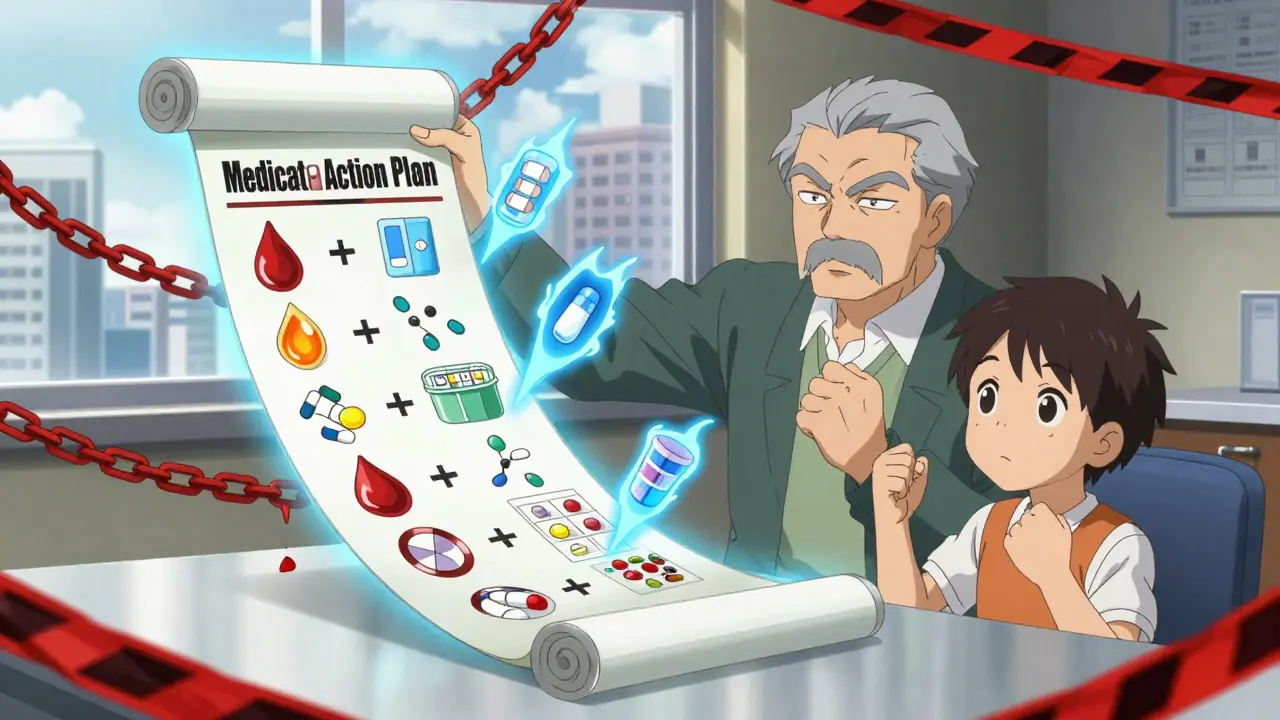
How to Prepare: The 5-Step Checklist
Preparation isn’t optional. It’s the difference between a 10-minute chat and a life-changing conversation. Here’s exactly what to do:
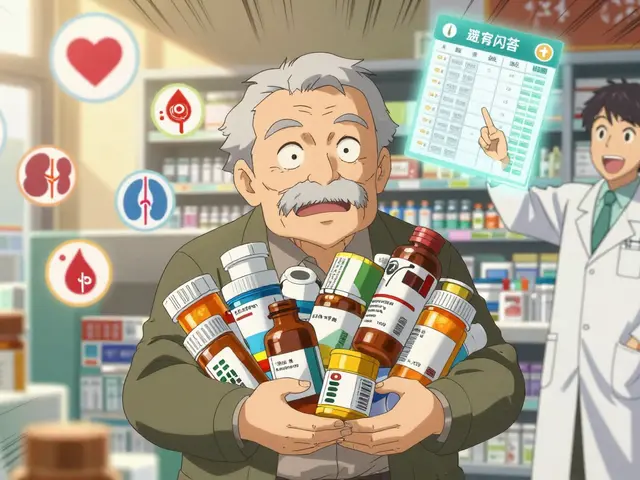
- Gather every medication you take - in the original bottles. This includes prescriptions, over-the-counter drugs (like Tums, Advil, or Zyrtec), herbal supplements (like St. John’s Wort or turmeric), and vitamins (even the ones you only take once a week). Don’t rely on your memory. Don’t bring a list you wrote last month. Bring the actual bottles. Pharmacists need to see the strength, dosage, and expiration date.
- Write down why you take each one. For each pill, note: What condition does it treat? When did you start? Did your doctor say to take it with food? Did you ever feel weird after taking it? This takes 15-20 minutes but makes the review 10 times more useful.
- Track your adherence. Have you missed doses? Do you skip pills because they’re too expensive? Do you forget to take them? Be honest. The pharmacist isn’t judging - they’re trying to fix the problem. If you’re skipping your blood pressure med because it makes you dizzy, they can suggest a different one.
- Bring your recent lab results or hospital discharge papers. If you had a blood test last month showing your kidney function dropped, or you were hospitalized for dehydration, bring that info. These changes affect how your body handles meds.
- Bring someone with you. Memory fades. Stress clouds thinking. A spouse, child, or friend can help remember questions, take notes, and catch things you overlook. One survey found that beneficiaries who brought a companion were 47% more likely to understand their medication plan afterward.
What Happens During the Review?
The review usually lasts 30 to 60 minutes. It’s not a lecture - it’s a conversation. The pharmacist will:
- Compare your actual meds to what’s on file with your insurance.
- Check for duplicates (like taking two different statins or two NSAIDs).
- Look for dangerous interactions (like blood thinners with garlic supplements).
- Assess whether any meds are outdated or no longer needed.
- Discuss cost-saving options - generics, mail-order pharmacies, or patient assistance programs.
- Answer your questions about side effects, timing, or how to take them correctly.
At the end, you’ll get three documents:
- A Consultation Letter - a summary of what was discussed.
- A Medication Action Plan - a clear list of changes, like stopping a drug, switching to a cheaper version, or adding a new one.
- A Personal Medication List - your updated, easy-to-read list of all meds, doses, and reasons.
Keep these. Show them to your doctor. Put them in your wallet. Use them when you go to the ER.
Common Mistakes People Make
Most people think they’re ready - until they’re not. Here are the top three mistakes:
- Bringing a list instead of the bottles. A handwritten list can be wrong. A pill bottle has the exact name, strength, and instructions. Pharmacists need the real thing.
- Not asking questions. Many people sit quietly. But this is your chance. Ask: "Is this still necessary?" "Can I take this with grapefruit juice?" "Is there a cheaper version?" Don’t assume they’ll tell you.
- Waiting for the invitation. If you think you qualify, don’t wait. Call your Part D plan. Ask when your next CMR is scheduled. If they haven’t contacted you in over a year, push for one.
What If You Don’t Qualify?
If you don’t meet the criteria, you still deserve a full medication review. Ask your pharmacist for a free consultation. Many community pharmacies offer them - even if Medicare doesn’t pay for it. Or ask your doctor for a "medication reconciliation" during your annual wellness visit. It’s not the same as a CMR, but it’s better than nothing.
And if you’re close to qualifying - say, you take seven meds instead of eight - keep track. Next year, you might cross the line. Be ready.
What Happens After the Review?
Don’t just file the papers and forget it. Here’s what to do next:
- Share your Medication Action Plan with all your doctors - especially if you see multiple specialists.
- Set phone reminders for any new dosing schedules.
- Check your monthly pharmacy bills. If you’re still paying for a drug you were told to stop, call your plan.
- Keep your Personal Medication List updated. Add new meds. Cross out ones you stopped.
One man in Florida changed his entire routine after his CMR. He stopped taking a daily painkiller that was harming his stomach, switched to a cheaper blood pressure med, and started using a pill organizer. His monthly drug costs dropped by $187. He says it was the best 45 minutes he ever spent.
Final Tip: Make This a Habit
Don’t treat the annual review as a one-time chore. Make it part of your health routine - like your yearly eye exam or flu shot. Every January, when you get your new Medicare card, set a reminder to gather your meds. Do it before your plan calls you. Take control. Your body, your wallet, and your peace of mind will thank you.

Write a comment
Your email address will not be published.



11 Comments
I showed up to mine with a grocery bag full of bottles and the pharmacist just stared at me like I was carrying a live raccoon. Then she laughed and said 'this is why we get paid'. Best 45 minutes of my life. Saved me $200 a month and I didn't even know I was taking two kinds of blood pressure meds. My wife cried. Not because I was dying. Because I finally stopped arguing with her about my 'vitamin empire'.
Why do they make us do this like its some kind of test? I dont even know what half these pills are for anymore. My grandkids say its because I'm old. I say its because the system is rigged. They want us to be confused so we keep buying more. I skipped mine. Let them try to take my fish oil.
This is exactly how they get you. First they make you feel guilty for not knowing your meds. Then they give you a 'plan' that gets you to switch to generics they have deals with. Then they upsell you on mail order so they can track your every pill. I checked my plan's parent company. They also own a major pharmacy chain. Coincidence? I think not. Bring your bottles? Yeah right. Bring your lawyer instead.
Let me cut through the fluff. This isn't about safety. It's about cost containment disguised as care. The system doesn't care if you live or die. It cares if your meds cost less than the next guy's. The 'action plan' is just a corporate script. They don't want you to understand your meds. They want you to comply. The fact that they call it a 'review' instead of a 'audit' is the first lie. The second? That you're getting 'help'. You're getting optimized. Like a machine. And the machine wants efficiency. Not your health.
The precision of this guidance is commendable. One must acknowledge the structural integrity of the Medicare Part D framework, even as its implementation remains fraught with logistical friction. The emphasis on physical documentation-original bottles-is not merely procedural but epistemological: it anchors the patient's pharmacological identity in material reality. To reduce this process to mere administrative compliance is to misunderstand its philosophical weight. The act of gathering, organizing, and presenting one's medications is, in essence, an act of self-advocacy in a system designed to obscure agency.
I was skeptical until my mom did this. She had been taking 14 pills a day. After the review? Down to 7. They found three she didn't even know she was still on. One was for a condition she'd been cured of 8 years ago. She cried. I cried. We saved $300/month. And she finally stopped taking that 'miracle' turmeric capsule that made her stomach feel like it was full of rocks. This isn't bureaucracy. This is your life. Do it. Don't wait. Bring the damn bottles.
i just brought my meds in a shoebox and the pharmacist was so nice she gave me a free stress ball. i forgot to write why i take them but she just asked and we talked for like an hour. she said my blood pressure med was too strong and switched me. now i dont feel like a zombie. also i found out i dont need the calcium pills anymore. who knew? i just thought they were good for bones. thanks for the reminder to do this every year
i brought my meds in a duffel bag and the pharmacist asked if i was a hoarder. i said no just a guy who dont trust lists. she laughed and said i was her favorite kind of patient. we found i was taking two different versions of the same statin. turned out my cardiologist and my gp were both prescribing it. they fixed it. saved me $180. now i bring the bottles every year. even the expired ones. just for laughs.
this is so good i told all my friends in India 🙏 they dont have this here but we should. my uncle died because of a drug mix and no one checked. this could have saved him. thank you for writing this. i printed it out and gave it to my mom. she cried. i cried. we made a list. we are ready
I just did mine yesterday 💪 turned out I was taking a supplement that cancels out my thyroid med 😱 pharmacist said I’m lucky I didn’t have a heart event. Also found out I’ve been taking the wrong dose of my anxiety med for 3 years. She changed it. Now I feel like me again. I cried. Then I bought her a coffee. 🫶
This is why America is falling apart. We’re turning healthy seniors into pharmacy patients. They don’t want you to be well. They want you dependent. I’ve got 12 pills a day. I’m 72. I’m not a lab rat. I don’t need some pharmacist telling me what to take. I’ve lived this long without them. Let me live the rest without their meddling. This isn’t help. It’s control.