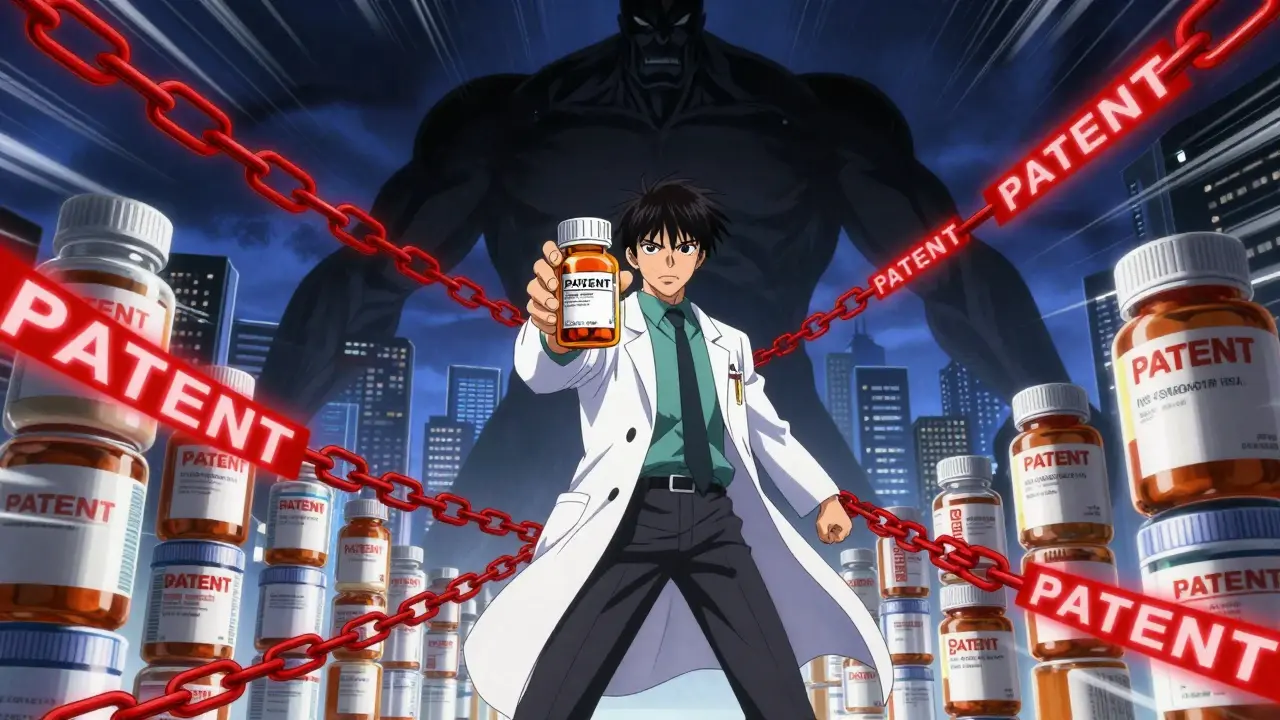
When you fill a prescription for a brand-name drug, you might expect to get a cheaper generic version instead-especially if your state law allows it. But in many cases, that’s not what happens. Even when generics are legally allowed to replace brand drugs, pharmaceutical companies have found ways to block them. This isn’t just a matter of business strategy-it’s an antitrust issue with real consequences for your wallet and your health.
How Generic Substitution Is Supposed to Work
State laws across the U.S. let pharmacists swap a brand-name drug for a generic version without needing a new prescription, as long as the generic is bioequivalent. This system was designed to save money. Generics cost 80-90% less than brand drugs, and when they’re allowed to enter the market freely, they quickly take over. In states with strong substitution rules, generics capture 80-90% of prescriptions within months of a patent expiring. But here’s the problem: brand-name companies don’t want that to happen. They know that once generics enter, their profits collapse. So instead of waiting for competition to take effect, they’ve invented new tactics to kill it before it starts.Product Hopping: The Main Antitrust Trick
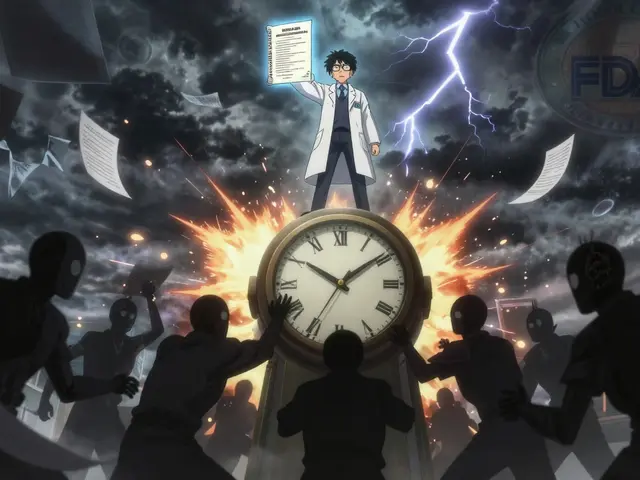
The most common tactic is called “product hopping.” It works like this: a brand-name drug is about to lose patent protection. Instead of letting generics take over, the company releases a slightly modified version-maybe an extended-release pill, a different shape, or a new delivery method. Then they pull the original drug off the market. Take Namenda, a drug for Alzheimer’s. In 2013, Actavis introduced Namenda XR, an extended-release version. Thirty days before generic versions of the original Namenda IR were set to launch, Actavis stopped selling the IR version. Pharmacists couldn’t substitute the generic because the original drug was gone. Patients had to get a new prescription for the new version, which was still under patent. The result? Generics were locked out. The Second Circuit Court of Appeals called this “anticompetitive” in 2016. They ruled that Actavis didn’t just innovate-they manipulated the system to avoid competition. The court noted that patients rarely go back to generics once they’ve switched to a new formulation. The transaction cost of getting a new prescription is too high. So by removing the old drug, Actavis effectively killed the entire generic market.Why Courts Are Split on This
Not every court sees it this way. In the 2009 Nexium case, AstraZeneca switched patients from Prilosec to Nexium, but kept selling Prilosec. The court said that was fine-adding a new product is just competition. But in the Namenda case, the original drug was gone. That’s the key difference. Some judges still think generics should just spend more on ads to win back customers. But that ignores reality. Generic makers don’t have the marketing budgets of big pharma. Their only advantage is price. If the original drug disappears before generics can even hit shelves, price doesn’t matter. The system is rigged. The FTC’s 2022 report on pharmaceutical product hopping found that courts often ignore the role of state substitution laws. These laws are meant to be the engine of competition. When companies break them, it’s not innovation-it’s exclusion.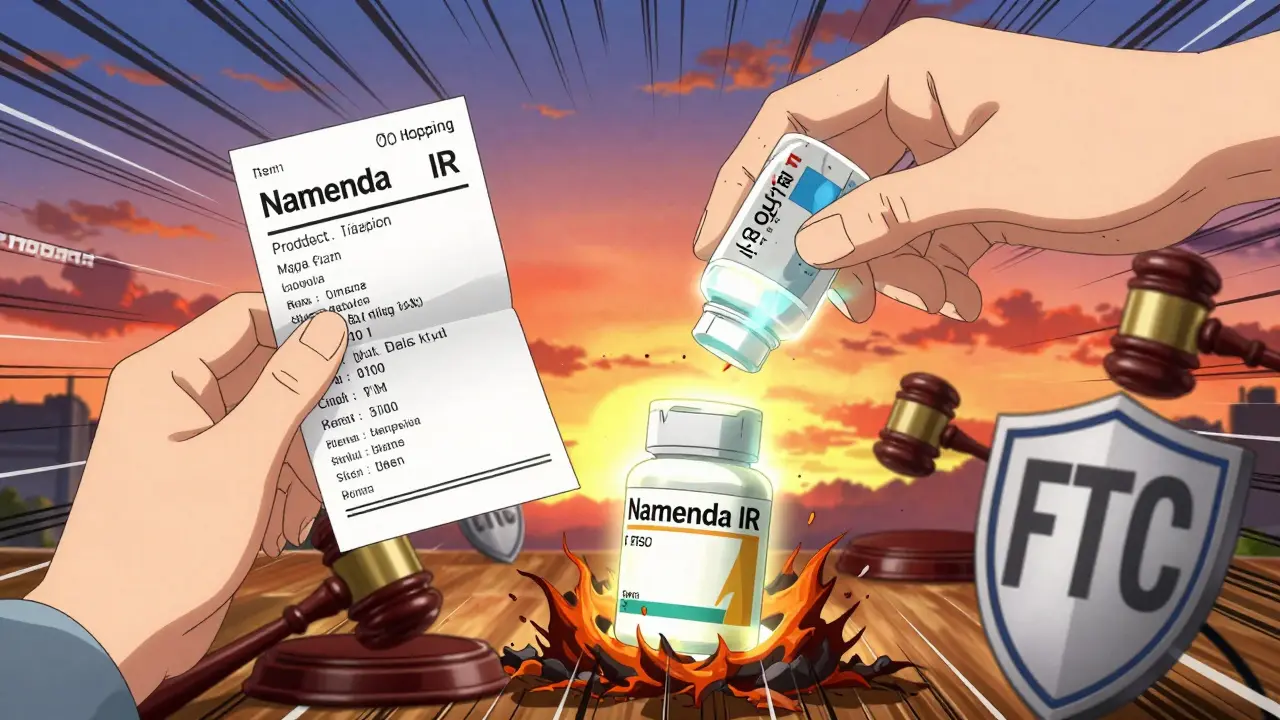
REMS Abuse: Blocking Access to Samples
Another tactic is abusing FDA-mandated safety programs called REMS (Risk Evaluation and Mitigation Strategies). These were created to control dangerous drugs, like those with high addiction risk. But brand companies now use them to block generic manufacturers from getting the samples they need to prove their drugs are bioequivalent. Without samples, generics can’t complete testing. Without testing, they can’t get FDA approval. And without approval, they can’t enter the market. According to legal scholar Michael A. Carrier, over 100 generic companies have reported being denied samples. A study of 40 drugs with restricted access found this tactic alone was costing consumers more than $5 billion a year. This isn’t about safety. It’s about delay. If a brand company controls the only supply of a drug, they control when generics can enter. The FTC and DOJ have started calling this monopolization. It’s not just unethical-it’s illegal under antitrust law.Real-World Cases That Changed the Game
The Suboxone case is one of the clearest examples. Reckitt Benckiser made Suboxone tablets, then switched to a film strip that stuck to the inside of the cheek. They claimed the film was safer and more effective. But they also launched a campaign warning doctors that the tablets could be abused if taken by children. They threatened to pull the tablets from the market. The FTC found this was coercion. Patients and doctors didn’t switch because the film was better-they switched because the tablet was disappearing. In 2019 and 2020, Reckitt settled with the FTC for $1.4 billion. The court agreed: this wasn’t innovation. It was a trap. Teva’s switch from Copaxone to a new injectable formulation had similar results. The original drug was pulled, and the new version carried a new patent. Consumers paid an extra $4.3 billion to $6.5 billion over two and a half years before the patent was invalidated. That’s not innovation. That’s rent-seeking.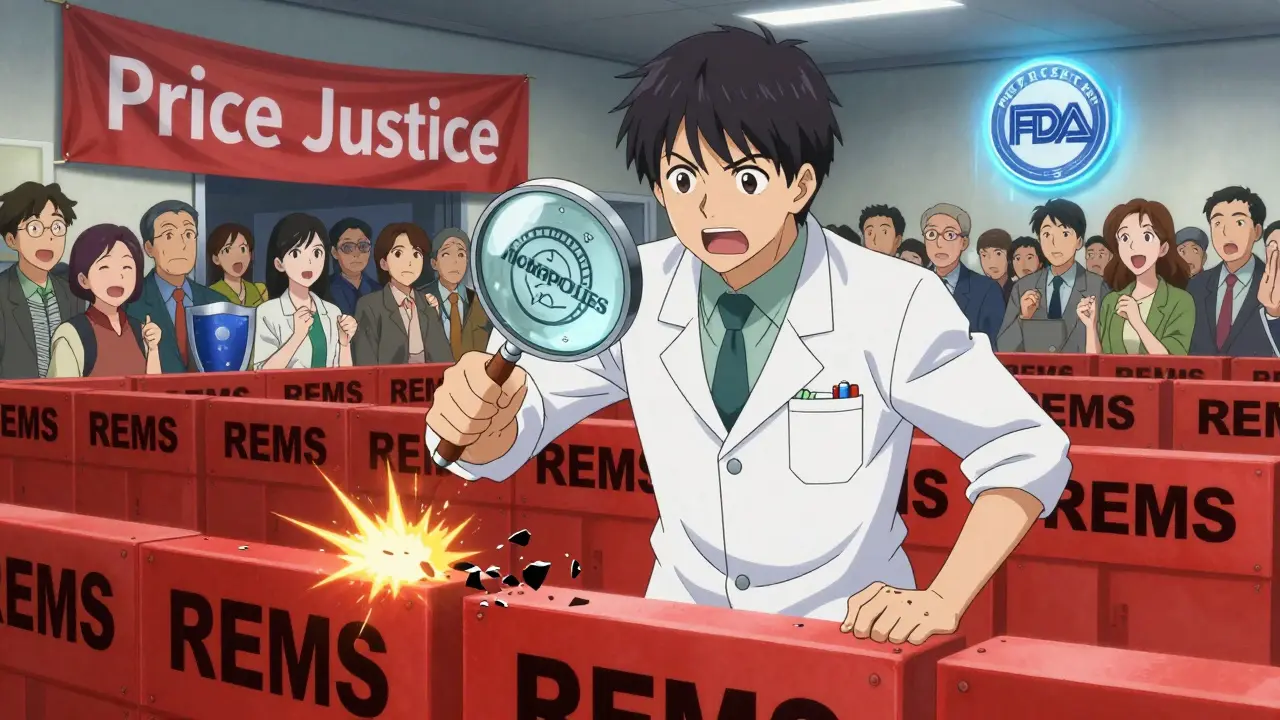
Who’s Fighting Back?
The FTC has been the main enforcer. In the Namenda case, they got a court order forcing Actavis to keep selling the original drug for 30 days after generic entry. That gave generics time to catch up. In other cases, they’ve pushed states to strengthen substitution laws so pharmacists can override manufacturer manipulation. The Department of Justice has gone further. In 2023, Teva paid a $225 million criminal penalty for price-fixing with other generic makers. Glenmark paid $30 million. These aren’t just civil cases-they’re criminal. The message is clear: if you collude to keep prices high, you’re not just breaking rules-you’re breaking the law. State attorneys general have joined in too. New York’s AG won an injunction against Actavis in 2014, forcing them to keep Namenda IR on the market. Other states are watching. If one state wins, others follow.The Financial Cost to Everyone
The numbers are staggering. The FTC estimates that delayed generic entry costs U.S. consumers and taxpayers billions every year. Just three drugs-Humira, Keytruda, and Revlimid-have cost the system an estimated $167 billion in the U.S. compared to Europe, where generics enter faster. Revlimid’s price jumped from $6,000 to $24,000 per month over 20 years. That’s not because it got better. It’s because the company kept extending patents and blocking generics. In states with weak substitution laws, generic penetration drops to just 10-20%. In strong states, it hits 80-90%. That gap isn’t accidental. It’s engineered.What’s Next?
The FTC’s 2022 report was a wake-up call. Chair Lina Khan made it clear: product hopping won’t be tolerated anymore. In 2023, the DOJ and FTC held joint hearings focused on generic and biosimilar competition. Congress is also paying attention. The House Committee on Appropriations has directed the FTC to report on its actions. Legal scholars agree: the current patchwork of court rulings is unsustainable. Some judges still allow product hopping. Others don’t. That inconsistency lets companies test the waters-until they get caught. The solution? Clearer laws. States need to require that brand companies keep the original drug available until generics are on the shelf. Federal regulators need to stop letting REMS be used as a weapon. And courts need to stop pretending that withdrawing a drug is “innovation.” Until then, patients and taxpayers will keep paying the price-for drugs that should be cheap, but aren’t.
Write a comment
Your email address will not be published.
Recent Posts
-
 Betamethasone for Urticaria: How It Works, Benefits & Risks September 14, 2025


13 Comments
My pharmacist told me last month they couldn't switch my dad's blood pressure med to generic because the brand was 'discontinued.' Turned out it wasn't discontinued-just pulled off shelves right before generics launched. This isn't just corporate greed, it's a systemic scam. We're paying 10x for the same chemistry.
States need to mandate that brand-name companies keep the original formulation available until generics are fully stocked. No loopholes. No 'new delivery systems' as a cover. The law already says substitution is legal-enforce it.
AMERICA IS GETTING ROBBED. Big Pharma is laughing all the way to the bank while you and I pay $500 for a pill that costs $2 to make. This isn't capitalism-it's feudalism with FDA logos. We need to ban product hopping outright. No more court debates. Just make it ILLEGAL. #BreakUpBigPharma
The jurisprudential inconsistency surrounding product hopping reveals a profound epistemological rupture within the regulatory framework governing pharmaceutical markets. When courts conflate market withdrawal with innovation, they inadvertently legitimize rent-seeking behavior under the guise of technological advancement. The legal distinction between 'new product introduction' and 'anticompetitive delisting' must be codified with precision, lest the Sherman Antitrust Act become a rhetorical artifact rather than a living instrument of economic justice.
Wait… so you’re telling me the government lets drug companies control the supply of medicine… and then uses REMS as an excuse? 🤔
Okay, but what if this is all a psyop by the Illuminati to make us dependent on their pills so they can control our minds through the water supply? I mean, why else would they block generics? They don’t want us to be healthy-they want us to be profitable. Also, did you know the moon landing was fake? Same energy.
Hey, I know this feels overwhelming-but we’re not powerless. Every time you call your state rep, every time you share this post, every time you ask your pharmacist if they can fight for substitution-you’re making a difference.
Change doesn’t happen because of one law or one court case. It happens because ordinary people refuse to stay silent. You’re not just saving money-you’re saving lives. Keep pushing. We’ve got this.
Just to add-REMS abuse is way more common than people realize. I work in a hospital pharmacy, and we’ve had at least 5 drugs in the last year where we couldn’t get samples for generic testing. The brand companies just say ‘we’re reviewing safety protocols’ and ghost us for 6–12 months. It’s a delay tactic with zero medical justification.
Also, the FTC’s 2022 report has a full appendix listing every drug affected. It’s public. Check it out.
I had a friend on Suboxone. She was on the tablets, fine. Then suddenly, her pharmacy started saying ‘we don’t have the tablets anymore, only the film.’ She had to switch, even though she hated the film-it tasted like plastic and fell off her tongue. She didn’t want to change, but she had no choice.
That’s not patient care. That’s corporate coercion. And it’s happening to millions. The worst part? No one talks about it. We’re just supposed to be grateful we get *any* version of the drug. But we deserve the cheap one. We deserve the one that works. We deserve to not be manipulated like this.
Product hopping is not innovation. It is the commodification of necessity. When a life-saving medication becomes a chess piece in a financial game, the moral architecture of healthcare collapses. The patent system was never meant to be a weapon against accessibility. It was a bargain: limited monopoly for public benefit. This? This is theft dressed in lab coats.
One must interrogate the ontological framing of ‘bioequivalence’-a term that functions as a neoliberal epistemic veil, obscuring the material realities of pharmacokinetic variance across formulations. The FDA’s bioequivalence thresholds (80-125% AUC) are statistically permissive, allowing for clinically significant deviations that disproportionately impact polypharmacy patients.
Furthermore, the notion that ‘price is the only competitive advantage’ for generics ignores the structural asymmetry of market access: brand firms control prescriber relationships, formulary placement, and-crucially-pharmacist substitution protocols through contractual rebates and anti-switching clauses embedded in PBM contracts.
Thus, the antitrust inquiry must expand beyond product withdrawal to encompass the entire vertical integration of pharmaceutical distribution.
As a veteran, I’ve seen this firsthand. My VA prescription for a generic was denied because the brand version was ‘preferred.’ I asked why. They said ‘it’s the same thing.’ Then I looked up the price. The brand was $180. The generic? $12.
They don’t care about your health. They care about your copay. We need to stop treating medicine like a luxury item. This isn’t just an antitrust issue-it’s a civil rights issue. We need to fight for our right to affordable care.
State substitution laws are the most underutilized tool in the antitrust arsenal. Pharmacists are trained to substitute-but they’re often legally prohibited from doing so when the original product is withdrawn. This creates a regulatory vacuum that brand firms exploit.
Legislators must amend pharmacy practice acts to require that the original product remain available for a minimum of 90 days post-generic approval, regardless of manufacturer intent. Without this safeguard, substitution laws are hollow.
The real tragedy isn’t the price-it’s the normalization. We’ve been conditioned to accept that drugs should cost thousands. That if you can’t pay, you’re not worthy. That innovation justifies exploitation. But what if the real innovation was simplicity? What if the best drug was the one that didn’t require a second mortgage?
Maybe we’ve been asking the wrong question. Not ‘how do we stop product hopping?’ but ‘why did we ever allow this system to exist?’
THIS IS A CRIME. NOT A BUSINESS STRATEGY. NOT ‘COMPETITION.’ A CRIME. They’re stealing from sick people. From veterans. From single moms. From kids with asthma. And the DOJ is dragging their feet like it’s a fucking tea party. I’ve had enough. If you’re not angry right now, you’re part of the problem.