
Narcolepsy with cataplexy isn’t just feeling tired. It’s falling asleep mid-conversation, collapsing when laughing, or waking up unable to move - even though your mind is wide awake. This isn’t laziness. It’s a neurological disorder rooted in the brain’s inability to regulate sleep-wake cycles properly. For those living with it, daily life can feel unpredictable, embarrassing, and exhausting. But there’s a clear path to diagnosis and a treatment that changes everything: sodium oxybate.
What Exactly Is Narcolepsy with Cataplexy?
Narcolepsy with cataplexy, also called narcolepsy type 1, is defined by two core symptoms: overwhelming daytime sleepiness and sudden muscle weakness triggered by strong emotions. Cataplexy can be as mild as a drooping eyelid during a joke or as severe as collapsing to the floor when startled. It lasts seconds to minutes and doesn’t involve loss of consciousness - you’re aware of everything, but your body won’t respond.
This condition is caused by the loss of hypocretin (also called orexin) neurons in the hypothalamus. These neurons help keep you alert during the day and stabilize sleep at night. Without them, your brain can’t maintain the boundary between wakefulness and REM sleep. That’s why people with this disorder experience REM sleep intrusions - like hallucinations when falling asleep or waking up, or sleep paralysis - while still awake.
It’s rare - affecting only about 1 in 2,000 people - but often misdiagnosed. Many are told they’re depressed, anxious, or just sleep-deprived. The average delay between first symptoms and correct diagnosis is nearly nine years. That’s nine years of confusion, missed work, and social isolation.
How Is It Diagnosed?
Diagnosing narcolepsy with cataplexy isn’t just about asking if you feel sleepy. It’s a two-part process: clinical history and objective testing.
First, doctors look for the classic signs:
- Excessive daytime sleepiness for at least three months - not just tiredness, but uncontrollable urges to sleep
- Clear episodes of cataplexy triggered by emotions like laughter, anger, or surprise
Then, they confirm it with tests. The gold standard is the multiple sleep latency test (MSLT), done after an overnight sleep study (polysomnography). The MSLT measures how quickly you fall asleep during four or five naps spaced throughout the day. If you enter REM sleep within 15 minutes of falling asleep during two or more naps, that’s a strong indicator of narcolepsy.
But there’s a more definitive test: a spinal fluid analysis to measure hypocretin levels. If your CSF hypocretin-1 is 110 pg/mL or lower, you have narcolepsy type 1. This test is over 98% accurate. The problem? It requires a lumbar puncture - a spinal tap - which can be uncomfortable and carries a small risk of headache.
Not every clinic can do the MSLT. In the U.S., only about 40% of sleep centers have the staffing and scheduling capacity to run it properly. That means many people wait months just to get tested.
And here’s the catch: not all cataplexy looks the same. Some people only get facial twitching or slurred speech. Others feel their knees buckle but never fall. That’s why 30% of patients are initially misdiagnosed - their symptoms don’t match the textbook description.
Why Sodium Oxybate Is the Gold Standard Treatment
Before sodium oxybate, treatments were hit or miss. Stimulants like modafinil helped with sleepiness but did nothing for cataplexy. Antidepressants reduced cataplexy but caused side effects like dry mouth, weight gain, or sexual dysfunction.
Sodium oxybate - sold as Xyrem and Xywav - is the only medication approved in the U.S. that treats both excessive daytime sleepiness and cataplexy at the same time. It’s a synthetic version of gamma-hydroxybutyrate (GHB), a naturally occurring brain chemical. At low, controlled doses, it helps stabilize sleep architecture, reducing REM intrusion and improving nighttime sleep quality.
Here’s what patients report:
- 79% see a drop in cataplexy episodes - from an average of seven per week to fewer than two
- 68% no longer need unplanned naps during the day
- 74% regain the ability to drive safely
That’s not just symptom relief. That’s quality of life restored.
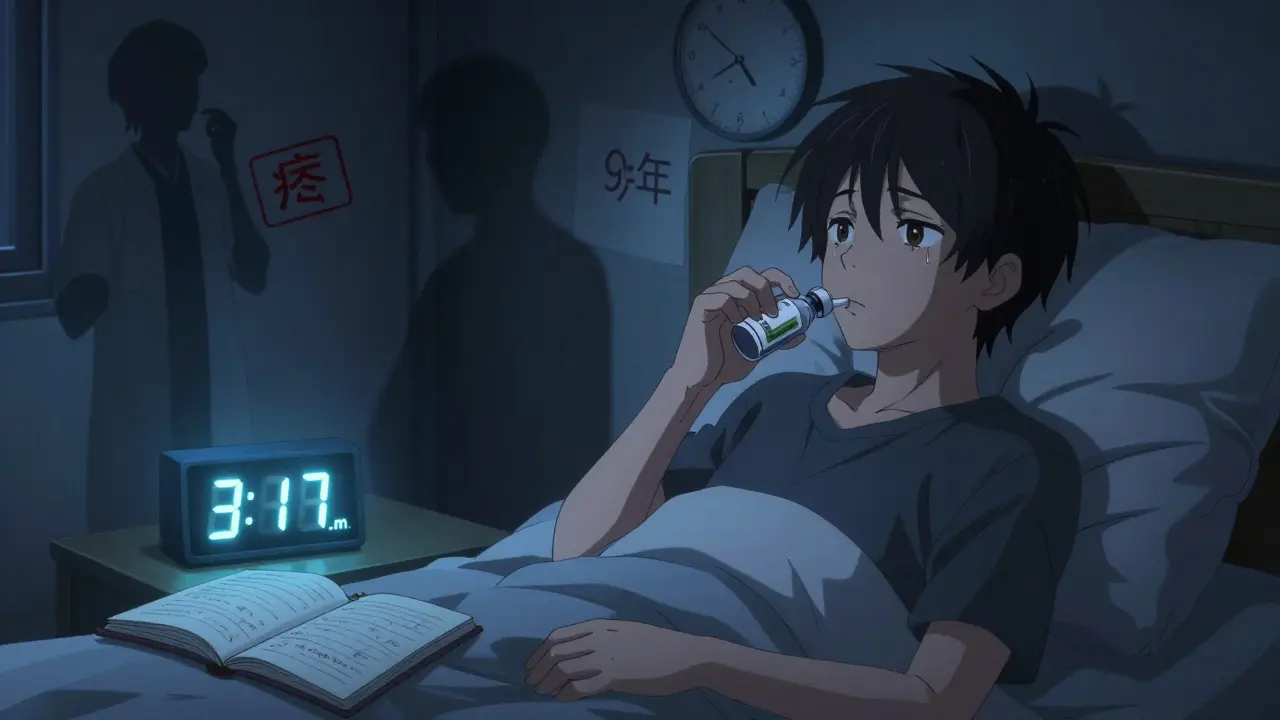
How It Works - and Why It’s Complicated
Sodium oxybate isn’t taken like a regular pill. You take it twice a night: once when you get into bed, and again 2.5 to 4 hours later. That means waking up in the middle of the night to drink a liquid that tastes like salty water. For many, this is the hardest part.
Patients report:
- 65% struggle with the midnight dose
- 38% get nausea
- 29% feel dizzy
- 12% experience bedwetting
And because GHB has a history of abuse, sodium oxybate is tightly controlled. You can’t just walk into any pharmacy. You need to enroll in a special program called Xyrem/Xywav REMS. Only certified doctors can prescribe it, and only certified pharmacies can fill it. Insurance companies require prior authorization - and 92% of U.S. patients face denials at first.
The cost? Between $10,000 and $15,000 per month before insurance. Even with coverage, copays can hit $500 or more. Many patients delay treatment for years because they can’t afford it - or their insurance won’t cover it.
What’s New in Treatment?
There’s hope on the horizon. In 2020, Xywav was approved - a version of sodium oxybate with 92% less sodium. That’s important for people with high blood pressure or heart conditions who can’t handle the salt load in Xyrem.
In 2023, Xywav got FDA approval for children as young as 7. That’s a big deal - kids with cataplexy often struggle in school, fall behind socially, and are mislabeled as lazy or disruptive.
And now, a new formulation called FT001 is in late-stage trials. It’s designed to be taken just once at night, eliminating the midnight dose. Early results show it works just as well as Xyrem - without the disruption to sleep. If approved, it could be a game-changer for adherence.
Even more exciting? Drugs targeting hypocretin directly. Takeda’s TAK-994, an oral drug that activates hypocretin receptors, showed a 92% reduction in cataplexy in trials. But development was paused in late 2023 due to liver safety concerns. Researchers are still working on safer versions.

What to Do If You Suspect Narcolepsy
If you or someone you know has:
- Constant daytime sleepiness that doesn’t improve with more sleep
- Emotional episodes that cause sudden muscle weakness
- Waking up unable to move or seeing vivid hallucinations
- it’s time to see a sleep specialist. Start with a sleep diary for two weeks. Track when you feel sleepy, when cataplexy happens, and how long it lasts. Bring this to your doctor.
Ask for a referral to a sleep center that does polysomnography and MSLT. If cataplexy is clear, ask about CSF hypocretin testing. It’s invasive, but it gives you a definitive answer - no guesswork.
Don’t settle for being told it’s stress or depression. Narcolepsy with cataplexy is real, measurable, and treatable. You don’t have to live in the dark.
Living With It - What Works
Medication isn’t the only tool. Many people find success combining sodium oxybate with:
- Scheduled short naps (15-20 minutes) during the day
- Consistent sleep schedules - even on weekends
- Avoiding alcohol and heavy meals before bed
- Working with employers to adjust schedules or allow flexible breaks
Support groups matter too. Online communities like Narcolepsy Network and Reddit’s r/Narcolepsy are full of people who’ve been where you are. They know the insurance battles, the side effects, the moments of frustration - and they’ve found ways through.
One woman in her 30s, diagnosed after 11 years of misdiagnosis, said: “The first night I took sodium oxybate, I slept through the whole night - no waking up, no nightmares. The next day, I didn’t nap once. I drove to the grocery store without falling asleep. I cried in the parking lot. I hadn’t felt that safe in over a decade.”
Can narcolepsy with cataplexy be cured?
No, there is no cure yet. Narcolepsy with cataplexy is a lifelong neurological condition caused by the loss of hypocretin-producing brain cells. But it can be effectively managed. Sodium oxybate, along with lifestyle adjustments and other medications, allows most people to live full, active lives with minimal symptoms.
Is sodium oxybate addictive?
At the prescribed therapeutic doses for narcolepsy, sodium oxybate is not addictive. While GHB (the same chemical) is abused recreationally at much higher doses, the controlled, low-dose regimen used for narcolepsy doesn’t produce euphoria or cravings. The FDA-approved REMS program ensures safe distribution and prevents misuse.
Why is the diagnosis delayed so long?
Because symptoms like daytime sleepiness and emotional weakness are often mistaken for depression, anxiety, poor sleep habits, or even laziness. Cataplexy episodes are frequently dismissed as “just fainting” or “dizziness.” Many doctors aren’t trained to recognize them. Without a clear understanding of the condition, patients are passed from specialist to specialist for years before someone considers narcolepsy.
Can children get narcolepsy with cataplexy?
Yes. Symptoms often begin between ages 10 and 30, but children as young as 7 can develop it. In kids, cataplexy may look like sudden drops in head control, slurred speech, or buckling knees during play. It’s often mistaken for seizures or behavioral issues. Xywav is now FDA-approved for children 7 and older, offering a targeted treatment option.
What if sodium oxybate doesn’t work for me?
About 12% of patients don’t respond well to sodium oxybate, usually due to side effects or poor tolerance. Alternatives include pitolisant (a wakefulness-promoting agent that also reduces cataplexy), solriamfetol (for daytime sleepiness), or low-dose antidepressants like venlafaxine. Some patients combine treatments. Your sleep specialist can help tailor a plan based on your symptoms and tolerance.

Write a comment
Your email address will not be published.
Recent Posts
-
 How to Prepare for a Medication Review Appointment: A Step-by-Step Guide November 17, 2025
 -
 Buy Cheap Generic Metformin Online - Complete Guide & Tips September 30, 2025
 -
 Buy Online Cheap Generic Warfarin: Best Prices & Safe Pharmacies August 29, 2026
13 Comments
Been living with this for 12 years. Got diagnosed after my boss thought I was drunk at a meeting because I collapsed laughing at a meme. Turns out I wasn’t drunk - just my brain glitching. Sodium oxybate saved my job. The midnight dose? Hell yeah it sucks. But waking up without feeling like a zombie? Worth it.
PS: Stop telling people to 'just sleep more'. It’s not a lifestyle issue. It’s a broken brain.
Also, the cost? My insurance denied me 4 times. Took a lawyer to get it through. You’re not alone.
It’s infuriating how society just writes off people with this as ‘lazy’ or ‘attention-seeking.’ You don’t just ‘push through’ when your body shuts down mid-sentence because someone cracked a joke. This isn’t a personality flaw - it’s a neurological tragedy masked as laziness by people who’ve never had to explain why they fell asleep in church.
And yes, sodium oxybate is a miracle. But the fact that it’s locked behind a $15k/month prison of insurance red tape? That’s the real crime. We treat cancer patients like humans. Why not people with invisible brain disorders?
OMG I JUST GOT DIAGNOSED LAST MONTH 😭
My mom thought I was depressed. My therapist thought I was just anxious. I cried in the sleep lab after the MSLT because for the first time someone said ‘this isn’t in your head.’
Started oxybate last week. First night? I slept 7 hours straight. No nightmares. No waking up frozen. I didn’t even know that was possible.
Still hate the taste. Still have to wake up at 3am to chug salty water. But I drove to Starbucks today without falling asleep. I’m alive again. 💛
Just saw this and had to comment - I’m 19 and got diagnosed last year. Cataplexy hits me when I laugh at my dog. 😅
My knees just give out. No warning. I fell into a pile of laundry once and my roommate thought I was faking. I cried for an hour after. No one gets it until they’ve been there.
My mom cried when I told her about the spinal tap. I told her: ‘It’s worse than a tattoo, but better than dying inside.’
Now I take oxybate. The midnight dose? Yeah, I set three alarms. But I can go to parties again. I can laugh without fear. That’s everything.
❤️
India has zero awareness about this. Doctors think its stress or bad karma. I waited 8 years. Finally got diagnosed in US on visit. Oxybate cost more than my car. But I can now hold my baby without fear of collapsing. No more shame. No more lies.
People don’t realize how dangerous this is. I almost died driving home after a cataplexy episode. My car veered into a ditch. No one was hurt - but I was lucky.
Sodium oxybate didn’t just help me - it gave me back my freedom. I used to avoid birthdays, weddings, anything with laughter. Now I laugh until I cry - and I don’t fall over.
And yeah, the cost is insane. But if you’re reading this and you’re undiagnosed? Don’t wait. Get tested. Your life depends on it.
Wait - so you’re telling me this whole time, people with narcolepsy are just… not lazy? Who knew?
Look, I get it. I’ve had bad sleep. But this sounds like a made-up disorder invented by Big Pharma to sell expensive liquid.
And why does it need a spinal tap? That’s just a way to make money. I bet they’re just overdiagnosing to sell oxybate.
Also - GHB? That’s a club drug. You’re telling me giving someone a controlled substance twice a night is ‘safe’? I don’t buy it.
Bro. This is the most American medical story ever.
Neurological disorder? Check.
11-year diagnosis delay? Check.
Expensive drug locked behind insurance bureaucracy? Check.
Life-changing treatment? Check.
But only if you’re rich or have a lawyer? Double check.
Meanwhile, in other countries, they just give you a nap and a hug.
Y’all turned a brain disorder into a Netflix documentary with a co-pay.
so i just got my oxybate prescription and i think i spelled it wrong like oxybate or is it oxybate??
anyway i took it last night and i slept for 8 hours straight and i didnt wake up once and i dont even remember setting the alarm for the second dose but i did it somehow and i cried in the shower today because i havent felt this awake since high school
also the taste is like salty socks but worth it
thank you for writing this
This isn’t medicine. This is a metaphysical awakening disguised as a pharmaceutical.
You see, the loss of hypocretin isn’t just a biological event - it’s a spiritual fracture. Our modern world demands constant wakefulness, but the soul knows better. The brain doesn’t ‘fail’ - it retreats. It says: ‘I cannot exist in this broken reality.’
Sodium oxybate doesn’t fix your neurons. It helps you align with the natural rhythm of the universe - the same rhythm that ancient sages knew before the Industrial Revolution shattered our sleep cycles.
The real cure? Stop chasing productivity. Stop glorifying burnout. Let your body rest. Let your soul sleep.
And yes - the cost is high. Because truth always is.
Thank you for this comprehensive and clinically accurate exposition. The diagnostic criteria are clearly delineated, and the therapeutic rationale for sodium oxybate is presented with appropriate nuance. I appreciate the inclusion of both efficacy data and the systemic barriers to access, particularly regarding insurance denials and the REMS program.
It is imperative that healthcare providers receive continued education on the heterogeneity of cataplexy presentations, as misdiagnosis remains tragically prevalent. Furthermore, the socioeconomic implications of treatment cost warrant urgent policy intervention.
This is a model of patient-centered medical communication.
It’s pathetic that this condition requires a spinal tap to confirm - and that the only effective treatment is a Schedule III drug locked behind a Kafkaesque bureaucracy. This isn’t healthcare. It’s corporate extortion wrapped in a lab coat.
And yet, the media glorifies modafinil as a ‘smart drug’ for college students - while people who genuinely need this drug are denied because their insurance doesn’t consider their suffering ‘legitimate.’
Meanwhile, Big Pharma markets oxybate as a miracle while keeping the price astronomical. The hypocrisy is staggering. We are not treating illness. We are monetizing despair.
USA always make problem to make money. This narcolepsy thing? All fake. They want you to take drug so you stay dependent. Spinal tap? That’s for control. GHB? They put it in water. You think you’re sick? You’re being watched.
My cousin in Nigeria sleep 4 hour and work 18 hour. No problem. No drug. No test. Just work. You think you’re weak? You’re brainwashed.
They want you to pay. They want you to be afraid. Wake up.