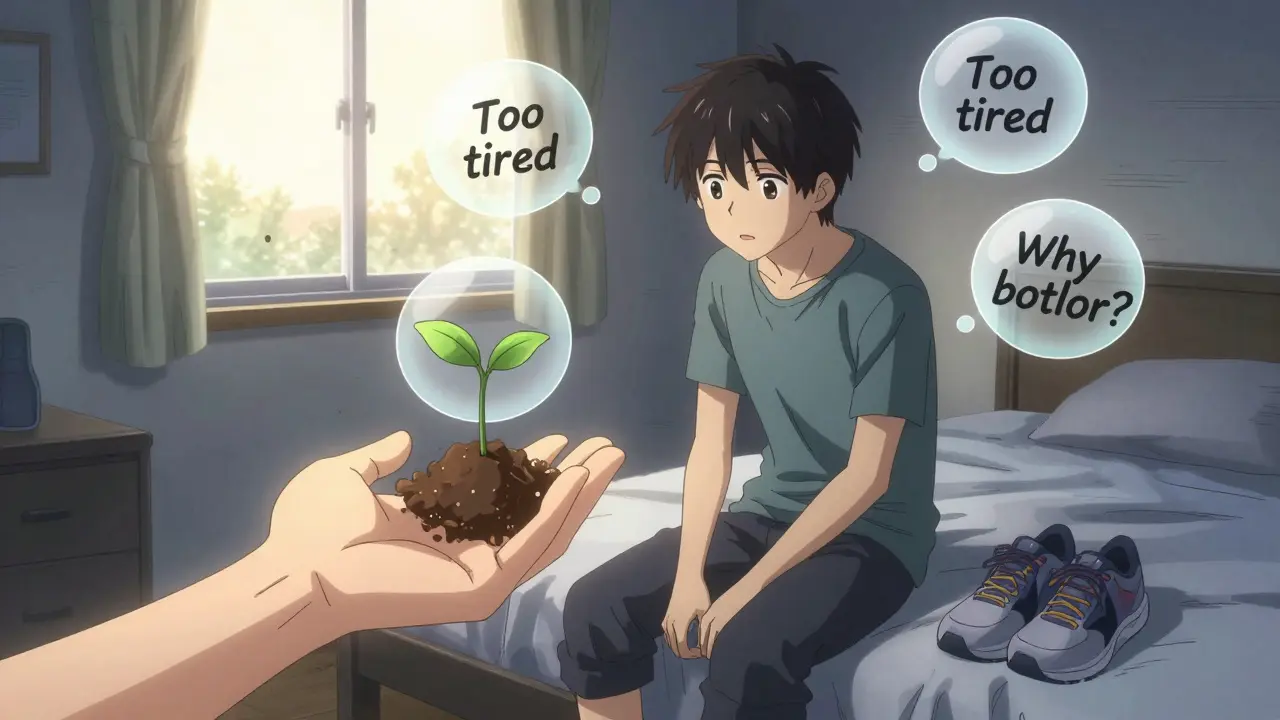
Depression isn’t just feeling sad. It’s a persistent weight that makes getting out of bed, answering texts, or even eating feel impossible. For over 280 million people worldwide, it’s a chronic condition that doesn’t vanish with willpower. The good news? We now have clear, science-backed ways to manage it - and they don’t all involve pills.
Medications: Not a Quick Fix, But Often a Necessary Tool
When doctors talk about antidepressants, they’re usually referring to second-generation drugs like SSRIs (selective serotonin reuptake inhibitors). These include sertraline, citalopram, and fluoxetine. They’re not magic bullets, but they’re the most commonly prescribed first-line options because they’re better tolerated than older medications.Why sertraline? It’s often the go-to because it’s affordable and tends to cause fewer side effects. But no single drug works for everyone. About 30-50% of people on SSRIs experience sexual side effects. SNRIs like venlafaxine can raise blood pressure in 10-15% of users. Bupropion, on the other hand, has lower sexual side effects but carries a small seizure risk - about 0.4% at standard doses.
For mild depression, guidelines like NICE’s 2022 update say medication shouldn’t be the first step. But for moderate to severe cases - especially when daily life is falling apart - antidepressants can be life-changing. The key? Give them time. Most need 4 to 8 weeks at the right dose before you know if they’re working. If not, switching or adding another medication is common.
When standard antidepressants fail after two trials, that’s called treatment-resistant depression. At this point, doctors may add lithium, thyroid hormone (T3), or an atypical antipsychotic like quetiapine. The QUIDDITY trial showed quetiapine helped 58% of people who didn’t respond to antidepressants alone. For the most severe cases - especially with psychosis - electroconvulsive therapy (ECT) remains the most effective option, with remission rates of 70-90%. Yes, it can cause temporary memory issues, but for many, it’s the only thing that brings relief.
Therapy: The Other Half of the Equation
You don’t need medication to treat depression. Therapy can be just as powerful - and in some cases, more lasting.Cognitive Behavioral Therapy (CBT) is the gold standard. It teaches you to spot negative thought patterns and replace them with more realistic ones. Studies show 50-60% of people with mild to moderate depression improve after 8-28 weekly sessions. Interpersonal Therapy (IPT), which focuses on relationships and social roles, works just as well for moderate depression. One 2016 meta-analysis found a 55% response rate for IPT versus 45% for no treatment.
If you’ve had depression more than once, Mindfulness-Based Cognitive Therapy (MBCT) can help prevent relapse. An 8-week group program reduced relapse risk by 31% over a year, according to the PREVENT trial. It’s not about positive thinking - it’s about noticing thoughts without getting stuck in them.
For people whose depression is tied to relationship conflict, Behavioral Couples Therapy (BCT) can be a game-changer. Studies show 40-50% symptom improvement with BCT, compared to 25-30% with individual therapy alone. And if you’re struggling with chronic depression - symptoms lasting two years or more - a specialized form called CBASP (Cognitive Behavioral Analysis System of Psychotherapy) has shown a 48% response rate when combined with medication, versus 28% with medication alone.
The American College of Physicians says you should choose between CBT and an antidepressant as your first move for moderate to severe depression. But combining both? That pushes response rates to 55-60%. It’s not about choosing one or the other - it’s about using both when needed.
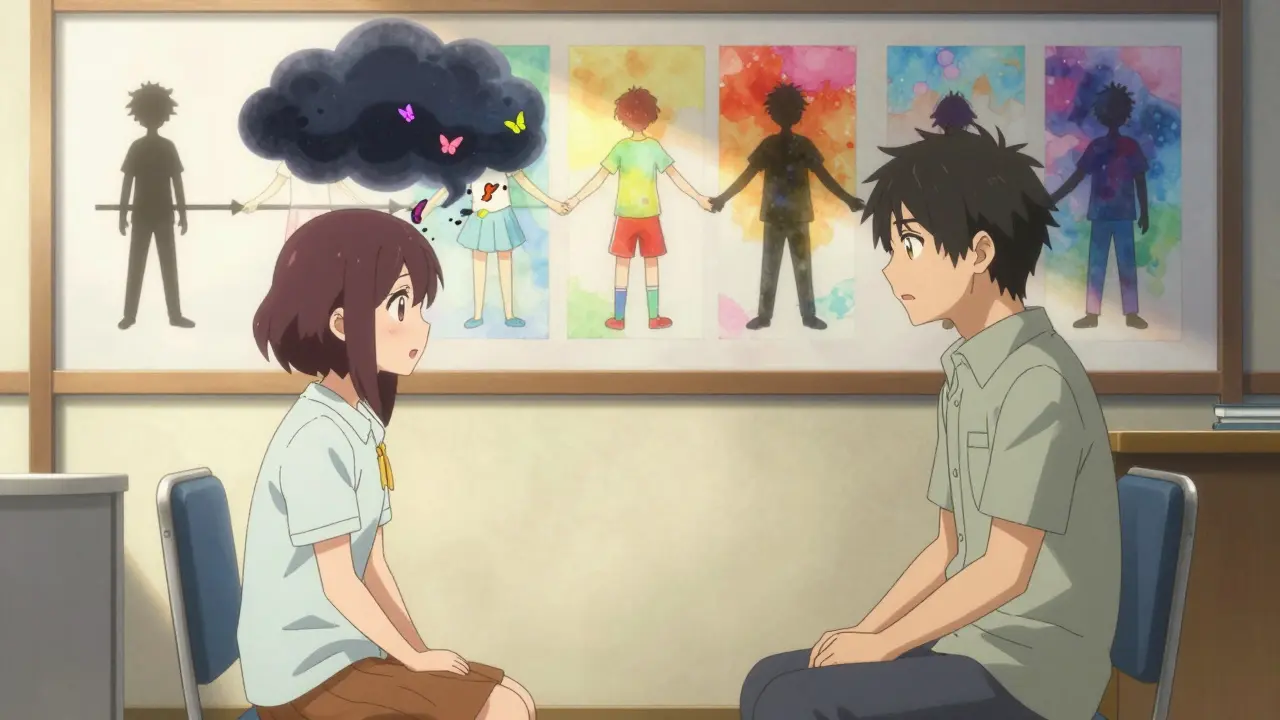
Lifestyle Changes: The Foundation You Can’t Ignore
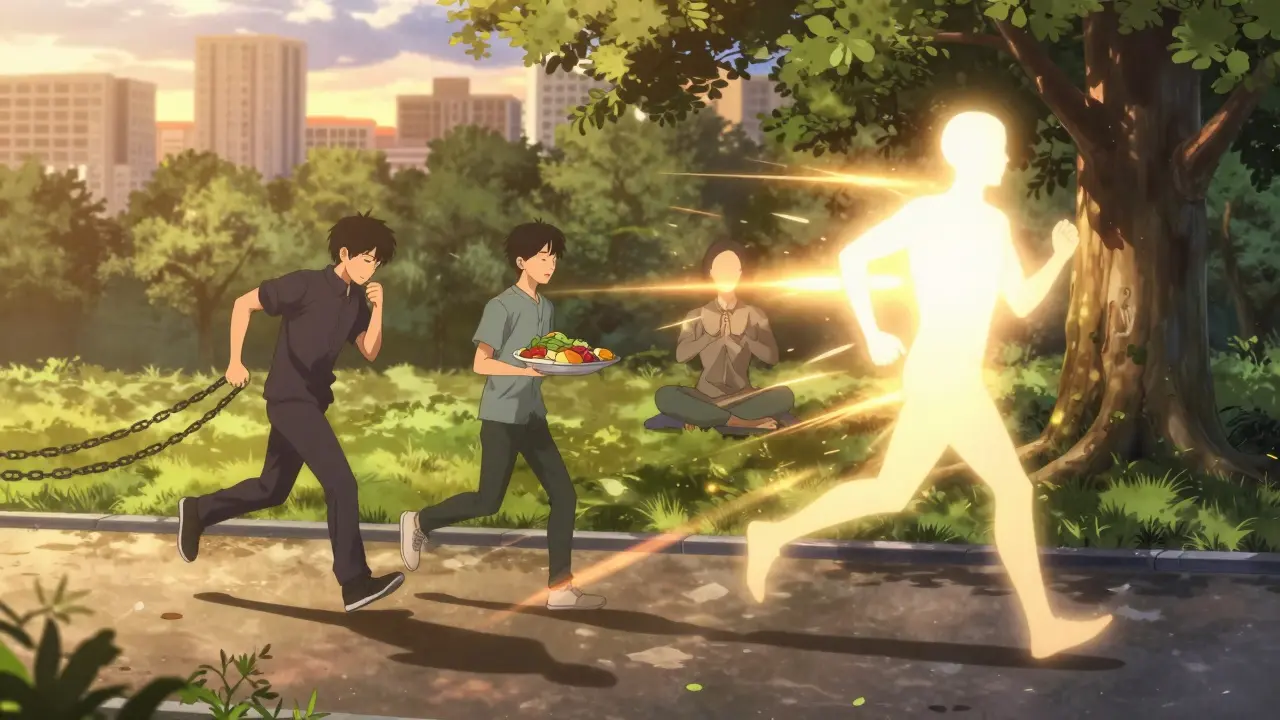
Medications and therapy work best when supported by daily habits. Lifestyle isn’t a bonus - it’s part of the treatment plan.Exercise is one of the most underrated tools. Three to five sessions a week of moderate activity - like brisk walking for 30-45 minutes - can reduce depression symptoms as much as medication does for mild cases. A 2020 meta-analysis found a standardized effect size of -0.68, meaning it’s clinically significant. You don’t need to run a marathon. Just move regularly.
Sleep is another major player. About 75% of people with depression have trouble sleeping. Fixing sleep hygiene can cut depression scores by 30-40%. That means: go to bed and wake up at the same time every day (within 30 minutes), only go to bed when you’re sleepy, and avoid screens for at least an hour before bed. Simple. Hard to do. Life-changing.
Diet matters too. The SMILES trial gave people with depression a 12-week Mediterranean-style eating plan - lots of vegetables, fruits, whole grains, fish, and lean proteins. After three months, 32% went into remission. The control group, which got social support, only saw an 8% remission rate. Food isn’t a cure, but it’s fuel for your brain.
Stress reduction techniques like daily mindfulness (10-20 minutes), yoga twice a week, or tai chi also help. Studies show moderate improvements - not dramatic, but consistent. These aren’t spa treatments. They’re tools to calm an overactive nervous system.
What Works Based on How Bad It Is
Depression isn’t one-size-fits-all. Treatment should match severity.Mild depression (PHQ-9 score 5-9): Start with active monitoring, guided self-help, or structured exercise. Medication isn’t usually recommended unless you really want it after talking it through.
Moderate depression (PHQ-9 score 10-14): Choose between CBT or an antidepressant. Both are equally valid. If your job, relationships, or daily tasks are falling apart, combine both.
Severe depression (PHQ-9 score 15+): Start with both medication and therapy. Studies show 60-70% respond to combination treatment, compared to 40-50% with one alone. If you’re having hallucinations or delusions (psychotic depression), ECT or antidepressants plus antipsychotics are the standard.
Chronic depression? CBASP + medication is the evidence-backed approach. It’s not easy, but it works where other methods stall.
Barriers and Real-World Challenges
Knowing what works is one thing. Getting it is another.In the U.S., only 35.6% of adults with depression got any mental health care in 2021. Why? Shortages. There are over 6,200 mental health professional shortage areas. Therapy is expensive. Insurance doesn’t always cover it well. And stigma still keeps people silent.
Digital tools are helping. FDA-cleared apps like reSET show a 47% response rate in trials. Telehealth has exploded - 68% of providers now offer virtual visits, up from 18% in 2019. But adoption is still low. Only about 5% of clinics use these tools regularly.
And then there’s the myth that depression is just a chemical imbalance. Some experts, like Dr. Joanna Moncrieff, argue we’ve overhyped this idea. The truth? It’s a mix of biology, environment, trauma, and lifestyle. No single factor explains it.
What’s Next? The Future of Depression Care
The field is moving fast. Psilocybin-assisted therapy showed a 71% response rate in a 2021 trial. It’s not approved yet, but it’s coming. Digital phenotyping - using your phone’s sensors to track speech, movement, and social activity - can predict a depressive episode 7 days in advance with 82% accuracy.Health disparities are glaring. Depression is 50% more common among racial and ethnic minorities in the U.S., yet they’re less likely to get care. Future guidelines are pushing for better access, culturally tailored care, and biomarkers to match people with the right treatment.
The goal isn’t just to reduce symptoms. It’s to restore function - to help people sleep, work, connect, and feel like themselves again. And that takes more than a pill. It takes a plan.
Can I manage depression without medication?
Yes, especially for mild to moderate depression. Therapy like CBT, IPT, or MBCT, combined with exercise, sleep hygiene, and dietary changes, can be as effective as medication. Many people choose therapy first, especially if they want to avoid side effects. But if symptoms are severe or don’t improve after 8-12 weeks, medication may be needed.
How long does it take for antidepressants to work?
Most antidepressants take 4 to 8 weeks to show noticeable effects. Some people feel small improvements in the first two weeks, but full benefit usually takes longer. It’s important to stick with the medication at the prescribed dose for at least 6-8 weeks before deciding it’s not working. Stopping too early is one of the most common reasons treatment fails.
Is therapy better than medication for depression?
Neither is universally better. For mild depression, therapy often works as well as medication - and the benefits last longer after treatment ends. For moderate to severe depression, combining both gives the best results. Therapy teaches skills to manage thoughts and emotions. Medication helps balance brain chemistry. They work together, not against each other.
What’s the most effective lifestyle change for depression?
Exercise has the strongest evidence. Three to five sessions per week of moderate activity - like walking, cycling, or swimming - can reduce symptoms as much as antidepressants for mild depression. But sleep hygiene is close behind. Fixing your sleep schedule and reducing screen time before bed can cut depression severity by 30-40%. Diet also plays a role - the Mediterranean diet improved remission rates from 8% to 32% in one major trial.
When should I consider ECT or other advanced treatments?
Consider ECT if you have severe depression with psychosis, have tried at least two antidepressants without success, or are at immediate risk of suicide. ECT has a 70-90% remission rate in these cases - far higher than medication alone. Repetitive transcranial magnetic stimulation (rTMS) is a non-invasive alternative with about 50-55% response rates after 4-6 weeks. These aren’t last resorts - they’re proven tools for when standard treatments fall short.
Can depression come back even after treatment?
Yes. About half of people who have one episode will have another. For those with three or more episodes, the risk jumps to 90%. That’s why maintenance treatment matters. Continuing therapy, staying active, eating well, and sometimes staying on a low-dose medication can prevent relapse. MBCT is specifically designed for this - it reduces relapse risk by 31% over a year.
If you’re struggling, know this: depression is treatable. Not because you’re weak, but because science has given us real tools. The path isn’t always linear. You might try therapy, then medication, then adjust your sleep, then add exercise. That’s not failure - that’s how recovery works. Keep going. You don’t have to do it all at once. Just take the next step.

Write a comment
Your email address will not be published.
Recent Posts
-
 Burning Sensation in the Joints: Causes and Treatment October 6, 2025
 -
 Wearable ECGs for QT Safety: Real-Time Risk Detection March 31, 2026
10 Comments
I mean, sure, you can ‘try’ therapy and kale smoothies, but if you’re not on a properly titrated SSRI with adjunctive lithium, you’re just wasting everyone’s time. I’ve seen too many people romanticize ‘lifestyle changes’ while their cortisol levels are through the roof. Wake up. This isn’t a Pinterest board.
It’s fascinating how we’ve pathologized human suffering into a pharmacological algorithm. The neurochemical narrative-serotonin, dopamine, norepinephrine-is a useful heuristic, yes, but it’s not ontology. Depression isn’t a broken circuit; it’s a systemic response to meaninglessness, alienation, and structural violence. Medication may dampen the signal, but it doesn’t restore the context. What if the cure isn’t in the brain, but in the world?
Oh wow, so now we’re giving out gold stars for ‘Mediterranean diet remission rates’? 🙄 Let me guess-you also think yoga fixes trauma and affirmations undo childhood neglect. Sweetheart, if your ‘lifestyle changes’ are the main treatment plan for someone who can’t get out of bed, you’re not helping. You’re performing wellness.
Thank you for this. Really. I’ve been on sertraline for 14 months. Took 11 weeks to notice anything. Side effects? Mild nausea, then libido issues. But I’m working again. I’m texting my sister. I’m sleeping. It’s not glamorous. It’s not ‘fixing’ me. But it’s letting me breathe. And that’s enough. 🙏
Let’s be real: if you’re still debating whether to take an SSRI in 2025, you’re either financially privileged enough to afford 3 years of CBT or you’re clinging to some toxic ‘natural healing’ cult. The fact that you’re reading this means you’re already in the 1% who have access to care. Stop romanticizing struggle. Take the pill. Go to therapy. Move your body. Stop making depression a virtue signal.
CBT 50-60%? Where’s the citation? Also, sleep hygiene? Lol. I’ve been doing ‘sleep hygiene’ for 3 years. Still up at 3am crying. Also, ‘Mediterranean diet’? My cousin ate that for 6 months and ended up in the psych ward. So… yeah. Not buying it.
While the data presented is statistically robust, it is methodologically compromised by the absence of longitudinal controls for socioeconomic confounders. Moreover, the conflation of ‘remission’ with ‘functional restoration’ is a semantic fallacy prevalent in contemporary psychiatric literature. ECT’s 70–90% remission rate is misleading without accounting for cognitive sequelae, which are often underreported in industry-funded trials. One must interrogate the epistemological foundations of ‘evidence-based’ psychiatry before prescribing.
Why are we still talking about SSRIs like they’re the holy grail? We’ve had ketamine and psilocybin trials since 2018. We’re clinging to 1980s pharmacology because Big Pharma owns the FDA and insurance companies won’t cover psychedelic therapy unless it’s ‘FDA-approved’-which it won’t be until 2032. We’re literally letting people die while waiting for bureaucracy to catch up.
Everyone’s acting like this is a new revelation. It’s not. We’ve known for decades that exercise and sleep matter. The real issue? Nobody wants to do them. People want a pill that fixes everything without changing anything. That’s not medicine. That’s magical thinking. And it’s killing people.
As a Black woman raised in a household where therapy was ‘for white people who can’t handle their lives,’ I didn’t believe this stuff until I was 32 and hospitalized. The truth? The system doesn’t want us healed. It wants us medicated, quiet, and productive. But I’m here-on quetiapine, in weekly group therapy, walking 5K every morning, eating collards and fish-and I’m alive. Not ‘fixed.’ Not ‘cured.’ But alive. And that’s the revolution.