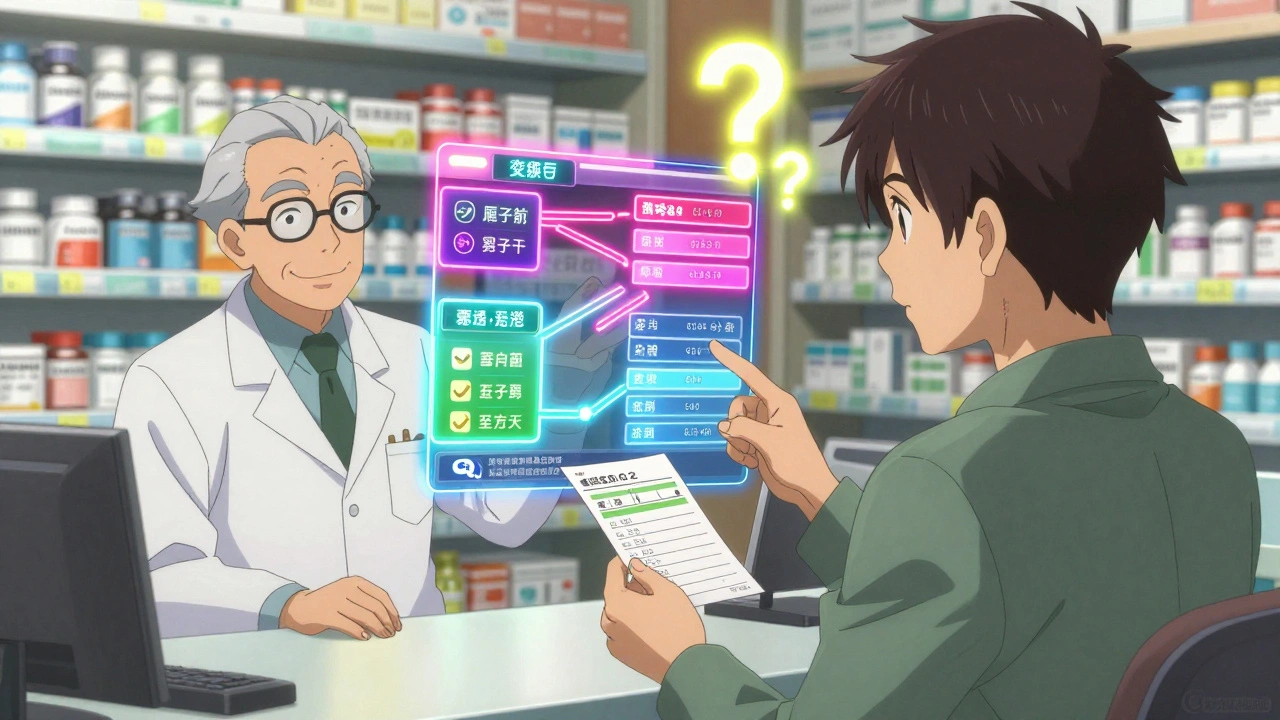
Don’t Just Pick Up Your Prescription-Ask These Questions
You walk into the pharmacy, hand over your prescription, and walk out with a bag of pills. But do you really know what you’re taking? Most people don’t. And that’s risky. Every year in the U.S., over 1.3 million emergency room visits happen because of medication errors-many of which could’ve been avoided with a simple conversation with your pharmacist.
Pharmacists aren’t just the people who count out pills. They’re trained medication experts who know how your drugs work, what they interact with, and how to make them safer for you. Yet, most people leave the pharmacy without asking a single question. You wouldn’t buy a car without asking how it runs. Don’t take medicine that way either.
What Is This Medicine For-and How Will It Help You?
It sounds basic, but 30% of medication errors happen because patients don’t understand why they’re taking a drug. You might get a prescription for something like lisinopril and assume it’s for blood pressure. But what if your doctor prescribed it for kidney protection after a recent infection? Or what if you’re taking metformin and think it’s just for diabetes, not realizing it’s also being used to help with insulin resistance from PCOS?
Ask: “What is this medication for?” and “How will I know it’s working?” Don’t settle for “it’s for your condition.” Get specific. If your doctor wrote “for hypertension,” ask what that means for you. Is your blood pressure high? Are you trying to prevent a stroke? Knowing the goal helps you stay on track.
How and When Should You Take It?
Timing matters. Taking a pill with food instead of on an empty stomach can make it work better-or worse. Some medicines need to be taken at night because they cause drowsiness. Others must be spaced out evenly over 24 hours to stay effective.
Ask: “Should I take this with food or on an empty stomach?” “What time of day is best?” “Can I take it with my morning coffee or grapefruit juice?”
For example, statins like atorvastatin work better when taken at night because your liver makes most cholesterol while you sleep. But levothyroxine for thyroid issues must be taken on an empty stomach-no coffee, no calcium supplements-for at least 30 minutes before eating. Get it wrong, and your treatment fails.
What Side Effects Should You Expect-and When Should You Worry?
Every medication has side effects. But not all of them are dangerous. Some are annoying, like mild nausea or dry mouth. Others are serious, like swelling, chest pain, or sudden confusion.
Ask: “What are the most common side effects?” “Which ones mean I need to call my doctor right away?” “Is there anything I can do to reduce them?”
For instance, ibuprofen can cause stomach upset-taking it with food helps. But if you notice black stools or vomiting blood, that’s a sign of internal bleeding. That’s not normal. That’s an emergency. Your pharmacist knows which side effects are red flags for each drug. They’ve seen the data. They’ve helped others through this.
Could This Interact With Other Things You’re Taking?
Here’s where things get dangerous. Most people don’t tell their doctor about every supplement, herb, or over-the-counter pill they take. But pharmacists see the full picture. They can spot interactions your doctor might miss.
Ask: “Does this interact with my other medications, vitamins, or supplements?” “What about alcohol or foods like grapefruit?”
One real case: A patient was taking tramadol for pain and also used St. John’s Wort for depression. Neither the doctor nor the patient knew this combo could cause serotonin syndrome-a life-threatening condition. The pharmacist caught it. Another person took warfarin and started drinking green tea daily. The vitamin K in the tea made the blood thinner less effective, putting them at risk for clots. These aren’t rare. They happen every day.
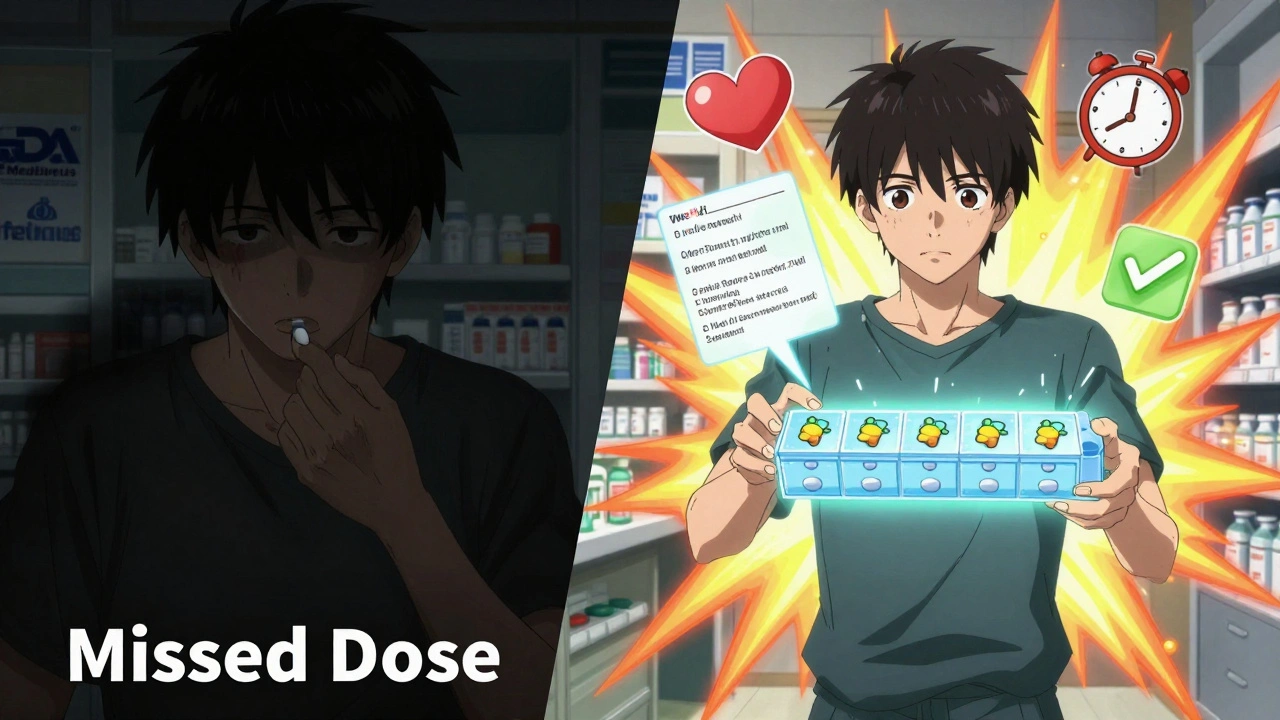
What If You Miss a Dose?
Life happens. You forget. You’re traveling. You feel better and think you don’t need it anymore. But skipping doses or doubling up can be just as dangerous as taking the wrong pill.
Ask: “What should I do if I miss a dose?” “Is it okay to double up next time?”
For antibiotics, missing doses can lead to resistant bacteria. For blood pressure meds, skipping even one day can spike your pressure. For insulin, it can trigger a diabetic emergency. Your pharmacist can give you a clear, safe plan: “If you miss it by less than 4 hours, take it. If it’s been longer, skip it and go back to your schedule.” No guessing. No panic.
Are There Cheaper or Generic Options?
Brand-name drugs can cost 80-85% more than generics-and they work exactly the same. The FDA requires generics to match brand drugs in strength, safety, and effectiveness. Yet many people pay more because they don’t ask.
Ask: “Is there a generic version?” “Are there lower-cost alternatives?” “Can you help me find a savings program?”
Some pharmacies offer $4 generic lists for common meds like metformin, atorvastatin, or levothyroxine. Others have manufacturer coupons or patient assistance programs. One woman in Wisconsin saved $280 a month just by switching from a brand-name antidepressant to its generic-and her pharmacist helped her apply for a free supply through the drugmaker’s program.
When Will You Know It’s Working?
Many people stop taking their meds because they don’t feel any different. But some drugs don’t make you “feel” better right away.
Ask: “When should I start noticing results?” “Will I need blood tests or other checks?”
Antidepressants like sertraline can take 4-6 weeks to show effects. Blood pressure meds like amlodipine might lower your numbers in days, but you won’t feel it. Your doctor might order a blood test after 6 weeks to check kidney function or potassium levels. If you don’t know that, you might think the drug isn’t working-and quit.
Are There Non-Drug Options?
Medication isn’t always the only path. Sometimes lifestyle changes-diet, exercise, sleep-can reduce or even replace the need for pills.
Ask: “Are there non-drug ways to manage this?” “Would losing weight or cutting salt help?”
For type 2 diabetes, weight loss and walking 30 minutes a day can bring A1C levels down as much as some pills. For high blood pressure, reducing sodium and doing strength training can lower readings by 10-15 points. Your pharmacist knows which conditions respond best to lifestyle changes-and which ones absolutely need meds. They can help you decide what’s realistic for your life.

How Do You Remember to Take It?
Half of all people stop taking their chronic meds within a year. Why? They forget. They get overwhelmed. They think it’s not necessary.
Ask: “What’s the easiest way to remember this?” “Do you have pill organizers or reminder apps?”
Pharmacists can give you free pill boxes with days of the week. Some pharmacies offer blister packs pre-filled for the whole month. Others link to apps that send text reminders. One man with six different meds started using a weekly pill box with alarms-and his hospital visits dropped by 70% in six months.
Where Can You Find Reliable Info?
Google can give you scary, misleading, or outdated info. Your pharmacist knows which websites are trustworthy.
Ask: “Where can I find accurate, easy-to-understand info about this drug?”
They’ll point you to MedlinePlus (from the U.S. National Library of Medicine), Drugs.com, or the official FDA patient guides. These sites don’t sell anything. They just give facts. No ads. No hype. Just what you need to know.
Why This Matters More Than You Think
Studies show that patients who ask just three questions at the pharmacy have 65% fewer medication-related problems. That’s not a small number. That’s life-changing.
Pharmacists prevent 1.5 medication errors per hospital admission. They reduce hospital readmissions by 27%. They cut emergency visits by 33%. They save lives.
And yet, most people spend less than three minutes with their pharmacist. That’s not enough time to ask everything. So come prepared. Write down your questions. Bring a list of everything you take-including vitamins, herbs, and OTC pills. Use the FDA’s “My Medicine Record” form. Practice saying your questions out loud.
What If You’re Too Busy or Shy to Ask?
You’re not alone. A 2022 survey found 63% of patients felt rushed at the pharmacy. Wait times average 14 minutes. Pharmacists are juggling 300+ prescriptions a day.
But here’s the thing: pharmacists want to help. They’re trained for this. If you’re shy, say: “I have a few quick questions about my meds. Can we spend two minutes?” Most will pause. If they’re too busy, ask if you can schedule a free consultation. Many pharmacies offer 10-15 minute private chats-no appointment needed.
Or try telepharmacy. In rural areas, virtual consultations are now common. You can talk to a pharmacist by video or phone from home.
Final Thought: You’re the Most Important Person in This Equation
Your doctor writes the prescription. Your pharmacist makes sure it’s safe. But you’re the one who takes it. You’re the one who lives with the side effects. You’re the one who decides whether to keep taking it.
Don’t be passive. Don’t assume. Don’t wait until something goes wrong. Ask the questions. Be curious. Be bold. You’re not bothering them-you’re helping them do their job better.
Next time you pick up a prescription, don’t just grab the bag. Stop. Look. Ask.
What’s the most important question to ask your pharmacist?
The most important question is: “What is this medication for, and how will I know it’s working?” Without knowing the purpose, you can’t tell if it’s helping-or if you’re at risk. This single question prevents misunderstandings, missed doses, and dangerous assumptions.
Can pharmacists change my prescription?
In most cases, no-they can’t change what your doctor prescribed. But in 45 U.S. states, pharmacists can now prescribe certain medications like naloxone, birth control, or smoking cessation aids. They can also substitute a generic version if it’s allowed and safe. If they spot a problem-like a dangerous interaction or duplicate drug-they’ll call your doctor to suggest a change. You don’t have to wait for your doctor to catch it.
Do I need to tell my pharmacist about vitamins and supplements?
Yes, absolutely. Supplements like St. John’s Wort, garlic, ginkgo, and fish oil can interact with blood thinners, antidepressants, and blood pressure meds. Many people think “natural” means “safe,” but that’s not true. Pharmacists see dangerous interactions daily. Bring a list-even if you think it’s not important.
Why do pharmacists ask about my other medications every time?
Because your medication list changes. A new antibiotic, a temporary painkiller, or a new vitamin can create a dangerous interaction with something you’ve been taking for years. Pharmacists check every time because safety isn’t a one-time thing-it’s ongoing. It’s not about doubting you. It’s about protecting you.
Is it worth asking about cost if I have insurance?
Yes. Insurance doesn’t always cover the cheapest option. Sometimes the generic isn’t on your plan’s lowest tier. Sometimes a different brand has a better coupon. Sometimes the pharmacy has a $4 list that’s cheaper than your copay. Always ask: “Is there a cheaper way to get this?” It could save you hundreds a year.

Write a comment
Your email address will not be published.
Recent Posts
-
 Buy Online Cheap Generic Warfarin: Best Prices & Safe Pharmacies August 29, 2026

11 Comments
Wow. So let me get this straight-you’re telling me I shouldn’t just blindly trust the guy who hands me my Adderall like it’s a free lollipop? Newsflash: I’ve been taking pills since 2007 and I’ve never died. Maybe the real problem is people who think they need a PhD to swallow a capsule.
i mean… i *did* ask my pharmacist if my blood pressure med was ‘like a vitamin’ and she just stared at me like i’d asked if gravity was optional. i now know it’s not. but also, why is everything written like a TED Talk? can we just… use commas?
In India we call this 'pharmacy chai time'. Pharmacist sits with you. Asks about your sleep. Your stress. Your aunt’s arthritis. No form. No rush. Just human. You don’t need questions. You need presence.
I literally cried when my pharmacist noticed I was taking 7 different meds and asked if I was ‘trying to become a walking pharmacy or just really bad at life.’ I said ‘both.’ She gave me a free pill organizer and a hug. I haven’t been this emotionally seen since my breakup with my cat.
This article is just pharmacoeconomic propaganda. The real issue is systemic underfunding of primary care. Pharmacist consultations are band-aids on a hemorrhage. Also generics are not always bioequivalent in real world. Blame the FDA. Not the patient.
You people are so naive. You think asking questions will save you? I’ve seen patients who asked everything… and still ended up in the ER. The real solution? Stop taking pills. Eat kale. Meditate. Walk. Your body doesn’t need chemicals. It needs silence. 🙏
There’s a quiet tragedy in how we’ve outsourced our health literacy to strangers in white coats. We treat pharmacists like oracle machines-feed them the script, receive the answer, walk away. But what if the real question isn’t ‘what is this for?’ but ‘who am I becoming while taking this?’ The pill doesn’t just alter biochemistry. It alters identity. And we never ask that.
i never knew about the $4 generics until my cousin showed me. now i get my metformin for 2 bucks. also i just tell the pharmacist ‘i’m broke’ and they always find a way. people are nicer than you think. just say it out loud.
I’m a pharmacist. 12 years in. I’ve seen people cry because they couldn’t afford insulin. I’ve seen grandmas take 14 pills a day because they didn’t know which ones were optional. I’ve seen men skip their blood pressure meds so they could afford their kid’s school trip. This isn’t just about questions. It’s about dignity. If you walk out without asking one thing-ask this: ‘Can you help me live?’ I’ll drop everything to answer.
so i asked my pharmacist if i could take my antidep with a beer and he said ‘no but also yes if you dont mind being a human paperweight’ 🤡 i now drink my meds with orange juice and a prayer
I just asked my pharmacist if my new cholesterol pill could make me hallucinate. She laughed and said, ‘Only if you take it with a psychedelic.’ I didn’t know that was a thing. Now I’m Googling ‘can statins make you see angels?’ and I’m not sorry.