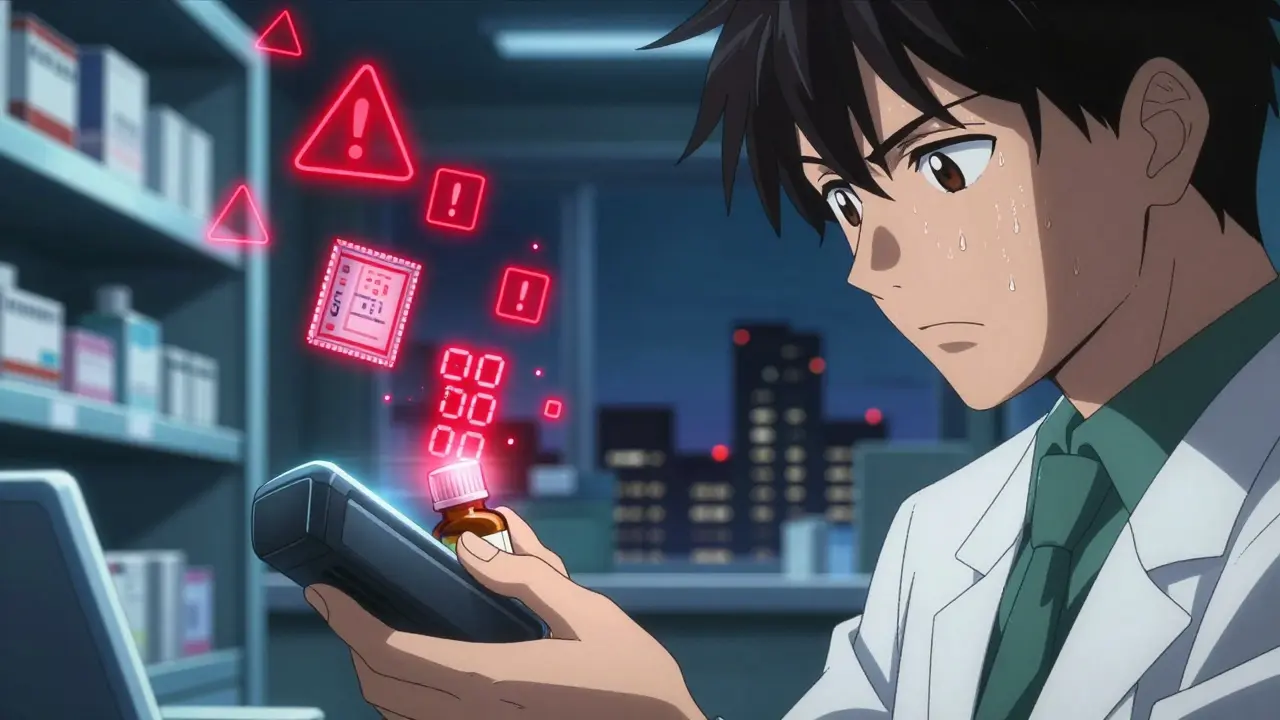
Every year, millions of prescription drugs move through a complex network of manufacturers, distributors, and pharmacies before ending up in your medicine cabinet. But what if one of those pills wasn’t made in a licensed facility? What if it was a fake - made in a basement lab, packed with flour or worse? That’s not science fiction. It’s a real threat. And since November 27, 2024, the U.S. has had a federal system designed to stop it: the DSCSA track-and-trace system.
What Is the DSCSA, Really?
The Drug Supply Chain Security Act (DSCSA) isn’t just another regulation. It’s the first time the U.S. has required every single prescription drug package - from the factory to your local pharmacy - to carry a unique digital fingerprint. This fingerprint includes the National Drug Code (NDC), a lot number, an expiration date, and a 20-character serial number. All of it must be readable by machines and humans. It’s not optional. By law, every manufacturer, wholesaler, repackager, and pharmacy must now scan, verify, and pass this data electronically at every step.This system didn’t appear overnight. It was built over a decade, starting in 2013. Before DSCSA, states had their own rules - some required tracking, others didn’t. That created chaos. A drug shipped from Ohio to California might pass through five different systems, each with different formats. DSCSA wiped all that away. Now, everyone uses the same standards: GS1 for serial numbers and EPCIS for data exchange. It’s like switching from handwritten receipts to barcodes on every package.
How It Stops Counterfeit Drugs
Counterfeit drugs don’t always look fake. Sometimes they’re perfect copies - same packaging, same logo. But they lack the unique serial number. Or the number doesn’t match the manufacturer’s database. That’s where DSCSA kicks in.When a pharmacy receives a shipment, it scans every package. The system checks the serial number against the manufacturer’s record. If it’s not there? The system flags it as a suspect product. If the number matches a drug that was reported stolen? It flags that too. The pharmacy doesn’t just toss it - they’re legally required to investigate, quarantine it, and report it to the FDA. No guesswork. No delays. Within 24 hours, they know if a drug is real or not.
Before DSCSA, recalls were messy. If a batch of blood pressure pills was found to be contaminated, pharmacies had to manually check every box. Now, they scan the lot number and instantly know which 377 packages are affected. That’s not just faster - it’s life-saving. The FDA estimates that DSCSA has reduced counterfeit drugs entering the supply chain by 95% since full implementation.
Who Has to Follow the Rules?
It’s not just big pharma. Everyone in the chain has a role:- Manufacturers - must serialize every package and share transaction data electronically.
- Repackagers - like those who turn large bottles into blister packs for nursing homes - must now assign new serial numbers and track every unit.
- Wholesalers - must verify every shipment they receive and pass along full transaction history.
- Dispensers - that’s pharmacies. Hospitals. Clinics. They must verify all prescription drugs before giving them to patients.
By 2024, even small independent pharmacies had to upgrade their systems. Many spent $150,000-$200,000 on scanners, software, and staff training. Some still struggle. But the alternative - selling a fake drug - is far worse. The FDA has issued warning letters to distributors who failed to investigate suspect products. One company in 2022 was fined after a counterfeit opioid package slipped through because they didn’t scan it.
Real-World Impact: Successes and Struggles
The system isn’t perfect, but it’s working.CVS Health reported a 75% drop in suspect product investigations after switching to automated verification. McKesson, one of the largest wholesalers, processed over 1.2 billion serialized transactions in 2023 with 99.98% accuracy. That’s not luck. It’s a well-built system.
But challenges remain. One major issue? Data mismatches. A pharmacy scans a box. The serial number doesn’t match what the wholesaler sent. Why? Maybe the manufacturer changed their system. Maybe the wholesaler entered it wrong. Or maybe the barcode got smudged. These mismatches cause delays - sometimes 2-3 days - while teams manually check records. That’s why the FDA gave a one-year stabilization period after November 2023. No penalties, but no excuses either.
Smaller pharmacies still feel the pressure. A 2023 survey by the National Community Pharmacists Association found 68% of independent pharmacies listed DSCSA compliance as their biggest tech challenge. Many didn’t have IT teams. They hired one person just to handle DSCSA data. Average salary? $110,000 a year.
How It Compares to Other Countries
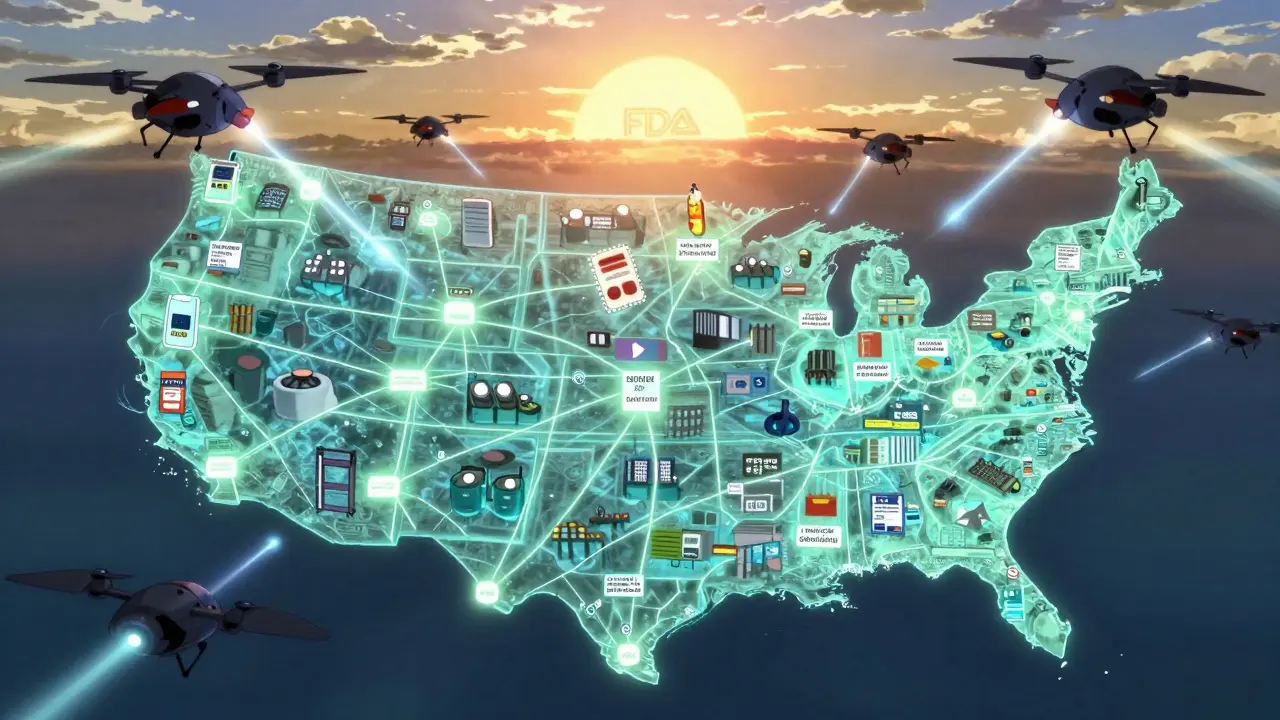
Europe has its own system: the Falsified Medicines Directive (FMD). It requires anti-tamper seals and a central database where every drug is registered. The U.S. doesn’t do that. Instead, DSCSA relies on a decentralized network - each company keeps its own data, but shares it electronically when needed. It’s less centralized, but more flexible. And it’s already handling over 5 billion drug transactions a year.Some experts argue the EU system is more secure. Others say the U.S. model scales better. The truth? Both work. But DSCSA was designed for America’s massive, fragmented supply chain - 10,000+ pharmacies, 150+ manufacturers, and 300+ distributors. It had to be adaptable. And so far, it is.
What’s Next?
The 2024 deadline was the end of Phase 1. Now, the FDA is looking ahead. One big question: Should over-the-counter drugs be included? Drugs like insulin, asthma inhalers, and certain painkillers are already being targeted for fraud. In March 2023, FDA Commissioner Dr. Robert Califf said the agency is evaluating extending DSCSA rules to high-risk OTC products.Another trend? The market for track-and-trace software is exploding. Companies like TraceLink, SAP, and Oracle now dominate a $3.2 billion industry - up from $1.2 billion in 2022. New tools are emerging that use AI to predict mismatches before they happen. Some systems now auto-correct minor data errors. Others alert pharmacists if a drug’s serial number has been reported stolen in another state.
Long-term? PwC predicts DSCSA will save $2.3 billion a year by 2027 through fewer recalls, less diversion, and fewer counterfeit incidents. That’s not just money. It’s lives.
Why This Matters to You
You might not see the scanners or the barcodes. But every time you pick up a prescription, you’re benefiting from this system. It’s why you can trust that your blood pressure pill came from a real manufacturer. It’s why you don’t have to worry that it was mixed with something dangerous.The DSCSA didn’t just add a new rule. It changed how an entire industry thinks about safety. No more paper trails. No more guesswork. Just data - fast, accurate, and impossible to fake.
And that’s the point. The goal isn’t to make things harder for pharmacies. It’s to make sure the medicine you take is the medicine you’re supposed to take.
Is the DSCSA only for prescription drugs?
As of 2026, the DSCSA applies only to prescription drugs. But the FDA is actively evaluating whether to extend it to certain high-risk over-the-counter medications, like insulin, epinephrine auto-injectors, and certain pain relievers. These drugs are increasingly targeted by counterfeiters. While no formal rule has been passed, industry experts expect expansion within the next 2-3 years.
Can I verify a drug myself as a patient?
Not directly. The verification system is built for pharmacies and distributors - not consumers. The serial number on your pill bottle is meant to be scanned by machines, not entered manually. But you can ask your pharmacist if they verified the drug using the DSCSA system. Most do, especially since 2024. If they say yes, you can be confident it’s legitimate.
What happens if a drug is flagged as suspect?
If a pharmacy scans a package and the system flags it as suspect - meaning the serial number doesn’t match, the lot is expired, or it was reported stolen - the drug is immediately quarantined. The pharmacy must investigate within 24 hours. That means checking with the manufacturer, reviewing transaction history, and sometimes sending a sample for lab testing. If confirmed as counterfeit or illegitimate, they must report it to the FDA within 24 hours. The drug is destroyed and never reaches a patient.
Did the DSCSA reduce drug shortages?
Not directly. The DSCSA wasn’t designed to fix shortages. But by reducing counterfeit drugs and improving supply chain visibility, it has helped prevent unnecessary recalls. Before DSCSA, a single fake drug in one state could trigger a nationwide recall. Now, only the exact lot is pulled. This has reduced the number of broad recalls by 60%, which in turn has helped keep legitimate drugs in stock.
Are there penalties for non-compliance?
Yes. The FDA can issue warning letters, seize non-compliant products, and even shut down operations. In 2022, a regional distributor received a formal warning for failing to investigate suspect products as required. Fines aren’t always public, but the FDA has made it clear: compliance is mandatory. Companies that ignore the rules risk losing their ability to distribute drugs legally.

Write a comment
Your email address will not be published.
Recent Posts
-
 How to Read Medication Guides for Risk and Monitoring Advice December 9, 2025
 -
 Methimazole Allergy: Symptoms, Diagnosis & Management Guide October 18, 2025
 -
 Financial Toxicity in Cancer Care: How to Manage Treatment Costs January 11, 2026
9 Comments
The DSCSA represents a monumental leap in pharmaceutical supply chain integrity, predicated upon granular serialization and interoperable data exchange protocols aligned with GS1 and EPCIS standards. The systemic adoption of machine-readable identifiers has fundamentally redefined the operational paradigm of drug distribution, eliminating the antiquated reliance on manual reconciliation and paper-based audit trails. This is not merely regulatory compliance-it is a paradigmatic shift toward traceability as a core pillar of public health infrastructure.
Moreover, the quantitative metrics cited-95% reduction in counterfeit ingress, 99.98% transactional accuracy at McKesson-are not anecdotal; they are empirically verifiable outcomes of standardized, end-to-end digital verification. The economic impact, projected at $2.3B annually by 2027, is a direct function of reduced recall scope and elimination of systemic fraud vectors.
It is imperative to recognize that this system’s efficacy is contingent upon universal adherence. The 68% of independent pharmacies reporting compliance as their foremost technological challenge underscores a structural disparity, not a failure of the model itself. The solution lies not in diluting standards, but in targeted federal subsidies for infrastructure modernization.
The comparison to the EU’s FMD is misleading; centralized databases introduce single points of failure and are inherently less scalable. The U.S. decentralized, API-driven architecture is not a compromise-it is an engineering triumph optimized for complexity and volume.
Any suggestion that this system is burdensome ignores the alternative: patients ingesting fentanyl-laced insulin or counterfeit anticoagulants. The cost of non-compliance is measured in lives, not IT budgets.
You people act like this is some revolutionary breakthrough when it's just another government overreach. All this 'serialization' does is make pharmacies spend $200K on scanners so they can scan the same damn barcodes they've been using for decades. The real problem? Pharma companies are the ones flooding the market with expensive generics and then crying foul when someone makes a cheaper version. This system was designed to protect Big Pharma's profits, not your life.
Oh wow. A government-mandated barcode system. How revolutionary. Next they'll require every aspirin bottle to have a hologram and a therapist on standby. Let me guess-the FDA's '95% reduction in counterfeits' is based on the same '9 out of 10 dentists agree' methodology they use to sell toothpaste? The fact that 68% of independent pharmacies are drowning in compliance costs while CVS and McKesson get tax breaks is the real story here. This isn't about safety. It's about consolidation. The little guys get crushed, the big guys get monopolized, and you're supposed to clap because your pill bottle has a QR code now. Thanks, bureaucracy.
i think this whole dscsa thing is just a scam. who really checks all these serial numbers? i bet most pharmacies just scan it and hit enter without even looking. and what about all those drugs from china? they still get in, right? i heard some guy on youtube say the fda is in on it with big pharma. they just want you to pay more for your meds. i mean, come on. a serial number? that's not gonna stop someone from making fake pills in a basement. they just print new barcodes. this is all theater.
Seriously? $200,000? For a scanner? And you're telling me this 'system' actually works? What about the 2-3 day delays from data mismatches? That's not safety-that's chaos. And who's paying for all this? The patient. Every time you fill a prescription, you're subsidizing some tech vendor's yacht. Plus, the FDA 'estimates' 95% reduction? Estimates? That's not data-that's PR. And don't even get me started on 'high-risk OTC drugs'-next they'll be scanning your Advil. This is dystopian. It's not about safety. It's about control. And the fact that nobody's asking who owns the data? That's the real red flag.
I just want to say THANK YOU to every pharmacist who’s been doing this. I had a panic attack last month because my insulin didn’t arrive on time. I called my pharmacy and they said, 'We scanned it-verified it with the manufacturer-shipped it same day.' I cried. I’m not just talking about a barcode-I’m talking about peace of mind. I have type 1 diabetes. This system? It’s not just policy. It’s survival. To everyone saying it’s overkill? You don’t know what it’s like to wonder if your life-saving drug was made in a basement. So thank you. From the bottom of my heart.
This system exists because America is the most vulnerable supply chain on earth. 10,000 pharmacies. 300 distributors. No centralized oversight. No wonder we were getting hit with fake opioids and fake insulin. This isn't about control-it's about national security. The EU can afford a centralized database because their supply chain is smaller and their government runs everything. We don't. We have to work with a patchwork of private companies. And guess what? It's working. The fact that you're complaining about $200K scanners means you've never run a business. This isn't a tax. It's insurance. And if you're against it, you're not for freedom-you're just lazy.
I just love how everyone is so quick to hate on this system, but no one ever talks about the grandma who got her blood pressure med and didn't have a stroke because it was verified. Or the kid with asthma whose inhaler wasn't laced with fentanyl. This isn't about Big Pharma or bureaucracy-it's about people. Real people. The fact that we can now say, 'Yes, this drug is safe,' with certainty? That's a miracle. I know pharmacists who worked 80-hour weeks to get this right. Let's give them some credit. And if you're still mad about the cost? Talk to your rep about funding for small pharmacies. But don't tear down something that's literally saving lives.
DSCSA isn't innovation. It's damage control. The system exists because we failed for decades. And now we're spending billions to fix what should've been regulated in 2005. The real scandal? The FDA waited until 2024 to enforce it. That's not efficiency. That's negligence. And the '95% reduction'? That's not proof of success-it's proof of how bad it was. This isn't a triumph. It's a last-minute patch on a leaking dam.