
When women start thinking about hormone therapy, it's not just about taking pills. It's about matching the right mix of hormones to your body, your history, and your goals. Many assume all hormone therapy is the same, but the truth is more complex. There are different types, delivery methods, and generic options - each with its own risks, benefits, and practical quirks. If you're considering hormone replacement therapy (HRT) to manage menopause symptoms, knowing your options isn't just helpful - it could be life-changing.
Why Combination Therapy? It Depends on Your Uterus
One of the first things your doctor will ask is: Have you had a hysterectomy? This isn't a random question. It determines whether you need estrogen alone or estrogen plus progestogen.
If you still have your uterus, taking estrogen by itself is dangerous. Estrogen makes the lining of the uterus grow. Left unchecked, that can lead to endometrial hyperplasia - and eventually, cancer. Studies show this risk jumps 2 to 12 times higher without progestogen. That’s why women with a uterus always get a combination: estrogen to handle hot flashes and night sweats, and progestogen to protect the uterine lining.
But if you’ve had a hysterectomy? Then estrogen-only therapy is safe and often preferred. It avoids the extra side effects of progestogen, like bloating or mood swings, while still giving you the symptom relief you need.
Two Main Types of Combination Therapy - and When to Use Each
Not all combinations are made equal. There are two main patterns: sequential and continuous.
Sequential combined HRT is for women who are still having periods - or just stopped recently. You take estrogen every day, then add progestogen for 10 to 14 days each month. This mimics a natural cycle and often causes monthly bleeding. It’s meant to help women in perimenopause or early menopause transition smoothly. The NHS recommends this for women with irregular periods who still have cycles.
Continuous combined HRT is for women who haven’t had a period for a full year. You take both hormones every single day, with no breaks. No monthly bleeding. This is the go-to for postmenopausal women who want symptom control without the inconvenience of periods. Research from the Women’s Health Initiative shows continuous therapy may reduce colon cancer risk by 18% and type 2 diabetes risk by 21% over time.
Generic Options You Can Actually Use
Most HRT prescriptions today are generic. Brand names like Premarin or Provera still exist, but they cost 3 to 5 times more. The active ingredients are the same.
Common generic estrogen options include:
- Conjugated estrogens - 0.3mg, 0.45mg, or 0.625mg tablets
- Estradiol - 0.5mg or 1mg tablets
For progestogen, the most common generics are:
- Medroxyprogesterone acetate (MPA) - 2.5mg, 5mg, or 10mg tablets
- Micronized progesterone - 100mg or 200mg capsules (often preferred for safety)
Price varies. In the U.S., monthly costs range from $4 to $40 depending on insurance and pharmacy. Generic estradiol patches or gels might run $30-$60, but they’re often worth it for the lower risk profile.
Delivery Matters More Than You Think
It’s not just what you take - it’s how you take it.
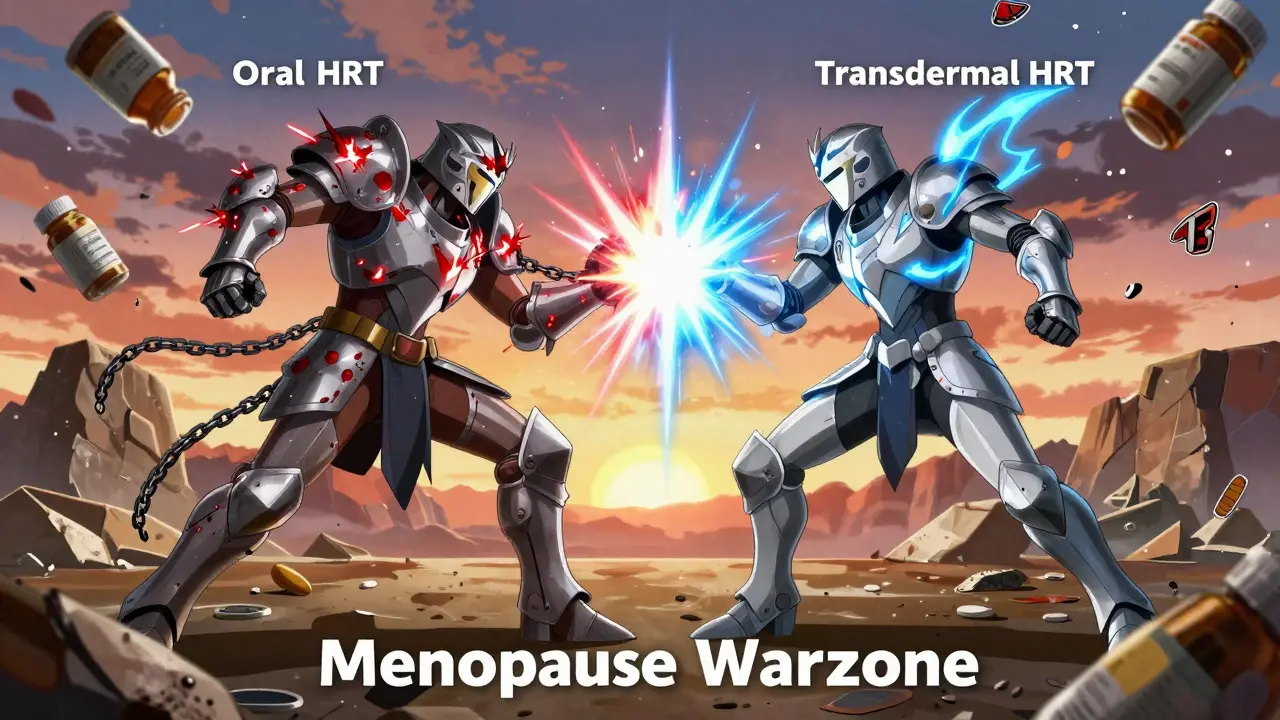
Oral pills (tablets) are common. But they go through your liver first, which can trigger clotting factors. That’s why oral estrogen increases your risk of blood clots by 2 to 3 times compared to skin-based methods. For women over 60 or with a history of clotting issues, this is a real concern. The WHI study found oral estrogen raised stroke risk by 39% in older women.
Transdermal options - patches, gels, sprays - skip the liver. They deliver hormones straight into your bloodstream. That means:
- Lower risk of blood clots
- Lower risk of stroke
- More stable hormone levels
The European Medicines Agency has pushed for transdermal use in Europe - now 65% of prescriptions there are patches or gels. In the U.S., it’s only 35%. But that gap is narrowing.
There’s also the Mirena IUS - a small device placed in the uterus that releases progestogen locally. It’s great for women who want to avoid systemic hormones entirely. It protects the uterine lining without affecting the rest of the body much. Many women use it with a low-dose estrogen patch for full symptom control.
Which Progestogen Is Safest? Not All Are Created Equal
Not all progestogens are the same. Synthetic ones like medroxyprogesterone acetate (MPA) have been linked to higher breast cancer risk. Data from Cancer Research Canada and the European Menopause Society show that for every year of use, synthetic progestins increase breast cancer risk by about 2.7%.
Micronized progesterone - the natural, body-identical version - has a better safety record. Its risk increase is closer to 1.9% per year. It’s also less likely to cause mood swings or bloating. If you’re choosing a combination therapy, ask if micronized progesterone is an option. It’s often available as a generic capsule and is becoming the preferred choice for long-term users.
Timing Is Everything - Start Early, Stay Low
Doctors now agree: hormone therapy works best when started early. The sweet spot? Within 10 years of your last period, and under age 60. For healthy women in this group, the benefits - reduced hot flashes, better sleep, lower bone loss - clearly outweigh the risks.
But if you wait until you’re 65? That’s a different story. Hormones introduced decades after menopause can increase dementia, stroke, and heart attack risk. Dr. Gutierrez of Houston Methodist says: “Throwing hormones at someone whose body hasn’t seen them for 20 years? That’s asking for trouble.”
Start with the lowest dose that works. Most women find relief with 0.5mg estradiol daily, or a 25mcg patch. Adjust slowly. It can take 3 to 6 months to find the right balance. Don’t rush it.
Common Problems - And How to Handle Them
Breakthrough bleeding is the #1 reason women stop HRT. Up to 20% of women on sequential therapy have spotting or irregular bleeding in the first 6 months. It’s usually harmless and fades with time. But if it lasts longer than 6 months? You need a check-up. It could mean the dose is too low, the timing is off, or there’s another issue.
Side effects like breast tenderness, headaches, or mood changes are common early on. They often fade. If they don’t, your provider can switch the type of estrogen, change the delivery method, or try micronized progesterone instead of MPA.
Transdermal gels require care: apply to clean, dry skin (arms or thighs), wait 60 minutes before showering or skin contact. Patches need replacing twice a week. Miss a dose? Don’t double up. Just resume your schedule.

What’s New in 2026?
Research keeps evolving. In 2023, the FDA approved a new transdermal patch that combines estrogen and progesterone in one application. Early data from the TWIRP study suggests it may lower breast cancer risk compared to older oral combos.
There’s also growing interest in tissue-selective estrogen complexes (TSECs) and selective progesterone receptor modulators (SPRMs). These are designed to give symptom relief without stimulating breast or uterine tissue. Several are in Phase III trials. They won’t be widely available yet in 2026, but they’re the next wave.
The North American Menopause Society now recommends annual reviews after 3-5 years of use. Hormone therapy isn’t a lifelong prescription for everyone. It’s a tool - use it as long as it helps, then reassess.
Who Should Avoid HRT?
HRT isn’t for everyone. Avoid it if you have:
- History of breast cancer
- History of blood clots or stroke
- Unexplained vaginal bleeding
- Active liver disease
- Known estrogen-sensitive cancer
Even if you’re healthy, if you’re over 60 and starting HRT for the first time, the risks climb. Transdermal options are safer here - but still require careful discussion.
The Bottom Line
Hormone therapy combinations aren’t one-size-fits-all. Your uterus status, age, delivery method, and type of progestogen all matter. Generic options are effective and affordable. Transdermal routes reduce serious risks. Micronized progesterone is safer than synthetic versions. Start low, start early, and don’t stay on longer than needed.
There’s no magic pill. But with the right combination - tailored to you - hormone therapy can give you back years of quality life.
Can I use generic hormone therapy instead of brand-name?
Yes. Generic hormone therapies contain the same active ingredients as brand-name versions and are equally effective. The FDA requires generics to meet the same standards for safety and potency. Most women save 60-80% by choosing generics. Common generic estrogens include estradiol and conjugated estrogens; common progestogens include medroxyprogesterone acetate and micronized progesterone.
Is transdermal HRT safer than oral?
Yes, for most women. Transdermal estrogen (patches, gels, sprays) bypasses the liver, which means less impact on clotting factors. This lowers the risk of blood clots, stroke, and heart attack compared to oral pills. The NIH reports a 2- to 3-fold higher risk of venous thromboembolism with oral therapy. For women over 60 or with a history of clotting, transdermal is strongly preferred.
Why do I need progestogen if I still have my uterus?
Estrogen alone causes the lining of the uterus to thicken. Without progestogen to balance it, this can lead to endometrial hyperplasia - a precancerous condition - and eventually uterine cancer. Studies show estrogen-only therapy increases endometrial cancer risk by 2 to 12 times. Progestogen prevents this by regularly shedding the uterine lining. This is why women with an intact uterus must always take a combination.
Does hormone therapy cause breast cancer?
Combined HRT (estrogen + progestogen) slightly increases breast cancer risk after 5 years of continuous use. The Cleveland Clinic estimates less than 1 in 1,000 women per year develop breast cancer due to HRT. The risk is higher with synthetic progestins like MPA (2.7% per year) than with micronized progesterone (1.9% per year). Estrogen-only therapy has a lower or neutral breast cancer risk. Risk drops back to normal within 5 years of stopping.
How long should I stay on hormone therapy?
There’s no fixed timeline. Most women take HRT for 2-5 years to manage symptoms. The North American Menopause Society recommends annual reviews after 3-5 years. If symptoms return after stopping, you can restart - but only if you’re under 60 and within 10 years of menopause. Long-term use (over 10 years) should be carefully weighed against risks like breast cancer and stroke.
What’s the best way to start hormone therapy?
Start with the lowest effective dose - like 0.5mg estradiol daily or a 25mcg patch. Use transdermal delivery if you have risk factors for clots or stroke. Choose micronized progesterone over synthetic progestins if you need a combination. Give it 3-6 months to settle. Track symptoms, side effects, and bleeding. Adjust slowly with your provider. Avoid high doses unless absolutely necessary.

Write a comment
Your email address will not be published.
Recent Posts
-
 How to Read Medication Guides for Risk and Monitoring Advice December 9, 2025
 -
 Genetic Testing for Cancer Risk: BRCA, Lynch, and Beyond December 15, 2025
 -
 Cefuroxime with Probiotics: Boost Gut Health and Reduce Side Effects September 22, 2025


13 Comments
Finally someone breaks this down without the medical jargon. I’ve been on transdermal estradiol + micronized progesterone for 3 years and my hot flashes? Gone. My mood? Stable. My bank account? Thank god for generics. $8/month vs $45 for the brand. Don’t let anyone tell you otherwise - this isn’t rocket science, it’s biology.
Oh honey, you’re telling me we’ve been using synthetic progestins like MPA for decades because Big Pharma wanted us to bleed monthly? 🤦♀️ Meanwhile, micronized progesterone’s been sitting there like a quiet hero. I mean, it’s literally the same molecule your body makes. But nooo, let’s keep prescribing the one that makes you weep over spilled milk. #FirstWorldMenopause
So basically, if you’re under 60 and haven’t had a hysterectomy, just slap on a patch, take a tiny capsule, and call it a day. No need to overthink it. I’ve seen too many women get scared off by fearmongering studies. The real risk? Not taking it. The real danger? Staying on too long without checking in. Simple.
Wait - so the FDA approved a combo patch in 2023 and we’re still talking about oral pills like they’re the OG? That’s wild. I’d love to see a chart comparing breast cancer rates between MPA users and micronized progesterone users over 10 years. Someone’s gotta do the legwork. Also, why is transdermal only 35% in the US? Are we allergic to adhesive?
I started HRT at 52 after my last period. First six months were a mess - spotting, mood swings, headaches. I switched from MPA to micronized progesterone. Within two weeks, the fog lifted. Not because I’m special. Because my body finally got what it needed. I didn’t know what I was missing until it was gone. Now I sleep through the night. I’m not ‘cured.’ I’m just… me again.
Look. If you have a uterus, you need progestogen. No exceptions. If you’re over 60, skip the pills. Use the patch or gel. If you’re worried about breast cancer, ask for micronized progesterone. Generic estradiol is $4. Mirena IUD? $0 with insurance. You don’t need to spend a fortune to feel human again. Just be smart. Start low. Stay low. Don’t panic.
Transdermal > oral. Micronized > synthetic. Start early. Stay under 60. Annual reviews. That’s the whole guide right there.
People don’t realize HRT isn’t a vitamin. It’s a drug. And drugs have side effects. You’re telling women to just slap on a patch and call it a day? What about the ones who get blood clots? What about the ones who get cancer? You’re making this sound like a spa day. It’s not. It’s medicine. And medicine requires caution not cheerleading
Bro. The system is rigged. Pharma wants you on MPA because it’s cheaper to make and you gotta keep bleeding so you keep coming back. Micronized progesterone? Costs more. Less profit. So they bury the studies. I’ve seen docs refuse to prescribe it unless you beg. That’s not medicine. That’s capitalism with a stethoscope.
I wonder how many women stop HRT because they’re told it’s dangerous, when really they just weren’t given the right combination. I think we’ve been so afraid of the risks that we’ve forgotten to ask: What if the alternative - suffering through night sweats, insomnia, brain fog - is worse? Maybe the real risk isn’t the hormones. Maybe it’s ignoring the signal your body is sending.
My doc gave me MPA because "it’s what’s covered." I switched to micronized progesterone out of pocket. My anxiety? Vanished. My sleep? Solid. My wallet? Broke. But I’d do it again. Worth every cent. Also - why is the Mirena not talked about more? It’s like the silent MVP of HRT.
Estrogen + micronized progesterone transdermal = optimal for most postmenopausal women under 60 with intact uterus. Avoid oral route if clotting risk present. MPA increases breast cancer risk more than natural progesterone. TSECs and SPRMs promising but not yet accessible. Start low. Monitor. Reassess annually. No need for high doses. Long-term use beyond 10 years requires strong indication.
You’ve got this. It’s not about being perfect. It’s about being heard. Find the combo that lets you breathe again. You deserve to feel like yourself - not just survive menopause, but thrive through it.