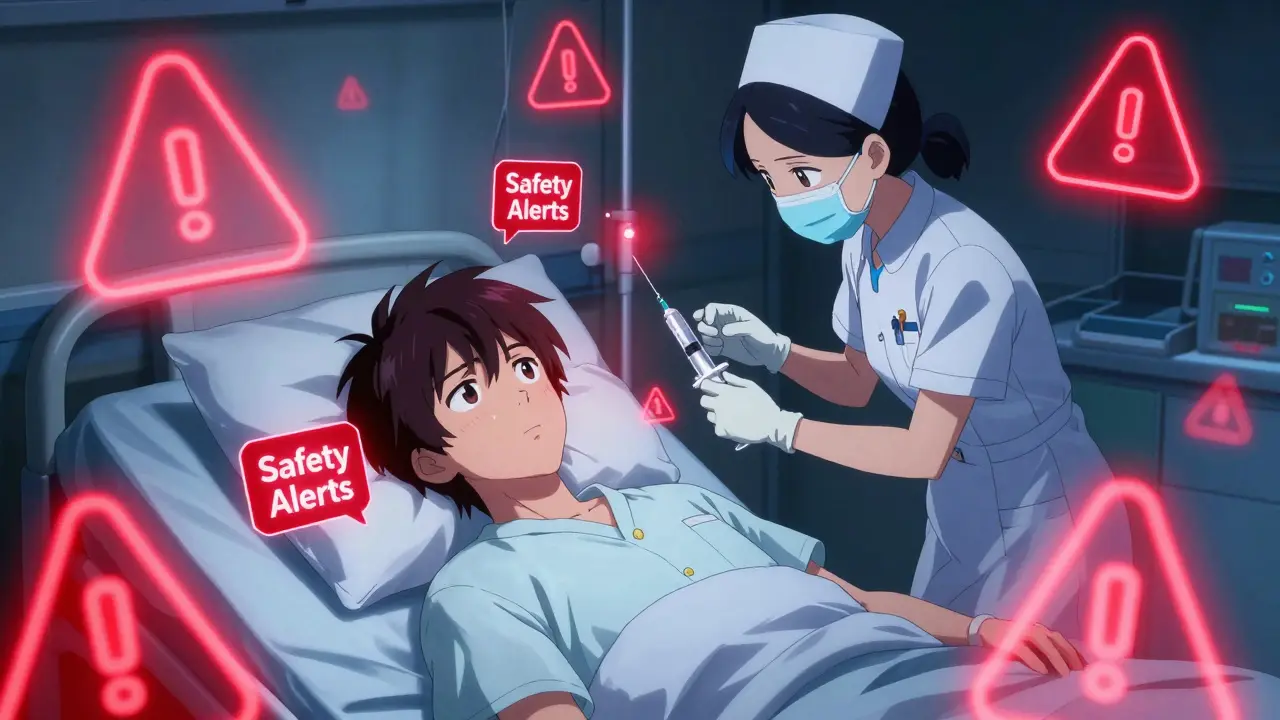
Imagine you’re at a busy hospital, and the nurse is about to give you a shot. You’re tired, maybe a bit confused from surgery, and you just want to rest. But what if that medication has a known risk? What if it interacts badly with something else you take for your heart? This isn’t a scary movie plot; it’s a real scenario where documenting safety alerts on your medication list can be the difference between a smooth recovery and a serious health crisis.
Many people think their medication list is just a piece of paper or a note in their phone. It’s not. It’s a living document that tells every doctor, pharmacist, and nurse exactly what’s going on inside your body. When we talk about documenting safety alerts, we mean adding specific warnings, interaction risks, and dosage cautions directly to this list so that anyone treating you sees them immediately. The Institute for Safe Medication Practices (ISMP) defines high-alert medications as those that carry an increased risk of causing serious harm when used in error. Think insulin, blood thinners like warfarin, or strong painkillers. These drugs save lives, but they need careful handling.
Why Your Medication List Needs More Than Just Names
A standard medication list usually includes the drug name, dose, and frequency. That’s a good start, but it misses the "why" and the "what if." For example, listing "Metformin 500mg twice daily" doesn’t tell a new specialist that you have mild kidney issues which require monitoring. Or that you also take Lisinopril, which can increase potassium levels when combined with certain other meds. By adding safety alerts, you transform a simple inventory into a protective shield.
Research from the World Health Organization shows that properly implemented safety documentation can reduce medication errors by up to 50% in hospital settings. That’s huge. Most errors aren’t caused by malice; they happen because information is missing, unclear, or buried in a thick chart. When you proactively document alerts, you cut through the noise. You are essentially saying, "Hey, watch out for this," before a problem even starts.
What Counts as a Safety Alert?
Not every side effect needs a big red flag. A headache from a cold pill is annoying, but not usually dangerous. Safety alerts focus on risks that could lead to hospitalization, permanent damage, or death. Here are the main categories you should look for:
- Drug-Drug Interactions: When two medicines clash. For instance, taking St. John’s Wort with birth control pills can make the contraception fail. Taking certain antibiotics with blood thinners can cause bleeding.
- High-Alert Medications: Drugs like insulin, opioids, and anticoagulants (blood thinners). These require extra checks because a small dosing error can be catastrophic.
- Allergies and Adverse Reactions: Not just "rash," but specifics. Did you go into anaphylaxis with penicillin? Did you get severe liver enzyme spikes with acetaminophen? Be precise.
- Condition-Specific Warnings: If you have kidney disease, some pain relievers (NSAIDs) can worsen it. If you have glaucoma, certain antihistamines might spike your eye pressure.
- Dosing Frequency Traps: Some drugs, like methotrexate for arthritis, are taken once a week. Mistaking this for a daily dose can be fatal. Marking this clearly is crucial.
Step-by-Step: How to Build Your Alert-Rich Medication List
You don’t need to be a pharmacist to do this. You just need to be organized and honest. Here is a practical way to structure your list.
- Start with a Master List: Write down every prescription, over-the-counter drug, vitamin, and herbal supplement you take. Include the brand name and generic name if you know it. Don’t forget topical creams and inhalers.
- Add the "Why": Next to each drug, write the condition it treats. This helps doctors see if a new prescription duplicates therapy. For example, if you list "Lisinopril for High Blood Pressure" and a new doctor prescribes "Losartan for High Blood Pressure," they’ll spot the redundancy.
- Insert Safety Alerts: Create a separate column or section called "Safety Alerts" or "Warnings." Use bold text or symbols like ⚠️. For each high-risk drug, add the alert. Example: "Warfarin: Check INR weekly. Avoid green leafy vegetables in large amounts. Watch for bruising."
- Note Allergies Clearly: Put allergies at the very top, in red if possible. Specify the reaction. "Penicillin: Hives and swelling" is better than just "Penicillin allergy."
- Update Regularly: Your list changes every time you start or stop a med. Make updating it part of your routine, like brushing your teeth.
Using Technology to Help You
Paper lists are great, but digital tools can automate some of the heavy lifting. Many pharmacies now offer apps that sync with your prescriptions. Apps like Medisafe or MyTherapy allow you to set reminders and add notes. However, technology isn’t perfect. Always double-check that the app has correctly identified your drugs. Sometimes, scanning a barcode picks up the wrong product.
In hospitals, electronic health records (EHRs) use hard-stop verification protocols for high-risk medications. This means the system won’t let a doctor prescribe a dangerous combination without forcing them to acknowledge the risk. As patients, we can’t force these stops, but we can ask questions. "Does this new pill interact with my blood thinner?" is a powerful question. It forces a pause and a check.
Common Pitfalls to Avoid
Even well-intentioned patients make mistakes when documenting alerts. Here are a few things to watch out for:
- Being Too Vague: Writing "Causes drowsiness" is less helpful than "Causes severe drowsiness; do not drive after first dose." Specificity saves lives.
- Ignoring OTC Meds: People often forget to list ibuprofen, aspirin, or melatonin. These can interact with prescriptions. Include everything.
- Outdated Information: A list from three years ago is useless. If you stopped taking a drug, cross it out but keep it visible with a date stopped, so doctors know your history.
- Hiding Side Effects: If you had a bad reaction to a drug in the past, write it down. Doctors might try to prescribe it again if they don’t know your history.
Sharing Your List Effectively
Having the list is half the battle. Using it is the other half. Keep a physical copy in your wallet and a digital version on your phone. Update both simultaneously. When you see a new doctor, hand them the physical list before they even open your chart. Say, "Here is my current medication list with safety alerts. Please review it." This sets the tone for a safe consultation.
In emergency situations, time is critical. Paramedics and ER doctors rely on quick information. Having a clear, alert-rich list can speed up treatment and prevent accidental administration of harmful drugs. Consider wearing a medical ID bracelet that says "See Medication List in Wallet" or lists your most critical allergies.
The Role of Pharmacists in Your Safety Net
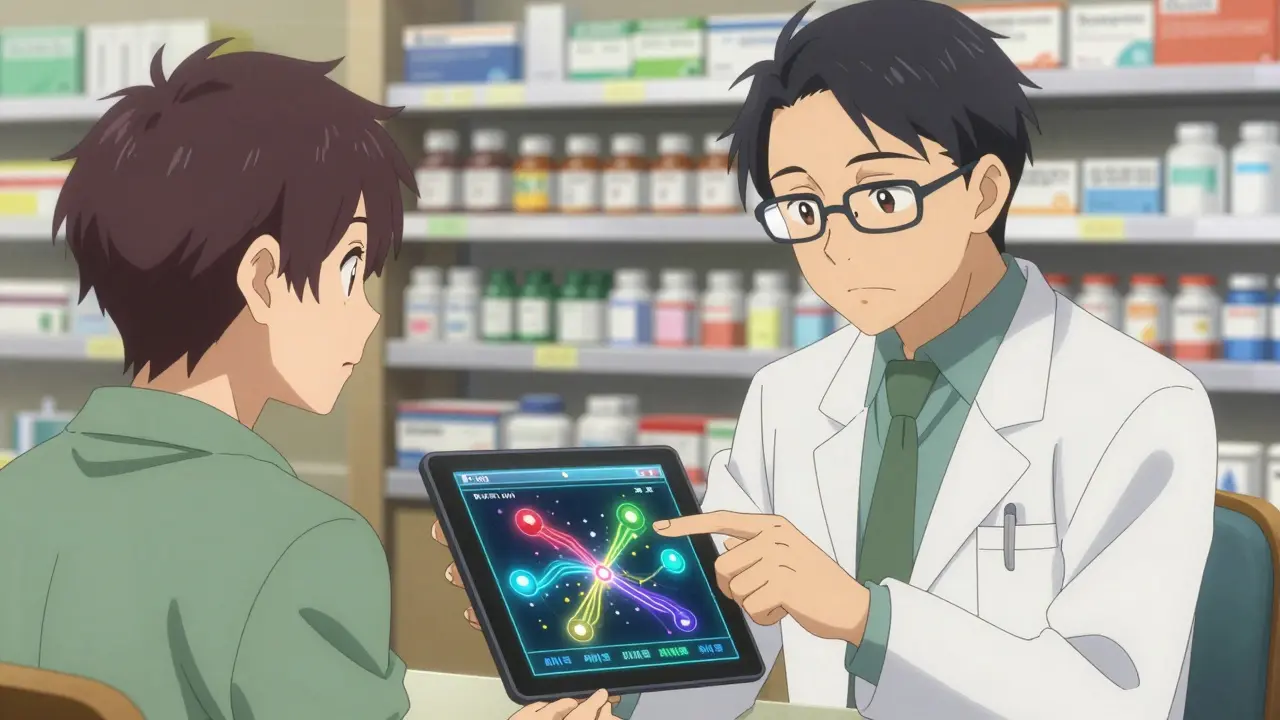
Your pharmacist is your best ally in this process. They are medication experts. Ask them to review your list annually. They can identify interactions that you might miss. They can also help you understand complex alerts. For example, they can explain why you need to monitor your kidney function while taking a certain antibiotic. Don’t hesitate to call them with questions. It’s their job to help you stay safe.
Do I really need to list vitamins and supplements?
Yes, absolutely. Supplements like St. John’s Wort, garlic, ginkgo biloba, and even high-dose Vitamin K can interact with prescription drugs. For example, Vitamin K can counteract the effects of warfarin, a common blood thinner. Listing them ensures your healthcare team has the full picture of what’s in your system.
How often should I update my medication list?
You should update it every time you start, stop, or change the dose of any medication. Aim for a thorough review at least every six months, or whenever you have a major health event like a hospital visit or surgery. Keeping it current prevents outdated information from leading to errors.
What is a "high-alert" medication?
High-alert medications are drugs that carry a higher risk of causing serious patient harm when used in error. Examples include insulin, opioids (like morphine or oxycodone), anticoagulants (like heparin or warfarin), and chemotherapy agents. These require extra caution, double-checks, and clear documentation of dosing instructions.
Can I use an app instead of a written list?
Apps are helpful for reminders and tracking, but they shouldn't replace a shared, accessible list. In emergencies, a paramedic might not have access to your phone or app account. A physical copy in your wallet and a digital backup ensure that critical safety alerts are always available to anyone treating you.
How do I know if a drug interaction is serious?
If you're unsure, ask your pharmacist or doctor. Serious interactions can lead to reduced effectiveness of one drug, increased toxicity, or unexpected side effects. For instance, mixing certain antidepressants can lead to serotonin syndrome, a potentially life-threatening condition. Never assume an interaction is minor without professional advice.

Write a comment
Your email address will not be published.
Recent Posts
-
 Mail-Order Pharmacy Cost Savings: Pros and Cons You Need to Know February 17, 2026
 -
 Methimazole Allergy: Symptoms, Diagnosis & Management Guide October 18, 2025


8 Comments
I mean, honestly, reading this makes me feel like I’ve been doing it wrong my whole life, which is just tragic. It’s not that I don’t care, it’s that the system is designed to make you fail if you’re even slightly tired or confused. The idea that a nurse should be able to figure out your entire medical history from a sticky note in your pocket is absurd. We are setting people up for disaster and then blaming them for not being pharmacists. It’s dramatic, sure, but it’s also the reality of modern healthcare where everyone is rushed and no one has time to actually look at the human in front of them.
people really think they know better than doctors lol. its cute how u think writing stuff down saves u when ur brain is foggy anyway. i have seen so many ppl die because they forgot to update their list or wrote the wrong dose. its not about the list its about being smart enough to remember what u took. stop acting like ur special and just listen to the professionals who actually studied for years instead of reading reddit articles.
Hey Jay, I totally get where you're coming from with the frustration! It feels like we're expected to be perfect little robots in a system that's often chaotic. But hey, let's flip the script and see this as an empowerment tool rather than a burden. Imagine having that peace of mind knowing exactly what's in your system, like having a superpower shield against errors. It’s all about taking charge of our own well-being, right? Let's keep the conversation positive and supportive because every bit of awareness helps us navigate these tricky health waters together!
i agree with mike here. its not about blame its about safety. i work in a clinic and seeing patients bring a clear list changes everything. its like magic how much smoother the consult goes. dont be lazy about it folks. take five mins to write it down. its worth it.
This article is garbage. In India we handle thousands of patients a day without such fancy lists and nobody dies. You people are too soft and dependent on technology. If you cannot remember your own medicine you are useless. Stop whining and start thinking. This is just another way to create anxiety for no reason. Real strength is mental clarity not paper notes.
Oh dear, Aswin, that is quite a harsh perspective! :-( However, I must gently disagree. Safety protocols are universal necessities, not signs of weakness. Every individual deserves the highest standard of care regardless of location. Let us strive for excellence in healthcare documentation everywhere! It brings joy to know that small steps can prevent big tragedies. Stay bright and safe! :)
I used to ignore this advice until my mom had a bad reaction to a mix of meds. Now I keep a binder. It saved her life.
its good to hear real stories like alysa. keeps things grounded. i always tell my kids to track their vitamins too. easy step big reward. thanks for sharing.