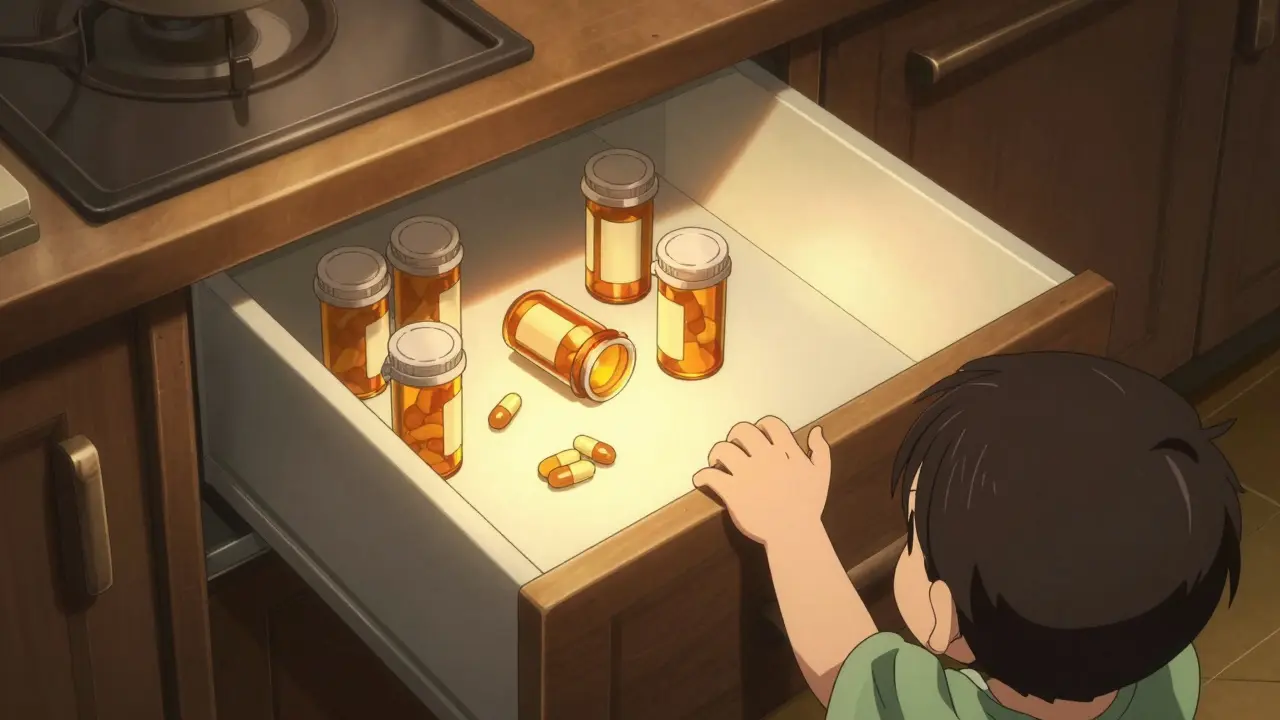
To start, we need to talk about what we actually mean by "high-risk." We're primarily talking about Opioids is a class of drugs used for pain relief that act on the opioid receptors in the brain, including prescription medications like oxycodone and fentanyl. Because these substances can suppress breathing and be highly addictive, they are prime targets for diversion-which is just a fancy way of saying people taking them without a prescription. According to the National Survey on Drug Use and Health, over half of non-medical opioid users get their supply from friends or family members whose drugs weren't locked up.
The Gold Standard: Locked Storage
If you want to actually reduce risk, you have to stop relying on "out of reach" and start relying on "out of access." The CDC (Centers for Disease Control and Prevention) and the FDA (Food and Drug Administration) both emphasize locked storage as the single most effective way to prevent accidental overdoses. A study in the Journal of the American Medical Association Pediatrics found that locked containers reduce accidental pediatric ingestions by a staggering 87%.
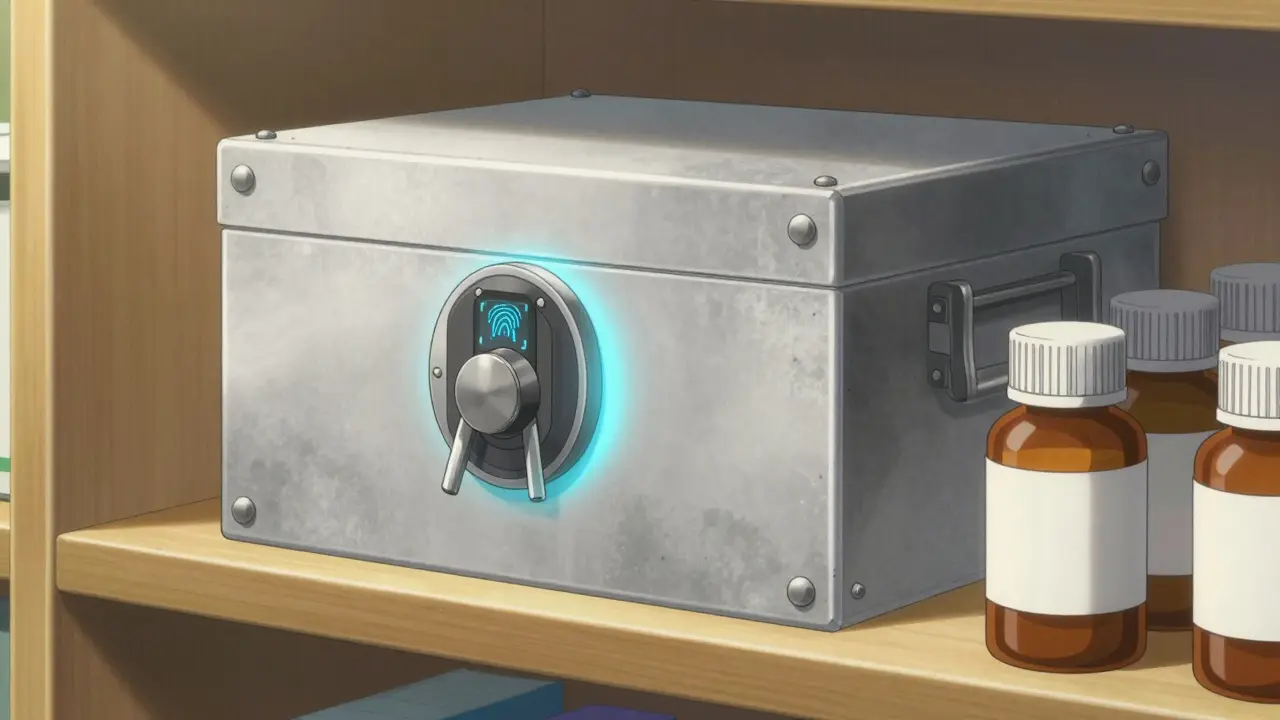
But not all locks are created equal. For real security, look for containers that meet ANSI Grade 2 standards. These aren't just plastic boxes with a latch; they are designed to withstand forced entry for at least 10 minutes. If you're on a budget, a simple steel lockbox from a pharmacy can do the trick, but if you have a history of theft or high-risk individuals in the home, biometric options offer a quicker, more secure way to get your meds without leaving a key lying around that a curious teenager might find.
| Storage Method | Security Level | Effectiveness | Best For... |
|---|---|---|---|
| Open Shelf/Cabinet | None | Very Low | Low-risk supplements |
| Child-Resistant Caps | Low | Moderate (40% reduction) | Daily use, low-risk kids |
| High Shelf (>4 feet) | Moderate | High (73% reduction) | Preventing toddler access |
| Locked ANSI Grade 2 Box | Very High | Highest (87-92% reduction) | Opioids, Benzodiazepines |
Why the Original Bottle Actually Matters
It's tempting to move your pills into a cute daily organizer or a smaller bottle for convenience. However, the Poison Prevention Packaging Act of 1970 exists for a reason. Original containers feature child-resistant caps that provide a critical first line of defense. FDA research shows that medications kept in original packaging have 40% fewer accidental ingestions than those moved to alternative containers.
Beyond the cap, the original label contains the dosage, the prescribing doctor's name, and critical warning signs. In an emergency, if a paramedics arrives at your home, they need to see the exact medication and dose immediately. Trying to guess what "the little white pill in the plastic bin" is costs precious seconds that could save a life. If you must use a pill organizer for convenience, keep the original bottles locked in a separate box and only move a few days' worth of medication at a time.
Location, Location, Location
Where you put your lockbox is almost as important as the lock itself. Many people keep their meds in the bathroom cabinet or on a nightstand. These are the first places children and guests look. The CDC suggests storing high-risk meds at least 4 feet off the ground. Why? Because most children can only reach objects up to 36 inches high. By simply moving your storage from a bedside table to a high shelf, you reduce the chance of child access by 73%.
Temperature also plays a role. Most medications should be kept between 68-77°F (20-25°C). Avoid storing your lockbox in a humid bathroom or near a heater in the kitchen. Extreme temperature shifts can degrade the chemical stability of the drug, making it less effective or, in some cases, dangerous. A cool, dry, high-up closet is usually the sweet spot.
Managing the Daily Routine
Security is great, but if it's too hard to use, you'll eventually stop doing it. This is the "accessibility gap." Many elderly patients with arthritis struggle with child-proof caps and heavy lockboxes, which leads them to leave meds out on the counter. If this is you, look for a locking pill organizer with a 4-digit code or a biometric scanner. These provide security without requiring the fine motor skills needed to turn a tiny key.
For those at the highest risk, tracking is the next step. Maintaining a daily pill count-literally noting "42 tablets remaining at 8:00 AM"-helps you spot diversion immediately. If you notice tablets are missing but you haven't taken them, you know there's a leak in your security. For a more tech-forward approach, smart dispensers like the Hero Health system can log every time a dose is accessed and send alerts if someone tries to open the device outside of the prescribed window.
A Simple 5-Step Setup Guide
Turning your home into a safe zone doesn't have to take all day. You can get this sorted in about an hour:
- Inventory (20 mins): Gather every single prescription in the house. Check for expired meds that need to be tossed.
- Secure Containers (10 mins): Ensure every drug is in its original bottle with the cap tightened.
- Get a Lockbox (30 mins): Purchase a steel lockbox or a biometric safe. Don't settle for a plastic tub with a latch.
- Pick the Spot (5 mins): Find a location at least 4 feet off the ground, away from heat and moisture.
- Set the System (Daily): Decide who has the key/code and start a simple log of your medication counts.
Getting Rid of the Danger
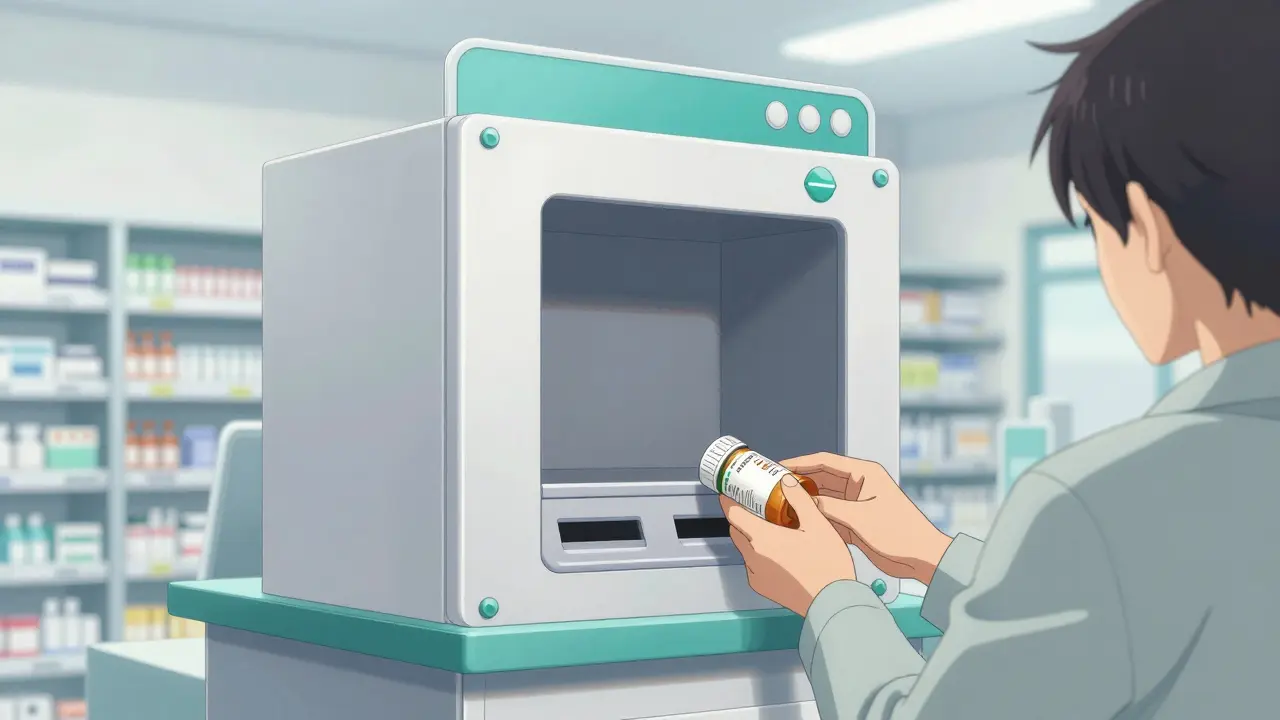
The safest way to store a medication you no longer need is to get it out of your house entirely. Many people keep "just in case" pills in the back of the cabinet for years. These are essentially ticking time bombs. The DEA (Drug Enforcement Administration) runs National Prescription Drug Take Back Days twice a year, but you don't have to wait for those. Many pharmacies now have permanent drop-off kiosks where you can dump your old opioids anonymously.
What should I do if I can't afford a professional lockbox?
If a high-security safe is too expensive, start by moving all medications to a shelf higher than 4 feet. Even a simple plastic bin with a cheap padlock is significantly better than an open cabinet. Additionally, check with your local pharmacy or community health center; some programs provide free or subsidized lockboxes to high-risk patients to prevent diversion.
Are child-proof caps enough to prevent overdose?
No, child-proof caps are a great first layer, but they are not a complete solution. Many children can eventually figure them out, and they provide zero protection against teenagers or adults who might misuse the medication. The only way to truly prevent unauthorized access is a physical lock.
How do I store fentanyl patches safely?
Fentanyl patches are incredibly dangerous if they touch a child's skin. They should be stored in a locked container and, crucially, disposed of according to the manufacturer's instructions (usually by folding the adhesive side together) before being placed in a secure disposal site.
What's the best way to track my medication?
The most reliable method is a manual log where you record the date, time, and remaining pill count. For those who struggle with memory or manual logging, smart pill dispensers provide an electronic trail and reminders, which increases adherence and alerts you to missing doses.
Who can I call if someone accidentally takes the wrong medication?
Immediately call the Poison Help hotline at 1-800-222-1222 (in the US) or your local emergency services. Do not wait for symptoms to appear, as some medications have a delayed effect but can be fatal if not treated early.

Write a comment
Your email address will not be published.
Recent Posts
-
 How to Buy Cheap Generic Azithromycin Online - Safe Tips & Price Guide September 26, 2025
 -
 How Lincomycin Is Used to Treat Ear Infections November 1, 2025


13 Comments
Makes a lot of sense to just keep things high up if a safe is too much.
Actually, the ANSI Grade 2 stuff is totally overkill for most people. Most 'break-ins' at home are just kids or teens who aren't using a blowtorch to get into a pillbox. You're basically paying for a marketing label when a simple key lock does the exact same thing for a tenth of the price.
It is absolutely disgraceful that we even have to talk about this because it shows how the breakdown of the traditional American family unit has left us in a position where we can't even trust the people in our own homes to not steal our medicine, and frankly, if you live in this great country, you should be buying American-made steel safes and not some cheap plastic junk imported from overseas that will break the first time a toddler looks at it, because we need to bring back quality and strength in everything we do if we want to keep our families safe from these tragedies!
Omg I literally tried a biometric safe last year and it failed to read my thumbprint three times in a row while I was in actual pain 🙄!! Like, what is the point of a 'high-tech' solution if it just stresses you out more when you're already hurting?? Totally ridiculous! 💅
There is a certain irony in the way we secure our physical health through locks and keys, reflecting our deeper fear of the vulnerabilities within our own domestic sanctuaries.
The adherence to original pharmaceutical packaging is a matter of profound necessity. One must consider the grave implications of an incorrect dosage during a medical crisis, where the absence of a professional label could lead to irreversible errors by emergency responders.
biometrics are a joke lol imagine thinking a fingerprint scanner is a real security measure in 2024... just get a damn bolt and a chain if you're actually scared
Right, because a 4-digit code is definitely the peak of security for a household. I'm sure no one has ever guessed '1234' in the history of mankind.
I think we should also remember that some people struggle with these locks due to disability or age. It's important to find a balance where we keep children safe without making life impossible for the elderly who need their meds. Maybe we can help each other find more inclusive storage solutions that work for everyone in the family.
Listen, this whole 'locked box' thing is a fancy way of saying you don't trust your cousins! Just hide the pills in a jar of old pickled mangoes or something equally chaotic, nobody will ever look there, not even the most nosy relative in the neighborhood!
It is all so convenient that they want us to use 'pharmacy kiosks' for disposal, but have you actually thought about where those drugs go? They probably just sell them back to the manufacturers or use them for some sinister government experiment to track our genetic markers through the water supply, and this entire guide is just a way to get us to buy more 'certified' safes that probably have built-in microphones to listen to our private conversations in the bathroom because they want total control over every single aspect of our medical privacy!
This whole post feels like an ad for the Hero Health system. Why is it always about buying more gadgets? Just don't leave your drugs on the counter and call it a day. Also, the DEA 'take back' days are a joke, they probably just incinerate them in a way that poisons the air anyway.
I actually agree with the part about keeping the original bottles. I had a scare once where I mixed up two different white pills and the label was the only thing that saved me from a huge mistake.