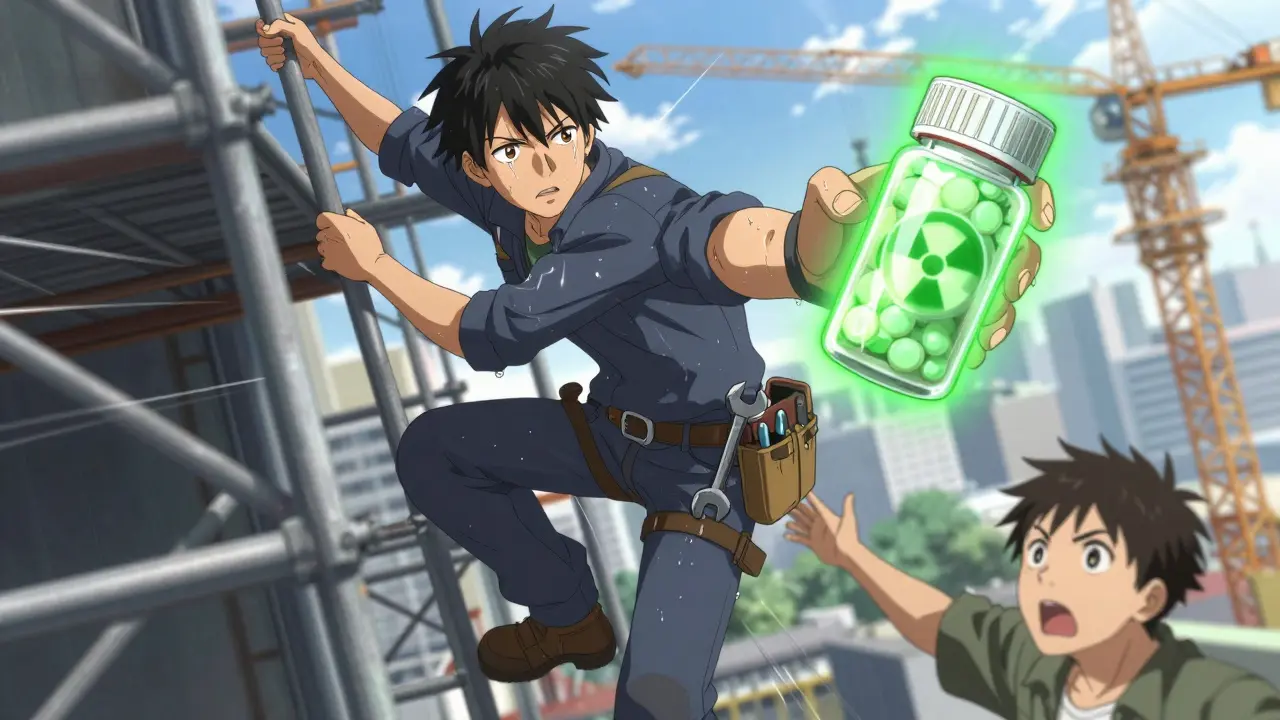
Medication Safety Risk Calculator
How Your Medications Could Impact Safety
Take this 2-minute assessment to understand if your prescription medications might affect your ability to work safely. Many common drugs can cause drowsiness, blurred vision, or slowed reaction time.
When Your Medicine Becomes a Workplace Hazard
It’s not just about getting high or abusing drugs. Millions of workers take prescription medications every day-painkillers for back injuries, anti-anxiety pills for stress, or drugs for chronic conditions-and those same medications can turn their jobs into dangerous situations. At the same time, healthcare workers handling chemotherapy drugs or other toxic substances face risks that aren’t always visible. This isn’t theoretical. It’s happening in hospitals, pharmacies, warehouses, and construction sites across the country. The question isn’t whether medication affects work safety-it’s how much, and what you can do about it.
Two Sides of the Same Problem
There are two very different but equally serious risks when it comes to medications and work safety. The first is when workers take drugs that slow their reaction time, blur their vision, or make them dizzy. Opioids and benzodiazepines are the biggest culprits. A 2018 NIOSH study found that 18.7% of U.S. workers with musculoskeletal injuries were prescribed opioids. Another 7.2% took benzodiazepines for stress. When used together, these drugs increase the chance of a fall or accident by 84%. One anesthesiologist on Medscape described nearly causing a surgical error after taking prescribed painkillers for a back injury. He felt dizzy, nauseous, and couldn’t focus during a procedure. That’s not rare. It’s common enough that OSHA and NIOSH track these incidents.
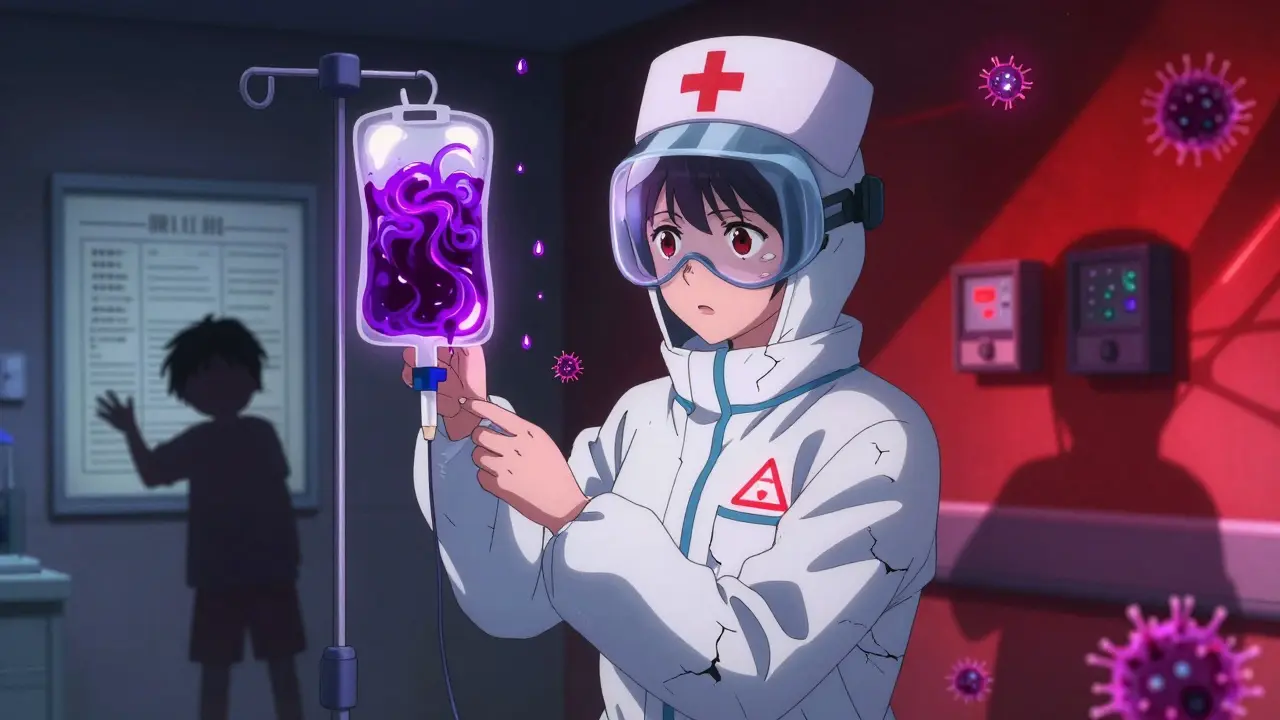
The second risk is for workers who handle hazardous drugs as part of their job. Nurses, pharmacists, lab techs, and cleaners in oncology units are exposed to chemotherapy agents every day. These aren’t just strong medicines-they’re toxic. The 2024 NIOSH list includes 370 hazardous drugs, with 267 being antineoplastic agents used to treat cancer. Exposure happens through tiny droplets in the air, skin contact with contaminated surfaces, or even accidental needle sticks. A nurse on Reddit shared that after three years handling these drugs, she developed chronic skin rashes-even though she followed all safety protocols. Surface tests later showed detectable levels of drugs in 68% of work areas.
How Exposure Happens (And How It Hurts)
Most people think of exposure as spills or accidents. But the real danger is the quiet, daily contact. According to WorkSafeBC’s 2022 analysis, 38% of exposures come from inhaling aerosols or vapors during drug preparation. Another 29% happen when liquid splashes onto skin or eyes. Skin contact with contaminated surfaces-like a counter, IV bag, or even a computer keyboard-accounts for 22%. Even poor hand hygiene can lead to ingestion, which makes up 7% of cases. And yes, needle sticks still happen, making up 4%.
The effects aren’t always immediate. Acute reactions include nausea, vomiting, rashes, and hair loss. But chronic exposure is worse. A CDC meta-analysis of 47 studies found healthcare workers exposed to hazardous drugs have 2.3 times higher risk of reproductive problems-miscarriages, birth defects, infertility. Long-term exposure is linked to a 3.4 times higher risk of certain cancers, according to OSHA’s 2022 review. These aren’t guesses. They’re backed by data from real workers over decades.
What’s Being Done-And Where It Falls Short
There are rules. OSHA’s Hazard Communication Standard (29 CFR 1910.1200) requires labeling and training for hazardous chemicals, including many drugs. NIOSH publishes the official list of hazardous drugs and updates it annually. The U.S. Pharmacopeial Convention’s Chapter 800 sets standards for handling these drugs in pharmacies. But here’s the problem: these rules don’t cover everyone.
OSHA’s standard applies only to about 6.2 million U.S. workplaces. That leaves 1.8 million healthcare workers in smaller clinics, private practices, and home care settings with no federal protection. USP Chapter 800 only applies to compounding pharmacies-about 58,000 workers. That means most nurses in hospital oncology units, pharmacists in retail stores, and cleaners in ambulatory surgery centers are operating under incomplete or inconsistent guidelines.
Even when rules exist, they’re not always followed. CDC’s 2021 field study found that 43% of workers didn’t properly wear gloves, gowns, or masks when handling hazardous drugs. In 31% of facilities, safety cabinets didn’t match the type of drugs being handled. Ventilation systems in 27% of sites were outdated or broken. Training matters, but 16 to 24 hours of initial training isn’t enough if it’s not reinforced. Annual refreshers are required-but often skipped.
What Actually Works
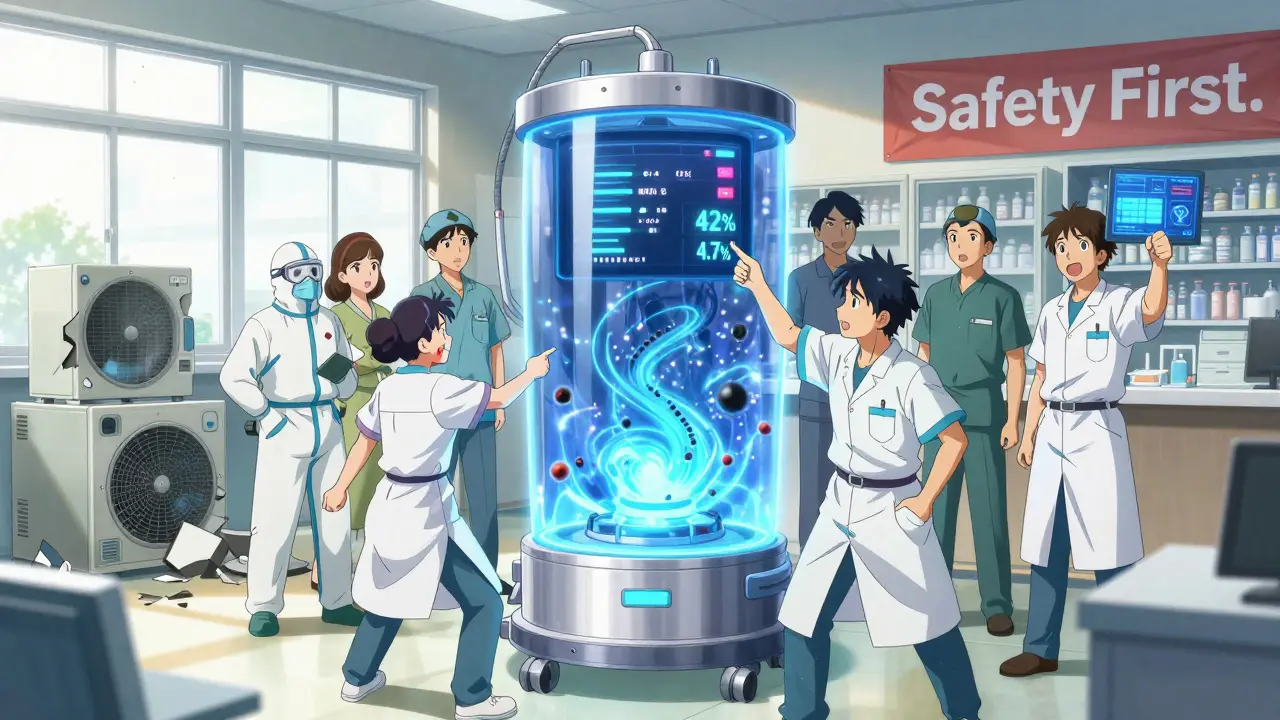
Some places are getting it right. Mayo Clinic reduced hazardous drug exposures by 89% between 2015 and 2020 by combining engineering controls-like closed-system transfer devices-with behavioral training. These devices seal the drug pathway so nothing leaks into the air. WorkSafeBC’s 2021 tests showed they cut surface contamination by 94.7%. The American Society of Health-System Pharmacists surveyed 4,812 workers and found 68% felt safer after these devices were installed.
Unionized workers have 22% fewer medication-related incidents than non-unionized staff, according to AFL-CIO’s 2023 analysis. Why? Better training, stronger safety culture, and more accountability. One pharmacy technician on WorkCompWire said after her facility adopted NIOSH’s 2024 guidelines, surface contamination dropped from 42% to just 4.7% in six months.
Drug-free workplace policies can help too. SureHire’s 2023 analysis of 1,287 workplaces showed a 42% drop in medication-related incidents after implementing these programs. But they’re not perfect. Dr. Robert Gotlin pointed out in the Journal of Occupational Rehabilitation that 32% of workers who needed legitimate medications lost their jobs because of blanket policies-despite no safety incidents. The goal shouldn’t be to ban medication. It should be to manage risk.
What You Can Do Right Now
If you take opioids or benzodiazepines for pain or anxiety, ask yourself: Could this affect my ability to operate machinery, drive, climb ladders, or respond quickly in an emergency? Talk to your doctor. Maybe there’s a non-sedating alternative. If you’re on multiple medications, make sure your prescriber knows your job duties. A 2017 study in the Journal of Occupational and Environmental Medicine showed that combined use of opioids and benzodiazepines is one of the biggest preventable risks in high-risk jobs.
If you work with hazardous drugs, know the NIOSH 2024 list. Check if your facility uses closed-system transfer devices. Ask if air and surface monitoring is done regularly. Make sure you’re trained-not just once, but every year. Wear your PPE correctly. Don’t skip gloves just because it’s “too hot.” A single drop of chemotherapy on your skin can have long-term consequences.
Employers need to do more than post signs. They need to invest in engineering controls, maintain ventilation, and train staff properly. The market for safety equipment is growing-projected to hit $3.8 billion by 2028. That’s because more places are realizing that protecting workers isn’t optional. It’s cheaper than lawsuits, workers’ comp claims, and lost staff.
The Bigger Picture
The economic cost of these incidents is $4.7 billion a year-$2.1 billion in medical bills, $1.8 billion in lost productivity, and $0.8 billion in workers’ compensation. That’s not just a number. It’s real people out of work, families dealing with chronic illness, and employers paying for mistakes that could have been prevented.
There’s progress. The FDA now requires boxed warnings on 27 antineoplastic drugs about occupational exposure risks. NIOSH removed liraglutide and pertuzumab from the hazardous list in early 2024 because newer data showed lower risk. AI systems are being tested at Johns Hopkins to predict exposure risks before they happen. But the biggest change needed isn’t technological. It’s cultural. Safety can’t be an afterthought. It has to be built into every step-from prescribing a painkiller to handling chemotherapy.
Workers shouldn’t have to choose between managing their health and keeping their job. Employers shouldn’t have to risk lives to save money on safety gear. The tools exist. The science is clear. What’s missing is consistent action across every workplace, big or small.
Frequently Asked Questions
Can I be fired for taking prescribed medication at work?
It depends. If your medication impairs your ability to perform your job safely-like operating heavy machinery or handling hazardous substances-your employer may have grounds to restrict your duties. But blanket drug-free policies that remove workers for legally prescribed medications without assessing actual risk are legally questionable and ethically problematic. The Americans with Disabilities Act (ADA) protects workers with medical conditions, and courts have ruled that employers must consider reasonable accommodations. If you’re being penalized for taking medication your doctor prescribed, document everything and consult an employment lawyer.
What should I do if I think I’ve been exposed to a hazardous drug at work?
Immediately wash the affected area with soap and water. If it’s a splash to the eyes, rinse for at least 15 minutes. Report the exposure to your supervisor right away, even if you feel fine. Many effects are delayed. Request a copy of your facility’s exposure incident report and ask for medical evaluation. Keep records of symptoms, dates, and any follow-up care. If your employer doesn’t take it seriously, contact OSHA or your state’s occupational safety agency. Exposure to antineoplastic drugs can cause long-term damage, and early documentation is critical.
Are there safer alternatives to hazardous drugs in healthcare settings?
Yes, but not always. Some newer targeted therapies and biologics have lower toxicity profiles, and manufacturers are starting to design drugs with safer handling in mind. However, many life-saving cancer drugs are still highly toxic. The key isn’t replacing them-it’s controlling exposure. Closed-system transfer devices, proper ventilation, and strict PPE protocols reduce risk dramatically. Some hospitals are switching to pre-filled syringes or ready-to-use formulations to minimize handling. The goal is to make the drug safer to use, not to avoid using it.
How often should workers be trained on hazardous drug safety?
Initial training should be 16 to 24 hours, covering exposure routes, proper PPE use, spill response, and the NIOSH 2024 list. After that, annual refresher training of 4 to 8 hours is required under USP Chapter 800. But training alone isn’t enough. Effective programs include hands-on drills, regular audits, and feedback loops where workers can report safety concerns without fear. The best programs combine training with engineering controls and leadership accountability.
What’s the difference between OSHA and NIOSH guidelines?
NIOSH is part of the CDC and researches workplace hazards. They create the authoritative list of hazardous drugs and recommend best practices. OSHA is the federal agency that enforces safety rules. OSHA’s Hazard Communication Standard requires labeling and training, but doesn’t set specific exposure limits for most drugs. NIOSH’s recommendations are science-based and often more detailed than OSHA’s legal requirements. Many facilities follow NIOSH guidelines even when OSHA doesn’t require them-because they’re the gold standard.
Next Steps for Workers and Employers
If you’re a worker: Know your rights. Ask for training. Report unsafe conditions. Don’t ignore symptoms like rashes, nausea, or fatigue after handling drugs. If you’re on opioids or benzodiazepines, talk to your doctor about how your job might be affected.
If you’re an employer: Don’t wait for an accident. Audit your drug handling procedures. Invest in closed-system transfer devices. Make sure ventilation works. Train staff every year. Update your safety plan with the latest NIOSH list. And most importantly-listen to your staff. They’re the ones on the front lines. Their feedback can prevent a tragedy before it happens.

Write a comment
Your email address will not be published.
Recent Posts
-
 How to Recognize Unsafe Medication Advice on Social Media December 10, 2025

15 Comments
If you're handling chemo drugs and not using a CSTD, you're playing Russian roulette with your fertility. The data is clear.
I'm on gabapentin for nerve pain and work night shifts. My boss asked if I was 'okay to drive' after my last refill. Told him I'd rather lose the job than risk a crash. He didn't argue.
They don't want you to know this but the FDA and NIOSH are in bed with Big Pharma. The 'hazardous drug list' is just a way to push you toward cheaper generics that aren't tested. You think they care about your skin rash? Nah. They care about profit margins. 🤫
This is why I always double-check my gloves. One splash = months of doctor visits. Not worth it. You got this, frontline folks. 💪
Why do we even have jobs anymore? 😒 Just take the meds, don't work, get disability. Problem solved.
This whole thing is a left-wing scam to make us all dependent on government handouts. If you can't handle your job sober, maybe you shouldn't have a job. America doesn't need weaklings.
I used to work ER. Saw a guy on opioids try to lift a gurney. Nearly crushed his own foot. He cried afterward. Not because he got hurt... because he thought he'd lose his job. That broke me.
The NIOSH 2024 list...? How quaint. One must assume, of course, that the methodology behind the categorization hasn't been compromised by institutional bias, peer-review inertia, or the creeping influence of pharmaceutical lobbying... which, frankly, is almost certain.
CSTDs are the real MVPs 🙌 My hospital got 'em last year. Skin rashes? Gone. Stress? Down. My boss even bought me coffee. Small wins, folks.
In India, we don't have fancy gear. But we wash hands 10 times a shift. And we pray. Sometimes that's all you got.
They say 'medications are safe'... but then why do all the nurses get sick? Coincidence? I think not. 🤔
The $4.7B cost? That's just the tip. The real cost is the 12-year-old whose mom got ovarian cancer from handling chemo. No one tracks that. They never do.
You think this is about safety? Nah. It's about control. The government wants you dependent on pills so you don't question the system. The 'hazardous drugs' are just a distraction. Real danger? The surveillance state. The AI monitoring your vitals. The cameras in the break room. They're not protecting you. They're watching you. And when you get sick? They'll say it was your fault for not wearing gloves. But what if the gloves were made in a sweatshop? What if the ventilation system was installed by a contractor who bribed the inspector? You think you're safe? You're just a cog. Wake up.
You misspelled 'chemotherapy' in the third paragraph. And you used 'medications' instead of 'pharmaceutical agents' in three places. This undermines the credibility of your entire argument. Please consult a style guide before publishing.
I work in a pharmacy and I swear, if one more person asks if their pain meds will make them 'high' at work, I'm gonna quit. We're not here to babysit. Just take your pills and go.