
The U.S. Food and Drug Administration (FDA) doesn’t just approve drugs and medical devices - it keeps watching them long after they hit the market. That’s where the MedWatch system comes in. It’s not a flashy app or a high-tech dashboard. It’s a quiet, relentless pipeline of real-world reports from doctors, patients, and manufacturers that helps the FDA spot dangers before they become epidemics. If you’ve ever heard about a drug being pulled or a device recalled, chances are MedWatch played a role.
What Exactly Is MedWatch?
MedWatch, officially called the FDA Safety Information and Adverse Event Reporting Program, started in 1993. It’s the FDA’s main tool for collecting reports about harmful side effects, product failures, and other safety issues tied to medicines, vaccines, medical devices, and even cosmetics. Think of it as the nation’s early warning system for unsafe health products.
It doesn’t just collect reports - it also sends out alerts. When the FDA finds a pattern of trouble, MedWatch broadcasts warnings to doctors, pharmacists, and the public through emails, website updates, and RSS feeds. This dual role - gathering reports and sharing alerts - is what makes it unique. Most other countries’ systems only collect data. MedWatch both listens and speaks.
How Reports Get Into the System
There are two ways reports enter MedWatch: mandatory and voluntary.
Manufacturers, importers, and hospitals are legally required to report serious problems. If a heart monitor fails and causes injury, the company has 30 days to file Form FDA 3500B. If it causes death, they have just five workdays. These mandatory reports make up about 22% of the total.
The rest? They come from you.
Doctors, nurses, pharmacists, and even patients can file voluntary reports using Form FDA 3500. You don’t need to be a scientist. You just need to notice something unusual. Maybe a new blood pressure drug made you dizzy. Maybe a knee implant started making noise after six months. That’s exactly what MedWatch wants to hear.
In 2022, 42% of all reports came from patients and consumers - not professionals. That’s huge. It means everyday people are helping shape drug safety policy.
What Makes a Good Report?
Not every report is useful. A vague entry like “I felt sick after taking this pill” won’t help anyone. The FDA has clear guidelines for what makes a report actionable.
- Exact name of the drug or device (including NDC code or model number)
- When the problem started (e.g., “3 days after first dose”)
- What happened (e.g., “severe rash, swollen face, difficulty breathing”)
- Patient’s age and sex
- Other medications being taken
- Outcome (did they recover? go to the hospital? die?)
- Any lab results or doctor’s notes that support the claim
Dr. Sarah Johnson, an oncologist at MD Anderson, submitted a report in 2019 about unexpected immune reactions to Keytruda. She included detailed lab values and patient histories. That report led to an FDA safety communication within 90 days. She didn’t change the drug - but she helped doctors know what to watch for.
On the flip side, a 2020 ProPublica investigation found that 17% of reports were too vague to analyze. Missing patient age? Unclear timeline? No product ID? That’s data noise. It clogs the system.
The Data Behind the System
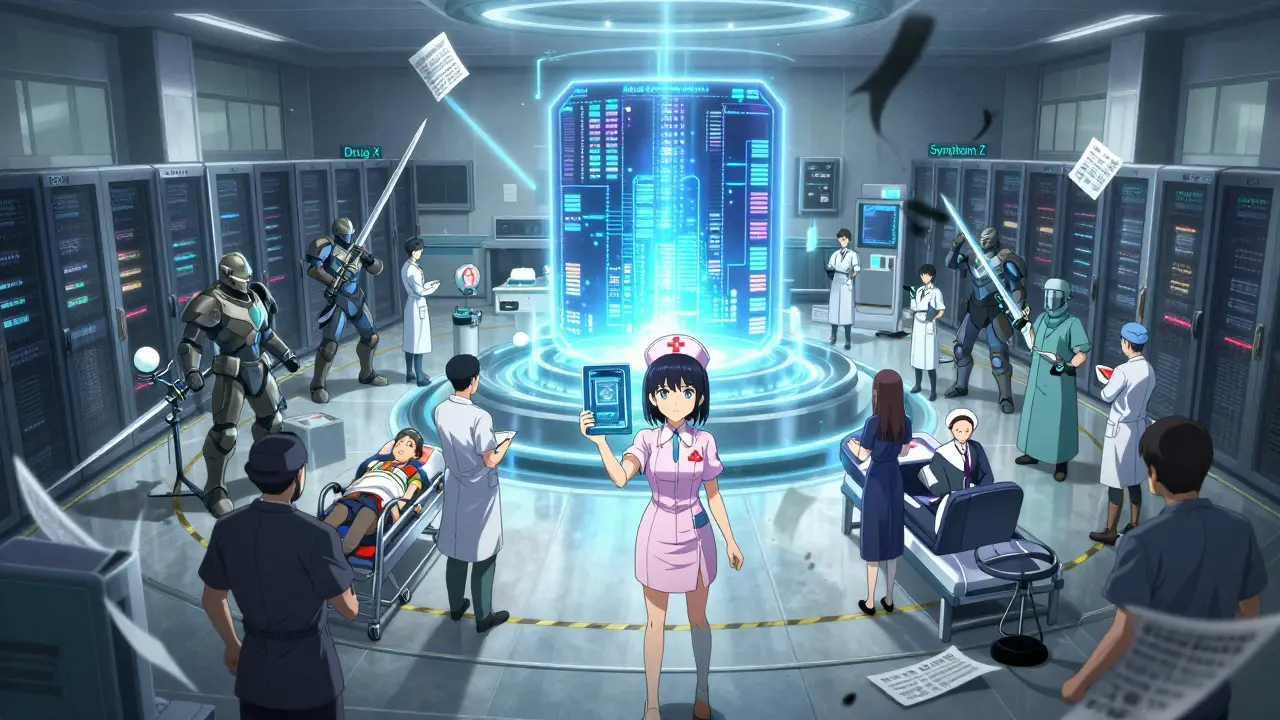
MedWatch feeds into the FDA Adverse Event Reporting System (FAERS), a database holding over 28 million reports as of late 2023. Every year, about 1.2 million new reports pour in.
- 78% are for drugs
- 15% are for medical devices
- 7% are for biologics like vaccines and blood products
The FDA doesn’t just sit on this data. It runs algorithms to find hidden patterns. Tools like the Proportional Reporting Ratio (PRR) and Bayesian Confidence Propagation Neural Network (BCPNN) scan for signals - unusual spikes in reports that suggest a hidden risk.
In 2021, reports of bleeding complications with Xarelto piled up. MedWatch data helped trigger a label update within months. In 2022, reports of breast implant complications led to the recall of Allergan’s BIOCELL textured implants - all because of reports filed through MedWatch.
Dr. Janet Woodcock, former FDA Commissioner, said MedWatch reports contributed to 37% of all FDA safety communications between 2015 and 2020. That’s not a small number. That’s foundational.
Where It Falls Short
MedWatch is powerful - but it’s not perfect.
The biggest problem? Underreporting. Experts estimate only 1% to 10% of all adverse events are ever reported. Why?
- Time: A full report takes 15-20 minutes. For busy doctors, that’s hard to justify.
- Confusion: Many don’t know what counts as reportable. Is a mild rash serious? What if the patient had another illness?
- Fear: Some worry reporting could lead to lawsuits or blame.
A 2022 National Consumers League survey found 68% of patients gave up trying to file a report because the forms were too technical. One woman wrote: “I didn’t know what ‘hypotension’ meant. I just knew I passed out.”
The Government Accountability Office called this a “systemic flaw.” Without more reports, even the smartest algorithms can’t spot risks.
What’s Changing? New Tools, New Hope
The FDA knows MedWatch needs an upgrade. In September 2023, they launched MedWatch Direct - a new API system that lets electronic health records (EHRs) send reports automatically.
Systems like Epic and Cerner are now testing it. If it works, a doctor’s note saying “patient developed liver enzyme spike after starting drug X” could auto-generate a MedWatch report. No extra clicks. No paperwork.
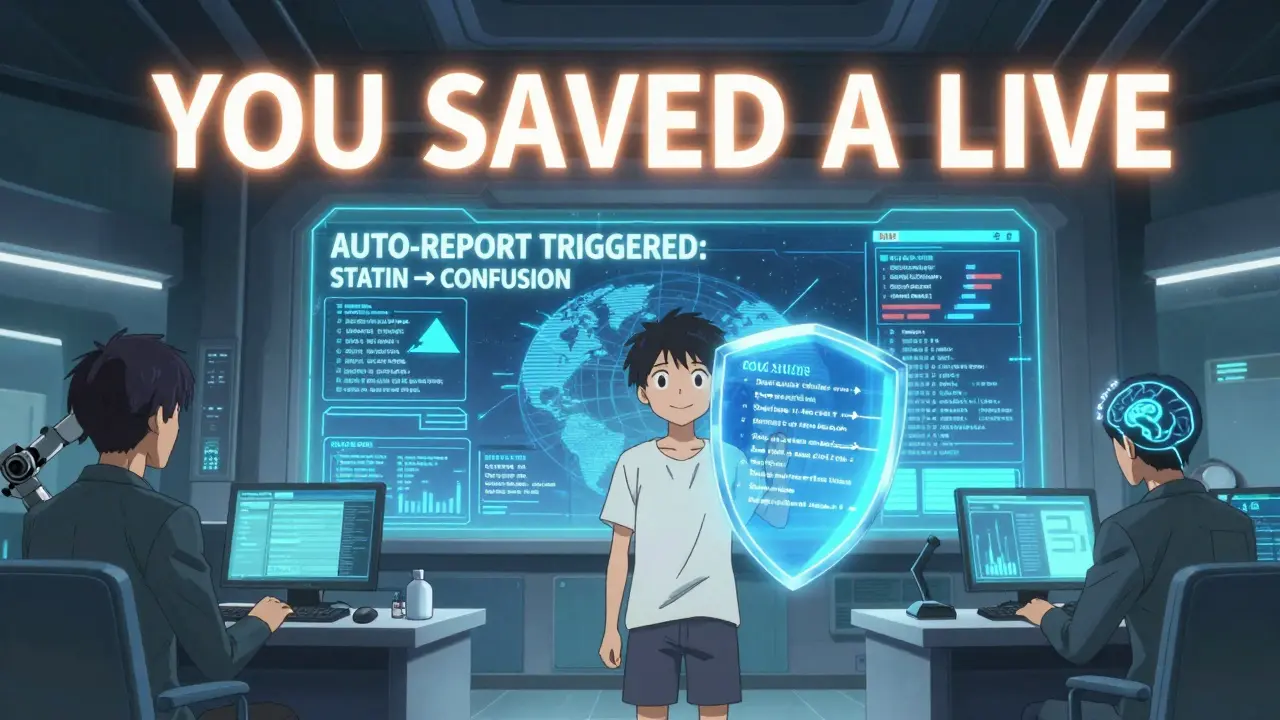
By Q2 2024, the FDA plans to use AI to scan clinical notes for hidden adverse events. If a doctor writes “patient had sudden confusion after new statin,” the system could flag it without a human needing to submit a form.
Blockchain verification for report authenticity is coming in late 2024. And the number of full-time analysts is slowly rising - from 120 in 2023 to 140 planned for 2025.
But tech alone won’t fix this. The real fix? Education. Empowerment. Making reporting easy.
What You Can Do
You don’t need to be a doctor to help.
If you or someone you know had a bad reaction to a medication or device - even if you’re not sure it was the product - file a report. Go to www.fda.gov/medwatch. It’s free. It’s anonymous. And it matters.
Use the FDA’s online decision tree tool. It asks simple questions like: “Did the patient go to the hospital?” or “Was the event life-threatening?” It tells you whether to report - and what to include.
Even one report can tip the scale. A single report helped trigger the Xarelto label change. One report helped identify a dangerous interaction between a common antibiotic and a diabetes drug. One report saved someone else’s life.
MedWatch isn’t magic. It’s made of people - doctors, patients, manufacturers - who care enough to speak up. You can be part of that.
Is MedWatch only for drugs?
No. MedWatch covers prescription and over-the-counter drugs, biologics (like vaccines), medical devices (pacemakers, implants, monitors), combination products (like drug-eluting stents), and even cosmetics. If it’s regulated by the FDA and used by people, it’s in scope.
Can I report an adverse event if I’m not a healthcare professional?
Yes. In fact, 42% of reports in 2022 came from patients or family members. You don’t need medical training. Just describe what happened, when, and with what product. The FDA provides clear forms and tools to guide you.
How long does it take for the FDA to act on a MedWatch report?
It varies. For life-threatening signals, like the 2021 breast implant recall, the FDA can act in under 45 days. For less urgent issues, analysis may take months or even years. The system prioritizes reports that show clear patterns - not isolated incidents.
Are reports anonymous?
Yes. You can file a report without giving your name. The FDA does not share personal identifiers with manufacturers or public databases. Your identity is protected under federal privacy rules.
What if I’m not sure the product caused the problem?
Report it anyway. The FDA doesn’t require proof of causation. They look for patterns. If five other people report the same reaction after using the same drug, that’s a signal - even if no single case proves the link. Uncertainty is exactly why the system exists.
Final Thought
MedWatch isn’t perfect. It’s slow, underfunded, and underused. But it’s the only system in the U.S. that lets patients help protect other patients. Every report - no matter how small - adds to a bigger picture. And that picture? It saves lives.

Write a comment
Your email address will not be published.
Recent Posts
-
 How to Organize a Medication List for Caregivers and Family January 20, 2026
 -
 Best Online Drug Databases and Resources for Patients December 4, 2025
 -
 Betamethasone for Urticaria: How It Works, Benefits & Risks September 14, 2025
14 Comments
I used to think these reports were just paperwork until my mom had a bad reaction to a new blood pressure med. I filed a report on a whim. Three months later, the FDA added a warning. Turns out, 12 other people had the same thing. Just shows how much one person can do. No heroics needed, just speak up.
Also, the forms aren't that bad. I did it on my phone while waiting for my kid's soccer game.
Honestly? I love that patients are reporting. In the UK, we have the Yellow Card system, but it's so... quiet. No one talks about it. Here, you've got grandmas filing reports like it's a TikTok trend. And honestly? That’s the secret sauce. Real people noticing real weird shit. The system’s not perfect, but it’s alive. And that’s more than most countries can say.
I just filed my first report last week after my dad’s knee implant started squeaking like a rusty door hinge. I was like ‘is this even reportable?’ and then I read that 42% of reports come from patients and I was like OH SHIT I’M PART OF THIS NOW. I included every detail I could think of - even the color of the hospital gown. (It was pale blue. I remember because it matched the curtains and I thought ‘this is the last time I’ll ever see this exact shade of blue.’) I don’t know if it matters but I needed to do it. Like I owed it to the next guy who gets one of these things.
Stop pretending this system works. The FDA is just another bureaucracy that collects data and does nothing. I’ve seen 3 different drugs get pulled over 10 years and each time it took YEARS. Meanwhile people are dying. Just give us the raw data and let the market decide. Government can’t be trusted to run safety systems.
I’m a nurse in Toronto and I’ve submitted 17 reports in 5 years. I’ve seen firsthand how one report can trigger a chain reaction. Last year, I reported a pattern with a new diabetes drug - 5 patients, same symptom, same timing. FDA responded in 6 weeks. That’s faster than my insurance company approves a CT scan. If you’re a healthcare worker or even just someone who uses meds - file. Don’t wait for someone else to do it.
Let’s be real - most of these reports are garbage. I work in pharma data analytics. Half the submissions are ‘I took aspirin and felt weird’ with no dates, no dosage, no lab results. It’s like trying to find a needle in a haystack made of napkins. The AI upgrades are long overdue. But even then, we’re still chasing ghosts. The real problem? The system rewards quantity over quality. And that’s why it’s broken.
You don’t need to be a doctor. You don’t need to be smart. You just need to care enough to type a few sentences. I reported my niece’s reaction to a vaccine. No one knew who I was. But that report? It got grouped with 11 others. Led to a new warning label. That’s power. That’s your voice. Use it.
I’ve been thinking about this a lot since my cousin passed away after a routine surgery. The implant failed. The hospital said ‘it’s rare.’ But I dug into MedWatch and found 14 other similar cases over two years. No one talked about it. No one knew. I filed a report. It took me 45 minutes. I cried the whole time. But here’s the thing - I didn’t do it for justice. I did it because I couldn’t stand the idea that someone else might go through it and think they were alone. The system’s flawed. But it’s the only thing we’ve got. And sometimes, that’s enough.
The FDA doesn’t even use 80% of the data. All the fancy algorithms? They’re just for show. Real decisions are made by committee meetings where someone says ‘well, we’ve seen this before.’ The whole thing’s a theater. Patients think they’re helping. They’re just filling out forms for a machine that doesn’t care.
Just filed my first one. Used the decision tree. It was like a quiz. ‘Did you go to the ER?’ Yes. ‘Was it life threatening?’ Hmm. Maybe. ‘Do you have a receipt for the product?’ Nope. Still submitted. Felt good. Like I did something. Not because I think it’ll change the world. Just because I didn’t want to sit there wondering ‘what if I’d said something?’
This is why America is falling apart. You let every uneducated person submit reports based on feelings. In India, we have Ayush - traditional medicine systems that don’t rely on Western bureaucracy. You think a grandma in rural Ohio knows what a ‘hypotension’ is? No. She thinks her pills are cursed. This system is built on fear and ignorance. We need structure. Not chaos.
Bro I just want to say that the AI scanning clinical notes is like the future is here 😍 I mean imagine your doctor writes ‘patient had sudden confusion’ and BAM - auto-report to FDA 🤯 blockchain verification? 🔥 I’m so hyped for 2024. This is the kind of innovation that’ll save millions. We need more like this. Stop overthinking. Just build. The people will come. 🙌
Report it. It takes five minutes. You don’t need to understand the science. Just write what happened. The system will do the rest.
I’ve been reading all these comments and I just want to say - thank you. To the nurses who report. To the grandmas who file. To the people who still care even when no one’s watching. This isn’t about bureaucracy. It’s about showing up. Even when it’s messy. Even when it’s slow. Even when you’re not sure it matters. You’re still here. And that’s what changes things.