Getting your prescriptions delivered to your door sounds like a dream-especially if you’re juggling multiple medications, have a busy schedule, or live far from a pharmacy. But is it really saving you money? Or are there hidden catches? Let’s cut through the noise and look at what mail-order pharmacies actually do, who benefits most, and where things can go wrong.
How Mail-Order Pharmacies Actually Work
Mail-order pharmacies aren’t just online drugstores. They’re part of a system run by Pharmacy Benefit Managers (third-party administrators that manage prescription drug programs for health plans). Companies like Express Scripts, CVS Caremark, and OptumRx handle everything: filling prescriptions, managing insurance claims, and shipping meds directly to your home.
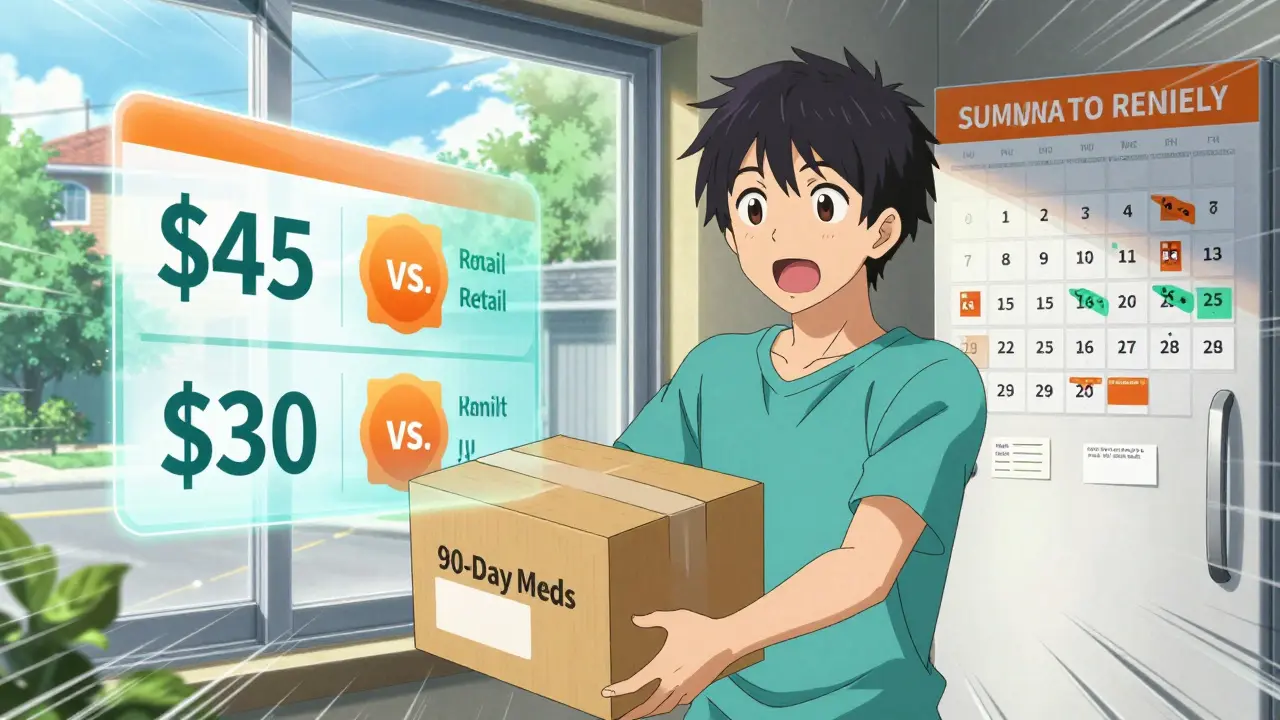
The big idea? You get a 90-day supply of your maintenance meds-like blood pressure pills, diabetes drugs, or cholesterol meds-instead of a 30-day refill. And here’s the math: if a 30-day supply costs $15, a 90-day supply through mail-order often costs $30, not $45. That’s two months’ worth of pills for the price of two, not three. That’s where the savings start.
Most major health plans include this as a standard benefit with no extra fees. You don’t need a special insurance plan. You just need to choose it.
The Real Cost Savings
Let’s be clear: the savings aren’t magic. They come from efficiency. Mail-order pharmacies use automated systems to fill hundreds of prescriptions at once. No waiting in line. No staff handling individual transactions. That cuts overhead.
According to the Pharmaceutical Care Management Association (PCMA), mail-order pharmacies offer median discounts on brand-name drugs that are 4 to 7 percentage points better than retail pharmacies. That might sound small, but if you’re taking three or four maintenance meds, it adds up fast. One user on Reddit reported saving $120 a year on just three prescriptions using Express Scripts.
And it’s not just about the price per pill. Mail-order pharmacies have higher generic substitution rates. That means they’re more likely to give you the cheaper, same-effect version of your drug. That’s another layer of savings built into the system.
For people on Medicare Part D or employer-sponsored plans, this isn’t optional-it’s often the default option for long-term meds. And if you’re switching from retail, you might be surprised how much less you pay out of pocket.
Why Adherence Goes Up
Saving money is great, but the real win? Taking your meds as prescribed.
A 2011 study in PubMed Central found that people using mail-order pharmacies were 5% to 15% more likely to stick with their treatment for conditions like high blood pressure, diabetes, or high cholesterol. Why? Because they don’t have to remember to refill every month. Their meds arrive automatically. No missed trips. No running out.
For someone with mobility issues, a chronic illness, or a hectic job, this matters. It’s not just about convenience-it’s about health outcomes. Skipping doses can lead to hospital visits, which cost way more than a few extra dollars on prescriptions.
And here’s something most people don’t realize: mail-order pharmacies use electronic systems to check for dangerous drug interactions across all your prescriptions-even if you’ve filled some at different pharmacies. That’s a safety net most retail pharmacies can’t offer unless you’ve told them every single med you’re on.
Where Mail-Order Falls Short
It’s not perfect. And it’s definitely not for everyone.
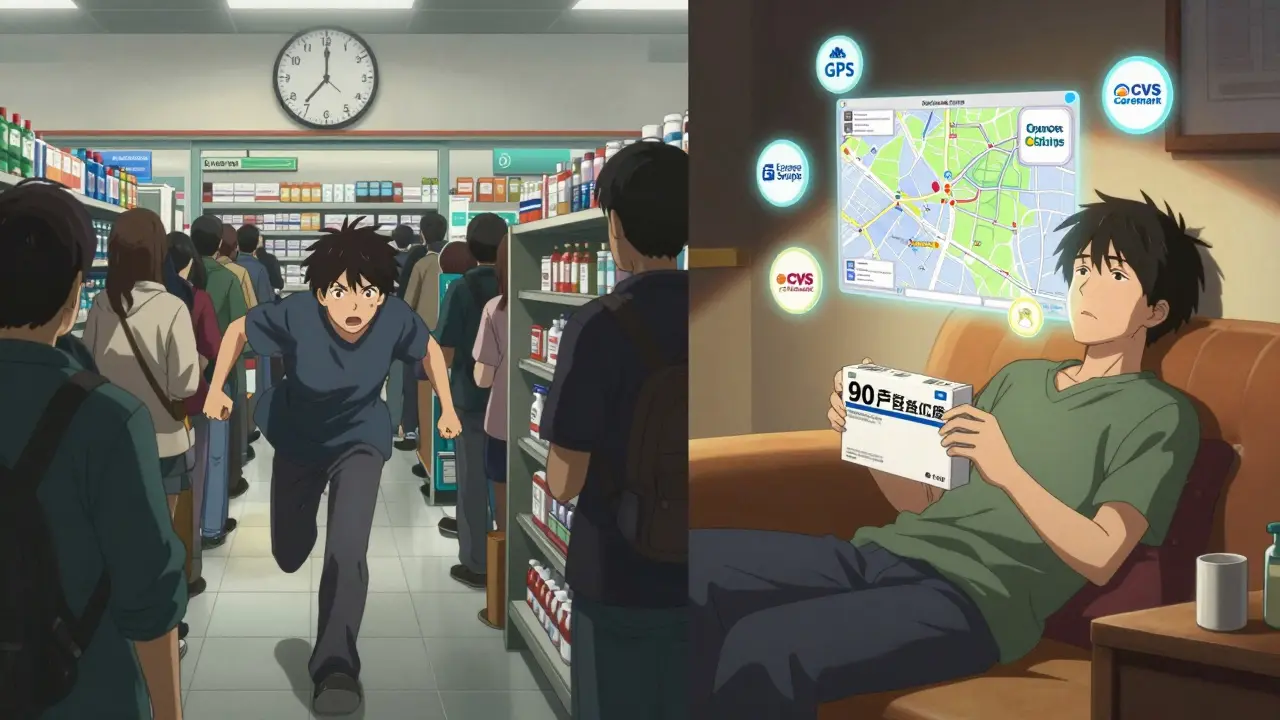
First, you can’t use it for acute meds. Need antibiotics for a sudden infection? A painkiller after surgery? A new prescription you need right now? Mail-order won’t cut it. Delivery takes 5 to 7 business days. That’s too slow when you’re in pain or sick.
Second, delivery fails. About 0.5% of shipments get lost, damaged, or delayed. One user shared that their blood pressure meds were lost in transit and they had to pay full price at Walgreens for an emergency refill. That kind of thing isn’t common-but when it happens, it’s stressful and expensive.
Third, not all plans make it easy. Some require you to switch your entire prescription history over. If your doctor hasn’t sent the new prescription yet, or your old pharmacy won’t release it, you could be stuck without meds for days. About 32% of new users in a 2024 Kaiser Family Foundation survey said this was their biggest headache.
And if you rely on face-to-face advice from your pharmacist? Mail-order doesn’t offer that. You get phone support, but you can’t walk in and ask, "Does this pill look different?" or "Can I take this with my grapefruit juice?"
Who Benefits the Most?
Mail-order pharmacy services shine for people who:
- Take 2 or more long-term medications (like statins, insulin, or thyroid pills)
- Live in rural areas with no nearby pharmacy
- Have trouble getting to the store due to mobility, transportation, or time constraints
- Prefer automatic refills and don’t want to remember monthly trips
- Are on a health plan that heavily subsidizes mail-order (most do)
If you’re young and healthy, only take one med a year, and love going to your local pharmacy? Skip it. But if you’re managing a chronic condition, this system is designed for you.
How to Get Started
It’s easier than you think.
- Check your health plan’s website or call customer service. Ask if they use Express Scripts, CVS Caremark, or OptumRx.
- Log in to their mail-order portal. Most have simple online forms.
- Enter your prescription info. You’ll need your doctor’s name, the drug name, and your insurance details.
- Choose your delivery address. Most allow P.O. boxes or home delivery.
- Set up automatic refills. This is the key to avoiding gaps in coverage.
Most people complete their first order in under 15 minutes. Blue Cross NC found that 78% of new users got through setup without help.
Need help? Every major PBM has a 24/7 phone line. No waiting on hold for hours. Just call, explain your issue, and they’ll fix it.
What’s Changing in 2026
Mail-order is getting smarter. In early 2024, Express Scripts started offering real-time GPS tracking for every shipment. You can now see exactly where your meds are-like a package from Amazon.
CVS Caremark announced in March 2025 that they’ll roll out same-week delivery to 85% of U.S. addresses. That means you might get your meds in 3 days instead of 7.
And cold-chain delivery is expanding. If you’re on biologic drugs that need refrigeration-like some arthritis or cancer treatments-you’ll now get them shipped with temperature-controlled packaging.
But there’s a threat. The 2023 Lower Drug Costs Now Act (H.R.3) could limit how much insurers can charge different prices for mail-order vs. retail. If passed, it might erase up to 40% of the savings you currently enjoy. Right now, it’s still under review-but it’s something to watch.
The Bottom Line
Mail-order pharmacies aren’t a magic fix. But for people on long-term meds, they’re one of the most reliable ways to save money, stay on track with treatment, and reduce hassle. The savings are real. The safety improvements are backed by data. And the convenience? Unmatched.
Just don’t use it for urgent needs. Keep a 30-day supply at your local pharmacy for emergencies. And if you’ve been paying full price at the counter for years, switching could save you hundreds-maybe even over a thousand-each year.
It’s not about choosing between mail-order and retail. It’s about using both wisely.
Can I use mail-order pharmacy for all my medications?
No. Mail-order is designed for maintenance medications-drugs you take daily or weekly for chronic conditions like high blood pressure, diabetes, or cholesterol. It’s not meant for acute needs like antibiotics, painkillers after surgery, or new prescriptions you need right away. Always keep a 30-day supply at your local pharmacy for emergencies.
How long does it take to get meds from a mail-order pharmacy?
Most mail-order pharmacies deliver within 5 to 7 business days after your prescription is approved. Some new services, like CVS Caremark’s 2025 update, are testing same-week delivery for 85% of U.S. addresses. First-time orders may take longer if your doctor needs to send the prescription or if there’s an insurance hold.
Is mail-order cheaper than my local pharmacy?
For 90-day supplies of maintenance meds, yes-usually. A 90-day supply often costs the same as two 30-day supplies at retail. That means you pay for 60 days’ worth of pills but get 90. If your 30-day copay is $15, your 90-day mail-order cost is typically $30, not $45. That’s a 33% savings per cycle.
What if my mail-order meds are lost or damaged?
If your shipment is lost, damaged, or delayed, contact the pharmacy benefit manager’s customer service immediately. Most have 24/7 support lines. They’ll usually send a replacement at no cost. But until then, you may need to pay out of pocket for an emergency refill at a local pharmacy. Keep your pharmacy’s phone number handy.
Do I need to switch all my prescriptions to mail-order?
No. You can choose which meds to send through mail-order. Most people keep their acute or occasional meds at a local pharmacy and use mail-order only for long-term prescriptions. Talk to your pharmacist or plan administrator to set up a mix that works for you.

Write a comment
Your email address will not be published.
Recent Posts
-
 Monoclonal Antibody Biosimilars: Examples and Clinical Uses November 19, 2025
 -
 MedWatch System Explained: How FDA Tracks Drug and Device Safety February 7, 2026
 -
 Buy Cheap Generic Doxycycline Online - Safest Guide 2025 October 12, 2025
14 Comments
So let me get this straight - the government and Big Pharma are teaming up to push mail-order pharmacies so they can track every pill you take? 🤔 I’ve heard they’re embedding microchips in the packaging now. Next thing you know, your insulin pump will be reporting your blood sugar to a server in Virginia. And don’t even get me started on how Express Scripts sells your data to advertisers. "Oh, you’re on statins? Here’s a coupon for red meat!" This isn’t savings - it’s surveillance with a side of savings.
I don’t trust any of this. America used to be about local pharmacies - the guy who knew your name, your dog’s name, and that you hated grapefruit juice. Now? Some guy in Ohio fills your meds while you’re asleep. And don’t even mention the "90-day supply" - that’s just a way to lock you in. What if you die? Or move? Or get divorced? Your meds are now tied to a corporate portal that doesn’t care if you’re alive or not. This is socialism disguised as convenience.
Oh honey, if you think mail-order is just about saving money, you’re not looking at the full picture. I’ve been on 5 meds for 8 years. I used to drive 45 minutes to the pharmacy, wait 20 minutes, then drive home. Now? I wake up, check my inbox, and boom - meds show up like Amazon Prime. No more forgetting. No more "oops, I’m out" panic. And yeah, I saved $300 last year. But the real win? I didn’t have to explain to my boss why I was late AGAIN because I was stuck at CVS. This isn’t magic. It’s just… smart.
I think this is actually kind of beautiful. People forget that healthcare isn’t just about pills - it’s about consistency. If you’re managing diabetes or heart disease, missing a dose isn’t a minor thing. It’s a domino effect. Mail-order removes the friction. No more running out. No more "I’ll do it tomorrow." And the drug interaction checks? That’s not a gimmick - that’s lifesaving. I used to think it was impersonal. Now I see it as… quietly revolutionary. Also, I love that they’re doing GPS tracking. My mom’s meds showed up at 3 a.m. last week. She was awake anyway. She took them. She smiled. That’s the kind of detail that matters.
In the grand tapestry of human existence, we are but threads woven by systems beyond our comprehension. The mail-order pharmacy is not merely a logistical innovation - it is a metaphysical shift in the relationship between the individual and the pharmaceutical apparatus. The automation of care, while efficient, subtly erodes the sacred ritual of human interaction - the pharmacist’s nod, the whispered question, the shared silence over a bottle of pills. Yet, in this mechanized embrace, we find an unexpected liberation: freedom from the tyranny of time, from the burden of memory, from the chaos of daily life. Is this progress? Or merely a more elegant cage? I do not know. But I take my pills on time. And I am grateful.
You know who benefits most from this? Not you. Not me. The Pharmacy Benefit Managers. They’re the middlemen. They’re the ones who decide which generics you get. Which drugs get blacklisted. Which doctors get pressured. And guess what? They’re owned by the same companies that make the drugs. So when they say "we save you money," what they really mean is "we’re cutting out the retail pharmacy so we can control the entire pipeline." And the "safety checks"? Those are just为了让 you feel safe while they quietly raise prices on the drugs you can’t live without. Wake up. This isn’t convenience. It’s consolidation.
This is what happens when you let corporations run healthcare. Back in the UK, we had real pharmacists. Real people. Real advice. Now we’ve got a system where your meds arrive in a box with a QR code and a robot voice saying "Your prescription is ready." We don’t need efficiency. We need humanity. And if you’re okay with this, you’re already part of the problem. We’re not just losing money - we’re losing our dignity.
I’ve been using mail-order for my diabetes meds for three years now. The savings? Real. The convenience? Unbelievable. But here’s the thing nobody talks about - the refill automation saved my life. I was in a car accident last year. Broke my wrist. Couldn’t write. Couldn’t sign. Couldn’t even hold a pill bottle. But my meds? Came on time. No drama. No stress. No "oh no, I’m out." That’s not luck. That’s design. And yeah, sometimes the package is late. But when it happens? You call. They fix it. No judgment. No attitude. Just service. That’s more than I can say for my old pharmacy. They once told me to "just go to CVS." Like it was a suggestion.
i just want to say that mail order saved me so much stress i cant even tell you. i have crohns and take 6 meds a day. used to be a nightmare. now i get a box every 3 months. i dont even think about it. also, the 24/7 phone line? life saver. i called once because my pills looked different and they sent a pharmacist to call me back within 10 mins. no joke. i cried. its not perfect but its way better than the old way. ps. dont forget to set up auto-refills. trust me.
You people are naive. You think this is about convenience? It’s about control. Every time you sign up for mail-order, you surrender your autonomy. You allow a third-party corporation to dictate which medications you receive, which substitutions they make, and when you get them. You’re not saving money - you’re trading your agency for a discount. And let’s not pretend the "safety checks" are altruistic. They’re there to prevent you from getting drugs that might interfere with their profit margins. If your doctor prescribes a brand-name drug, they’ll fight it. If you want generics? Fine. But you’re not being helped - you’re being managed. And if you’re okay with that, you’ve already lost.
I love this so much!! 🙌 I used to forget to refill my thyroid med every month and then panic for two weeks. Now? It just shows up. And the fact that they check interactions? I’m on 4 meds and I didn’t even know one of them was risky with my supplements - they flagged it! I’m so grateful. Also, the tracking? I’ve watched my meds go from Ohio to my porch like it’s a Netflix show. It’s weirdly satisfying. 🥰
I used to think mail-order was for old people. Then I started taking my cholesterol pills. I’m 32. I work 60-hour weeks. I don’t have time to drive across town for a $15 pill. The first time I got my 90-day supply, I did the math: $30 instead of $45. I saved $15. Then I realized - I didn’t have to spend 45 minutes driving, waiting, and arguing with the pharmacist about my insurance. That’s not just money. That’s time. That’s peace. That’s my life back. And yeah, I keep a 30-day backup at my local pharmacy. But 90%? Mail-order. No regrets.
The term "mail-order pharmacy" is a euphemism for pharmaceutical outsourcing. The real story isn’t about savings - it’s about the commodification of healthcare delivery. The PBM model operates under a fiduciary duty to shareholders, not patients. The 4–7% discount? That’s the illusion. The real cost is the erosion of clinical autonomy. When a computer algorithm decides whether you get brand or generic, you’re not a patient - you’re a data point. And the "safety checks"? They’re designed to prevent polypharmacy, not promote health. They’re gatekeepers in white coats. And let’s not forget: the 0.5% loss rate? That’s 12,000 patients annually who are left vulnerable. This isn’t progress. It’s a carefully marketed transaction.
I’ve worked in pharmacy for 18 years. I’ve seen retail. I’ve seen mail-order. The savings are real. The adherence rates are real. The safety features? Real. But here’s what no one says: you need to be proactive. Don’t just sign up and forget. Check your portal. Confirm your address. Know your tracking number. If your doctor hasn’t sent the script? Call them. Don’t wait. And if your meds don’t arrive? Call the PBM immediately - don’t wait until you’re out. This system works beautifully… if you treat it like a responsibility, not a gift. And yes - keep a local pharmacy backup. Always. Because life doesn’t care about your 90-day supply.