Heartburn Risk & Timing Calculator
Step 1: Current Medications
Select any medications you take regularly that may affect your digestive system.
Your Heartburn Risk Profile
Personalized Recommendations
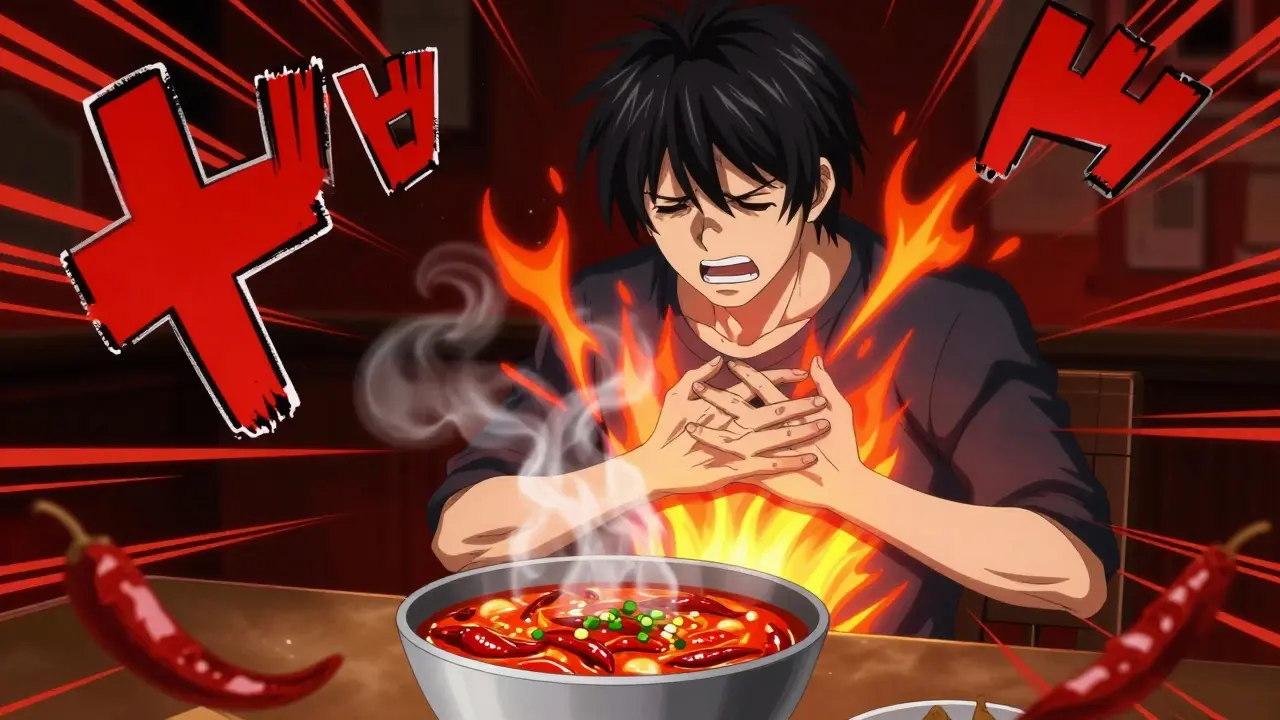
That burning sensation rising up your chest after a bowl of chili isn't just about the heat in the peppers. If you are taking medications for high blood pressure, asthma, or even osteoporosis, you might be facing a perfect storm for gastroesophageal reflux disease (GERD), commonly known as severe heartburn.
Many people blame their diet alone when they feel that familiar burn. But the reality is often more complex. Certain drugs relax the muscle valve between your stomach and esophagus, while spicy foods trigger acid production. When these two factors collide, standard treatments like proton pump inhibitors may lose their effectiveness. Understanding this interaction is key to stopping the cycle of discomfort without giving up every meal you enjoy.
The Science Behind the Burn
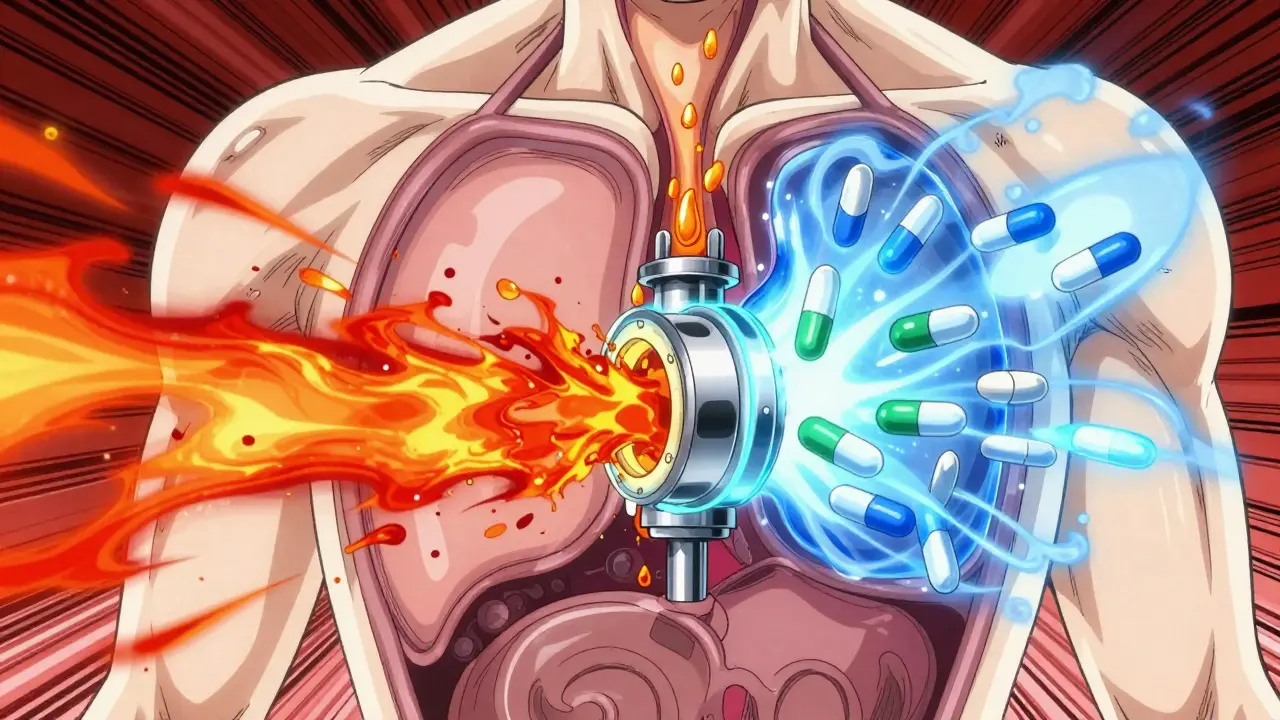
To manage heartburn, you first need to understand what is happening inside your body. The lower esophageal sphincter (LES) acts as a gatekeeper. It stays closed to keep stomach acid where it belongs-in the stomach. When it opens improperly, acid escapes into the esophagus, causing that painful burning sensation.
Capsaicin, the compound that makes chili peppers hot, is a known culprit. Research from Eastern Virginia Medical School indicates that capsaicin can cause the LES to relax by 30-40% in sensitive individuals within 30 minutes of eating. This relaxation allows gastric acid to flow backward freely.
However, not everyone reacts the same way. Dr. Anish Sheth from Yale University notes that individual variability is significant. For some, a mild salsa causes immediate pain; for others, extremely hot wings are fine. The National Institutes of Health (NIH) have even noted a lack of sufficient evidence to universally forbid spicy foods for all GERD patients. This means your personal tolerance level matters more than general rules.
Medications That Worsen Heartburn
If you take prescription drugs daily, you might be unknowingly contributing to your heartburn. Many common medications have side effects that mimic or worsen acid reflux by either increasing acid production or relaxing the LES further.
| Medication Class | Primary Use | Effect on Digestive System |
|---|---|---|
| NSAIDs (e.g., Ibuprofen) | Pain relief, inflammation | Increases GERD risk by 40-60% with chronic use; can cause erosive esophagitis |
| Beta Blockers | Hypertension (high blood pressure) | Associated with 22% increased GERD risk according to Framingham Heart Study data |
| Anticholinergics | Seasickness, allergies, overactive bladder | Decreases LES pressure by 25% in 68% of users |
| Bisphosphonates | Osteoporosis | Can cause direct esophageal irritation and esophagitis in 15-30% of users |
| Theophylline | Asthma, COPD | Relaxes the LES by approximately 28% |
Dr. Gary W. Falk from the University of Pennsylvania warns that NSAIDs like ibuprofen significantly increase GERD risk with long-term use. If you rely on these for pain management, talk to your doctor about alternatives or protective strategies. Similarly, if you take beta blockers for heart health, be aware that they may make you more sensitive to dietary triggers like spicy food.
Why Your Heartburn Meds Might Not Be Working
You might be taking your acid-reducing medication correctly but still suffering because of what you eat alongside it. Timing and food interactions play a huge role in how well drugs like Pantoprazole work.
PPIs (Proton Pump Inhibitors) are the gold standard for treating GERD, but they require specific conditions to be effective. According to clinical reviews, the absorption and efficacy of Pantoprazole can decrease by 18-23% if taken within two hours of consuming trigger foods like spicy dishes, fatty meals, or acidic fruits. These foods interfere with the drug's ability to suppress acid production effectively.
Furthermore, many people turn to antacids like Rolaids or Tums for immediate relief. While these provide quick comfort within 2-5 minutes, they last only 30-60 minutes. More importantly, antacids can block the absorption of other essential medications. Aluminum-containing antacids can reduce the absorption of tetracycline antibiotics by 50% and fluoroquinolones by up to 90% if taken at the same time. This is a dangerous interaction that can render your primary treatment ineffective.
Strategic Timing for Maximum Relief
To get the most out of your medication and minimize heartburn, timing is everything. You cannot simply pop a pill whenever you feel a twinge of discomfort. Here is how to structure your day for better control:
- PPIs (e.g., Pantoprazole, Omeprazole): Take these 30-60 minutes before your first meal of the day. This ensures the drug is active when your stomach begins producing acid for digestion. Do not take them with spicy food immediately after.
- H2 Blockers (e.g., Famotidine/Pepcid): These take 30-60 minutes to kick in but offer 12-hour relief. They are useful for preventing nighttime heartburn if taken before bed.
- Antacids: Use these sparingly for breakthrough symptoms. Always wait at least one hour after a meal or four hours before taking other medications to avoid interactions.
The American College of Gastroenterology recommends spacing meals by three hours to allow gastric emptying. This simple habit reduces reflux risk by 35% in controlled studies. Avoid lying down for at least three hours after eating, which can reduce nocturnal reflux by 60%.

Finding Your Personal Trigger Threshold
Since blanket bans on spicy food lack robust scientific foundation for everyone, a personalized approach works best. Dr. Philip O. Katz suggests that precision nutrition is superior to generic restrictions.
Try a 3-7 day elimination period. Remove all suspected triggers-spicy foods, caffeine, alcohol, and citrus-from your diet. Once your baseline is stable, reintroduce one item at a time. Keep a detailed food-symptom diary. Studies show that after two weeks of consistent tracking, patients can predict their personal triggers with 90% accuracy.
Some patients find success with "capsaicin desensitization." A trial at Johns Hopkins University showed that 65% of participants could gradually increase their tolerance to spicy foods over 12 weeks without symptom exacerbation. Start with very mild spices and slowly increase the heat, always having an antacid on hand just in case. This method helps retrain your esophageal sensitivity rather than living in fear of every pepper.
Lifestyle Adjustments That Complement Medication
Medication alone rarely solves the problem completely. Combining drugs with lifestyle changes yields a 78% success rate, compared to just 52% for medication-only approaches. Consider these adjustments:
- Elevate your head: Raise the head of your bed by 6-8 inches using blocks or a wedge pillow. This uses gravity to keep acid down, reducing symptoms by 45%.
- Watch portion sizes: Large meals put pressure on the LES. Eat smaller, more frequent meals instead.
- Maintain a healthy weight: Excess abdominal fat pushes against the stomach, forcing acid upward.
- Avoid tight clothing: Restrictive waistbands can compress the stomach and trigger reflux.
By understanding how your medications interact with your diet, you can take control of your heartburn. It is not about never eating spicy food again; it is about knowing your limits, timing your meds correctly, and making smart lifestyle choices to support your digestive health.
Can I eat spicy food if I take Pantoprazole?
Yes, but caution is advised. Spicy foods can reduce the efficacy of Pantoprazole by interfering with acid suppression. For best results, take Pantoprazole 30-60 minutes before breakfast and avoid consuming highly spicy meals within two hours of taking your dose. Monitor your symptoms closely, as individual sensitivity varies.
Which medications are most likely to cause heartburn?
Common medications that worsen heartburn include NSAIDs (like ibuprofen and aspirin), beta blockers for blood pressure, anticholinergics for allergies or seasickness, bisphosphonates for osteoporosis, and theophylline for asthma. These drugs either irritate the esophagus directly or relax the lower esophageal sphincter.
How long should I wait to take antacids after other medications?
You should wait at least one hour after eating or four hours after taking other medications before using antacids. Antacids can bind to other drugs in the stomach, significantly reducing their absorption and effectiveness. This is particularly critical for antibiotics like tetracyclines and fluoroquinolones.
Is it true that spicy food doesn't cause heartburn for everyone?
Yes, research indicates significant individual variability. While capsaicin relaxes the lower esophageal sphincter in many people, some individuals tolerate spicy foods well. The NIH notes there is insufficient evidence to universally ban spicy foods for all GERD patients. Personalized trigger identification through elimination diets is recommended over blanket restrictions.
What is the best time to take PPIs for maximum effectiveness?
Proton Pump Inhibitors (PPIs) like Pantoprazole or Omeprazole work best when taken 30-60 minutes before the first meal of the day. This timing allows the medication to reach peak concentration in the blood just as the stomach begins producing acid for digestion. Taking them with food or after meals reduces their effectiveness.

Recent Posts
-
 Opioid Withdrawal Timeline & Symptom Management Guide October 25, 2025