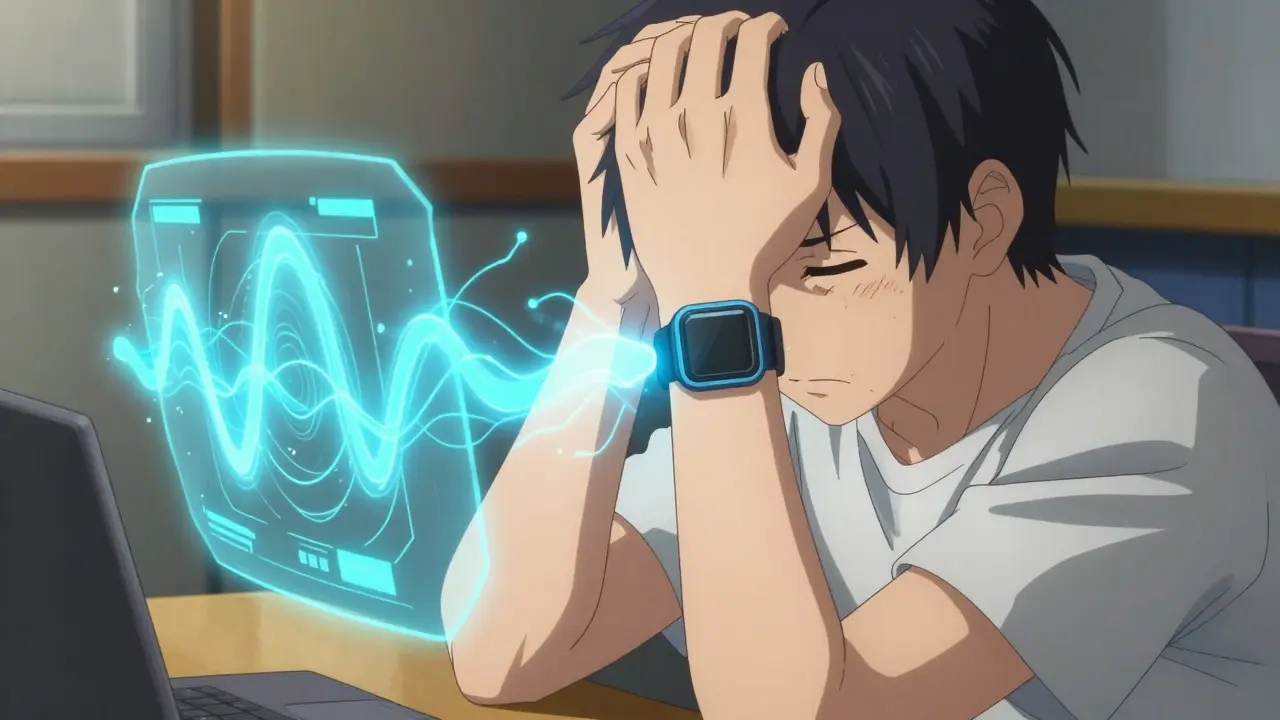
QT Interval Safety Checker
Use this tool to interpret your ECG wearable readings. Enter your measured QT Interval (in milliseconds) to see if you fall within safe parameters or require immediate medical attention.
Enter your measurements above to begin analysis.
Why Your Wrist Might Save Your Life
Imagine you're sitting at your desk when a wave of dizziness hits you. For many people taking common medications for heart rhythm issues, antibiotics, or mental health conditions, a spike in the heart's electrical cycle called the QT IntervalA measurement of the time between the start of the Q wave and the end of the T wave during one heartbeat cycle. could mean the difference between a healthy day and life-threatening instability. Until recently, tracking this required a trip to the doctor and a sticky sticker-on-the-chest monitor. Now, that same data is available instantly on a watch or a small handheld device in your pocket.
This shift from reactive to proactive monitoring represents a major leap in cardiovascular safety. Traditional 12-lead ECGs capture only a snapshot of heart activity, often missing transient events. Wearable ECG DevicesConsumer-grade and medical-grade tools that enable continuous or intermittent electrocardiogram recording through smartwatches and mobile accessories. allow for real-time risk detection, flagging dangerous changes before symptoms appear. With over 16 studies now validating specific devices for this exact purpose, the gap between consumer tech and clinical utility is closing faster than anyone predicted.
What is the QT Interval and Why Does it Matter?
To understand the value of these gadgets, you first need to know what they are measuring. The QT interval represents the duration it takes for the heart's ventricles to depolarize and repolarize-essentially contracting and then resetting for the next beat. While a normal range depends on your heart rate, a prolonged QT interval signals electrical instability. When corrected for heart rate (often denoted as QTc), an interval exceeding 500 milliseconds significantly increases the risk of Torsades de PointesA form of polymorphic ventricular tachycardia characterized by twisting of the point pattern around the isoelectric line., a rapid, chaotic heart rhythm that can cause fainting or sudden cardiac death.
The danger becomes acute when combined with certain medications. Antibiotics like azithromycin, antipsychotics, and even some COVID-19 treatments have been linked to QT prolongation. Before the rise of wearable technology, patients had to rely on intermittent blood tests and clinic visits to monitor their status. If a medication caused a delay in repolarization, it might go unnoticed until a catastrophic event occurred in the patient's own home. Today, continuous monitoring bridges that gap, alerting users if their electrical recovery time starts slipping into the danger zone.
Hardware Leaders in Personal Heart Monitoring
Not all wearables are created equal when it comes to precision. Two devices currently dominate the conversation regarding clinical validity for interval measurement.
| Device | Measurement Type | Lead Coverage | Best For |
|---|---|---|---|
| Apple Watch (Series 4+)Smartwatch equipped with FDA-cleared ECG app launched in September 2018. | Single-Lead (Lead I) | Coverage via digital crown contact | Daily AFib & QT trend tracking |
| KardiaMobile 6LWireless mobile ECG device by AliveCor measuring 9.0 cm × 3.0 cm × 0.72 cm. | Six-Lead ECG | Leads I, II, III, aVL, aVF, aVR | Detailed waveform analysis & Diagnosis |
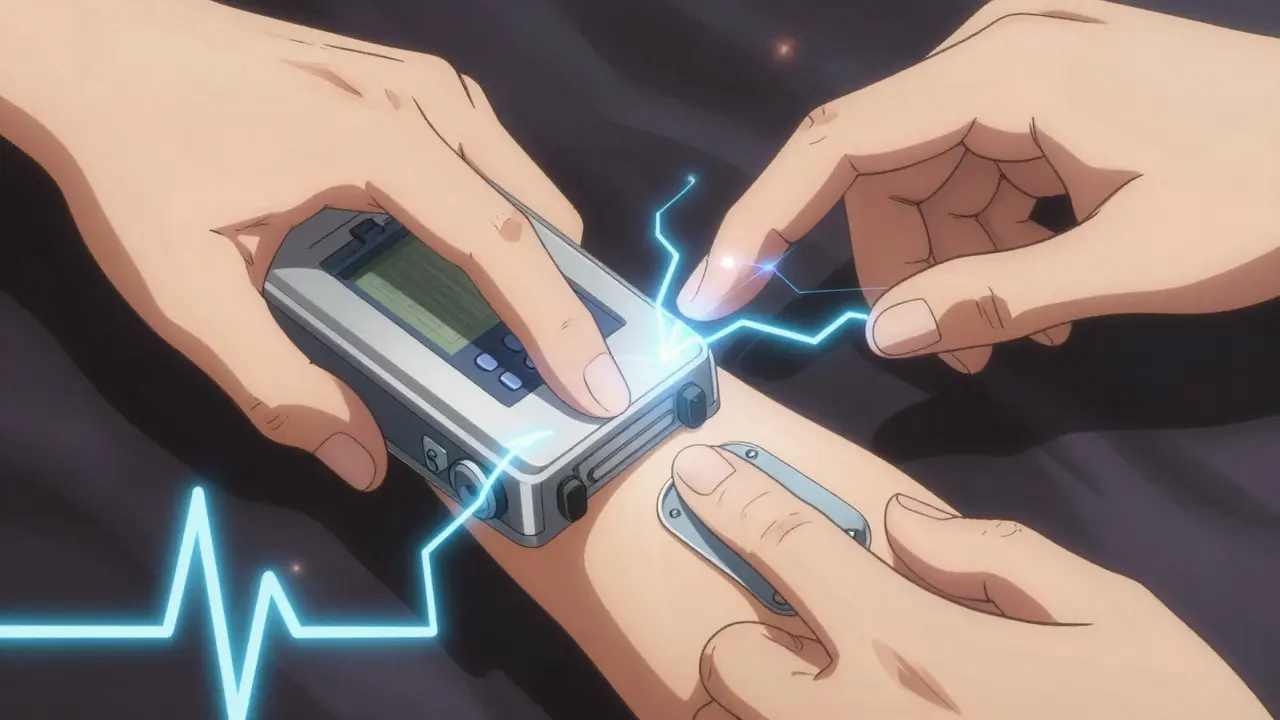
The Apple WatchApple SmartwatchFeatures capacitive sensors built into the metal loop to record electrical activity. uses a proprietary app where you place your finger on the digital crown for thirty seconds to complete the circuit. While convenient, it captures a single vector of electrical activity. In contrast, the KardiaMobile 6LAliveCorHandheld device connecting via Bluetooth for real-time analysis. requires a slightly more deliberate setup involving both thumbs and a knee contact to generate six simultaneous leads. This additional electrode coverage mimics the diagnostic power of a clinical machine much more closely, providing different angles of the heart's electrical landscape.
Accuracy Benchmarks: Consumer Tech vs. Clinical Standards
A critical question remains: Can a gadget really replace a hospital-grade machine? Research says yes, with caveats. A pivotal study by Spaccarotella et al. (2021) published in Scientific Reports put the Apple Watch through rigorous testing. When comparing measurements against a standard 12-lead ECG, the smartwatch demonstrated a Spearman's correlation coefficient of 0.886 for Lead I and 0.914 for mean QT values. These high correlation numbers suggest that while there may be slight variance, the wearable accurately reflects the physiological reality.
Further validation comes from the Cleveland Clinic Journal of Medicine (2024). Their review noted that handheld single-lead ECGs achieved noninferiority to standard 12-lead ECGs for corrected QT interval measurements within a margin of ±20 milliseconds. That level of precision is clinically significant. If a patient's baseline QTc is 400ms, a shift to 420ms detected by the watch is a reliable signal to consult a doctor. However, it is important to recognize the boundaries. Consumer wearables were initially validated for detecting atrial fibrillation (irregular rhythms) rather than subtle morphological changes. Sensitivity for pathologic Q waves was found to be only 20.6% in some trials, meaning these devices are excellent for timing but less ideal for spotting complex structural damage without medical interpretation.
The Role of Regulation and Pandemic Shifts
Nothing changes the regulatory landscape quite like a global emergency. During the early phases of the COVID-19 pandemic, hospitals were overwhelmed, and patients receiving QT-prolonging drugs like hydroxychloroquine needed monitoring. In April 2020, the U.S. Food and Drug AdministrationFederal agency responsible for protecting public health including the approval of foods, medicines, and medical devices. issued specific guidance permitting the use of devices like KardiaMobile 6L for QT interval measurement in these patients. This marked a turning point. It acknowledged that 'single-lead mobile cardiac outpatient telemetry units' could serve as valid proxies when traditional care access was impossible.
This regulatory pivot validated a new standard of care. By October 2023, AliveCor had received FDA clearance for 16 separate indications related to ECG monitoring, including QT interval measurement. This accumulation of official endorsements gives both doctors and patients confidence in the data being generated. It signals that what was once considered 'consumer novelty' has graduated to 'clinical tool.' The FDA's stance also highlighted the importance of mitigating signal quality issues, noting that skin-to-electrode impedance affects clarity-a reminder that user technique still matters immensely.

Bridging the Gap with Artificial Intelligence
Technology doesn't stop at hardware. The true potential of real-time risk detection lies in software intelligence. Manual review of thousands of daily ECG recordings is impossible for human clinicians. To solve this, researchers are deploying deep learning architectures. Alam et al. (2024) developed a Residual Neural Network model designed to infer QT intervals directly from single-lead streams using 2D convolutions.
In their evaluation involving 686 patients with genetic heart disease, this AI successfully predicted QTc prolongation defined as greater than 500ms. This addresses the bottleneck of availability; we simply cannot scale doctors to review every reading a smartwatch produces. Instead, the algorithm acts as the gatekeeper, flagging anomalies for human review. As of 2024, GE Healthcare experts observed that in-home monitoring includes not just watches, but clothing embedded with sensors, broadening the horizon further. This convergence suggests the future isn't just about better hardware, but smarter interpretation engines that live locally on the device.
Practical Steps for Safe Self-Monitoring
If you decide to integrate this into your health routine, proper technique is non-negotiable. Impedance-the resistance of skin to electricity-is the enemy of good data.
- Patient Preparation: Ensure your skin is clean and dry before attempting a scan. Moisture or oils can distort the signal.
- Correct Contact: For Apple Watch, rest your arm comfortably on a surface, press your finger gently but firmly on the digital crown. Do not hold your breath. Wait for the full 30-second count.
- Foot Placement: For KardiaMobile 6L, you must create a complete circuit. Place thumbs on the top electrodes and touch the bottom electrodes against your left knee or ankle. Movement ruins the trace.
- Consistency: Record at the same time each day. QT intervals vary naturally throughout the circadian cycle; a morning reading might differ from an evening one. You are looking for deviation from your personal baseline, not a random absolute number.
Remember, these tools provide data, not diagnoses. If your device flags a prolonged interval, especially one exceeding 500ms, contact your cardiology team immediately rather than trying to interpret it alone. The goal is early intervention, preventing the dangerous cascade of arrhythmias that historically led to unexplained sudden deaths.

Write a comment
Your email address will not be published.
Recent Posts
-
 How and Where to Buy Dapasmart Online Safely (2025 Guide) September 14, 2025
 -
 Pulmonary Function Tests: How to Interpret Spirometry and DLCO Results December 15, 2025



12 Comments
This is such exciting news for anyone managing heart issues! ❤️ I love how the watch connects to apps easily now.
The convenience factor really changes everything for us patients.
Continuous tracking means we feel safer knowing someone is watching.
It brings peace of mind to my family definitely.
Hope everyone stays safe out there.
👍
This analysis provides accurate clinical benchmarks for consumer devices.
We live in an era where privacy is traded for safety without much thought.
It feels like our biological rhythms are now public domain for algorithms to parse.
The convenience is undeniable but comes at a psychological cost we ignore.
Watching your heart rate fluctuate constantly creates a baseline anxiety known as orthostatics.
People will begin to distrust their own bodies because the machine says otherwise.
True health comes from trusting internal signals rather than external validation.
This device measures electrical noise but misses the spiritual essence of vitality.
A machine cannot detect fear or joy that precedes a cardiac event.
We become slaves to the dashboard metrics instead of living life.
The medical establishment pushes this to reduce liability costs primarily.
Patients are converted into data points for insurance companies eventually.
Who owns the information gathered during these quiet moments of rest?
The FDA approval suggests regulation but does not solve the ethics issue.
We accept surveillance under the guise of self-care increasingly today.
Consider what happens when the battery dies and the guardian fails you.
That dependency is the real danger lurking beneath the shiny hardware.
Honestly most of these wearable gadgets are marketed heavily to consumers who lack technical understanding.
I find the enthusiasm here somewhat misplaced given the margin of error still present.
Real cardiology requires rigorous testing not consumer grade sensors.
It is amusing to see people treating a smartwatch as a diagnostic tool.
Some might argue availability is key but accuracy remains compromised frequently.
I prefer waiting until standards are truly met before jumping on bandwagons.
The trend shows clear desperation for solutions regardless of quality control.
Maybe one day these will work but currently they are toys for the masses.
I understand the skepticisim about these devices rocky.
Teh accuracy has improved a lot lately though.
Becuase teh studies showed correlation coefficients near 0.9 it is actually reliable.
Many doctors are using it now for telehealth checks regularly.
We should try to help others see teh potential in this.
I am happy to share more info if needed later.
Just remember to check your skin contact often too.
You bring up some deep philosophical points Christopher :)
It is true that data ownership is a major concern today.
However the trade off saves lives in acute situations.
My team uses similar setups for telemetry now.
The algorithm filtering helps us triage cases efficiently.
Technology is a tool and we should wield it wisely :D
Stay healthy friends.
The implications for remote patient management are absolutely staggering!!!
Medical professionals will soon rely on these metrics for decisions!!!
Every millisecond counts when preventing a catastrophic event!!!!!
We must embrace this change immediately!!!
The research backing these findings is robust and detailed!!
It is incredible to witness progress like this in healthcare!!!!!
Please consider adopting these tools for personal safety!!!
Thank you for highlighting such vital information!!
Jenny you have a great point about embracing change!
It really helps to stay proactive with our health.
Knowing the numbers can empower you to speak up at doctor visits.
Keep spreading that positive energy about tech adoption.
It makes the whole process feel less scary for everyone.
Staying informed is always the best defense against risk.
You guys are doing amazing work keeping the community updated.
i think its important to stay calm and follow medical advice though.
tech is good but doctors know best.
dont panic over small readings changes.
consistency matters more than daily stress.
just monitor and talk to your specialist if needed.
American innovation usually leads the way in medical breakthroughs like this.
Other countries take years to catch up on FDA approvals.
Our regulations ensure safety unlike the rest of the world.
This specific guidance came from our domestic agency clearly.
We should be proud of how far the industry has come.
Relying on foreign data is always risky for critical health matters.
Stick with the proven US approved brands for security.
Healthcare advancements belong to the global community ultimately.
While American leadership is noted collaboration improves outcomes everywhere.
Sharing knowledge helps patients across different borders significantly.
Technology transcends national lines in terms of utility.
We all benefit from shared safety standards and data protocols.
Focus on patient care rather than origin stories please.
Unity in health goals is what matters most.
I remain very hopeful about the direction of preventative medicine.
Early detection capabilities are finally becoming accessible to normal people.
This technology could prevent tragedies in many homes tonight.
It is nice to see science delivering tangible results quickly.
We should all celebrate this step forward together.
Keeping a pulse on your health is a good habit to build.
Great article explaining the mechanics so clearly.