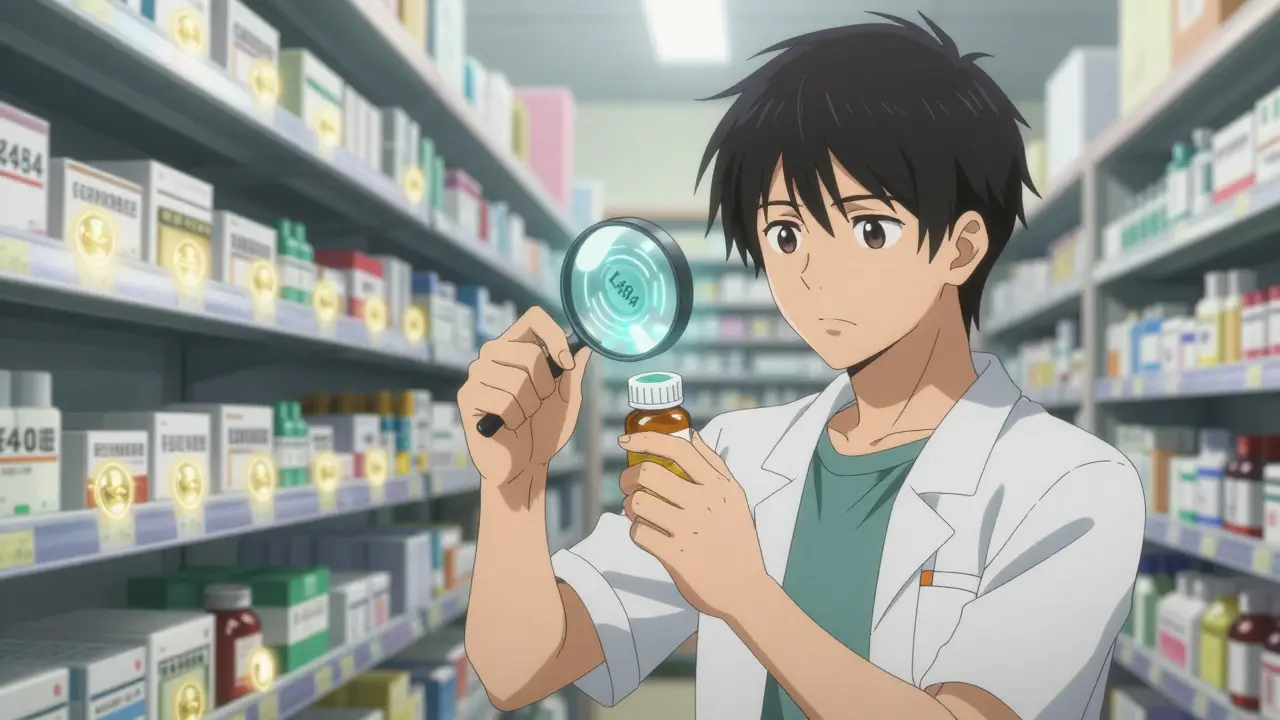
Every year, millions of people in the U.S. and around the world save money by switching to generic drugs. But not all pills that look like generics are real. Some are fake - made in unregulated labs, packed in dirty conditions, and sometimes filled with chalk, rat poison, or no medicine at all. If you’ve ever picked up a prescription and thought, “This doesn’t look right,” you’re not alone. Knowing how to spot a legitimate generic drug can keep you safe - and your money where it belongs: in your pocket, not a criminal’s.
What Makes a Generic Drug Legitimate?
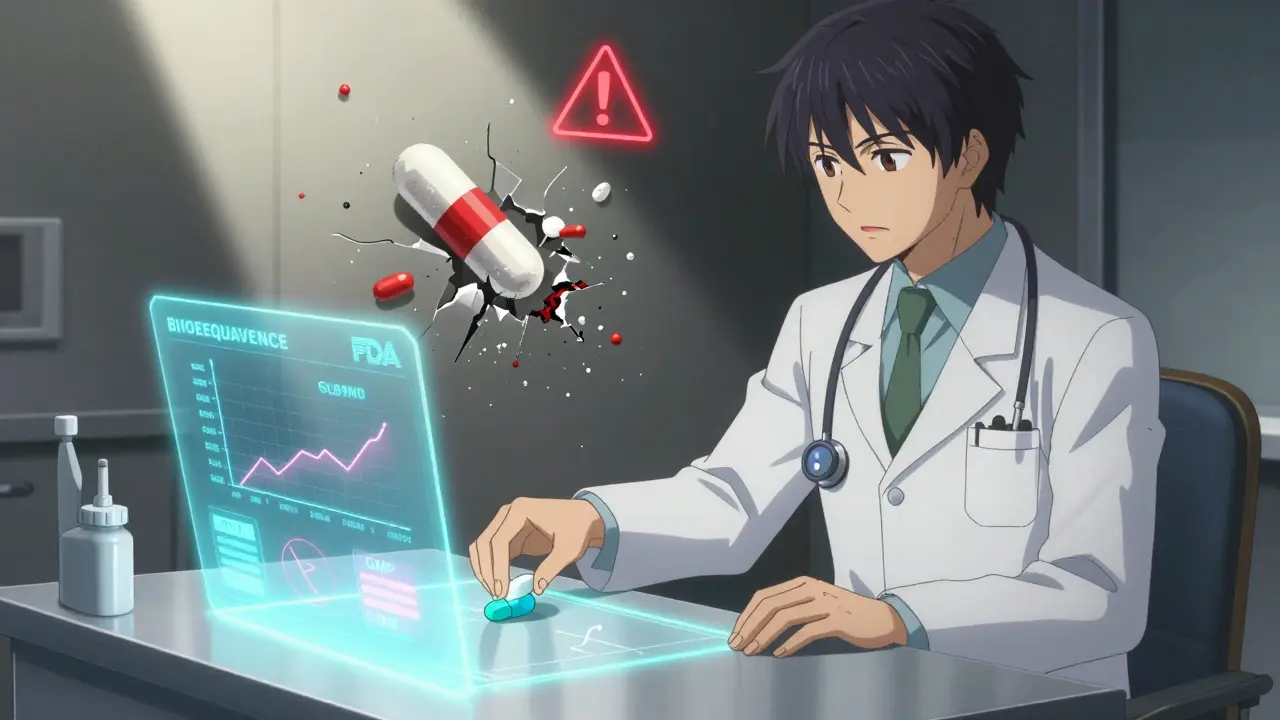
A legitimate generic drug isn’t just a cheaper copy. It’s a medicine that has passed the same strict tests as the brand-name version. The FDA requires generic manufacturers to prove their product delivers the same active ingredient, in the same amount, at the same speed as the original. This is called bioequivalence. In simple terms: if the brand-name drug works, the generic must work the same way.For example, if you take a 20mg tablet of omeprazole (brand name: Prilosec), the generic version must release the exact same amount of omeprazole into your bloodstream over the same time period. Studies show that 98.7% of FDA-approved generics meet this standard - with average absorption rates within 1% of the brand. That’s not luck. It’s science.
Legitimate generics are made in facilities inspected by the FDA. These inspections happen over 3,500 times a year. The factories follow Current Good Manufacturing Practices (cGMP), which means every step - from raw powder to sealed blister pack - is documented, monitored, and audited. Counterfeit drugs? They’re made in basements, garages, or unlicensed labs with no oversight.
How to Tell the Difference: 5 Physical Signs to Check
Generic drugs can look different from the brand-name version. That’s legal. But there are limits. Here’s what to look for when you pick up your prescription:- Consistent shape and color - Legitimate pills have uniform color, size, and shape. If one tablet looks darker than the next, or one is slightly larger, that’s a red flag. Counterfeiters can’t always control quality.
- Clear imprinting - Every FDA-approved tablet has a code stamped on it - like “L484” or “20 M.” This tells pharmacists and regulators what it is. Fake pills often have blurry, crooked, or missing imprints. Sometimes they’re completely blank.
- No crumbling or cracking - A legitimate tablet should feel solid. If it crumbles in your fingers, feels sticky, or has a powdery coating that rubs off, it’s likely fake. Moisture, heat, or poor manufacturing cause this.
- No odd smell or taste - If your pill smells like plastic, chemicals, or metal, or leaves a strange aftertaste you’ve never felt before, stop taking it. Real generics have a neutral or faintly medicinal odor. They don’t taste like chalk or bleach.
- Proper packaging - Legitimate drugs come in sealed bottles or blister packs with a manufacturer’s name, lot number, and expiration date. If it’s in a plastic bag, has a crooked label, or says “Made in China” in English (when it shouldn’t), walk away.
According to FDA data, 78% of counterfeit drugs reported to MedWatch had crooked or poorly printed labels. Another 63% were sold in generic bags instead of proper prescription containers. These aren’t accidents - they’re signs of illegal distribution.
Check the Label: What Must Be There
Every legitimate generic drug container must include:- The name of the drug (e.g., “Lisinopril”)
- The strength (e.g., “10 mg”)
- The manufacturer’s name (e.g., “Teva Pharmaceuticals” or “Sandoz”)
- The lot number (a mix of letters and numbers)
- The expiration date (not “best by” - it must be a real date)
If any of these are missing, the drug is not approved for sale in the U.S. You should never accept a prescription without this information. Even if the pharmacy says it’s “a special order,” ask for the manufacturer’s name. Legitimate generics always have it.
Pro tip: Look up the lot number on the FDA’s Drug Recall Database. If it’s listed as recalled, the drug is unsafe. This takes less than a minute.
Where to Buy: Only Use Verified Pharmacies
The biggest risk isn’t your local pharmacy - it’s online sellers. The National Association of Boards of Pharmacy (NABP) found that 96% of websites selling drugs without a prescription are illegal. Many of them sell fake generics.Here’s how to stay safe:
- Use only local, licensed pharmacies - If you’ve been going to the same pharmacy for years, you’re likely fine. Pharmacists check every generic they receive.
- Look for .pharmacy - This is a verified seal for online pharmacies. If a website doesn’t have it, don’t buy. You can check the NABP’s list at nabp.pharmacy.
- Avoid “too good to be true” deals - A 30-day supply of metformin for $5? That’s not a deal - it’s a trap. Legitimate generics cost $10-$20. If it’s under $5, it’s probably fake.
- Never buy from social media or text links - If someone DMs you with “generic Viagra for $1 per pill,” it’s not real. It’s dangerous.
Pharmacists at verified pharmacies spend 2-3 minutes per prescription verifying the manufacturer, batch, and integrity of the drug. That’s how they catch problems before they reach you.
What to Do If Something Feels Off
If you notice any of these signs:- Your medication stopped working after a refill
- You feel new side effects you’ve never had before
- The pill looks, smells, or tastes different
Stop taking it. Call your pharmacist. Ask them to check the batch number. Then report it.
The FDA’s MedWatch program received over 1,200 reports of counterfeit drugs in 2022. Most came from people who noticed something strange - a weird aftertaste, sudden loss of effect, or pills that didn’t dissolve properly. Your report helps protect others.
Don’t throw it away. Bring it back to the pharmacy. They’ll send it to the FDA for testing. That’s how they track fake drugs and shut down illegal operations.
Technology Is Helping - But You Still Need to Check
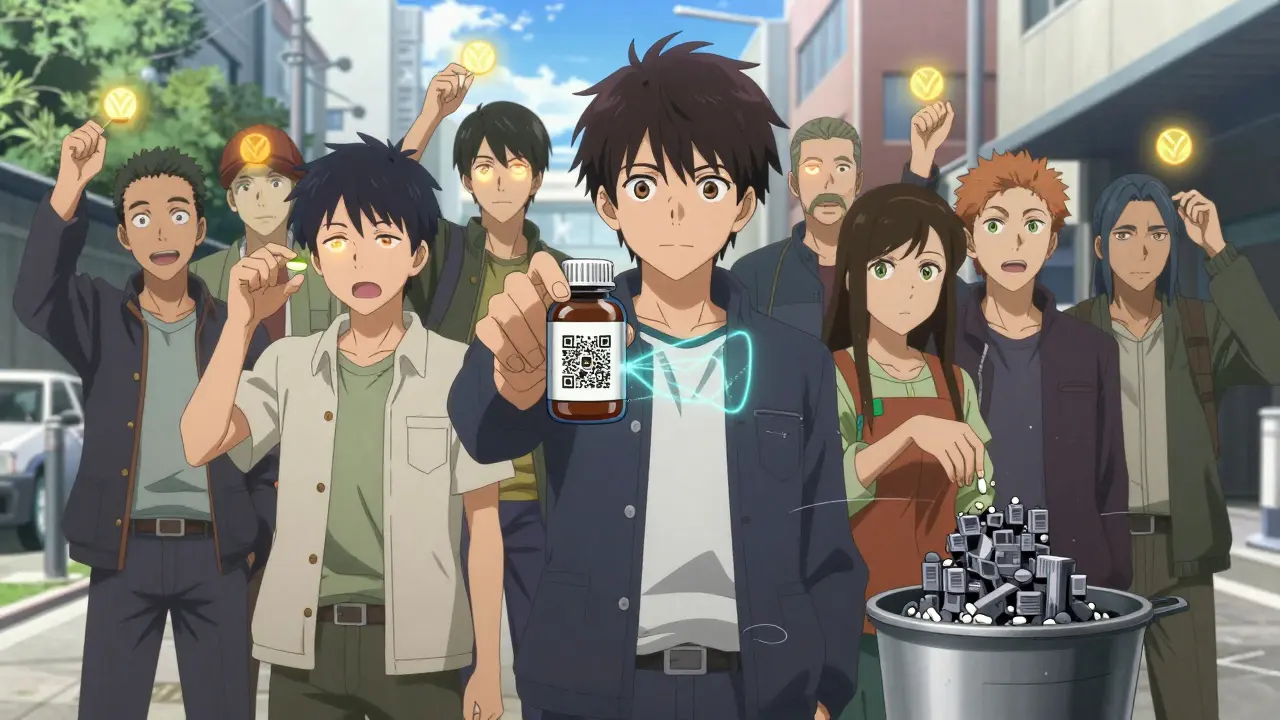
New tools are making verification easier. Since 2022, major manufacturers like Teva and Viatris have been putting 2D barcodes on every pill bottle. You can scan them with apps like MediSafe to confirm authenticity. Blockchain systems now trace drugs from factory to pharmacy in minutes.But here’s the catch: fake sellers are catching up. Some counterfeiters now use recycled legitimate packaging. They refill old bottles with fake pills. That’s why you still need to check the imprint, smell, and texture - even if the box looks real.
AI tools are coming. MIT’s 2023 tests showed AI can identify fake pills with 99.2% accuracy by analyzing shape, color, and surface texture. But those tools aren’t in your phone yet. So for now, your eyes and instincts are your best defense.
Real Stories: What Happens When People Don’t Check
In 2022, a woman in Ohio bought “generic Cialis” from a website that looked like a real pharmacy. She took it for months. Then, she started having chest pains. Her doctor found no heart issue - but toxicology tests revealed her pills had no tadalafil. Instead, they had sildenafil (the active ingredient in Viagra) and traces of rat poison. She nearly died.On Reddit’s r/pharmacy community, a man shared that his father, who took blood pressure meds for 15 years, suddenly had a stroke. His last refill came from a “discount pharmacy” online. The pills had 1/10th the active ingredient. He didn’t survive.
These aren’t rare. The WHO estimates 1 in 10 drugs in low- and middle-income countries are fake. In the U.S., it’s less than 1%, but it’s still happening - and it’s getting smarter.
Final Checklist: 5 Quick Checks Before You Take Any Generic
Before swallowing any generic pill, do this:- Check the label - Does it have the manufacturer’s name, strength, and expiration date?
- Inspect the pill - Is the color and imprint consistent? Is it smooth, not crumbly?
- Smell it - Does it smell like medicine? Or plastic, chemicals?
- Verify the pharmacy - Is it a local, licensed pharmacy? Or a website without .pharmacy?
- Report it - If something’s wrong, tell your pharmacist. Then report to FDA MedWatch.
Generic drugs save lives - and money. But only if they’re real. You don’t need to be a pharmacist to spot a fake. Just be curious. Be careful. And never assume.
Are generic drugs really as effective as brand-name drugs?
Yes - when they’re legitimate. The FDA requires generics to prove they deliver the same active ingredient at the same rate and strength as the brand-name version. Studies show 98.7% of approved generics meet this standard. In fact, many generics are made in the same factories as brand-name drugs. The only differences are color, shape, or inactive ingredients - none of which affect how the medicine works in your body.
Can I trust generics from big manufacturers like Teva or Sandoz?
Absolutely. Teva, Sandoz, Mylan (now Viatris), and other major manufacturers are FDA-registered and subject to regular inspections. They supply the majority of U.S. generics. PharmacyChecker rates Teva at 4.6/5 and Sandoz at 4.5/5 based on thousands of verified user reviews. These companies have zero tolerance for quality issues - because one bad batch can shut them down.
Why do generic pills look different from the brand-name ones?
Because of trademark laws. The original brand-name drug has a registered color, shape, and imprint. Generic manufacturers can’t copy those exactly, so they change them. For example, the brand-name Lipitor is blue and oval. The generic atorvastatin might be white and round. That’s legal - and normal. What’s not normal? If the generic suddenly changes color between refills or has a blurry imprint.
Is it safe to buy generic drugs online?
Only if the website has the .pharmacy seal and is verified by the NABP. Over 96% of online pharmacies selling drugs without a prescription are illegal. Many sell counterfeit pills. The FDA warns against buying from sites that don’t require a prescription, offer “miracle cures,” or have prices that seem too low. Always use your local pharmacy or a verified online pharmacy.
What should I do if I think I got a fake generic drug?
Stop taking it immediately. Bring the pills and packaging to your pharmacist. Ask them to check the lot number and contact the manufacturer. Then report it to the FDA’s MedWatch program at fda.gov/medwatch. Even one report helps the FDA track dangerous products and shut down illegal suppliers.

Write a comment
Your email address will not be published.
Recent Posts
-
 Sepsis: Recognizing Early Warning Signs and How Hospitals Treat It January 26, 2026
 -
 How Aluminium Hydroxide Powers Modern Paints and Coatings August 3, 2025

13 Comments
I get that generics are supposed to be safe, but have you ever tried to get a refill at a pharmacy where they switched brands and suddenly your anxiety got worse? I swear, one batch of generic sertraline made me feel like I was underwater. I went back to the brand and boom - normal again. FDA says they're all equal, but my body doesn't believe it.
Youre not alone girl 🙌 I used to think generics were just cheaper versions but now I know theyre legit if you know what to look for. Check the imprint, smell it, dont be shy to ask your pharmacist - theyre the real MVPs. Your health is worth the 2 mins it takes to double check 💪
LMAO this is peak FDA propaganda. 🤡 98.7%? That’s like saying 98.7% of your WiFi works - until you try to stream Netflix. Meanwhile, Teva and Sandoz outsource 70% of their production to India and China. You think they’re inspecting every batch? Nah. They inspect the paperwork. The pills? Not so much. And don’t even get me started on the ‘lot number’ scam - fake ones have perfect ones too now. 🧪
It’s fascinating how we’ve built this entire system around trust - trusting regulators, manufacturers, pharmacists - and yet we’re so quick to distrust when things feel off. Maybe the real issue isn’t the generics themselves, but our lack of transparency in the supply chain. If we had open access to inspection reports and batch data, wouldn’t that be more empowering than fear-based checking?
The information presented here is both accurate and critically important. Pharmacists are trained to verify the integrity of pharmaceutical products, and the regulatory framework enforced by the FDA remains one of the most rigorous in the world. It is imperative that patients remain vigilant, but not alarmist. Verification through official channels, including the FDA’s Drug Recall Database, is not merely advisable - it is a standard of care.
Bro, you think fake pills are bad? Try buying a generic blood thinner from a pharmacy in Puerto Rico. I did. My cousin’s INR went from 2.5 to 6.2 in 48 hours. Turned out the batch had no warfarin - just cornstarch and glitter. Literally. Glitter. FDA doesn’t even track international shipments properly. And now they want us to trust barcodes? Come on. That’s like trusting a QR code on a soda can to tell you if it’s poisoned.
Dude, I work in a pharmacy and I can tell you - 99% of the time, generics are fine. But the 1%? That 1% kills. I’ve seen pills that looked perfect but crumbled like dust. One guy came in crying because his dad’s diabetes meds didn’t work. Turned out the label was real, but the bottle was refilled with fake pills. Don’t be lazy. Check the imprint. Smell it. Ask. It’s not hard. Your life’s worth it.
Bioequivalence? Please. That’s a regulatory loophole dressed up as science. The FDA only requires ±20% variation in absorption. That means a generic can be 20% weaker OR 20% stronger than the brand. You think that’s safe? Try being on a beta-blocker and suddenly your heart rate drops from 60 to 42 because the generic was at the upper limit. That’s not science - that’s Russian roulette with your circulatory system.
This is all a distraction. The real problem? The FDA and pharma giants are in bed together. They don’t want you to know that 80% of generic manufacturing is outsourced to countries with zero oversight. They want you to check imprints and lot numbers so you think you’re safe. Meanwhile, the real danger is systemic corruption. You think a barcode stops a counterfeit pill? Nah. It’s just a shiny sticker on a coffin.
In India, we make 40% of the world’s generics. You think your pills are safe? They’re made in our factories. We don’t use rat poison. We use science. If you can’t trust Indian-made medicine, then maybe your problem isn’t the pill - it’s your bias. Your country’s fear is our livelihood.
I appreciate the thorough breakdown. One minor correction - the FDA does not require the manufacturer’s name on every generic container. Some states allow repackaging by third-party distributors, which may omit the original manufacturer. It’s still legal as long as the drug is FDA-approved. The lot number and expiration date are the critical identifiers.
I scanned my generic metformin with MediSafe and it said ‘authentic’ 🤖 but then I noticed the pill was slightly off-color. So I called the pharmacy - turns out it was a batch from a new supplier. They replaced it immediately. Point is: tech helps, but your eyeballs are still the best tool. Don’t just trust the app. Trust your gut. And if it tastes like metal? Spit it out. 💀
i just take what they give me. if i feel weird, i stop. if i dont, i keep going. its not that hard. also i think the guy who said rat poison is kinda extra. like, yeah, its bad, but its rare. dont make it a horror movie.