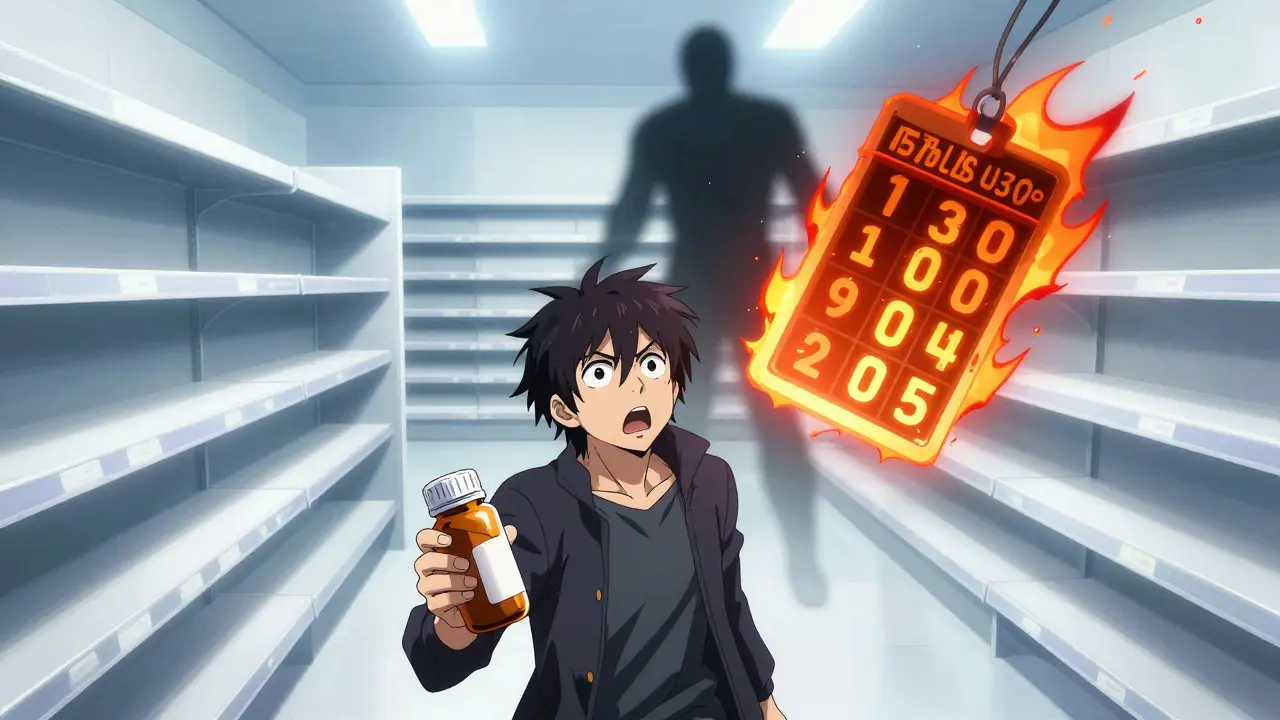
Have you ever walked into a pharmacy or grocery store only to find the shelves bare? You reach for a specific medication or a staple food item, but it’s gone. Then, when it finally comes back, the price tag looks like it has been multiplied by two. This isn’t just bad luck; it is a textbook example of pricing pressure combined with supply shortages that disrupt normal market equilibrium. While we often hear about these issues in the news regarding cars or electronics, the consequences are far more severe when they hit essential sectors like healthcare.
The modern understanding of these phenomena gained prominence during the post-pandemic recovery period starting in 2020. However, the underlying principles have been studied since classical economics. Today, we see how supply bottlenecks in energy, labor, and raw materials create imbalances that drive prices up and goods out of reach. For patients and consumers, this means more than just higher bills-it means delayed treatments and reduced access to care.
Why Supply Bottlenecks Drive Prices Up
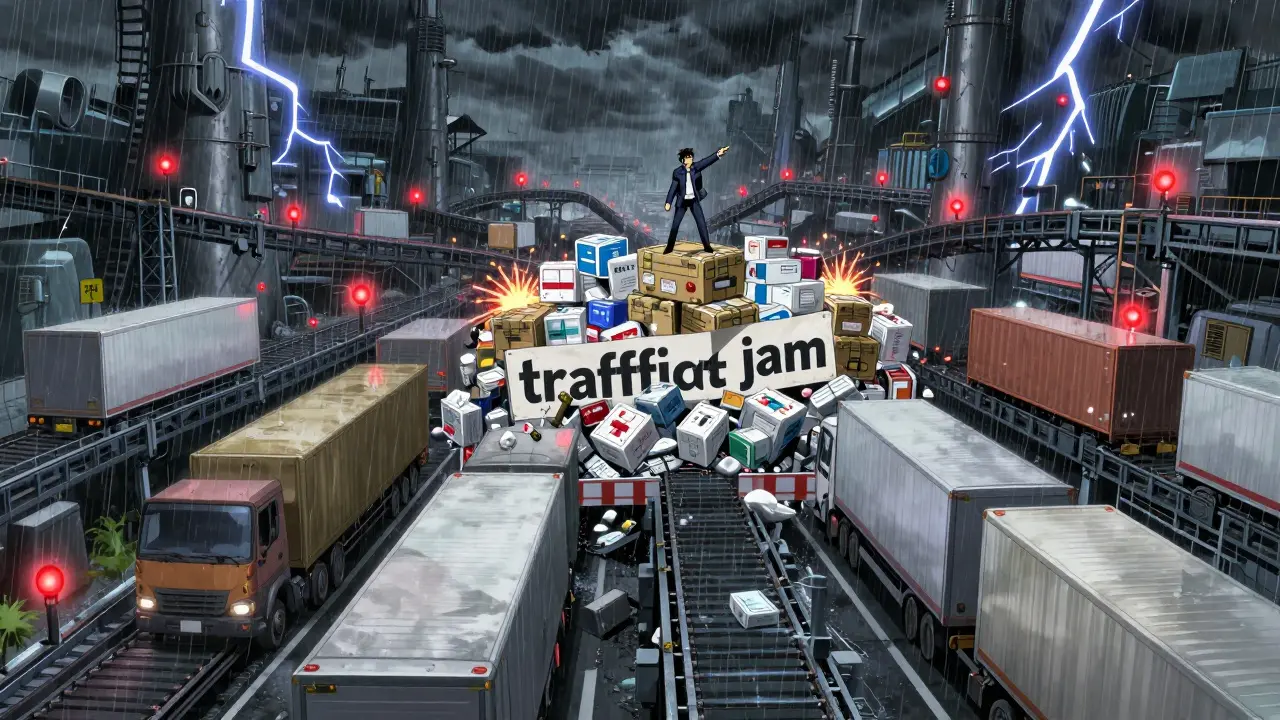
To understand why prices spike, we need to look at what economists call "demand-driven bottlenecks." These occur when production capacity, transportation networks, or labor availability cannot adjust quickly enough to meet changing demand patterns. Imagine a highway where traffic suddenly doubles, but the number of lanes stays the same. Congestion follows immediately.
The Office for Budget Responsibility (OBR) identified these bottlenecks as critical factors influencing inflation dynamics. In their October 2021 Economic and Fiscal Outlook, they documented how specific manifestations became pronounced in late 2021. When the supply of essential inputs is inelastic-meaning it cannot be increased quickly-the result is severe scarcity.
The Federal Reserve noted in a June 24, 2022 publication that sweeping production constraints combined with surging demand led to shortages not seen in decades. By the second quarter of 2022, U.S. goods spending was 18.7% above its pre-pandemic trend. This surge overwhelmed systems designed for lower volumes, creating a perfect storm for pricing pressure.
The Health Sector Under Siege
While car manufacturers faced semiconductor shortages, the health sector faced a different kind of crisis. Medical supplies, pharmaceuticals, and even hospital staffing became constrained. The San Francisco Federal Reserve estimated in June 2023 that supply chain disruptions contributed approximately 60% of the above-trend run-up of headline inflation in the United States during 2021-2022. A significant portion of this impact fell on health-related goods and services.
Consider the case of insulin or specialized surgical equipment. These items do not have many substitutes. If the supply chain for a key chemical ingredient breaks down, production stops. Unlike a smartphone, which might use alternative chips, life-saving medications often require very specific manufacturing processes. This lack of flexibility makes the health sector particularly vulnerable to global supply shocks.
Energy markets also play a huge role here. The OBR noted that UK wholesale gas prices reached £200 per therm in August 2021, compared to a five-year average of £35-45 per therm. Since pharmaceutical manufacturing is energy-intensive, these input cost increases were passed directly to hospitals and pharmacies. Steel, glass, and chemical producers saw input costs rise by 25-40% in Q3 2021 alone.
Supply Shocks vs. Demand Shocks: What’s the Difference?
Not all price increases come from the same source. It is crucial to distinguish between supply-driven and demand-driven shortages because they have different economic consequences. The Cleveland Federal Reserve’s research demonstrates that supply shocks have approximately five times greater impact on price levels than demand shocks (0.25% vs 0.05%).
| Impact Area | Supply Shock | Demand Shock |
|---|---|---|
| Price Level Increase | ~0.25% | ~0.05% |
| Employment Impact | -0.15% | -0.05% |
| Primary Cause | Production/Labor Constraints | Sudden Surge in Buying |
| Resolution Speed | Slower (Requires Capacity Build) | Faster (Demand Cools Down) |
Dr. Loretta Mester, President of the Federal Reserve Bank of Cleveland, emphasized that "supply shocks are an important factor in driving supply chain disruptions." When supply is constrained, businesses cannot produce enough to meet needs, leading to immediate shortages. In contrast, demand shocks often resolve faster as consumer behavior stabilizes. For health economics, this distinction matters because supply-side fixes-like building new factories or training more nurses-take years, not months.
The Danger of Price Controls
When prices rise too sharply, governments often consider imposing price controls. The idea sounds good in theory: cap the price so people can afford essentials. However, history and data show this often makes things worse. The Foundation for Economic Education (FEE) documents that government-imposed price ceilings prevent price adjustments that would normally balance markets.
Harvard economist Martin Weitzman established in his research that "when prices are held artificially low, the resulting shortage deformation follows a predictable pattern where consumers engage in speculative hoarding once scarcity becomes apparent." If you cap the price of a scarce medical device, suppliers may stop producing it because it is no longer profitable. Meanwhile, buyers rush to stockpile it before it disappears completely.
We saw this in the UK energy market. The government's energy price cap prevented providers from passing costs to consumers. The result? Twenty-seven smaller energy providers failed between August and December 2021. In health terms, similar caps on drug prices could lead to manufacturers withdrawing products from the market entirely, leaving patients with zero options rather than expensive ones.
Real-World Impact on Consumers and Businesses
These aren't just abstract numbers. They represent real struggles for families and small businesses. Industry surveys by the Institute for Supply Management showed that 76% of manufacturing executives reported supply chain disruptions in Q4 2021. Average supplier delivery times jumped from 45 days pre-pandemic to 78 days in Q4 2021.
Consumer sentiment data from the University of Michigan revealed that 58% of respondents cited "shortages of things they wanted to buy" as a primary concern in Q2 2022. In online forums, users described empty freezer sections at major supermarkets for weeks due to meat shortages. For a diabetic patient, missing a shipment of test strips or medication is not an inconvenience; it is a health risk.
Businesses felt the pain too. John Furneaux, CEO of Hive Project Management, noted that 73% of his construction clients reported project delays averaging 68 days per project due to material shortages. In healthcare, hospitals faced similar delays in receiving surgical instruments or PPE, forcing them to cancel elective procedures and redirect resources.

Mitigation Strategies That Actually Work
So, what can be done? The Federal Reserve identified three potential resolution scenarios: easing consumer goods demand, rapid reallocation to services, or persistent negative supply shocks. For businesses and policymakers, the focus must be on resilience.
- Diversify Supplier Networks: Companies with diversified suppliers experienced 40% fewer disruption days than those with concentrated bases. Relying on a single source for critical components is a massive risk.
- Invest in Digital Visibility: Firms using digital supply chain visibility tools reduced inventory stockouts by 28%. Knowing where your inventory is in real-time allows for proactive adjustments.
- Remove Labor Market Rigidities: The OBR recommended focusing on removing factor market rigidities to enable labor mobility. Flexible work arrangements and streamlined licensing can help fill critical gaps in healthcare staffing.
- Nearshoring: Goldman Sachs predicted that nearshoring trends would reduce supply chain vulnerability by 25% in North America, though it may increase production costs by 8-12% long-term. Closer suppliers mean shorter transit times and less exposure to global geopolitical risks.
The European Central Bank suggested temporary relaxation of competition rules during acute disruptions. Germany implemented this in 2021, reducing pharmaceutical shortages by 19% within six weeks. Allowing companies to collaborate temporarily on logistics can save lives.
Looking Ahead: Structural Changes
By mid-2023, the Global Supply Chain Pressure Index (GSCPI) had returned to pre-pandemic levels, contributing to a slowdown in U.S. inflation from 9.1% in June 2022 to 3.0% in June 2023. However, the International Monetary Fund projected that supply chain pressures would remain 15-20% above pre-pandemic norms through 2025 due to geopolitical fragmentation and climate-related disruptions.
The future of supply chain management is changing. Gartner predicts that 60% of global Fortune 2000 companies will implement "digital twin" supply chain simulations by 2025. These virtual models allow companies to test scenarios and predict disruptions before they happen, reducing response times by 45%. For the health sector, this means better preparedness for future pandemics or geopolitical crises.
Understanding pricing pressure and shortages is not just for economists. It is essential for anyone who relies on stable access to goods and services. By recognizing the signs early and supporting policies that enhance flexibility and transparency, we can build a more resilient system for everyone.
What causes pricing pressure in the health sector?
Pricing pressure in health arises from supply bottlenecks, such as labor shortages, energy cost spikes, and raw material constraints. When demand for medical services or drugs exceeds the limited supply capacity, prices rise sharply to balance the market.
Do price controls help solve shortages?
No, price controls often worsen shortages. By capping prices, suppliers may lose the incentive to produce or import goods, leading to even greater scarcity. Historical data shows that artificial price limits frequently result in product withdrawals from the market.
How do supply shocks differ from demand shocks?
Supply shocks stem from production or logistical failures and have a much larger impact on prices (about five times greater) than demand shocks, which are caused by sudden surges in buying. Supply shocks also tend to last longer because rebuilding capacity takes time.
What is the Global Supply Chain Pressure Index (GSCPI)?
The GSCPI is a metric developed by the San Francisco Federal Reserve to quantify supply chain disruptions. It tracks indicators like shipping costs, delivery times, and port congestion. A one standard deviation shock to the GSCPI can raise goods inflation by up to 1.5 percentage points.
How can businesses mitigate the risk of shortages?
Businesses can mitigate risks by diversifying supplier networks, investing in digital supply chain visibility tools, and considering nearshoring strategies. These approaches reduce dependency on single sources and improve response times to unexpected disruptions.

Recent Posts
-
 Psoriasis and Psoriatic Arthritis: Linking Skin Flares to Joint Damage September 2, 2026
 -
 FDA Safety Alerts: Recent Warnings and Guidance Changes in 2025 November 26, 2025
 -
 How Birth Control Impacts Iron Levels and Triggers Deficiency September 24, 2025