Fexofenadine Absorption Calculator
Medication Details
Absorption Result
Estimated Drug Absorption:
Select your juice and timing to see how it affects your allergy medication.
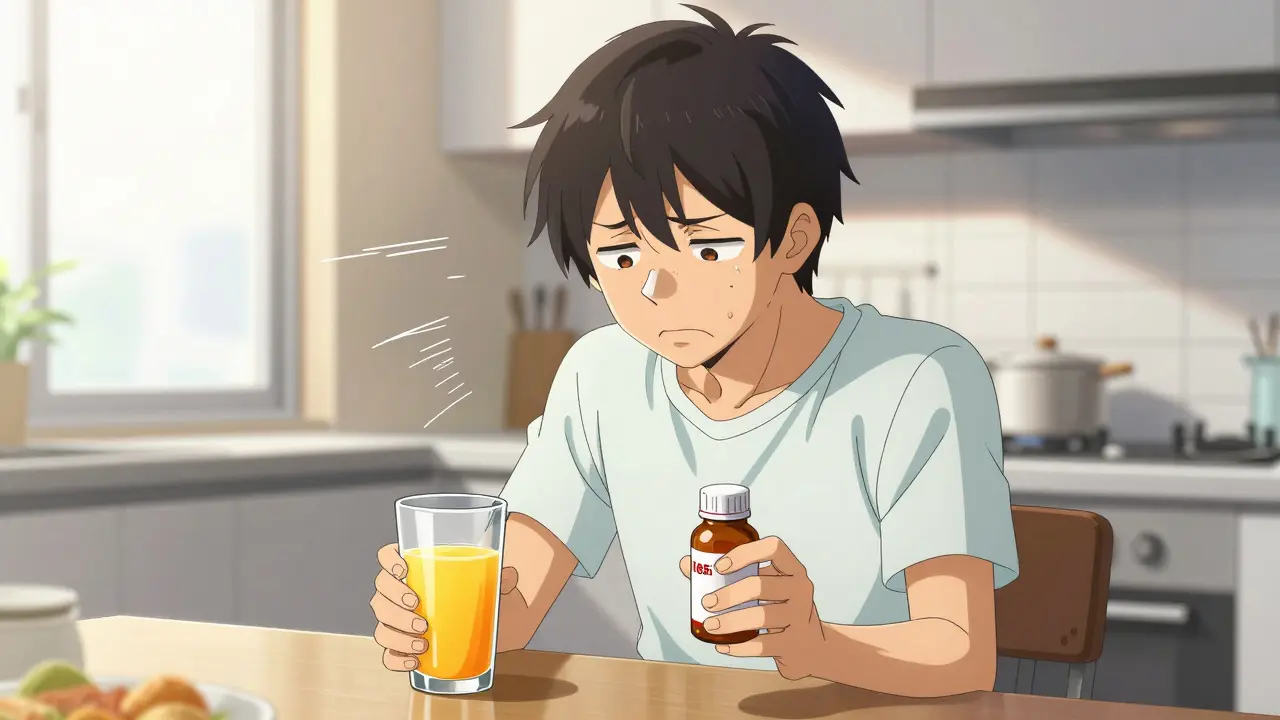
You take your morning dose of Fexofenadine is a second-generation antihistamine used to treat seasonal allergies and chronic hives without causing drowsiness., sip your usual glass of orange or grapefruit juice, and still feel like your nose is running. It’s frustrating, especially when you’ve been diligent about taking your meds. The culprit might not be a worsening allergy season or a new allergen-it could be the drink in your hand.
This isn’t just a rumor. There is a well-documented, scientifically proven interaction between fexofenadine (sold as Allegra) and certain fruit juices that drastically reduces how much medicine actually gets into your bloodstream. If you are drinking these juices around the time you take your pill, you might only be getting a fraction of the intended dose.
The Science Behind the Interaction
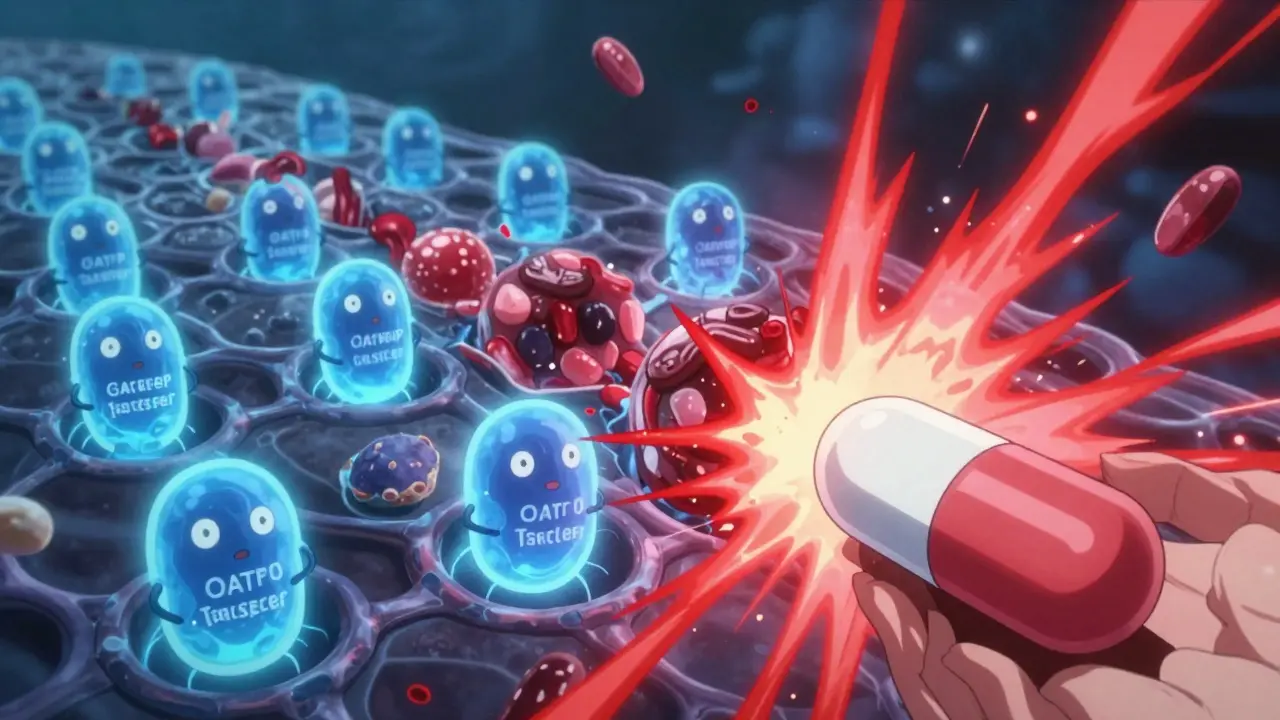
To understand why this happens, we have to look at how your body absorbs fexofenadine. Unlike many drugs that are broken down by liver enzymes, fexofenadine relies on specific "gatekeepers" in your intestines to get absorbed. These gatekeepers are proteins called Organic Anion-Transporting Polypeptides (OATPs), specifically types 1A2, 1B1, 1B3, and 2B1, which transport the drug from your gut into your blood.
Certain compounds found in grapefruit, orange, and apple juice act like roadblocks for these transporters. When you drink these juices, flavonoids like naringin (from grapefruit) and hesperidin (from orange) bind to the OATP proteins. This blocks the fexofenadine from entering your system. Instead of helping your body absorb the drug, the juice prevents it.
This discovery was made in the early 2000s by researchers at the University of Western Ontario, led by Dr. Gail K. Dresser and Dr. David G. Bailey. They initially thought grapefruit juice would increase drug levels (as it does with some other medications via enzyme inhibition), but they found the exact opposite happened with fexofenadine. Their research, published in Clinical Pharmacology & Therapeutics in 2002, changed how doctors and patients view this common allergy medication.
How Much Does Juice Reduce Absorption?
The numbers are striking. In clinical studies where participants drank 1.2 liters (about four cups) of juice, the reduction in drug absorption was massive:
- Apple juice: Reduced absorption by 77%
- Orange juice: Reduced absorption by 72%
- Grapefruit juice: Reduced absorption by 67%
Even smaller amounts matter. A later study showed that just one 8-ounce glass of dilute grapefruit juice reduced absorption by 23%. While 23% might sound manageable, for a medication that works by blocking histamine receptors, even a small drop in concentration can mean the difference between relief and sneezing all day.
| Juice Type | Absorption Reduction (High Volume) | Key Inhibiting Compound |
|---|---|---|
| Apple Juice | 77% | Phloridzin / Flavonoids |
| Orange Juice | 72% | Hesperidin |
| Grapefruit Juice | 67% | Naringin / Bergamottin |
| Tomato Juice | Negligible | N/A |
Note that tomato juice, despite tomatoes being fruits, does not significantly inhibit these transporters. Cranberry juice also has not shown the same strong inhibitory effect in major studies. The big three to avoid are apple, orange, and grapefruit.
Timing Is Everything: How to Avoid the Issue
You don’t have to give up your morning juice entirely, but you do need to change when you take your medication. The blockage caused by these juices lasts for a specific window. Research indicates the inhibition effect lasts more than 2 hours but less than 4 hours after consumption.
Here is the practical rule to follow:
- Take fexofenadine with water only. Never mix the pill with juice, tea, or soda.
- Wait at least 4 hours before drinking problematic juices. If you take your pill at 8 AM, wait until noon to have your orange juice.
- Or, drink your juice 4 hours before your pill. If you usually have juice at breakfast, consider moving your medication to bedtime or mid-afternoon.
Many people make the mistake of thinking that because the interaction isn't permanent, they can drink a small sip. However, individual variability means some people are more sensitive to these inhibitors than others. The safest bet is strict separation.
Why Don't Other Antihistamines Have This Problem?
If you switch to Cetirizine (Zyrtec) or Loratadine (Claritin), you won't face this issue. These drugs use different pathways for absorption and metabolism. Cetirizine, for example, is not heavily dependent on OATP transporters in the same way fexofenadine is. This is why competitors often highlight this difference in their marketing-since 2015, Zyrtec ads have explicitly mentioned that their product doesn't interact with fruit juice.
This doesn't mean fexofenadine is a bad drug. It remains one of the most effective non-sedating antihistamines available, holding about 35% of the market share in the US. But it requires a bit more discipline in how you take it compared to its rivals.
Common Mistakes People Make
Based on patient forums and pharmacy data, here are the most frequent errors:
- The Breakfast Combo: Taking the pill right after a smoothie or juice blend. Even if the juice is diluted, the flavonoids are still present.
- Confusing Fruits: Assuming all citrus is bad. Lemonade or lime juice has not been shown to have the same potent inhibitory effect as orange or grapefruit, though caution is always wise.
- Ignoring Green Tea: Some studies suggest green tea may also contain compounds that affect OATP transporters. While less studied than juice, it's safer to stick to water during the dosing window.
- Mixing with Antacids: Magnesium and aluminum-based antacids can also reduce fexofenadine absorption. If you need an antacid, separate it from your allergy med by at least two hours.

What About Whole Fruit?
Can you eat an orange instead of drinking the juice? Technically, yes, but with caveats. The concentration of inhibitors in juice is higher because you consume the extract of many fruits at once. Eating a whole orange involves fiber and slower digestion, which might mitigate the peak inhibitor level. However, a blog post from the NUS Department of Pharmacy noted that "a small glass of grapefruit juice can pack as many polyphenols as an entire grapefruit." To be safe, try to space out whole fruit consumption from your medication by at least an hour, though juice requires the full 4-hour buffer.
When to See a Doctor
If you have been taking fexofenadine correctly with water, avoiding juice, and still aren't getting relief, it might be time to consult your healthcare provider. You may have a different type of allergy response, or you might benefit from a nasal steroid spray in addition to the antihistamine. Don't just double your dose to compensate for perceived ineffectiveness; sticking to the recommended dosage ensures safety and avoids potential side effects like headache or dry mouth.
Does coffee interact with fexofenadine?
Coffee does not significantly inhibit OATP transporters like fruit juices do. You can generally drink coffee with fexofenadine, but caffeine can sometimes exacerbate jitteriness or anxiety, so monitor how you feel. Water is still the best choice for swallowing the pill.
Is Allegra-D affected by fruit juice?
Yes. Allegra-D contains fexofenadine plus pseudoephedrine. The fexofenadine component is still subject to the same absorption issues with grapefruit, orange, and apple juice. The pseudoephedrine part is not affected, but the overall efficacy of the antihistamine portion will be reduced.
How long does fexofenadine stay in your system?
The elimination half-life of fexofenadine is approximately 14 hours in healthy adults. This means it takes about 14 hours for the concentration of the drug in your blood to reduce by half. It typically clears your system within 24 to 48 hours.
Can I take fexofenadine with food?
Yes, fexofenadine can be taken with or without food. However, high-fat meals may slightly delay absorption but do not significantly reduce the total amount absorbed. The critical factor is avoiding fruit juices and certain antacids, not solid food.
Why does grapefruit juice increase some drugs but decrease fexofenadine?
Grapefruit juice inhibits CYP3A4 enzymes in the liver and gut, which normally break down many drugs, leading to higher drug levels. However, fexofenadine is not metabolized by CYP3A4. Instead, it relies on OATP transporters for absorption. Grapefruit juice blocks these transporters, preventing the drug from entering the bloodstream, thus lowering its levels.

Write a comment
Your email address will not be published.
Recent Posts
-
 Buy Cheap Generic Metformin Online - Complete Guide & Tips September 30, 2025


10 Comments
Stop drinking juice with your meds.
It is genuinely pathetic how many people refuse to read the package insert, opting instead for anecdotal evidence from unqualified peers. The mechanism of OATP inhibition by flavonoids such as naringin and hesperidin is not a 'myth' but a fundamental pharmacokinetic reality established in peer-reviewed literature over two decades ago. Those who continue to consume apple or orange juice concurrently with fexofenadine are effectively engaging in self-sabotage, rendering their pharmaceutical expenditure moot. One must possess a basic level of intellectual diligence to understand that biological transporters are not infinite resources; they can be saturated or blocked by dietary compounds. The fact that this interaction reduces bioavailability by up to 77% in the case of apple juice is not merely a statistic; it is a catastrophic failure of drug delivery that no amount of 'hope' will rectify. It is insulting to suggest that patients should simply 'try harder' to breathe when they have chemically neutralized their own treatment through ignorance. This is not a debate about personal preference; it is a matter of biochemical efficacy that defies only those who choose to remain obstinately uninformed.
The pretension of believing one's body operates outside established scientific laws is both amusing and tragic. We see this same pattern with statins and grapefruit, yet here we are again with antihistamines. The solution is trivially simple: use water. Yet, the human propensity for ritualistic consumption of sugary fruit extracts overrides rational health management. It is a testament to the decline of critical thinking in modern society that such basic instructions require repetitive reinforcement. If you cannot adhere to a four-hour window between ingestion of polyphenol-rich fluids and your medication, perhaps you are not suited for self-administered therapy at all. The data is irrefutable, the studies are robust, and the conclusion is singular: stop poisoning your absorption pathways.
the big pharm companies want u to think its the juice but its actually the fluoride in the water blocking the receptors too!!! they dont want u to know that natural remedies work better but they suppress the info about OATPs being manipulated by gov agencies. i read on a forum that allegra is just sugar pills with tracking chips. the flavonoids are trying to save us but the mainstream media says otherwise. why do they hide the truth about tomato juice being safe? because tomatoes are grown with pesticides that counteract the chip signal!! its all connected. trust no one. drink only distilled water and eat raw kale. the system is rigged against our immune systems.
I appreciate this clarification. I have been taking my allergy medication with a small glass of apple juice every morning for years, assuming it was fine since it was a 'healthy' choice. It explains why I often felt like the medication wasn't fully effective during peak pollen season. I will start switching to water immediately and ensure I wait the recommended time before having any fruit juice. Thank you for sharing these specific details about the different types of juices and their varying effects on absorption.
This is very helpful information. Many people struggle with seasonal allergies and may not realize that their daily habits are reducing the effectiveness of their medicine. It is important to listen to your body and follow the guidelines provided by healthcare professionals. Taking your medication with plain water is a simple change that can make a big difference in how you feel. Remember to stay consistent with your routine and give yourself time to adjust. You are doing great by seeking out accurate information to manage your health better.
Oh please, everyone is so dramatic about a little juice! :D I drink orange juice with my Allegra every day and I feel FINE. Maybe some people are just weak or have sensitive stomachs. It’s not like the juice is poison. Stop making everything so complicated. If it worked for me for ten years, it works for me now. All this science talk is just to scare people into buying more expensive drugs or following strict rules they don’t need to follow. Relax and enjoy your breakfast! 😊
While the statistical significance of the reduction in bioavailability is indeed considerable, one must consider the individual variability in metabolic rates and transporter expression levels among the general population; therefore, it is not necessarily true that every single person who consumes a moderate amount of citrus juice will experience a clinically significant decrease in therapeutic effect, especially if their baseline symptom severity is low enough that even a partially inhibited dose provides sufficient relief for their specific condition, which brings us to the broader philosophical question of whether rigid adherence to pharmacological guidelines stifles the organic, holistic approach to wellness that many individuals prefer to cultivate in their daily lives, thus creating a tension between empirical data and lived experience that cannot be easily resolved by mere instruction manuals.
Furthermore, the definition of 'moderate' consumption is subjective and culturally dependent, meaning that what constitutes a problematic amount of juice in one context might be negligible in another, thereby complicating the universal application of these warnings without accounting for socioeconomic factors that influence dietary habits and access to alternative hydration sources, which ultimately suggests that the problem may not be the juice itself, but rather the lack of personalized medical advice that takes into account the full spectrum of a patient's lifestyle and environmental exposures.
It is truly disheartening to observe the sheer negligence displayed by individuals who disregard well-established medical advice in favor of convenience or habit. The integrity of one's health regimen should be paramount, and compromising it for the sake of a preferred beverage is an affront to the discipline required for proper self-care. Those who claim immunity to these interactions based on anecdotal success are ignoring the potential long-term consequences of subtherapeutic dosing, which can lead to chronic inflammation and reduced quality of life. One must hold oneself to a higher standard and respect the science behind pharmaceutical formulations. To do otherwise is to exhibit a profound lack of responsibility towards one's own well-being.
Let me correct a few misconceptions here. While the study cited by Dresser and Bailey is foundational, it is important to note that the volume of juice used in those trials (1.2 liters) is significantly higher than typical daily consumption for most adults. Therefore, while the percentage reduction is stark in clinical settings, real-world impact varies. Additionally, the interaction with green tea is often overstated; while catechins can inhibit OATP1A2, the concentration in brewed tea is generally lower than in concentrated fruit juices. However, I agree that water is the optimal vehicle for administration. Also, regarding whole fruits, the fiber content does slow gastric emptying, which can alter the peak plasma concentration time, but it does not necessarily negate the inhibitory effect entirely. Patients should be cautious but not paralyzed by fear. Consult a pharmacist for personalized advice rather than relying solely on internet forums.
In the grand tapestry of human existence, we often find ourselves bound by the invisible chains of biochemical determinism, where the simple act of quenching thirst becomes a complex negotiation with our own physiology. Is it not ironic that nature, in its bounty, provides us with remedies and poisons in the same vessel? The grapefruit, a symbol of vitality, becomes an agent of obstruction. This duality reflects the deeper existential struggle between desire and discipline. We seek comfort in the familiar taste of orange juice, yet we deny ourselves the clarity of mind that comes from unimpeded histamine blockade. Perhaps the true lesson here is not merely about timing our medication, but about understanding the interconnectedness of all things-how the macrocosm of the universe mirrors the microcosm of our intestinal transporters. To ignore this wisdom is to live in a state of perpetual discord with the natural order. Embrace the water, embrace the void, and let the medicine flow freely.