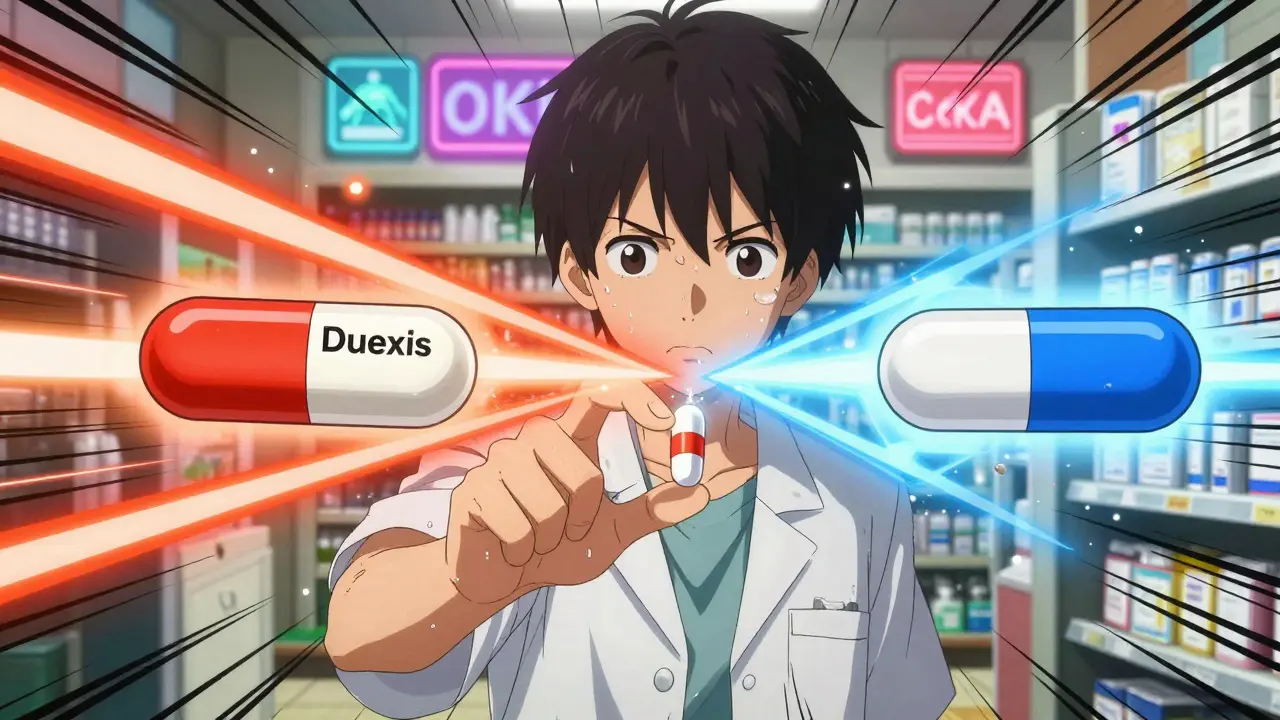
When you’re dealing with digestive issues like acid reflux, ulcers, or irritable bowel syndrome, doctors often prescribe gastrointestinal combination products-medicines that pack two or more active ingredients into a single pill. The idea is simple: treat multiple symptoms at once, reduce the number of pills you take, and make therapy more effective. But here’s the real question: are these combinations available as generics? And if not, what are your real-world alternatives?
What Are Gastrointestinal Combination Products?
These aren’t random mixes. They’re carefully designed to work together. For example, if you have an H. pylori infection (a common cause of stomach ulcers), you won’t just get an antibiotic. You’ll get a proton pump inhibitor (PPI) like omeprazole plus two antibiotics-usually amoxicillin and clarithromycin. The PPI reduces stomach acid so the antibiotics can kill the bacteria more effectively. It’s a team effort inside your gut.
Another common combo is ibuprofen and famotidine. Ibuprofen helps with joint pain and inflammation, but it can irritate your stomach lining. Famotidine blocks acid production, protecting your stomach while you take the painkiller. The FDA-approved version, Duexis, contains exactly 800 mg of ibuprofen and 26.6 mg of famotidine per tablet. It’s not just a suggestion-it’s a precise formula approved for people with arthritis who need pain relief without ulcers.
Newer combinations are popping up too. Vonoprazan (brand name Voquezna) is a potassium-competitive acid blocker, a different kind of acid reducer than traditional PPIs. It was approved by the FDA in July 2024 for heartburn from nonerosive GERD. Unlike PPIs, which need to be activated in acid, vonoprazan works immediately and stays active longer. It’s a next-generation option.
Generic Availability: What’s Available and What’s Not
Here’s where things get messy. The individual ingredients? Almost always available as cheap generics. Omeprazole? Generic. Amoxicillin? Generic. Famotidine? Generic. But when they’re locked into a single pill, things change.
Some combinations have opened up. In August 2021, the FDA approved the first generic version of ibuprofen-famotidine from Par Pharmaceutical and Alkem Laboratories. That meant patients could get the same dual-action tablet for a fraction of the cost. But not all combos follow the same path.
Take Linzess (linaclotide). It was approved as a generic by Mylan in February 2021. That’s great news for people with IBS-C or chronic constipation. But newer drugs like vonoprazan? Still under patent. No generics yet. Same with Xifaxan (rifaximin), which lost exclusivity in 2024 after over 20 years on the market. Now, generics are starting to appear.
Janumet-a combo of sitagliptin and metformin for type 2 diabetes-is expected to face generic competition in 2026. But here’s the twist: Medicare treats each unique combination as its own drug. So even though metformin has been generic for decades, Janumet is a separate entity for pricing and negotiation purposes. That means brand-name versions can hold onto higher prices longer than you’d expect.
Why Some Combinations Stay Expensive
It’s not just about patents. Pharmaceutical companies use a tactic called “product hopping.” They tweak a drug slightly-change the dose, delivery system, or add a second ingredient-and get a new patent. This delays generics even after the original patent expires.
Also, some combinations are built for niche uses. For example, Livmarli (maralixibat) is approved only for rare liver disease in children as young as 12 months. It’s not a mass-market drug, so there’s little financial incentive for generic makers to rush in. The dosage? 570 mcg/kg twice daily. That’s not something you can easily copy without specialized manufacturing.
Then there’s the issue of formulary rules. Insurance companies like MassHealth require prior authorization for brand-name combinations-even when generics exist. Why? Because they want proof that you tried the cheaper version first and it didn’t work. You’ll need medical records showing an adverse reaction or inadequate response. This isn’t just paperwork-it’s a real barrier for patients.

Alternatives: Splitting the Combo
If your combination drug isn’t available as a generic, or if your insurance denies coverage, here’s what you can do: ask your doctor about taking the ingredients separately.
For example, instead of paying $300 for a branded Duexis tablet, you could take one 800 mg ibuprofen tablet and one 20 mg famotidine tablet. Both are available as generics for under $10 a month. The timing matters-famotidine should be taken 30 minutes before ibuprofen to maximize protection. Your pharmacist can help you time it right.
Same goes for H. pylori regimens. Instead of a pre-packaged triple therapy, you can get omeprazole 20 mg, amoxicillin 1000 mg, and clarithromycin 500 mg as separate pills. You’ll need to manage the schedule yourself-usually twice daily for 10-14 days-but it’s far cheaper and just as effective.
Even for newer drugs like vonoprazan, if cost is an issue, traditional PPIs like omeprazole or pantoprazole still work well for most people with GERD. The difference? Vonoprazan may work faster and last longer, but for many, the older drugs are enough.
What About Over-the-Counter Options?
Some GI combos are already OTC. Loperamide (Imodium) for diarrhea? Available without a prescription since 2021. Same with bismuth subsalicylate (Pepto-Bismol), which helps with nausea, heartburn, and diarrhea. These aren’t fancy, but they’re effective for short-term use.
For mild acid reflux, OTC famotidine (Pepcid) or omeprazole (Prilosec OTC) are solid choices. You can even combine them with antacids like Tums if needed. Just don’t rely on them long-term without checking in with your doctor. Chronic use of PPIs can lead to low magnesium, bone loss, or gut bacteria imbalances.

How to Navigate Access and Cost
If you’re stuck with a high-cost combo:
- Ask if your pharmacy can get the generic version-even if it’s not on the formulary yet. Sometimes it’s just a matter of ordering.
- Use GoodRx or SingleCare to compare cash prices. Sometimes paying cash is cheaper than using insurance.
- Request a 90-day supply. Many insurers offer lower copays for longer scripts.
- Ask your doctor for a letter of medical necessity if you’ve tried generics and failed.
- Check patient assistance programs. Companies like Takeda and AbbVie have programs for eligible patients.
And remember: just because a drug is approved doesn’t mean it’s immediately available. The FDA lists approval dates, but manufacturers may delay production. Always call the pharmacy or the ANDA applicant directly if you’re told a drug isn’t in stock.
The Future: More Generics Coming
The market for GI drugs is growing fast-projected to hit $96 billion by 2035. As more patents expire, expect more generics. Janumet, Pomalyst, and Xifaxan are already on the list. Even biologics like Stelara are seeing biosimilars like Pyzchiva hit the market in 2024.
That means more choices. More affordability. And more control over your treatment. But until then, you don’t have to accept high prices. The ingredients are often already out there-you just need to know how to put them together.
Are generic gastrointestinal combination products as effective as brand-name versions?
Yes. The FDA requires generic versions to have the same active ingredients, strength, dosage form, and route of administration as the brand-name drug. They must also meet the same strict standards for safety and effectiveness. For example, the generic ibuprofen-famotidine tablet approved in 2021 is bioequivalent to Duexis. That means it works the same way in your body. The only differences are in inactive ingredients (like fillers or dyes), which don’t affect how the drug works.
Why can’t I get a generic for vonoprazan yet?
Vonoprazan (Voquezna) received FDA approval in July 2024, and its patents are still active. Pharmaceutical companies typically get 20 years of patent protection from the date of filing, and additional exclusivity periods can extend that. Since it’s a new class of drug (a potassium-competitive acid blocker), it hasn’t faced generic competition yet. Expect generics to appear in the next 5-7 years, depending on patent challenges and legal settlements.
Can I split my combination pill into separate pills to save money?
In most cases, yes-and it’s often the smartest move. For example, taking separate generic omeprazole and antibiotics for H. pylori is just as effective as the pre-packaged combo. The same goes for ibuprofen and famotidine. Your pharmacist can help you time the doses correctly. Just make sure your doctor approves the switch and writes separate prescriptions. Insurance may not cover the combo if you’re using generics, but you’ll likely save 70-90%.
Why does my insurance require prior authorization for a combination drug?
Insurance companies use prior authorization to control costs. They want to make sure you’ve tried cheaper alternatives first. If a generic version of the individual ingredients exists, they’ll usually require proof that you tried them and had an adverse reaction or didn’t respond. This is standard practice for drugs like PPIs and combination therapies. You’ll need medical records from your doctor to support your request.
What should I do if my pharmacy says the generic combo isn’t available?
Don’t assume it’s out of stock forever. The FDA approval date doesn’t guarantee immediate availability. Manufacturers sometimes delay production due to supply issues or legal disputes. Call the pharmacy’s supplier directly-ask for the ANDA applicant listed on the FDA’s approval notice. Sometimes they can ship it directly to your pharmacy. If all else fails, ask your doctor about switching to the separate generic ingredients.

Write a comment
Your email address will not be published.
Recent Posts
-
 ECG and Stress Tests: What You Need to Know About Heart Diagnostic Tests November 24, 2025
 -
 Ethambutol’s Role and How NGOs Shape Tuberculosis Control August 22, 2025
 -
 FDA Safety Alerts: Recent Warnings and Guidance Changes in 2025 November 26, 2025
 -
 How and Where to Buy Finast Online: Legal Options & Safety Guide August 25, 2026
12 Comments
Generic combinations? Don't make me laugh. In India, we know what real medicine is-single pills, clean formulations, no corporate junk. You think Duexis is expensive? Try paying for a full course of antibiotics without insurance. The real problem isn't generics-it's that Western pharma invented a whole industry around packaging the same damn ingredients in different colored pills and charging $300 for it. This isn't healthcare-it's a scam dressed in white coats.
I love how this post breaks down the real issue: it's not about whether the drugs work-it's about access. I've been on omeprazole + amoxicillin for H. pylori for years now. Took me six months to get my doc to write separate scripts because my insurance wanted me to try the combo first. Turned out, the generics cost $12 a month total. I'm not mad-I'm just grateful someone finally explained this clearly. We need more of these guides. Seriously. Share this with your grandma.
Oh wow. Just wow. You actually think people are dumb enough to believe that splitting pills is 'just as effective'? That's the kind of dangerous misinformation that kills people. You don't mess with bioequivalence. You don't play pharmacist. The FDA doesn't approve these combos because they're greedy-they approve them because the pharmacokinetics are *engineered*. The timing. The absorption. The buffering. You think famotidine just 'blocks acid'? It's a precise molecular dance. And now you want to DIY it with a $3 bottle of Pepcid and a generic ibuprofen? That's not frugality-that's medical negligence. Someone needs to sue you.
Look i just wanna say if u r payin 300 for a pill u r gettin scammed. i got my h pylori treatment for 15 bucks total. omeprazole 10c a pill, amox 5c, clarithro 8c. i took em at the right times. no prob. dont let big pharma tell u u need a fancy pill. u dont. its just chemistry. same molecules. same results. if ur doc says otherwise ask em why they get kickbacks. its not rocket science.
I've been taking generic omeprazole and amoxicillin for my H. pylori for two years now. No issues. My doctor just gave me the script for separate pills and told me to space them out. Honestly? It was easier than I thought. I set phone alarms. Took them with food. Felt better in a week. The combo pill was $280. The generics? $11. I'm not a genius. I just read the label and asked my pharmacist. You don't need a PhD to save money on meds.
This is one of the most practical, clear-headed pieces I've read in months. Thank you for explaining the difference between approval and availability. I had no idea that even after FDA approval, manufacturers can sit on a generic for months-or years. I’ve been stuck with a $400 prescription for months because my pharmacy ‘couldn’t source it.’ Called the ANDA applicant directly. Turns out they were shipping to a different distributor. Got it in 48 hours. You’re right-call them. Don’t take ‘out of stock’ as the final answer.
I just want to say-I’m 68, diabetic, and on three different GI meds. I used to buy the combo pills because I thought it was ‘easier.’ Then I switched to generics. My pharmacist sat with me for 15 minutes, drew a little chart with arrows and times. Now I take them at breakfast, lunch, and before bed. I save $200 a month. My grandkids are getting a new bike this summer. Small changes. Big impact.
I hate how people act like this is just about money. It’s about dignity. I’ve been denied coverage for my combo because I ‘didn’t try the generics first.’ But I DID. I tried them. I got diarrhea for three weeks. My stomach felt like it was being scraped with sandpaper. My doctor had to write a 3-page letter just to get me the brand. And now they’re saying I’m ‘abusing the system’? No. I’m just trying to not vomit while I work my 60-hour week. This isn’t a debate. It’s survival.
There is a deeper philosophical layer here that is rarely addressed: the commodification of health. We have been conditioned to believe that complexity equals efficacy-that a single pill with two ingredients is inherently superior to two separate pills. But biology does not care about packaging. Biology cares about molecular structure, bioavailability, and pharmacokinetics. The fact that we accept corporate branding as a proxy for medical legitimacy is a profound cultural failure. We have outsourced our autonomy to pharmaceutical marketing departments. The solution is not just cheaper generics-it is re-empowering patients with knowledge. And that, more than anything, is the real revolution.
OMG I JUST REALIZED I’VE BEEN OVERPAYING FOR YEARS. I thought Duexis was some magical potion. Turns out I could’ve been taking ibuprofen + famotidine for like $8/month?? I feel like an idiot. My pharmacist didn’t even mention it! She just handed me the brand name like it was the only option. I’m gonna go back there tomorrow with this article. Maybe she’ll stop treating me like a clueless tourist in my own body. Also-can we start a movement? #SplitThePillNotTheBill
Vonoprazan isn’t just ‘new’-it’s a game-changer. PPIs have been the band-aid solution for decades. This? This is a real upgrade. Faster. Stronger. Longer-lasting. And yes, it’s expensive. But that’s because it took 12 years of R&D. You don’t get breakthrough science for $10. The generics will come. But until then? If you have severe GERD and OTC stuff isn’t cutting it? This is worth the cost. Stop trying to turn healthcare into a bargain bin.
I just want to say THANK YOU for this post 🙌 I’ve been struggling with acid reflux for 5 years and didn’t know I could just take separate generics. I cried when I saw the price difference 😭 I went to my pharmacy and asked for the split-pharmacist was so nice and even gave me a little printed schedule. I’m saving $250/month. I bought myself a massage. You’re not just saving money-you’re saving your peace. 💛 #GenericRevolution #LifeChangingAdvice