
You’ve heard the hype. You’ve seen the results. But have you felt the nausea? If you are starting or considering GLP-1 receptor agonists is a class of medications that mimic natural hormones to control blood sugar and suppress appetite, you need to know what happens before the scale drops. These drugs, including popular options like Ozempic, Wegovy, and Mounjaro, are revolutionizing weight management. However, they come with a price tag in terms of physical comfort. The most common hurdle isn’t the injection itself; it’s the gastrointestinal distress that hits many users within the first few weeks.
This guide cuts through the noise. We will look at why these side effects happen, how the dosing schedules are designed to protect you, and exactly what you can do to keep your stomach happy while reaching your health goals. Understanding the mechanics of these drugs is the first step to mastering them.
Why Do GLP-1 Medications Cause Nausea?
To fix the problem, you first have to understand the cause. GLP-1 agonists work by mimicking a hormone called glucagon-like peptide-1. This hormone does three main things: it tells your pancreas to release insulin, it stops your liver from releasing too much glucose, and crucially for weight loss, it slows down gastric emptying.
Gastric emptying is the process by which food leaves your stomach and enters your small intestine. When this process slows down, food sits in your stomach longer. This creates a feeling of fullness (satiety) that helps you eat less. But if you eat too much, too fast, or foods that are hard to digest, that food stays there even longer. The result is bloating, nausea, and sometimes vomiting.
Dr. Robert Gabbay, Chief Scientific Officer of the American Diabetes Association, explains that this mechanism is a double-edged sword. It is precisely why the drugs promote weight loss, but also why they cause nausea in so many patients. According to FDA labeling documents, approximately 20% to 30% of patients experience nausea as an adverse reaction. At higher maintenance doses, this number can climb to 45%. Knowing this is a biological feature, not a bug, helps you adjust your expectations and your behavior.
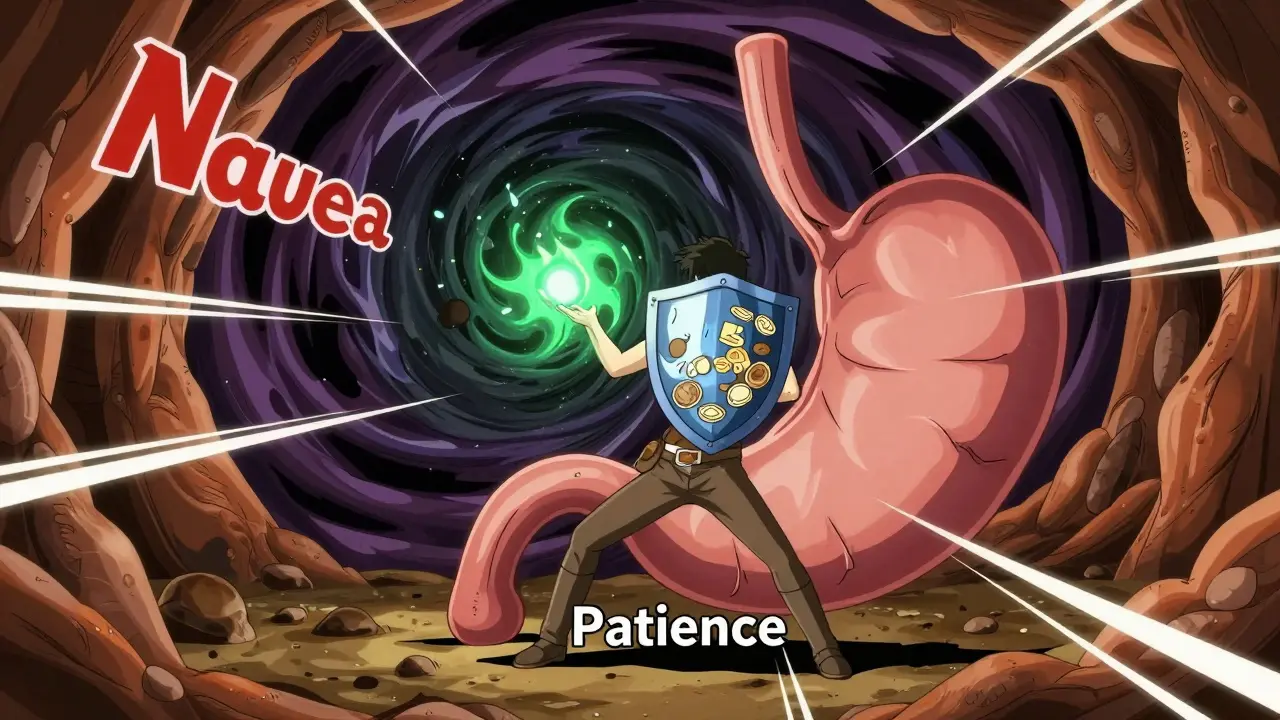
Understanding the Dosing Schedule: Why Patience Pays Off
The manufacturers didn’t just pick random numbers for your dose. The titration schedule-the gradual increase in dosage-is specifically engineered to let your body adapt. Jumping straight to the maximum dose would likely send most people to the emergency room. Instead, you start low and go slow.
| Medication | Starting Dose | Maintenance Dose | Time to Max Dose |
|---|---|---|---|
| Wegovy (semaglutide) | 0.25 mg weekly | 2.4 mg weekly | 17+ weeks |
| Ozempic (semaglutide) | 0.25 mg weekly | 2.0 mg weekly | 16+ weeks |
| Mounjaro (tirzepatide) | 2.5 mg weekly | 15 mg weekly | 20+ weeks |
| Victoza (liraglutide) | 0.6 mg daily | 1.8 mg daily | 4+ weeks |
Notice the timeline. For Wegovy, you stay on the lowest dose (0.25 mg) for four weeks. This dose is not even intended to lower blood sugar or cause significant weight loss; its only job is to acclimate your system. Only after those four weeks do you move to 0.5 mg. If you feel fine, you wait another four weeks before moving up again. This slow crawl prevents your gut from being overwhelmed all at once.
Tirzepatide (Mounjaro) follows a similar logic but with different increments. It starts at 2.5 mg and increases by 2.5 mg every four weeks. While the numbers look bigger, the principle remains the same: gradual exposure. Dr. Allison L. Rhodes, an obesity medicine specialist at Ohio State University, emphasizes that sticking to this schedule is non-negotiable for minimizing side effects. Skipping steps or increasing the dose early because you "feel strong" is a recipe for severe gastrointestinal distress.
Practical Tips to Mitigate Nausea and Discomfort
Knowing the schedule is one thing; surviving the side effects is another. Based on data from patient surveys and clinical recommendations, here are the most effective strategies to manage nausea.
- Adjust Your Injection Timing: Many patients report that injecting at bedtime significantly reduces nausea. A Cleveland Clinic survey found that 63% of patients experienced less nausea when they took their shot before sleeping. The theory is that you sleep through the peak intensity of the drug’s effect on gastric emptying.
- Change What You Eat: High-fat foods are your enemy right now. Fat takes the longest to digest. Since your stomach is already slowing down, adding greasy burgers or fried chicken is like pouring concrete into a slow-moving pipe. Stick to lean proteins, vegetables, and complex carbs. Avoid heavy meals entirely.
- Eat Smaller, More Frequent Meals: Don’t try to fit three normal meals into a day where your stomach capacity feels halved. Aim for five or six tiny snacks. This keeps the stomach from becoming overly full or completely empty, both of which can trigger nausea.
- Hydrate Strategically: Dehydration worsens nausea. Drink water throughout the day, but avoid chugging large amounts during meals. Drinking with meals adds volume to your stomach, which can lead to discomfort. Sip between meals instead.
- Use Ginger: It sounds old-fashioned, but it works. A National Obesity Society survey indicated that 78% of specialists recommend ginger products. Ginger tea, candies, or supplements can help settle the stomach naturally without interacting negatively with the medication.
User experiences on platforms like Reddit’s r/semaglutide community reinforce these tips. In a survey of over 1,200 users, 72% reported that symptoms improved after two to four weeks at each dose level, provided they adjusted their diet. One user noted, "The first four weeks were rough, but by week three at the next dose, I had figured out my food triggers and it became manageable."
When to Hold Back vs. When to Push Through
There is a debate in the medical community about how aggressively to manage side effects. Some experts advise pushing through mild nausea to reach the therapeutic dose faster. Others, like Dr. David Ludwig from Harvard T.H. Chan School of Public Health, caution that persistent side effects may indicate the need to pause or reduce the dose.
Here is a practical rule of thumb: Mild nausea is expected. Severe nausea that prevents you from keeping food or water down is not. If you are vomiting repeatedly, you are at risk of dehydration and electrolyte imbalance, which can be dangerous. In this case, contact your healthcare provider. They may advise you to stay at your current dose for an extra four weeks before attempting to increase again. There is no penalty for going slower. The goal is long-term adherence, not speed.
Data shows a clear correlation between managing these initial hurdles and success. An Obesity Action Coalition survey found that 89% of patients who persisted through initial nausea achieved at least 5% body weight loss. In contrast, only 47% of those who discontinued due to side effects reached that milestone. Sticking with it, even if slowly, pays off.

Other Common Side Effects to Watch For
Nausea gets all the attention, but it isn’t the only player. Constipation is another frequent complaint, affecting nearly half of some patient groups. Because gastric emptying slows, everything downstream slows too. To combat this, increase your fiber intake gradually and maintain that hydration strategy mentioned earlier. If constipation becomes severe, talk to your doctor about safe laxatives.
Diarrhea can also occur, though less frequently than constipation. This is often triggered by eating something that doesn’t agree with your slowed digestion. Keep a food diary. If you notice diarrhea following specific foods, eliminate them temporarily. Also, watch out for heartburn. As food sits in the stomach longer, acid reflux can become more pronounced. Over-the-counter antacids may help, but if it persists, seek medical advice.
Rare but serious risks include pancreatitis and gallbladder issues. Symptoms include severe abdominal pain that radiates to your back, fever, and yellowing of the skin or eyes. These require immediate medical attention. While rare, knowing the signs ensures you don’t ignore a potential emergency.
The Long-Term View: Supply, Cost, and Future Options
As you navigate your treatment, keep the broader context in mind. The demand for GLP-1 medications has exploded, leading to periodic shortages. The FDA has listed Wegovy and Ozempic on shortage lists for extended periods. This means consistency in your supply might be challenging. Work with your pharmacy to ensure you have enough medication to bridge any gaps.
Cost is another barrier. Without insurance, annual treatment can range from $9,000 to $13,000. Insurance coverage varies widely, with many plans excluding weight management indications despite covering diabetes treatments. Check with your insurer and explore manufacturer assistance programs, such as Novo Nordisk’s Wegovy Support Program or Eli Lilly’s Mounjaro Care, which can offer savings.
Looking ahead, the landscape is evolving. Novo Nordisk is developing an oral semaglutide formulation expected around 2025, which may offer a different side effect profile compared to injections. Additionally, tirzepatide (Zepbound) has received FDA approval for weight management, expanding options for patients who may tolerate it better than semaglutide. Clinical trials continue to show cardiovascular benefits, with the SELECT trial demonstrating a 20% reduction in major adverse cardiovascular events in non-diabetic patients with obesity using semaglutide. This suggests that beyond weight loss, these drugs may offer protective health benefits that justify the short-term discomfort.
How long does GLP-1 induced nausea last?
For most patients, nausea is worst during the first 2-4 weeks of starting the medication or after a dose increase. Symptoms typically subside as the body adjusts to the new dosage level. If nausea persists beyond a month at a stable dose, consult your healthcare provider for potential dose adjustment.
Can I drink alcohol while taking GLP-1 medications?
Alcohol can worsen nausea and interact with blood sugar levels. It is generally recommended to limit or avoid alcohol, especially during the initial titration phases. If you do drink, do so in moderation and never on an empty stomach, as this can exacerbate gastrointestinal side effects.
What should I do if I miss a dose?
If you miss a dose by less than 48 hours, take it as soon as you remember. If it has been more than 48 hours, skip the missed dose and take the next one on your regular scheduled day. Do not double up doses to make up for a missed one, as this can increase the risk of severe side effects.
Is it safe to stop GLP-1 medication abruptly?
While stopping abruptly is not typically dangerous in terms of withdrawal symptoms, it can lead to rapid weight regain and a return of high blood sugar levels if you have diabetes. It is best to taper off under medical supervision to manage expectations and monitor health metrics.
Do GLP-1 medications cause muscle loss?
Rapid weight loss from any method can include muscle mass. To mitigate this, it is crucial to consume adequate protein (aim for 0.7-1 gram per pound of target body weight) and engage in resistance training exercises. This helps preserve lean muscle tissue while losing fat.

Write a comment
Your email address will not be published.
Recent Posts
-
 Proving Bioequivalence for Complex Generic Drugs: Key Challenges August 19, 2026
 -
 Buy Cheap Generic Cymbalta Online - Fast, Safe & Affordable October 9, 2025



10 Comments
It is imperative that we adhere strictly to the titration schedules outlined in this guide. Deviating from the prescribed incremental increases invites unnecessary gastrointestinal distress, which is entirely preventable through disciplined compliance.
The pharmacokinetic profile of semaglutide necessitates a gradual up-titration to mitigate adverse events. As per the clinical data presented, maintaining the initial 0.25 mg dose for four weeks allows for adequate receptor desensitization before escalating to therapeutic levels.
I’ve found that adjusting injection timing to bedtime significantly reduces peak nausea intensity. It’s a simple behavioral modification that aligns with the drug’s half-life and helps patients sleep through the worst of the gastric slowing effects.
Oh my goodness, the nausea sounds absolutely terrifying! But remember, your body is undergoing a profound transformation. Trust the process, stay hydrated, and know that this temporary discomfort leads to incredible long-term health victories!
It is highly recommended to incorporate ginger into one's daily regimen, as it has been shown to alleviate gastrointestinal symptoms effectively. Furthermore, maintaining strict hydration protocols between meals rather than during them can prevent excessive gastric distension. :)
just started week 2 on ozempic and yeah the bloating is real lol but i tried eating smaller portions like the article said and its helping a bit hopefully it gets better soon
the key is patience really no need to rush the dose increases if you feel fine at your current level just stay there until your body adjusts completely then move up slowly
omg i was so scared of the side effects but my dr told me to take it at night and eat lean protein only and its been totally manageable so far dont give up guys!!!
It is disheartening to observe how many individuals neglect the fundamental principles of dietary discipline while relying solely on pharmaceutical intervention. The gastrointestinal distress experienced by these patients is a direct consequence of their failure to adhere to proper nutritional guidelines, thereby rendering the medication less effective and more burdensome.
Look, if you can't handle a little nausea, maybe this isn't for you. But hey, at least the big pharma companies are making billions off our misery. Enjoy your expensive shots while they hoard the supply. :rolleyes: