
Waking up with a chest that feels like it’s filled with wet gravel is not just uncomfortable; it’s the daily reality for millions living with Bronchiectasis, a chronic lung condition where the airways become permanently widened and damaged. Unlike a standard cold or flu, this isn’t about getting over an infection-it’s about managing a cycle where mucus builds up, bacteria take hold, and the lungs get weaker. If you’ve been diagnosed or suspect you have this condition, the good news is that while there is no cure, effective management can significantly slow progression and improve your quality of life. The key lies in mastering two pillars: aggressive sputum clearance and strategic antibiotic use.
Understanding the Cycle of Damage
To treat bronchiectasis effectively, you first need to understand why it happens. Normally, your lungs are lined with tiny hair-like structures called cilia that sweep mucus out of your airways. In bronchiectasis, these cilia are damaged, and the airways themselves are dilated. This creates pockets where mucus gets trapped. That trapped mulus becomes a breeding ground for bacteria, leading to inflammation. The inflammation causes more swelling and further damage to the airways, trapping even more mucus. It’s a vicious cycle that starts months or years after an initial event, such as a severe pneumonia or an underlying genetic issue like cystic fibrosis.
The hallmark symptom is a chronic productive cough. You’re likely producing at least 30mL of foul-smelling sputum daily, which often appears yellow or green due to high neutrophil content. If left unmanaged, your lung function declines faster than normal aging. While a healthy person might see a slight drop in forced expiratory volume (FEV1) over time, untreated bronchiectasis patients can lose 30-50mL annually. Breaking this cycle is the primary goal of all treatments.
The Critical Role of Airway Clearance
Many patients think antibiotics are the most important part of their treatment, but experts agree that daily airway clearance is non-negotiable. Dr. Shivani Gupta from Penn Medicine notes that daily clearance is as essential as taking antibiotics. Without physically removing the mucus, antibiotics can’t reach the bacteria hiding in those sticky pools. Patients who stick to a consistent clearance routine show 47% fewer hospitalizations annually compared to those who skip sessions.
You don’t need expensive equipment to start, but you do need consistency. Here are the core techniques used in respiratory therapy:
- Huff Coughing: This involves taking a deep breath and making a sharp, open-mouthed "huff" sound at different lung volumes (high, medium, low). It helps move mucus from the small airways to the larger ones without collapsing them.
- Active Cycle of Breathing Techniques (ACBT): A combination of controlled breathing, thoracic expansion, and huff coughing. It’s gentle and can be done anywhere.
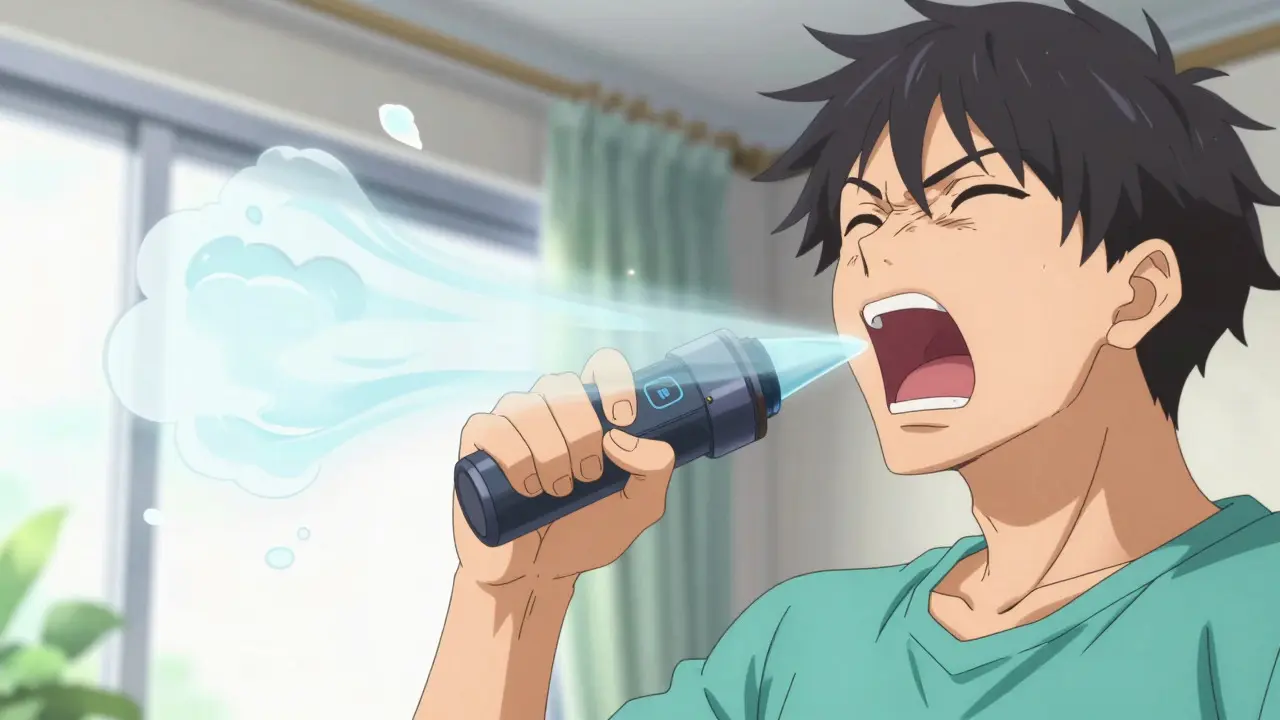
- Positive Expiratory Pressure (PEP) Devices: Handheld devices like the Aerobika® create back-pressure when you exhale through them, helping to open airways and mobilize secretions. These are cost-effective ($150-$200) and highly effective for many users.
- Oscillating PEP Devices: Vests or vests that vibrate the chest wall. While more expensive ($5,000-$7,000), they can achieve 35% greater sputum clearance volume compared to manual techniques alone, though handheld PEP devices offer comparable efficacy at a lower cost.
Aim for 15-20 minutes of clearance one to two times a day. It takes about 6-8 weeks to master the technique, so be patient with yourself. If your mucus is too thick to clear, increase your hydration to at least 2 liters of water daily and consider adding nebulized hypertonic saline (7%) to thin it out before clearing.
Strategic Use of Antibiotics
Antibiotics in bronchiectasis serve two distinct purposes: treating acute exacerbations and preventing them. Using them only when you feel sick is a common mistake that leads to resistant bacteria. The European Respiratory Society warns that patients treated only during flare-ups have a 2.3 times higher risk of permanent lung function decline.
For prevention, long-term macrolide antibiotics like azithromycin are often prescribed. A typical regimen is 500mg three times a week. Research from the EMBRACE trial showed this reduces exacerbation frequency by 32% compared to placebo. However, this isn’t a one-size-fits-all solution. You need regular monitoring for side effects, particularly hearing loss and liver enzyme changes.
If you have a chronic infection with Pseudomonas aeruginosa, a stubborn bacterium common in bronchiectasis, inhaled antibiotics like tobramycin may be added. Taking 300mg twice daily via nebulizer can reduce colonization by 56%. Newer options include inhaled gallium maltolate, approved by the FDA in 2023, which has shown a 42% reduction in exacerbations for refractory cases.
| Strategy | Primary Goal | Efficacy Metric | Cost Consideration |
|---|---|---|---|
| Daily Airway Clearance | Remove mucus, prevent infection | 47% fewer hospitalizations if adherent | Low (technique-based) to High (vests) |
| Long-term Macrolides (Azithromycin) | Reduce exacerbation frequency | 32% reduction vs. placebo | Moderate (oral medication) |
| Inhaled Tobramycin | Eradicate Pseudomonas colonization | 56% reduction in colonization | High (nebulizer + drug costs) |
| Hypertonic Saline Nebulization | Thin mucus for easier clearance | Improves sputum viscosity | Low-Moderate (saline + device) |
Navigating Daily Life and Treatment Burden
Let’s be real: doing 20 minutes of chest physiotherapy twice a day while working a job and raising a family is tough. About 42% of patients report difficulty maintaining these routines. The key is integration. Try to do your clearance right after waking up, when mucus has accumulated overnight, and again in the evening. Use reminders on your phone or wear a smartwatch to track adherence. Apps like the American Thoracic Society’s 'Clearing the Air' help track patterns and keep you motivated.
If you find your current method isn’t working, talk to your respiratory therapist. There’s no shame in switching techniques. Some patients thrive with ACBT, while others prefer the mechanical assistance of a PEP device. The goal is what works for *you*. Also, remember that bronchodilators alone aren’t enough; they only provide 12% improvement in symptoms on their own, but 28% when combined with proper clearance.

When to Worry: Red Flags and Progression
While management is effective for most, some patients progress despite optimal care. About 15-20% may eventually require oxygen therapy, and 5% might need surgery for localized disease. Watch for signs that your current plan isn’t holding up:
- Increased frequency of fever or chills.
- Sputum changing color to dark green or rust-colored.
- Shortness of breath during activities that previously didn’t bother you.
- Weight loss or fatigue that doesn’t resolve with rest.
Frequently Asked Questions
Is bronchiectasis contagious?
No, bronchiectasis itself is not contagious. However, if you have a specific bacterial infection like Pseudomonas, it can be passed to other people with compromised immune systems or those also suffering from lung conditions. Good hand hygiene is still recommended.
How long does it take to learn airway clearance techniques?
Most patients achieve proficiency after 12 supervised sessions with a respiratory therapist. Expect a learning curve of 6-8 weeks before the technique feels natural and effective. Consistency is more important than perfection in the beginning.
Can I stop taking antibiotics once I feel better?
Only if directed by your doctor. For acute infections, you finish the full course. For prophylactic (preventative) long-term antibiotics like azithromycin, stopping early can lead to rebound infections and resistance. Always consult your pulmonologist before changing your regimen.
What is the best diet for someone with bronchiectasis?
There is no specific "bronchiectasis diet," but staying hydrated is crucial to thin mucus. Aim for at least 2 liters of fluid daily unless restricted by another condition. A balanced, anti-inflammatory diet rich in fruits, vegetables, and lean proteins supports overall lung health and energy levels for exercise.
Does exercise help with bronchiectasis?
Yes, aerobic exercise improves cardiovascular fitness and helps mobilize secretions. Walking, swimming, or cycling are excellent choices. Just ensure you do your airway clearance after exercising to clear any additional mucus brought up by the activity.

Write a comment
Your email address will not be published.
Recent Posts
-
 Why Early Intervention with Finasteride Makes All the Difference October 28, 2025
 -
 Questions to Ask Your Pharmacist About Prescription Medications December 1, 2025



10 Comments
The cycle of mucus and bacteria is a perfect metaphor for how we trap ourselves in negative habits. Break the loop, or it breaks you.
finally some real info not just fluff about drinking water lol i was doing huff coughing wrong for years thinking it was just yelling into a pillow turns out its all about the pressure difference. my lungs feel less like a swamp now
I've been using the Aerobika for about three months now and honestly it changed my mornings completely. It's weird how much better I feel after twenty minutes of that clicking sound. The article mentions it's cost-effective which is true compared to those big vests, but make sure your insurance covers it if you can get it because the initial buy isn't exactly cheap. Also, pairing it with the hypertonic saline really helps if your phlegm is super thick. Just don't skip the hydration part or the whole thing feels like chewing on dry cement. Consistency is key here folks.
oh wow the "wet gravel" description hit hard because thats exactly what my chest sounds like at 6am every single day 😂
i tried the vest therapy once and it felt like being inside a washing machine on spin cycle but the aerobika thing is way more chill and fits in my bag. also who knew azithromycin could mess with your hearing? scary stuff but glad im on the preventative side now instead of waiting for the next flare up to happen
It is fascinating how mechanical intervention can restore biological function so effectively. The cilia are essentially our internal janitors; when they fail, we must become our own maintenance crew. This parallels many aspects of life where neglect leads to compounding damage, yet consistent, small efforts yield significant long-term stability. Do not underestimate the power of routine in health management.
this is so helpful thank you! i was struggling with the timing of when to do my clearance. doing it right after waking up makes so much sense because i always feel worst then. also the tip about tracking it on a smartwatch is genius. i have an apple watch and i set a reminder for 7am and 6pm and it has actually helped me stick to it better than trying to remember manually
so basically you are telling us that we have to spend 40 minutes a day blowing air out of our mouths like we are trying to blow out a candle but louder and more desperate?? i mean i get it its for our lungs and all but does anyone else feel like this is just a very expensive way to be bored? i tried the huff coughing technique last week and ended up throwing up because i did it too hard and now my throat hurts more than my chest. i think i am going to stick to just drinking tons of water and hoping for the best because the idea of buying a $200 plastic tube that makes noise scares me a little bit. plus what if i break it? then i have no lungs AND no money. such a stressful condition to have to manage while also trying to keep a job and not cry in the shower every night. i guess consistency is key but consistency is hard when you are tired all the time. anyway thanks for the detailed breakdown i will try to read it again later when i am less overwhelmed by the amount of work involved in keeping my own body alive
You're not alone in feeling that burden. Think of it as investing in your future self. Start with just 10 minutes if 20 feels like too much. Small wins build momentum. You've got this!
They never tell you that the pharmaceutical industry loves chronic conditions. Azithromycin is just another door-opener for resistant strains. Watch out for the 'new' gallium treatments, likely overhyped. Trust the old ways, mostly.
great post bro 🙌 i suffer from this too and the pseudomonas part is real pain in the ass 💀. the inhaled antibiotics are a game changer but the nebulizer sessions take forever. keep pushing through u can do it 💪🔥