
Psoriasis isn't just a rash. It’s your immune system attacking your skin. Every flare-up - the red, scaly patches that burn or itch - isn’t random. It’s a signal. Something in your life pushed a button your body can’t ignore. And for most people, three things are behind those pushes: stress, infections, and a broken skin barrier.
You might think psoriasis is just a skin problem. But it’s deeper than that. It’s an autoimmune disease, meaning your body’s defense system goes rogue. Instead of fighting off germs, it starts targeting healthy skin cells. That’s why treatments don’t just cover up the patches - they try to calm down the immune system. But if you don’t stop the triggers, the flares keep coming. No matter how good your cream is.
Stress: The Silent Trigger No One Talks About Enough
Stress doesn’t just make you feel tired. It rewires your immune system. When you’re under pressure - whether it’s a tough work deadline, a funeral, or even a big promotion - your body dumps cortisol and other inflammatory chemicals into your bloodstream. That’s fine for short-term survival. But when stress is constant? It turns your immune system into a fire alarm that won’t stop ringing.
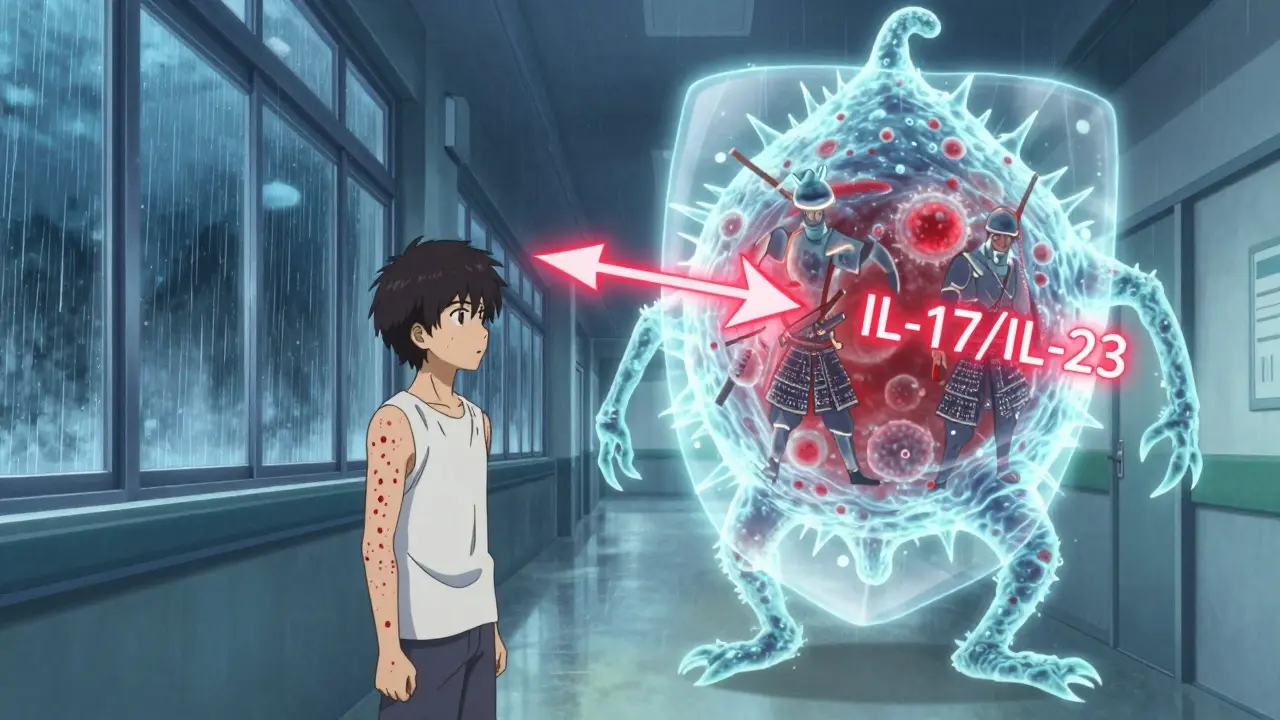
Studies show that 70% of psoriasis patients say stress triggered their first flare. And it’s not just about feeling anxious. One woman on Reddit shared how her mother’s death led to her psoriasis spreading over 30% of her body in three months. That’s not coincidence. Research from Mount Sinai confirms that stress activates the exact immune pathways that drive psoriasis - especially IL-17 and IL-23, the same targets used by modern biologic drugs.
Here’s the twist: psoriasis causes stress too. The itch, the embarrassment, the constant need to cover up - it wears you down. That creates a loop. Stress triggers flares. Flares cause more stress. And the cycle just keeps going.
Breaking it? It’s not about avoiding stress entirely. That’s impossible. It’s about managing how your body reacts. A 2023 study found that 20 minutes of daily mindfulness meditation cut cortisol levels by 25% in just eight weeks. People who practiced this consistently reported 30% fewer flares. Therapy, walking every day, even just breathing exercises before bed - they all help. You’re not fixing your skin with these. You’re calming the storm inside it.
Infections: When Your Body’s Defense Turns Against Itself
Ever notice your psoriasis gets worse after a cold or sore throat? That’s not your imagination. Infections - especially viral and bacterial ones - are powerful psoriasis triggers.
Strep throat is the classic example. In kids and young adults, a strep infection often leads to guttate psoriasis - tiny, drop-like spots all over the arms and legs. It’s not the bacteria itself. It’s how your immune system responds. The immune cells that fight strep get confused and start attacking skin cells instead.
Even common viruses like the flu or COVID-19 can do it. The body’s antiviral response, especially through a sensor called RIG-I, can accidentally turn on the same inflammatory signals that cause psoriasis. That’s why people with psoriasis often flare after getting sick - even if the illness seems mild.
And here’s the odd one: HIV. You’d think a virus that kills immune cells would calm psoriasis down. But it doesn’t. In fact, HIV patients often have worse psoriasis. Why? Because the immune system gets so out of balance, it starts firing randomly. It’s a mess - and psoriasis is one of the casualties.
So what can you do? Simple habits matter. Wash your hands often. Get your flu shot. Studies show vaccination cuts infection-triggered flares by 35%. Avoid close contact with sick people during cold and flu season. If you get sick, treat it early. Don’t wait. The sooner you clear the infection, the less chance your immune system has to go off track.
Skin Barrier Care: The Foundation You’re Probably Ignoring
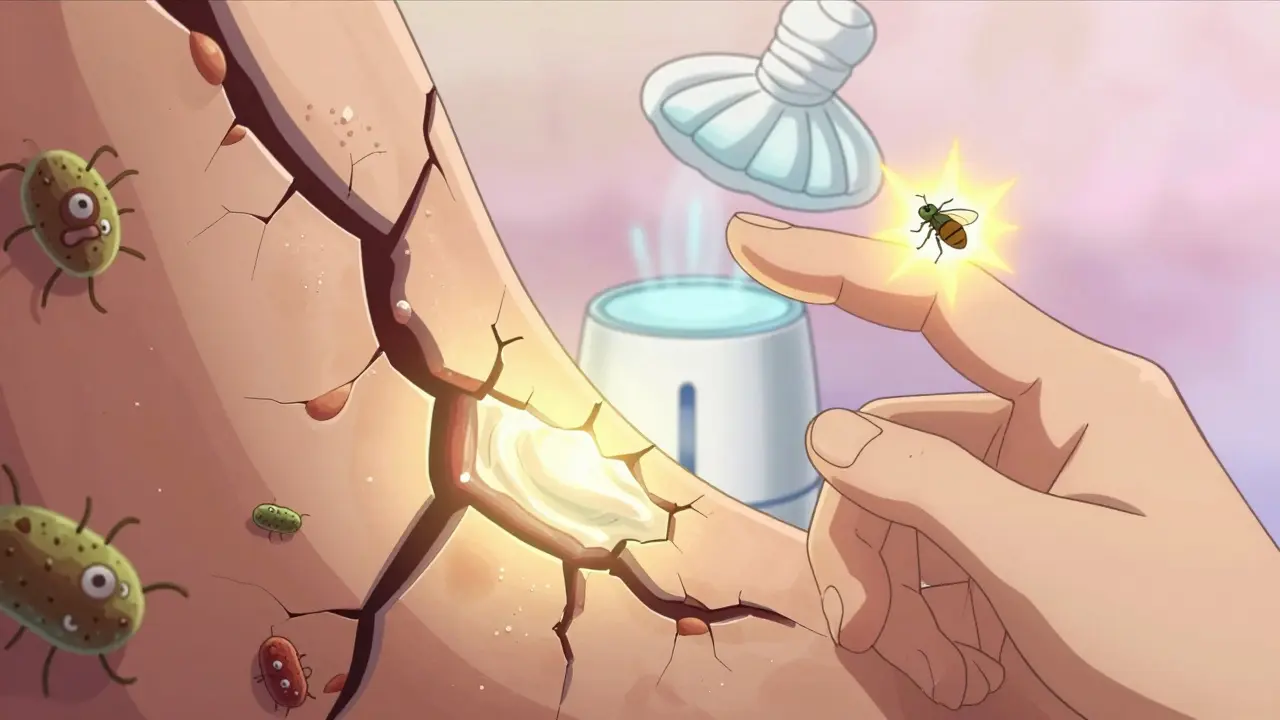
Your skin isn’t just a covering. It’s a wall. A carefully built barrier that keeps germs out and moisture in. In psoriasis, that wall gets cracked. And once it’s cracked, things slip through - bacteria, irritants, dry air - and they fan the flames.
Researchers call this the “cycle of barrier damage.” You scratch. You get a tiny cut. Your skin tries to heal, but because of psoriasis, it overproduces cells. Those cells pile up, dry out, and crack more. Bacteria move in. Your immune system notices the bacteria - and attacks harder. More inflammation. More scaling. More itching. And the cycle spins faster.
Mouse studies proved this. When scientists broke the skin barrier in psoriasis-prone mice, the animals developed full-blown psoriasis-like lesions. Then they applied a topical antibiotic. The lesions cleared. Why? Because they removed the bacteria that were fueling the immune response.
So skincare isn’t optional. It’s critical. But not all moisturizers work. You need ones with ceramides - the building blocks of your skin’s natural barrier. Fragrance-free. No alcohol. No harsh soaps. Your skin’s pH is around 5.5. Most bar soaps are 9 or 10. That’s like pouring acid on your skin. It strips everything.
Apply moisturizer at least twice a day. Right after showering, while your skin is still damp. Keep your home humidity between 40% and 60%. Use a humidifier in winter. Wear soft fabrics. Avoid scratching - even if it itches. Use a cool compress instead. And protect your skin from injuries. Bug bites? Use repellent. Sunburn? Wear sunscreen. Even a small scrape can trigger a new patch of psoriasis weeks later. That’s the Koebner effect - and it’s real.
The Bigger Picture: Triggers Are Personal, But Patterns Are Real
Not everyone reacts the same way. For one person, stress is the main trigger. For another, it’s dairy or cold weather. A 2022 survey of over 1,200 psoriasis patients found 32% linked flares to dairy, 25% to gluten, and 18% to nightshade vegetables like tomatoes and peppers. But that doesn’t mean you should cut them all out. Only if you’ve tracked it yourself.
Track your flares. Use a simple notebook or a free app. Note what you ate, how stressed you felt, whether you got sick, and if you had any skin injuries. After a few months, patterns emerge. Maybe your flares always happen after a work trip. Or every time you skip moisturizing for two days. That’s your personal map.
And the future is getting smarter. Wearable devices that monitor stress levels are already being tested. AI apps that analyze your skin photos can predict flares before they happen. Within five years, dermatologists will use this data to give you a custom trigger plan - not just a cream.
What to Do Today
You don’t need to fix everything at once. Start with one thing.
- Apply a ceramide-based moisturizer twice a day - right after your shower.
- Wash your hands for 20 seconds, three times a day - especially before touching your skin.
- Try one 10-minute breathing exercise before bed. Inhale for four counts, hold for four, exhale for six.
- Get your flu shot if you haven’t already.
- Write down one flare you had in the last month. What happened right before it?
Small steps add up. Psoriasis flares don’t vanish overnight. But when you stop feeding the fire, your skin starts to heal. Not because of magic. Because you’re removing the fuel.

Write a comment
Your email address will not be published.
Recent Posts
-
 Buy Cheap Generic Metformin Online - Complete Guide & Tips September 30, 2025
 -
 Prevent Tummy-Ache: Proven Tips for a Healthy Gut October 22, 2025


13 Comments
Stress is the real villain. No cream fixes that. Just breathe.
Ceramides are non-negotiable. 🙌 If your moisturizer doesn’t have them, it’s just fancy lotion. Your barrier needs rebuilding, not masking.
This reads like a pharma brochure. Dairy? Gluten? Please. Psoriasis is a symptom of systemic toxicity. You're ignoring the root: gut dysbiosis and heavy metal burden. Your skin is just the messenger.
They don’t want you to know this-but 5G radiation spikes IL-17. That’s why flares are worse in cities. The CDC buried the studies. Vaccines? They’re just another trigger. Your immune system is being weaponized.
I appreciate the nuance in this piece. The stress-flare feedback loop is so under-discussed. I’ve seen patients spiral into anxiety because they believe their skin is a moral failing. It’s not. It’s biology. Compassion matters as much as ceramides.
In Chennai, we use neem oil and turmeric paste. Not fancy science. Just tradition. Works better than half the creams sold here. Maybe the answer isn’t always in a lab.
I’ve been doing the 4-4-6 breath for 6 months. Flares down 40%. Not magic. Just consistency. You don’t need to be perfect. Just show up.
The Koebner effect... it’s haunting. I got a mosquito bite last summer. Three weeks later, a plaque appeared right where I scratched. It felt like my body was screaming. I didn’t even know that was a thing until now.
Oh please. Mindfulness? You think sitting quietly fixes an autoimmune condition? You’re one step away from crystal healing and moon cycles. The real solution is pharmaceutical-grade IL-17 inhibitors. Everything else is placebo with a yoga mat.
Ceramides + humidity + handwashing = 80% of the battle. Stop overcomplicating it. Your skin isn’t broken. It’s just starved. Feed it. Don’t lecture it.
I’ve been using a humidifier since winter. Big difference. Also, switched to oat soap. No more burning. Simple stuff works. Who knew?
i started tracking flares last month and holy cow my worst ones always happen after i skip moisturizing for 2 days. its like clockwork. also i think stress is way worse than i thought. i just thought i was being dramatic lol
They’re hiding the truth. The real trigger? Glyphosate in your food. It’s in EVERYTHING. Even organic. Your skin is detoxing through inflammation. They don’t want you to know that the FDA approved it despite 12,000 studies linking it to autoimmunity. Fight the system. Eat wild. Avoid plastic. Your body is fighting a war you didn’t know you were in.