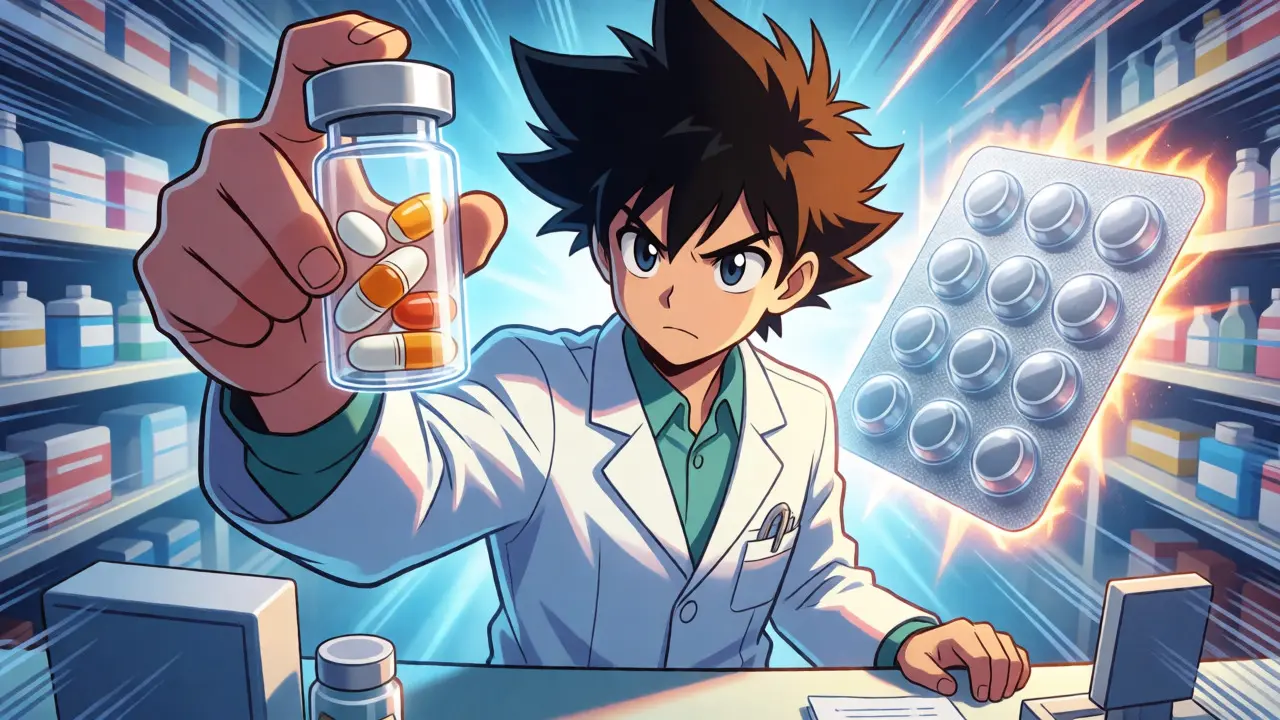
You just picked up a bottle of pills from your local pharmacy. The label says they are good for six months. But wait-those pills didn't come in the manufacturer's original blister pack. They were scooped out of a bulk bin and poured into a clear plastic vial by a technician who probably had ten other prescriptions waiting. Does that expiration date still hold water? For most people, yes. But if you are managing complex care, running a small clinic, or just being extra careful about drug efficacy, you need to know that repackaged medications carry different risks than those in their factory-sealed containers.
The core issue is simple: when you move a drug from its engineered home to a generic vial or a weekly pill organizer, you strip away the protective barriers designed to keep it stable. Moisture gets in. Light gets in. Oxygen gets in. And suddenly, that "safe" expiration date becomes a guess. Here is how to actually evaluate whether those repackaged meds are still good to take, without needing a PhD in chemistry.
Why Original Packaging Matters More Than You Think
Pharmaceutical companies don't just throw pills into bottles. They spend millions designing container-closure systems. These systems are tested to ensure the drug stays pure until the last day on the label. When a pharmacy repackages a drug, they break this system. According to FDA guidance Q1A(R2), stability testing applies to the product in its final packaging. If you change the package, you change the stability profile.
Think of it like storing milk. In a sealed carton, it lasts weeks. Pour it into an open glass jar on your counter, and it sours in days. Pills work similarly. A study in the Journal of Pharmaceutical Sciences found that albuterol sulfate tablets degraded 15.7% faster in standard pharmacy vials compared to their original high-density polyethylene (HDPE) bottles with desiccants over 90 days. That’s not a rounding error; that’s a significant loss of potency.
For solid oral dosage forms, the enemies are moisture, light, and oxygen. Standard prescription vials often have higher moisture vapor transmission rates than manufacturer bottles. If you are evaluating stability, your first job is to assess the container. Is it amber? Is it HDPE? Does it have a child-resistant cap that seals tightly? If the answer is no, assume the shelf life is shorter.
The Pillbox Problem: Mixing Drugs Creates New Risks
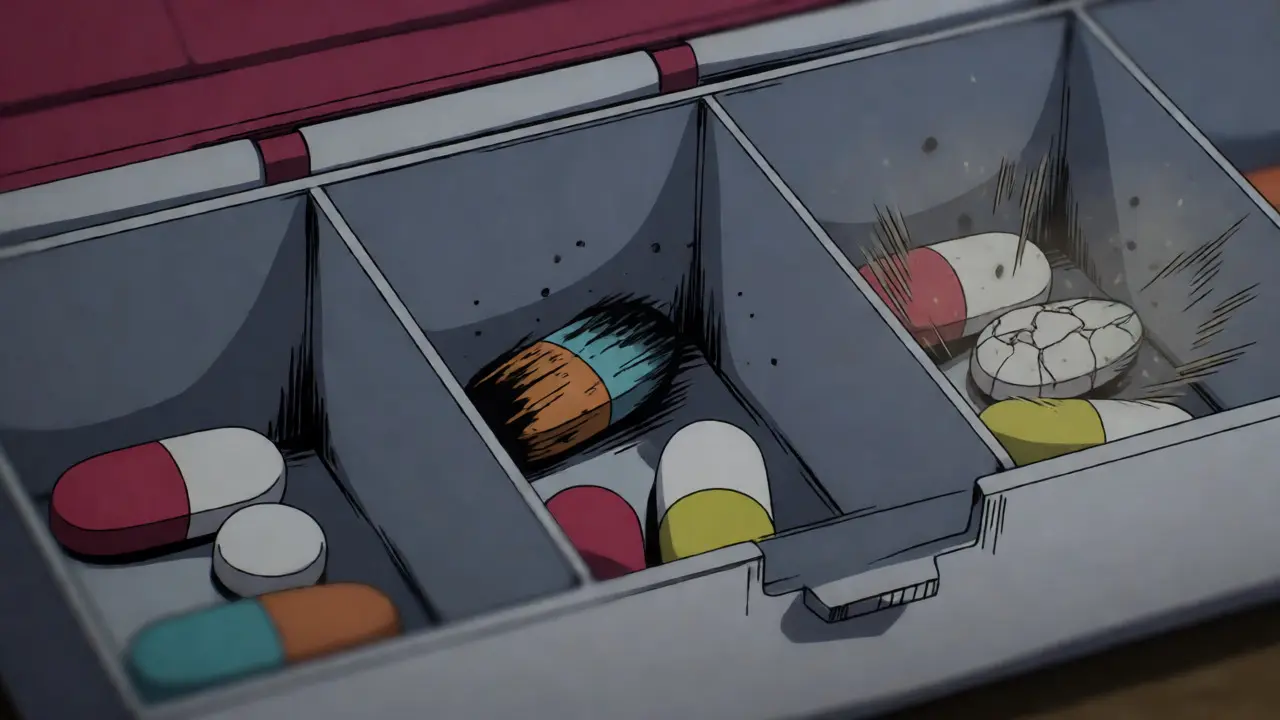
Pill organizers are great for adherence, but they are terrible for long-term storage. Why? Because you are mixing drugs from different manufacturers, possibly with different coatings, in one confined space. This creates opportunities for physical interactions. Do you ever notice sticky residue at the bottom of your weekly organizer? That’s often a sign of coating breakdown due to humidity or interaction between excipients.
A 2022 report from the American Pharmacists Association noted that nearly 19% of multi-drug combinations in organizers showed physical changes like caking or discoloration within just 14 days. This isn't necessarily toxic, but it signals instability. If your pills look chalky, sticky, or have changed color significantly since you filled the box, they might not be delivering the dose you think they are.
| Container Type | Moisture Protection | Light Protection | Typical Safe Duration |
|---|---|---|---|
| Original Blister Pack | High | High | Until Manufacturer Expiry |
| Amber HDPE Vial + Desiccant | Moderate | Good | 6 Months (General Rule) |
| Clear Plastic Vial | Low | None | 30-90 Days |
| Weekly Pill Organizer | Very Low | Variable | 7-14 Days Max |
Regulatory Reality Check: Who Decides the Date?
Here is a hard truth: many pharmacies assign expiration dates based on convenience, not science. The U.S. Pharmacopeia Chapter <1178> defines repackaging as transferring a drug into a different container. It doesn't automatically extend the manufacturer's expiry. In fact, Dr. Diane J. Berry from the University of Florida pointed out that assuming the manufacturer's date applies to repackaged goods is "categorically false" under FDA regulations.
Most states limit repackaged medication expiration to six months max, but some impose stricter limits of 30 to 90 days for sensitive drugs. If you see a six-month date on a repackaged antibiotic stored in a clear vial, be skeptical. The Parenteral Drug Association recommends just 30 days for hygroscopic drugs like amoxicillin in non-original containers. Always check local state board guidelines, but lean toward the conservative side if you aren't sure.
Practical Steps to Evaluate Stability at Home
You don't need an HPLC machine to do basic checks. Use your senses and common sense. Start with visual inspection. Are there chips, cracks, or unusual spots? Has the color faded or darkened? Next, smell them. Some drugs naturally have odors, but a sudden chemical or vinegar-like smell can indicate hydrolysis-the breakdown of the drug molecule by moisture.
Check the texture. If tablets are sticking together or feel powdery when rubbed, moisture has gotten in. For capsules, if they look brittle or leak oil, they are compromised. Finally, consider the storage environment. Did the pillbox sit in a hot car? Was the vial left on a steamy bathroom sink? Heat accelerates degradation exponentially. If the storage conditions were poor, discard the meds regardless of the printed date.
- Visual: Look for discoloration, spots, or crumbling.
- Olfactory: Sniff for unexpected chemical or sour smells.
- Tactile: Check for stickiness, powdering, or brittleness.
- Environmental: Recall exposure to heat, humidity, or direct sunlight.
When to Trust the Pharmacist vs. When to Ask Questions
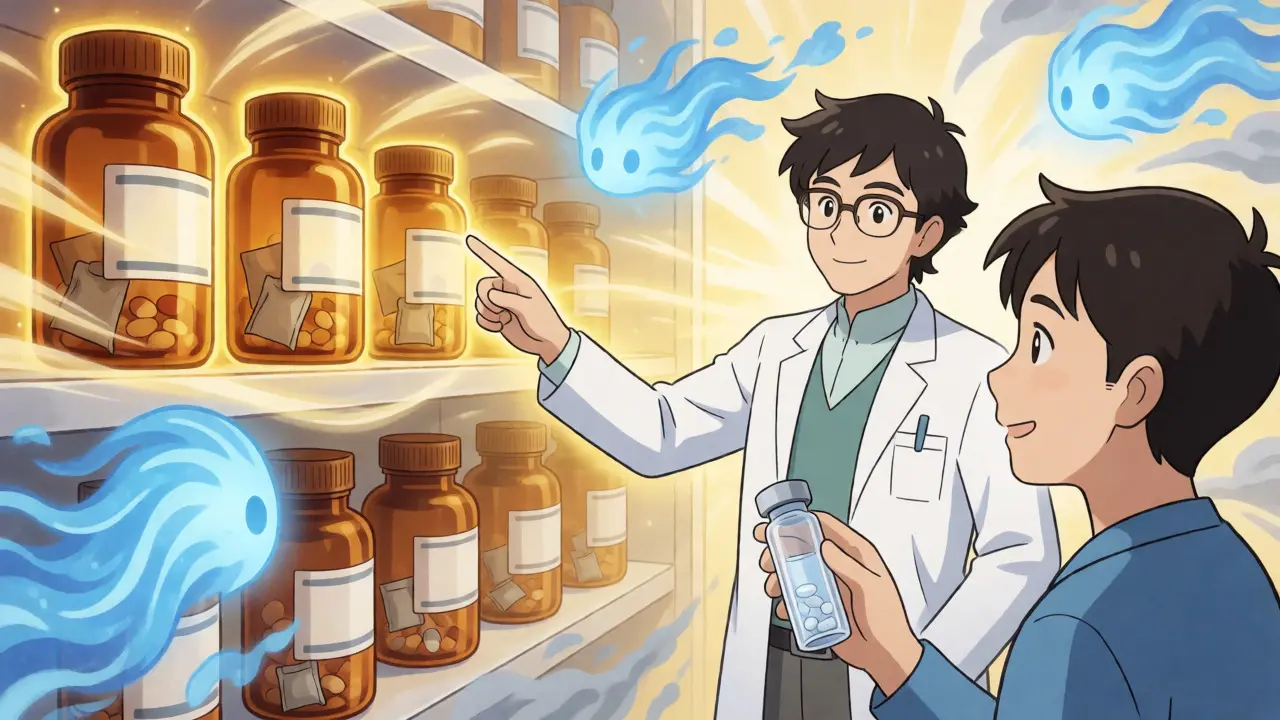
Not all repackaging is equal. Hospital pharmacies often use automated blister-pack machines that create individual unit-dose packets. These offer much better protection than loose pills in a vial. Community pharmacies vary wildly. Some use high-quality amber vials with desiccants; others use cheap clear jars.
If you are on narrow therapeutic index drugs-like warfarin, levothyroxine, or lithium-be extra cautious. Small changes in potency can lead to big health issues. Ask your pharmacist: "Is this drug sensitive to moisture or light? Did you add a desiccant? What is the actual stability window for this specific formulation in this container?" If they can't answer, treat the medication as having a shorter shelf life. When in doubt, throw it out. Medication waste costs money, but ineffective treatment costs health.
Future-Proofing Your Med Routine
Regulations are tightening. The USP is finalizing General Chapter <1790>, which will standardize stability testing for repackaged products. Expect more transparency soon. Until then, rely on evidence-based rules of thumb. Keep meds in cool, dry places. Avoid the bathroom cabinet unless you run a fan. Use opaque, tight-sealing containers for any short-term transfers. And remember, the clock starts ticking the moment the seal is broken, not when you swallow the first pill.
Can I use the manufacturer's expiration date for repackaged pills?
Generally, no. Once removed from the original container, the stability changes. Most guidelines suggest using repackaged solid oral doses within 6 months, but sensitive drugs may only last 30-90 days. Always follow the specific date assigned by the pharmacy, which should be shorter than the manufacturer's date.
Are pill organizers safe for daily medications?
Yes, for short periods. Weekly organizers are fine for most stable drugs. However, avoid filling them more than 7-14 days in advance. Mixtures of different drugs can interact physically (stickiness, color change) due to humidity or coating incompatibilities.
What does it mean if my pills are stuck together?
Stickiness usually indicates moisture absorption, leading to potential hydrolysis (breakdown) of the active ingredient. While not always dangerous, it suggests the drug may have lost potency. Discard them if they are difficult to separate or show other signs of degradation.
Do amber bottles really make a difference?
Yes. Amber plastic blocks UV light, which causes photodegradation in many drugs. Clear plastic offers little protection against light-induced breakdown. For light-sensitive medications, amber containers significantly extend stability compared to clear ones.
Should I ask my pharmacist about desiccants?
Absolutely. Desiccants absorb moisture inside the container. For hygroscopic drugs (those that attract water), adding a desiccant packet can extend stability by nearly 50%. Not all pharmacies include them automatically, so asking ensures better preservation.

Recent Posts
-
 Wearable ECGs for QT Safety: Real-Time Risk Detection March 31, 2026
 -
 How to Buy Cheap Generic Clomid Online Safely October 12, 2025
 -
 How to Read Medication Guides for Risk and Monitoring Advice December 9, 2025