
Licorice Root Risk Calculator
Understand Your Risk
This tool calculates your potential risk of licorice root interactions with your blood pressure medications. Based on the article's findings, consuming over 100 mg of glycyrrhizin daily for two weeks or more can cause dangerous effects.
When you're managing high blood pressure, every pill matters. Your doctor carefully chose your medication based on your health history, lifestyle, and lab results. But what if something you're taking - something labeled as a "natural remedy" - is quietly undoing all that work? Licorice root might be one of those hidden culprits.
What’s in Licorice Root That Causes Problems?
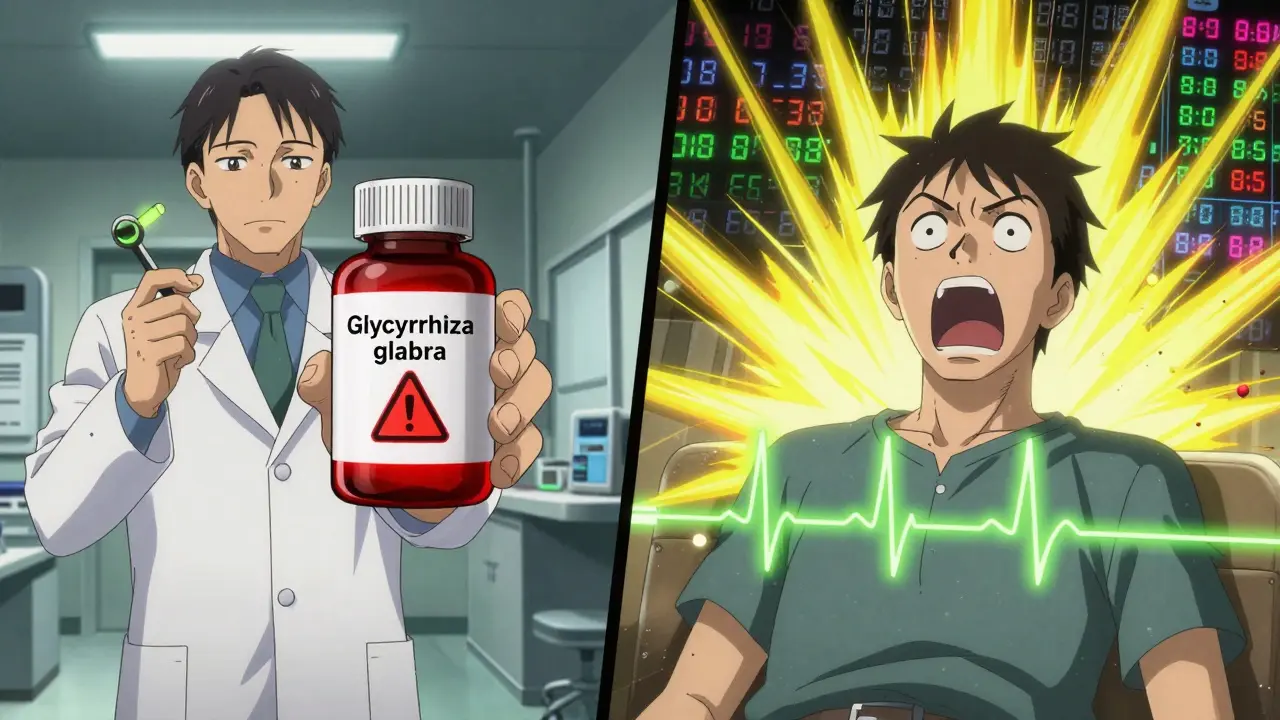
Licorice root comes from the plant Glycyrrhiza glabra. It’s been used for thousands of years - from ancient Egyptian remedies to traditional Chinese medicine - mostly for coughs, stomach issues, and sore throats. Today, you’ll find it in teas, candies, herbal supplements, and even some cough syrups. But here’s the catch: the real licorice root contains a compound called glycyrrhizin. This isn’t just a flavoring agent. It’s a powerful substance that acts like a hormone in your body. Glycyrrhizin tricks your kidneys into holding onto salt and water while flushing out potassium. That means more fluid in your bloodstream, which raises your blood pressure. It also messes with your body’s natural hormone balance by blocking an enzyme called 11β-hydroxysteroid dehydrogenase type 2. Normally, this enzyme keeps cortisol (a stress hormone) from acting like aldosterone (a salt-retaining hormone). When glycyrrhizin blocks it, cortisol starts behaving like aldosterone - and your blood pressure climbs.How Much Is Too Much?
You don’t need to eat a whole bag of black licorice to run into trouble. Studies show that consuming more than 100 mg of glycyrrhizin per day for two weeks or longer can start causing problems. That’s roughly equivalent to eating 50 grams (about 1.7 ounces) of real licorice candy daily. But here’s the problem: you won’t know how much glycyrrhizin you’re getting. Raw licorice root can contain anywhere from 2% to 24% glycyrrhizin. Commercial extracts are often standardized to 4-20%. Some supplements don’t even list the amount on the label. A 2020 study found that one product labeled "licorice root" had 10 times more glycyrrhizin than another with the same name. That kind of inconsistency makes it impossible to guess your risk.Which Blood Pressure Medications Are Affected?
Licorice root doesn’t just raise blood pressure - it makes your medications less effective. Here’s how it interferes with common treatments:- ACE inhibitors (like lisinopril): Effectiveness drops by 30-50%. Your body holds onto salt, which these drugs are trying to flush out.
- ARBs (like losartan): Effectiveness decreases by about 25%. The same salt-and-water retention undermines their action.
- Calcium channel blockers (like amlodipine): Blood pressure control worsens by 15-20%. Studies show patients’ readings spike within days of starting licorice.
- Potassium-sparing diuretics (like spironolactone): This is the worst combo. Licorice drains potassium, while these drugs try to keep it. The result? A dangerous imbalance that can cause heart rhythm problems and complete loss of medication effectiveness.
Real People, Real Consequences
You don’t have to take our word for it. Real patients have shared their stories:- A 68-year-old man in the U.S. was doing fine on lisinopril - his blood pressure was steady at 130/80. After starting daily licorice tea, his numbers jumped to 185/105 in just 10 days.
- A Reddit user on r/HighBloodPressure noticed his systolic pressure rise by 22 points after eating black licorice candy daily. His doctor found out he’d been consuming real licorice root, not just flavored candy.
- In New Zealand, a 55-year-old man on fludrocortisone (a steroid that affects blood pressure) developed panic attacks and a systolic pressure of 210 after starting licorice supplements. He needed emergency care.
Not All Licorice Is the Same
Here’s something most people don’t know: Most licorice-flavored candy in the U.S. doesn’t contain real licorice root. In fact, about 95% use anise oil instead. That’s why you can eat Twizzlers and not have a problem. But if the label says "licorice extract," "Glycyrrhiza glabra," or "natural licorice flavor," you’re getting the real thing - and the real risk. The same goes for herbal supplements. Licorice is often included in formulas for digestion, adrenal support, or immune health. Many people take them without realizing the danger. A 2018 survey found that 30% of herbal laxatives and 25% of traditional Chinese medicine formulas contain licorice root.
What Should You Do?
If you’re taking blood pressure medication, here’s what you need to do:- Check every label. Look for "Glycyrrhiza glabra," "licorice root," or "licorice extract." If you see it, avoid it.
- Ask your pharmacist. They can check your supplements, teas, and even some cough syrups for hidden licorice.
- Don’t assume "natural" means safe. Licorice root is a plant, but that doesn’t make it harmless. It’s a potent substance with real drug-like effects.
- Consider deglycyrrhizinated licorice (DGL). This form has over 99% of glycyrrhizin removed. It’s used for stomach issues and is generally safe for people on blood pressure meds.
- Get your potassium checked. If you’ve been taking licorice, even occasionally, ask your doctor to test your potassium. Levels below 3.5 mmol/L can be dangerous, especially with diuretics.
What About the Future?
Right now, the U.S. Food and Drug Administration doesn’t require manufacturers to list glycyrrhizin content on labels. The European Union does - products with more than 10 mg per serving must carry a warning. The American Heart Association recommends avoiding all licorice root if you have high blood pressure. There’s hope on the horizon. The FDA’s proposed Dietary Supplement Listing Act of 2023 would require companies to disclose active ingredients - including glycyrrhizin - on labels. That could make it much easier to avoid dangerous interactions. Until then, the safest choice is simple: if you’re on blood pressure medication, skip licorice root entirely. The risk isn’t worth it. Your meds are working hard. Don’t let a sweet treat sabotage them.Can I eat licorice-flavored candy if I’m on blood pressure medication?
Most licorice-flavored candy in the U.S. uses anise oil, not real licorice root, so it’s generally safe. But always check the ingredients. If you see "Glycyrrhiza glabra," "licorice extract," or "natural licorice flavor," avoid it. Stick to products that list only "artificial flavor" or "anise oil."
How long does it take for licorice root to affect blood pressure?
Effects can show up in as little as a few days, but most people notice changes within 1-2 weeks of daily use. Glycyrrhizin’s effects on salt and water retention build up over time. Even stopping after a week won’t fix things immediately - it can take up to two weeks for your body to clear the compound completely.
Is deglycyrrhizinated licorice (DGL) safe with blood pressure meds?
Yes. DGL has over 99% of the glycyrrhizin removed, so it doesn’t affect blood pressure or potassium levels. It’s commonly used for stomach ulcers and heartburn and is considered safe for people on antihypertensives. Just make sure the product says "DGL" on the label - not just "licorice root."
I’ve been taking licorice root for months. Should I stop?
Yes, stop immediately. Even if you haven’t noticed symptoms, you may be at risk for hidden changes in blood pressure or low potassium. Talk to your doctor about getting your blood pressure and potassium levels checked. Don’t wait for symptoms like headaches, swelling, or muscle cramps - those are warning signs you’re already in trouble.
Can licorice root affect other medications besides blood pressure drugs?
Yes. Glycyrrhizin can interfere with diuretics, corticosteroids, and even some heart medications like digoxin. It can also affect how your liver processes certain drugs by interacting with liver enzymes. Always tell your doctor or pharmacist about any herbal supplements you’re taking - even if you think they’re harmless.

Write a comment
Your email address will not be published.



14 Comments
So let me get this straight - you’re telling me some guy in a lab coat made a candy that’s basically a slow-acting poison for hypertensives? And nobody’s regulated this? That’s not natural, that’s negligence. I’ve seen worse in third-world drug markets.
I appreciate the depth here. But honestly? The real issue isn’t licorice. It’s that we treat supplements like they’re candy. You wouldn’t take a handful of pills labeled ‘herbal’ without asking questions - so why do it with tea? We’ve normalized ignorance.
There’s something profoundly ironic about how we revere ‘natural’ remedies while ignoring their pharmacological weight. Licorice root isn’t evil - it’s a potent bioactive compound that’s been used for millennia. The problem isn’t the herb. It’s the lack of context. We’ve turned medicine into a marketplace of unregulated mysticism. And now people are dying because they thought ‘herbal’ meant ‘harmless.’
It’s not about banning licorice. It’s about demanding transparency. If a substance alters hormone pathways, it should carry a label like a prescription. Not a footnote on a tea bag.
I’ve seen patients on spironolactone who swore they only had ‘a cup a day.’ One cup can be 80mg of glycyrrhizin. No one knows. No one checks. And no one tells them until they’re in the ER.
We need standardized dosing. Mandatory disclosure. A public health campaign - not just another Reddit post.
And yes, DGL is safe. But most people don’t know it exists. That’s the tragedy.
So if I’m on blood pressure meds and I eat one Twizzler… am I safe? Or is it just the *idea* of licorice that’s dangerous? Like, what if I think I’m eating licorice but I’m not? Does my brain still freak out my BP? Just asking for a friend.
Of course the FDA doesn’t regulate this - they’re in bed with Big Herb. You think they want you to know that your ‘natural’ adrenal support tea is turning your kidneys into salt sponges? Nah. They’re too busy letting pharmaceutical companies charge $1200 for a pill that does the same thing as licorice root - but with more side effects and no flavor.
They want you scared. They want you dependent. They want you buying more meds. And they’re using ‘natural’ as a Trojan horse.
Next thing you know, they’ll ban ginger because it ‘interferes’ with aspirin. Or turmeric because it ‘thins the blood.’ It’s all connected. Wake up.
Ugh. Another ‘be careful with natural stuff’ post. I’ve been eating black licorice for 20 years. I’m 42. My BP is 118/76. Maybe it’s not the licorice. Maybe it’s the fear.
Y’all need to stop panicking and start checking labels. I’m a pharmacy tech. I see this ALL the time. Someone comes in with a ‘natural energy booster’ that’s 80% licorice root. They’re on lisinopril. They’re dizzy. They think they’re ‘detoxing.’ Nope. They’re about to have a stroke. I literally had to pull one off the shelf yesterday. Just read the fine print. Seriously. It’s not hard.
Also - DGL is a GAME CHANGER. I’ve been recommending it to my aunt for her acid reflux. She’s on a beta-blocker. No issues. Just make sure it says ‘DGL’ - not ‘licorice.’
And yeah - Twizzlers? Fine. Anise oil ≠ glycyrrhizin. You’re not gonna die from a candy cane. Chill.
Whoa. So licorice root is basically nature’s sneaky diuretic? I thought it was just for candy and cough syrup. Now I’m mad I didn’t know this before I started chugging that ‘digestive tea’ my yoga instructor gave me. I’ve been drinking it for months. I’m gonna go check my potassium. Like, right now. Thanks for the wake-up call, OP.
THIS. IS. A. PUBLIC. HEALTH. EMERGENCY.
Imagine if a pharmaceutical company released a drug that raised blood pressure by 30% and didn’t label it. They’d be sued. Arrested. Burned at the stake.
But herbal supplements? Oh, it’s ‘natural.’ It’s ‘ancient wisdom.’ It’s ‘holistic.’
It’s corporate negligence wrapped in a dreamcatcher.
Someone needs to sue the entire herbal supplement industry. And the FDA needs to be defunded until they stop letting this slide.
I’m not mad. I’m just… disappointed.
The glycyrrhizin-mediated inhibition of 11β-HSD2 is a well-documented phenomenon in endocrinology. The mineralocorticoid excess cascade is textbook. What’s concerning is the lack of pharmacovigilance in OTC herbal markets. The 2020 JAMA study on product variability was eye-opening - some batches had 10x the glycyrrhizin content. That’s not inconsistency - that’s systemic failure.
We need LC-MS/MS standardization in manufacturing. And mandatory labeling thresholds. Until then, the burden is on the consumer - which is absurd.
Also - potassium monitoring is non-negotiable. Hypokalemia below 3.0 mmol/L can trigger torsades. Don’t wait for symptoms.
So… if I stop eating licorice tomorrow, does my BP just magically go back down? Or am I stuck with this for life? Asking for a friend who’s been ‘accidentally’ consuming tea for 3 months… and now can’t feel his toes.
As someone who practices Ayurveda, I understand the reverence for licorice. It’s called ‘yastimadhu’ - sweet root. It soothes the throat, balances Pitta, and calms the nervous system. But modern pharmacology has stripped it of context. In classical texts, it was always used in small doses, with other herbs to counterbalance. Today? It’s isolated. Concentrated. Sold like candy.
The real issue isn’t licorice. It’s reductionism. We take one compound from a complex plant and pretend it’s a drug. That’s not traditional medicine. That’s pharmaceutical logic masquerading as herbalism.
Use licorice in formula. Not alone. And always under guidance. The danger isn’t the herb. It’s the misunderstanding.
While I appreciate the thoroughness of this article, I must respectfully challenge the assertion that all licorice root is inherently dangerous. There is a significant body of clinical literature suggesting that, in controlled, low-dose applications, glycyrrhizin may possess anti-inflammatory and hepatoprotective properties. To categorically condemn its use without acknowledging potential therapeutic benefits - particularly in non-hypertensive populations - constitutes an overgeneralization that risks undermining patient autonomy and evidence-based herbal medicine.
You’re not alone. I’ve been on blood pressure meds for 12 years. I thought I was doing everything right - until I found out my ‘calming tea’ was sabotaging me. I stopped. I got checked. My numbers dropped 18 points in two weeks. It wasn’t magic. It was just science. You don’t need to be perfect. You just need to be aware. Start with the label. Then ask your pharmacist. Then breathe easy. You’ve got this.