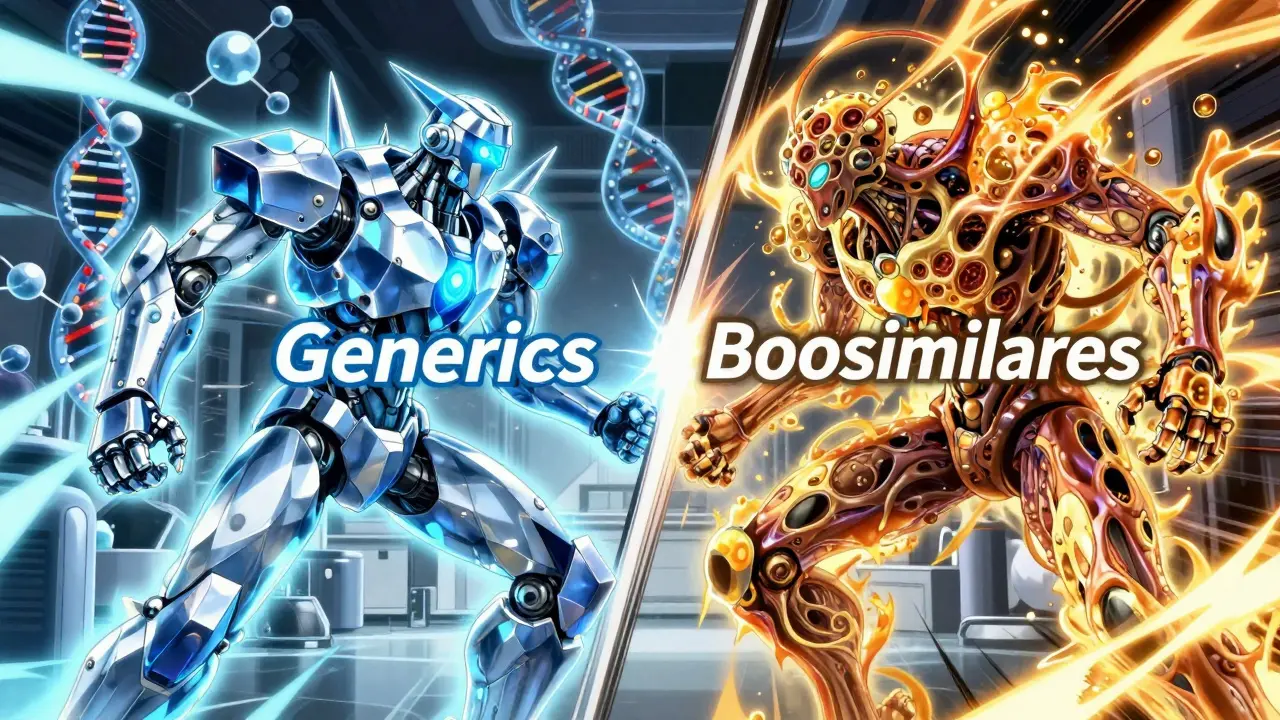
Imagine buying a generic version of your prescription pill and paying half the price. Now imagine doing the same for a complex cancer drug or an arthritis treatment made from living cells. That second scenario is where biosimilars are biologic medical products that are highly similar to an already approved reference biologic product, with no clinically meaningful differences in safety, purity, and potency. They are not cheap copies like traditional generics are identical chemical copies of brand-name small-molecule drugs. While generics are molecule-for-molecule replicas, biosimilars are 'highly similar' because they are produced by living organisms, making exact duplication impossible.
The global landscape for these high-value medicines looks very different depending on which side of the Atlantic you stand on. In 2026, Europe is the mature veteran of the biosimilar world, while the United States is finally waking up to its potential after years of regulatory hurdles and legal battles. Understanding this divergence is crucial for patients, payers, and policymakers who want to know why some regions save billions on healthcare costs while others lag behind.
The Core Difference: Biosimilars Are Not Generics
Before comparing markets, we need to clear up a common misconception. You cannot swap a biosimilar into the same category as a generic aspirin. Small-molecule drugs, like ibuprofen, are synthesized chemically. Their structure is simple and fixed. When the patent expires, any company can make an identical copy. This is a generic.
Biosimilars deal with biologics-large, complex proteins made in living cells (like bacteria or yeast). Think of it like baking bread versus manufacturing steel. Steel is precise; every bolt is identical. Bread varies slightly based on humidity, yeast strain, and oven temperature. Because of this complexity, regulators require extensive data to prove a biosimilar is 'highly similar' to the original reference product. There must be no clinically meaningful differences in safety, purity, or potency. This scientific rigor is why biosimilars launch at discounts of 15-30% compared to generics, which often drop prices by 80-90%.
Europe: The Early Adopter Advantage
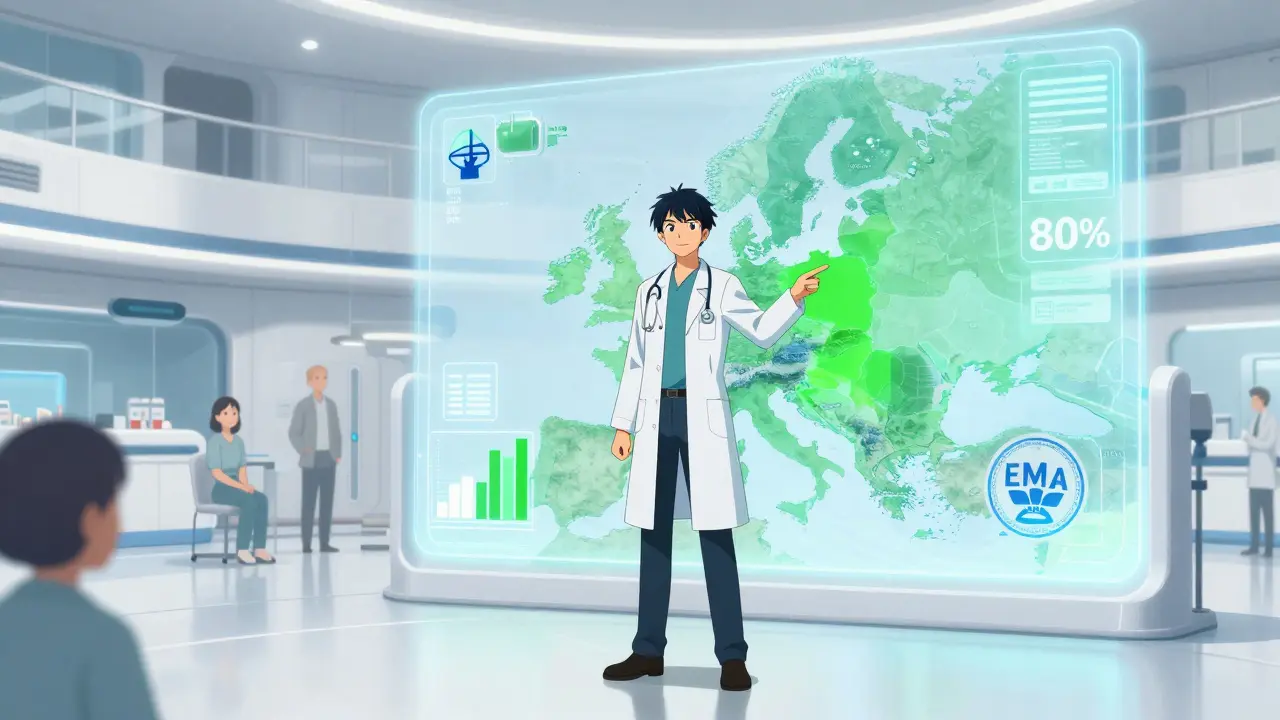
Europe didn't just enter the biosimilar race early; it wrote the rulebook. The European Medicines Agency (EMA) is the regulatory body responsible for the scientific evaluation, supervision, and safety monitoring of medicinal products in the EU. established the first regulatory framework for biosimilars in 2006. That same year, Europe approved Omnitrope, the world's first biosimilar. By establishing clear guidelines early, the EMA created a 'virtuous cycle,' according to Dr. Michael Reilly of Alira Health. Physicians became familiar with them, payers supported them, and patients accepted them.
This maturity shows in the numbers. In 2024, the European biosimilars market generated between USD 9.9 billion and USD 13.16 billion, depending on the research firm's methodology. More importantly, adoption rates are staggering. In therapeutic areas like oncology and rheumatology, biosimilars have captured over 80% of the market share in countries like Germany and France. How? Through structured pricing policies and hospital tenders. European health systems actively encourage substitution, often mandating that hospitals switch to biosimilars when available. Germany has emerged as a manufacturing powerhouse, attracting global developers with its strategic position in the value chain.
The United States: Breaking Through the Patent Thickets
If Europe is the smooth-running engine, the US market was a car stuck in neutral for a decade. The Biologics Price Competition and Innovation Act (BPCIA) is US legislation enacted in 2009 that created the pathway for biosimilar approval. passed in 2009, but the first US biosimilar, Zarxio, wasn't approved until March 2015 by the Food and Drug Administration (FDA) is the federal agency responsible for protecting public health through the regulation and supervision of food, drugs, medical devices, and cosmetics.. Why the delay?
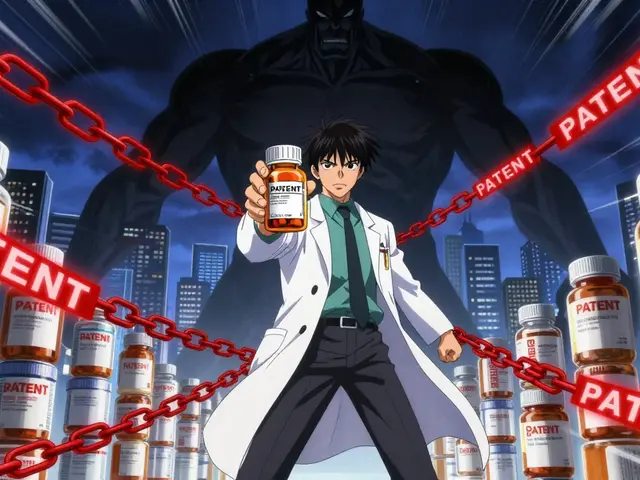
The BPCIA introduced a complex process known as the 'patent dance.' This legal mechanism was supposed to allow originator companies and biosimilar applicants to negotiate patent disputes. Instead, it became a tool for litigation. Originator companies built 'patent thickets'-layers of overlapping patents designed to block competition long after the core patent expired. As a result, by 2024, only 12 biosimilars had launched in the US, compared to over 100 approved in Europe since 2006. IQVIA called this gap the 'biosimilar void.'
However, the tide is turning rapidly in 2026. The US market reached USD 10.9 billion in 2024, growing at an 11% CAGR. Two major catalysts are driving this acceleration:
- The Inflation Reduction Act (2022): This law eliminated the Medicare Part D coverage gap ('donut hole') and provided incentives for biosimilar adoption, removing a significant financial barrier for seniors.
- FDA Regulatory Shifts: In June 2024, the FDA proposed new guidelines eliminating the requirement for switching studies to achieve 'interchangeable' designation. Previously, manufacturers had to prove that a biosimilar could be switched back and forth with the reference product without increased risk. This requirement was seen as an unnecessary hurdle that slowed competition. Removing it aligns the US more closely with the European model.
Market Comparison: 2024 Data and Future Projections
| Metric | Europe | United States |
|---|---|---|
| Market Size (2024) | USD 9.9 - 13.16 Billion | USD 6.5 - 10.9 Billion |
| Regulatory Pioneer | EMA (2006) | FDA/BPCIA (2009/2015) |
| Adoption Driver | Hospital Tenders & Substitution Policies | Patient Cost Savings & IRA Incentives |
| Key Therapeutic Areas | Oncology, Rheumatology | Supportive Care, Oncology (growing) |
| Projected CAGR (to 2034) | 17.34% | 17.50% - 18.5% |
| Major Players | Sandoz, Fresenius Kabi, Amgen | Pfizer, Merck, Samsung Bioepis |
While Europe currently holds a larger share of the global market (approximately 34% in 2020), North America is projected to lead regional revenue by 2027, reaching USD 17.2 billion. The US is catching up fast. With 118 high-revenue biologics expected to lose patent protection between 2025 and 2034, representing a $232 billion opportunity, the US market is poised for explosive growth. IMARC Group projects the US market will hit USD 30.2 billion by 2033.

Why the Gap Matters for Patients and Payers
The difference between these two markets isn't just about corporate profits; it's about healthcare sustainability. Biologics are among the most expensive drugs on the market. A single dose of certain cancer immunotherapies can cost tens of thousands of dollars. Biosimilars offer a way to reduce these costs without compromising care.
In Europe, the systemic approach works. When a country like Sweden or Germany decides to adopt a biosimilar, the entire healthcare system shifts. Doctors are educated, pharmacists are trained, and patients are informed. The result is rapid uptake and significant savings that flow back into the healthcare budget.
In the US, the system is fragmented. Coverage decisions involve the FDA, Centers for Medicare & Medicaid Services (CMS), and hundreds of private insurers. Each payer has its own formulary rules. However, the recent changes are simplifying this. The elimination of switching study requirements means more biosimilars can gain 'interchangeable' status, allowing pharmacists to substitute them at the pharmacy level without needing a new prescription from the doctor. This mirrors the generic substitution model Americans are used to.
Looking Ahead: Convergence and Complexity
As we move further into 2026, the regulatory approaches of the EMA and FDA are converging. Both agencies now accept similar analytical, non-clinical, and clinical data requirements to demonstrate biosimilarity. The main remaining difference lies in post-approval surveillance and interchangeability protocols, but even these are narrowing.
The next frontier is complexity. Early biosimilars were relatively simple molecules like filgrastim (used to boost white blood cell counts). The upcoming wave involves monoclonal antibodies and fusion proteins used for autoimmune diseases and cancer. These are harder to replicate. Manufacturing capabilities will be key. Europe, particularly Germany, maintains a strong edge in biomanufacturing infrastructure. However, US companies like Pfizer and Samsung Bioepis are investing heavily to close this gap.
For patients, the message is hopeful. Whether you are in London, Berlin, or New York, access to affordable biologic therapies is expanding. The 'biosimilar void' in the US is filling up. As patent cliffs hit blockbuster drugs like Humira (adalimumab)-which saw 14 biosimilars approved in the US by 2024-competition will drive prices down. The goal is clear: maintain the high standards of safety and efficacy that define modern medicine while making treatments accessible to everyone.
Are biosimilars as safe as the original biologic drugs?
Yes. Regulatory agencies like the EMA and FDA require rigorous testing to ensure biosimilars are 'highly similar' to the reference product with no clinically meaningful differences in safety, purity, or potency. They undergo the same quality control standards as the original drugs.
What is the difference between a biosimilar and a generic drug?
Generics are identical chemical copies of small-molecule drugs. Biosimilars are highly similar versions of complex biologic drugs made from living cells. Because biologics cannot be exactly copied, biosimilars must demonstrate similarity through extensive clinical and analytical data, whereas generics only need to prove bioequivalence.
Why did the US lag behind Europe in biosimilar adoption?
The US faced barriers including the complex 'patent dance' under the BPCIA, aggressive litigation from originator companies creating patent thickets, and stricter FDA requirements for interchangeable designation (such as switching studies) until recently. Europe established clear regulatory pathways earlier (2006) and implemented supportive hospital procurement policies.
How much cheaper are biosimilars than reference biologics?
Biosimilars typically launch at a discount of 15-30% compared to the reference product. Over time, as more competitors enter the market, prices can drop further. This is less dramatic than the 80-90% drops seen with generics, but still represents significant savings given the high cost of biologic therapies.
What impact does the Inflation Reduction Act have on biosimilars?
The Inflation Reduction Act of 2022 accelerated US biosimilar adoption by eliminating the Medicare Part D coverage gap and providing incentives for providers to prescribe biosimilars. It also allows CMS to negotiate prices for certain high-cost drugs, further encouraging competition.
Can pharmacists automatically substitute biosimilars for brand-name biologics?
Only if the biosimilar has been designated as 'interchangeable' by the FDA. Interchangeable biosimilars can be substituted at the pharmacy without the prescriber's intervention, similar to generics. In Europe, many countries have mandatory substitution policies that facilitate this process even more broadly.

Write a comment
Your email address will not be published.
Recent Posts
-
 Amlodipine and Mental Health: How It Impacts Anxiety and Depression September 11, 2025
 -
 STIs and Public Health Policy: How They Intersect September 28, 2025


10 Comments
pretty interesting read, the comparison between europe and us is spot on. i think the regulatory framework in ema was just way more straightforward from the start, which helped doctors get comfortable with it faster. here in india we are still catching up but seeing some good movement.
i have to ask though, why does the patent dance even exist? it seems like such an arbitrary hurdle designed solely to delay competition rather than protect actual innovation. the fact that the us lagged so far behind because of legal loopholes instead of scientific barriers is frustrating.
you guys are missing the point entirely 🇺🇸 the reason for the delay is quality control. european regulators are too loose. they approve anything that looks vaguely similar. we in the united states demand absolute perfection before risking patient safety. that is why our standards are higher and why we pay more. stop complaining about prices and appreciate the rigor of the fda process. 🙄
actually alexander that is not quite right. the fda has approved over 100 biosimilars now and the safety data is robust. the issue wasn't safety standards being different, it was the 'patent thicket' strategy used by big pharma to block launches legally. the science is the same, the law was just weaponized. once you understand the bpcia mechanics it makes more sense.
ugh this article is so long and boring. nobody cares about the history of the ema vs fda. i just want to know if my insurance will cover the cheaper version or not. typical corporate fluff piece trying to sound smart. :/
hey annemarie dont be so harsh! its actually really important info. i mean yeah its a bit dry but think about the savings. if we can get these drugs cheaper it helps everyone in the long run. lets stay positive about the progress being made with the inflation reduction act. go team usa! 🚀
the notion that the us market is merely 'waking up' is a gross oversimplification. the divergence is rooted in fundamental structural differences in healthcare financing. europe has single-payer or heavily regulated multi-payer systems that mandate substitution. the us relies on a fragmented private insurance model where formularies are negotiated opaquely. calling it a 'void' ignores the complex economic incentives at play.
one must consider the epistemological shift required in clinical practice when transitioning from reference biologics to biosimilars. the concept of 'interchangeability' is not merely a regulatory designation but a paradigm shift in how we perceive molecular identity in therapeutic contexts. the analytical similarity demonstrated through orthogonal methods provides a sufficient basis for extrapolation of efficacy data across indications, yet the psychological barrier among practitioners remains significant due to historical precedents of biologic variability.
you people are all so naive thinking this will actually help patients. the companies will just raise prices on the original drugs to offset the loss. its always the same game. and dont get me started on the pharmacists who refuse to substitute unless forced. they love their commissions. i bet half of you reading this cant even afford your current meds so what difference does a 20% discount make when the copay is still high. pathetic system.
omg sam you are so negative!! stop bringing everyone down. there is hope! look at germany they are doing amazing things with hospital tenders. we can do it too if we work together. let's focus on the solutions not the problems. you got this! 💪